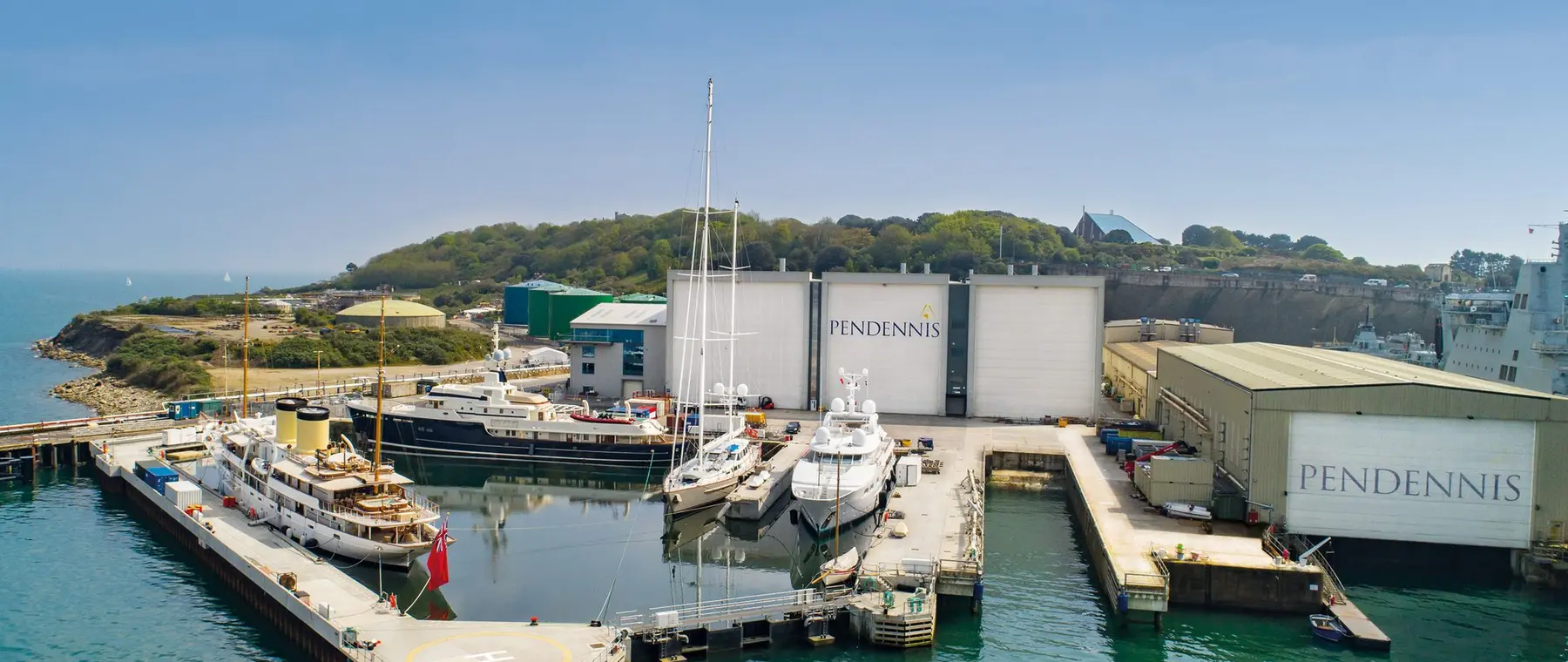
Pendennis Shipyard Reports £97.4m Turnover as 2025 Profit Narrows
By Stephen Yardley · Edited by Stephen Yardley
Pendennis Shipyard's reported 2025 group revenue rose to £97.4m but earnings fell despite an active refit year and a full year of Cockwells ownership.
Pendennis Shipyard’s group turnover reached a reported £97.4 million in the financial year ended 31 December 2025, an increase of approximately 7.4 per cent on the previous year. Yet pre-tax profit was reported at £4.7 million, compared with roughly £6.8 million in 2024, showing how a busier business can still face a squeeze on its earnings. The figures have been reported by two UK business publications following the filing of the group’s accounts.
The accounts belong to Pendennis Shipyard (Holdings) Limited, the parent company whose filing history is available through the UK’s Companies House register under company number 02281468. Companies House records that the 37-page group accounts for the year ended 31 December 2025 were filed on 7 October 2026. The return provides the formal reporting context; the financial line items cited here are attributed to the published business reports of those accounts rather than independently transcribed from the scanned filing.
The distinction matters to yacht owners, captains and industry suppliers because turnover measures the value of work recognised, not the amount retained after project costs and overheads. A shipyard may deliver sophisticated engineering, extensive joinery and multimonth refits while also absorbing integration expense, labour costs and contract-specific pressures. Pendennis’s latest reported results therefore invite a more useful question than whether turnover rose: what was required to support that growth?
One structural change between the two reporting years is clear from Pendennis’s own corporate history. In September 2024, the Falmouth-based group announced that it had acquired a majority interest in Cockwells Modern & Classic Boatbuilding, a specialist in bespoke superyacht tenders, motor launches and sailing yachts. The 2025 reporting period was the first complete calendar year after that transaction.
That timing is important when comparing headline revenue from 2024 with revenue from 2025. A full year of the acquired operation can contribute to a larger reported group figure even if demand in every individual business line has not increased by the same rate. For a fair commercial reading, growth from acquisition should be distinguished from changes in activity inside established facilities whenever the accounts provide the necessary detail.
Cockwells serves a segment directly connected to the superyacht experience without building the same product as a large custom yacht yard. The tender is often the owner’s practical connection between the mothership, a marina, a remote anchorage and a shore excursion. Specialist design, finish and propulsion work in that category adds a complementary strand to Pendennis’s more familiar new-build, refit and restoration capabilities.
Business Matters reported a pre-tax profit of approximately £4.7 million for 2025, down from £6.8 million a year earlier, despite the rise in sales. It also described a provision of £695,964 associated with losses on one-off contracts in the group’s joinery division. That provision is significant enough to merit attention, although it should not be treated as an explanation for every movement in group profitability.
Projects involving custom interiors, specialist machinery, highly skilled labour and a substantial amount of hand-finished work can be difficult to estimate precisely at the outset. Scope changes, reworking, material cost movements and scheduling constraints can all affect realised margins. Those are general characteristics of complex build programmes, not a claim that any particular one of them caused the reported Pendennis provision.
Integration and operating costs also deserve a separate reading from revenue. When a group adds another business, it may carry additional management, reporting, training, premises and coordination costs before the operational benefits become visible. The accounts cover the completed 2025 year; they do not in themselves establish an outcome for the current 2026 financial year or provide grounds for a profit forecast.
Pendennis’s own 2025 retrospective shows that the group’s technical operations were active across several areas of its business. At Pendennis Vilanova in Spain, the company says more than 120 superyachts were hauled during the year using the site’s 620-tonne and 200-tonne travel hoists. It identified October as particularly busy, with 29 haul-outs in that month alone.
Those numbers are a measure of activity at Vilanova and must not be presented as an annual total for every Pendennis site. Nor does one haul-out necessarily represent a major rebuild: technical-service periods can range from inspection and equipment maintenance to substantial works. Nevertheless, the volume gives a tangible sense of how much scheduling and infrastructure is required to support a Mediterranean service centre.
The same review describes an intensive autumn refit period and a marina operating at full capacity, while the company’s Falmouth operation continued its own work. From an owner’s point of view, the connection between those facilities is practical. Some projects require heavy lifting or a long shipyard stay; others depend on access to skilled teams and appropriate berthing within a specific Mediterranean cruising season.
Pendennis has been based in Falmouth since its founding in 1988 and describes continuing investment in facilities as part of its development. Its published history refers to a £22 million programme at the Falmouth shipyard as well as the installation of an 800-tonne travel hoist in 2019. Those are historical infrastructure statements and should not be confused with new capital expenditure announced in the October 2026 accounts.
The company’s portfolio covers bespoke construction, restoration, refit and technical support, a combination that helps spread capability across stages of a yacht’s working life. The commercial demands of each are different. Restoration can be especially sensitive to preserving an original vessel’s character, while technical refits require careful coordination of machinery, electrical and operational systems.
The Pendennis year-end review identified the 57-metre motor yacht Solace as a major 2025 project, noting her relaunch after a ten-month refit in Falmouth. It also highlighted the appearance of the 59-metre classic motor yacht Marala at the Monaco Yacht Show. These examples give more substance to the description of the yard’s work than a generic claim about luxury-yacht manufacturing.
Pendennis’s ownership interest in Cockwells provides one connection between the group’s financial consolidation and the highly customised experience owners expect. In its 2025 recap, Pendennis said Cockwells had delivered four bespoke superyacht tenders for a large motor yacht. That is a specific completed programme, not a statement about Cockwells’s total annual output.
The same company update described investment in Norfolk Interiors, another specialist business within the Pendennis group, including a computer-controlled cutting machine and a new business-development appointment. Pendennis’s heritage material says Norfolk Interiors joined the group in 2021 and supplies high-end residential and marine interiors. The company’s joinery capabilities sit alongside, but should not be conflated with, the separately reported contract-loss provision.
Workforce training forms another part of the industrial picture. Pendennis reported recognition as a Top 100 Apprentice Employer for a fourth consecutive year in 2025 and an apprentice intake spanning engineering, paint, joinery and machining. In a craft-intensive sector, training is an operational necessity as well as a recruitment message, although the recognition alone cannot quantify productivity or financial performance.
The first question when assessing any yacht-service partner remains whether its available facilities and skills match the vessel and scope of work. An owner considering a technical stop may care most about lifting limits, berth availability, project engineering and a realistic completion programme. A larger restoration or rebuild raises additional questions about design control, material selection, specialist subcontractors and documentation.
A rising turnover figure does not automatically answer those questions, just as a lower annual profit does not alone show that a yard cannot deliver a project. Financial accounts provide a snapshot of a reporting period; prospective clients still need project-specific evidence, references, contractual protections and current operational information. The sensible interpretation is to read commercial performance alongside a verifiable record of work completed.
Pendennis’s combination of Falmouth and Mediterranean activity gives owners alternative operating settings for different stages of a yacht’s lifecycle. The company’s public records show the broad scope of that proposition, but a customer should seek a current written schedule and technical specification for any particular undertaking. No information in the 2025 accounts should be mistaken for a guarantee of future berth space or completion timing.
The strongest established facts are that Pendennis Shipyard (Holdings) Limited filed its 2025 group accounts on 7 October 2026, that two recent business reports put turnover at £97.4 million and pre-tax profit at £4.7 million, and that the company itself documents its September 2024 majority investment in Cockwells. Pendennis’s 2025 operational round-up independently confirms the tender programme and significant activity at its Vilanova centre.
The financial contrast is meaningful but should not be simplified into a claim that all parts of the company performed identically. Acquisition, project mix, one-off provisions and operating expenditure can each influence a group-level comparison in different ways. Without a granular, verified segment analysis, it would be inappropriate to assign individual profit figures to Falmouth, Vilanova, Cockwells or Norfolk Interiors.
For the superyacht market, the filing offers a timely reminder that industrial capacity and financial returns do not always move together. Pendennis reported a busy 2025 across technical service, custom craft and restoration, while the published group figures point to tighter profitability. That combination—growing activity, diversified capabilities and cost discipline—is the story to follow as later results become available.
Primary records: Companies House filing history for Pendennis Shipyard (Holdings) Limited; Pendennis corporate heritage; and Pendennis 2025 activity summary. The parent-company accounts were filed on 7 October 2026, covering the year ended 31 December 2025.
The figures £97.4 million turnover, £4.7 million pre-tax profit, their comparative 2024 totals and the specific contract provision were cross-checked against accounts coverage in Business Matters and Insider Media. The Companies House PDF is a scanned filing, so this report does not represent those published line items as independently extracted from machine-readable accounts.
Explore
Go deeper into the yachts, companies, events and destinations directly connected to this article.
Continue reading

Metstrade has confirmed six initial exhibitors for its dedicated 2026 Superyacht Startups Area in Hall 8, with Fort Insurance sponsoring the wider programme.
D-Marin has partnered with ult. Insurance to connect yacht owners at its UAE marinas with specialist cover reviews, placement, claims assistance and a dedicated …
Sunseeker confirms its long-term ownership and appoints Scott Millar as CEO, establishing permanent leadership for the British yacht builder's five-year transformation.

Privacy is essential in superyacht ownership, but overly broad NDAs and opaque corporate structures can increase compliance costs, obstruct transactions and turn legitimate discretion …
Superyacht Guide
Continue into the wider Superyacht Guide.
Business opportunities · Superyacht Guide
Companies serving the superyacht market can discuss clearly identified advertising, sponsorship and business-profile opportunities. Commercial activity remains separate from independent editorial coverage.