Quick Group CTO Says Integrated Control Is Next Step in Yacht Stabilisation
By Stephen Yardley · Edited by Stephen Yardley
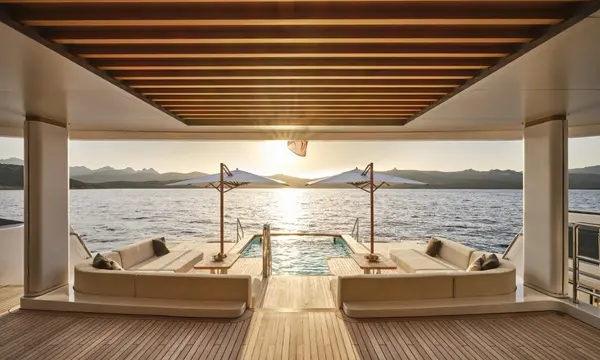
Image: Quick Group / SuperYacht24
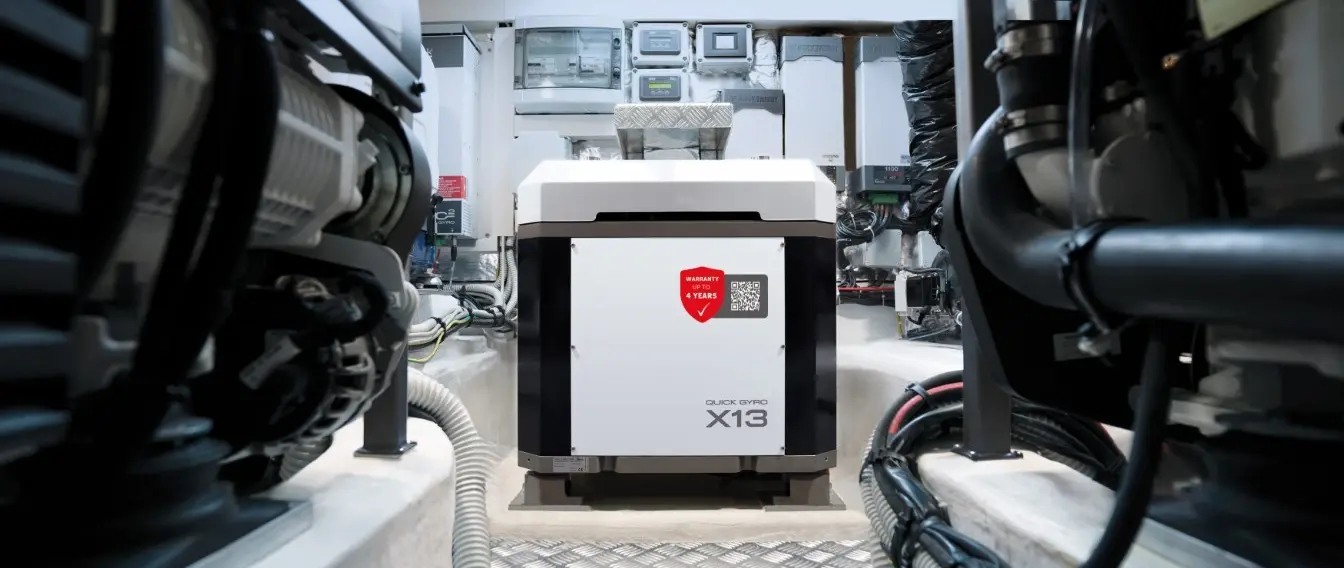
Quick Group CTO Lorenzo Mongiardo says combining gyro, fin, interceptor and yacht-control technologies will matter more than simply adding separate new hardware.
Lorenzo Mongiardo, chief technical officer at Quick Group, argues that the next advances in yacht stabilisation will come from making existing technologies work together instead of merely creating another stand-alone device. In an industry interview published on 8 October, he described increasing owner expectations for smooth movement both underway and at anchor.
The shift is relevant to large yachts because their motion-control arrangements may combine fins, gyroscopic equipment, interceptors, hull-form choices and propulsion behaviour. Their individual benefits can be compromised when systems respond independently to the same movement. Coordination requires controls that understand the vessel's changing conditions and the boundaries of each component.
The technical challenge is not to treat every stabiliser as interchangeable. Gyroscopes, active fins and interceptors address different motion characteristics and operating speeds; some are more effective while stationary, while others primarily shape behaviour underway. On a superyacht, appropriate combinations are determined by hull shape, displacement, machinery arrangement and the intended cruise profile.
Mongiardo emphasised increasing interest in multimodal solutions capable of adapting as speed and sea state change. A well-designed transition between modes could matter to guest comfort, especially when a yacht leaves an anchorage, accelerates and encounters a different wave pattern. Such behaviour needs to be proven through actual trials rather than assumed from a list of installed equipment.
The interview also identifies equipment noise, electrical efficiency and intrusion into valuable internal volume as important design issues. Gyroscopic equipment has particular implications for machinery space, cooling and acoustic isolation, while active control systems place demands on sensors, cabling and commissioning. These trade-offs become even more significant in refit work where spaces are already occupied.
Captains and shipyards therefore want intelligent systems that are easier to install, monitor and service without requiring an impractical reconstruction of the vessel. The desired simplification does not eliminate safety engineering or classification obligations. It makes a stronger case for planning motion control alongside the entire yacht's electrical and mechanical architecture.
Quick Group is working towards greater coordination between the systems it supplies and the wider onboard control environment. That direction may ultimately influence new-build specifications and refurbishment choices, but the interview does not establish a single universal package proven suitable for every hull.
Owners considering upgrades should ask which combinations have been tested, who is responsible for control-system integration and what happens when a sensor or actuator fails. The news is the company's stated engineering priority, distinct from its earlier product launches. Procurement decisions still require measurable performance, compatibility and maintenance evidence.
Explore
Go deeper into the yachts, companies, events and destinations directly connected to this article.
Continue reading
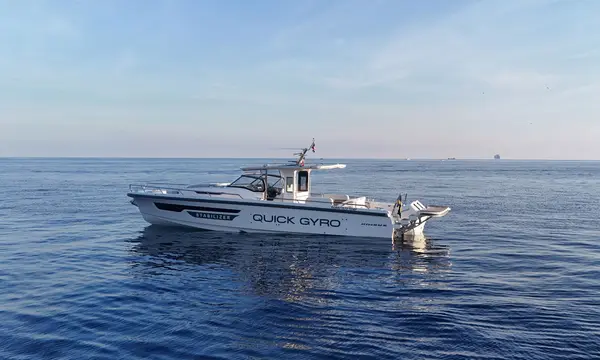
Quick Group says mechanical, electrical and control updates have cut Quick Gyro start-up times by more than 30% on its X13, X16 and X19 …
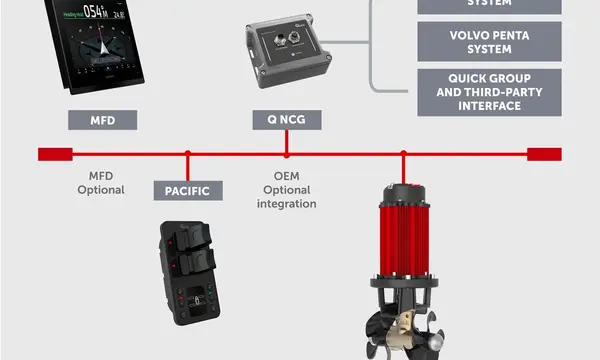
Quick Group will unveil QCentric, Pacific controls and its completed QSY electric-thruster range at Cannes. The upper QSY range extends into the 30-metre yacht …
New research into micro modular reactors is raising the possibility of nuclear power for future large yachts, although classification, port access and approval remain …
Benetti’s 67m B.Now yacht DAGGER combines two Caterpillar main engines, bidirectional 200kW VEM shaft motors and a 360kWh sodium-metal chloride battery bank.
Superyacht Guide
Continue into the wider Superyacht Guide.
Business opportunities · Superyacht Guide
Companies serving the superyacht market can discuss clearly identified advertising, sponsorship and business-profile opportunities. Commercial activity remains separate from independent editorial coverage.