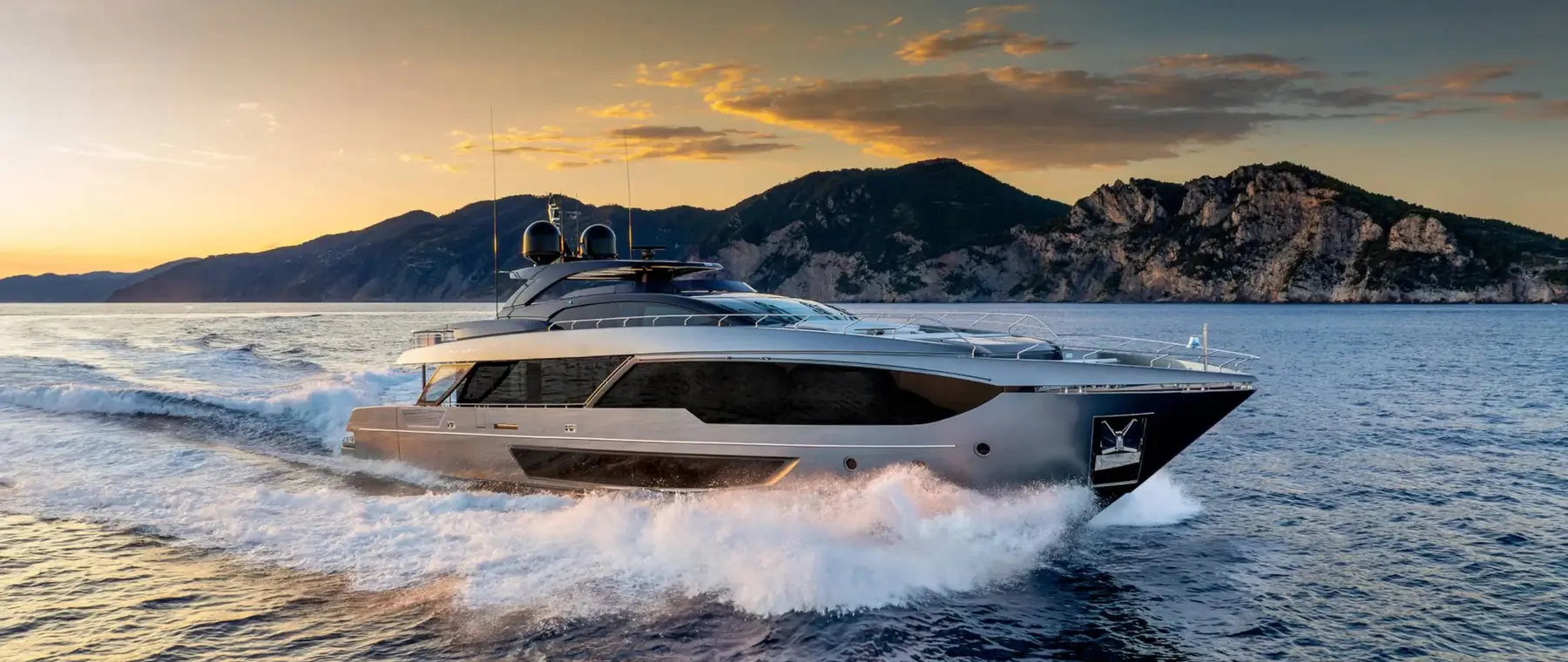
Riva 112 Dolcevita Super Puts Open-Air Living First
By Stephen Yardley · Edited by Stephen Yardley
Image: Riva
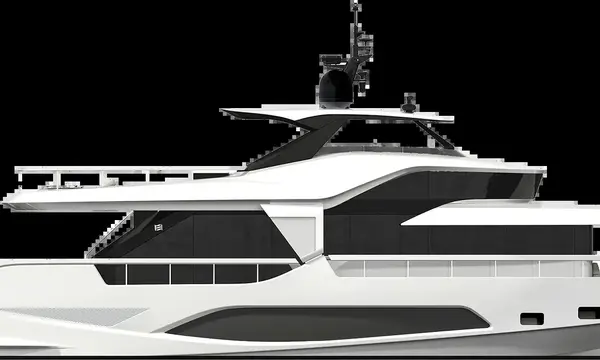
The 34.38-metre Riva 112 Dolcevita Super revisits its predecessor's priorities with more usable open-air spaces, a generous beam and a performance-minded flybridge platform.
Riva's 112 Dolcevita Super sets out to make a familiar flybridge format work harder for owners who spend most of their time outside. At 34.38 metres overall and 7.27 metres across the beam, the latest Dolcevita is a substantial yacht, yet its proposition is built around the quality of social spaces rather than a claim to unprecedented dimensions.
Riva's preliminary figures also place the yacht squarely in a part of the market where driving style and onboard hospitality must coexist. A cruise of several hours at a brisk pace creates different noise, fuel and service demands from an afternoon spent stationary near a coastal town. Owners should therefore evaluate the boat in both modes, asking how easily passengers can move, where meals are served and how well the crew can work discreetly.
The Italian builder explicitly positions the model as an evolution of its 110 Dolcevita, with expanded volumes and redesigned external areas that bring guests closer to the sea. It is a shift in emphasis that reflects how owners increasingly judge a yacht by the hours spent at anchor and not solely by the comfort of an interior passage.
The configuration remains very much in Riva's performance-oriented tradition, but the exterior programme has more in common with the relaxed rhythm usually associated with larger superyachts. A family choosing between a traditional flybridge yacht and a similarly sized beach-club design will therefore find several relevant comparisons here.
The 112 Dolcevita Super's principal talking point is the breadth of outdoor living, including substantial elevated deck areas and a stern arrangement intended to strengthen contact with the water. For owners, the appeal lies in moving naturally between a shaded meal, an afternoon swim and a gathering with friends.
Space alone is not enough, particularly when guests are moving between tender operations and bathing activities. The design needs safe access, predictable crew working routes and enough protected seating to remain useful as the wind turns or the midday sun becomes strong.
Riva's objective is an immersive waterfront experience, and that wording is more meaningful when examined through practical use. A well-resolved beach-level lounge may be central to a summer itinerary, while the same area should remain manageable and secure during passage or when the yacht is berthed in a crowded marina.
The builder's published preliminary specification gives a length at the waterline of 29.45 metres, draft of 2.07 metres and fuel capacity of 15,300 litres. Together with freshwater capacity of 3,000 litres, these are the figures captains will use to begin evaluating likely ports of call, provisioning and route flexibility.
Power is listed as twin MTU 16V 2000 M96L diesels, with maximum speed estimated at 25.5 knots and cruising speed at 23 knots. Riva quotes a 420-nautical-mile range at cruising speed, but those numbers should be treated as conditional data rather than a guarantee for every yacht and operating condition.
The difference between an attractive specification and an efficient ownership experience is often found in the details. Prospective buyers should verify actual loading, equipment options, stabilisation performance and speed-versus-consumption curves with the builder before settling on the routes they hope to make.
Riva lists five guest cabins and four crew cabins in its official data, giving the model a clear orientation towards extended private use supported by professional service. That balance is especially significant when owners intend to host several generations together or invite friends aboard without sacrificing the main social rooms.
The Dolcevita Super is not presented as a long-distance expedition vessel, and its published performance envelope should not be interpreted that way. Its strengths are the blend of speed, arrival style, outdoor comfort and the ability to keep guests connected with the surrounding coastline.
As the 2026 market considers different solutions around the thirty-five-metre mark, Riva's proposition is a useful reminder that an owner's actual habits should determine the choice of yacht. The decisive qualities are not confined to maximum speed or one impressive photograph, but are experienced in how comfortably the vessel supports an ordinary day on the water.
Explore
Go deeper into the yachts, companies, events and destinations directly connected to this article.
Continue reading
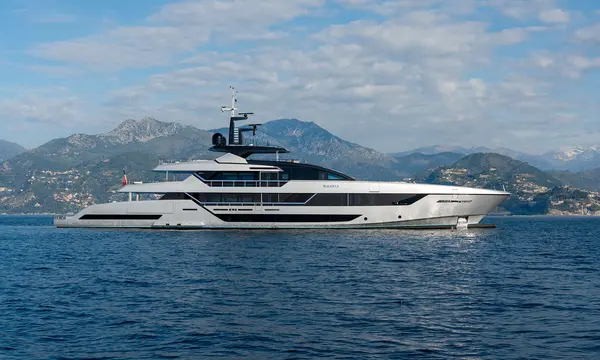
Riva’s 54.83m aluminium flagship has made its Monaco Yacht Show debut, combining 499 GT, a 9.18m beam and twin MTU propulsion for a quoted …
The 38.76-metre Navetta 38 uses a sub-300 GT displacement platform to connect interior rooms, exterior terraces and a full-beam beach deck across four levels.
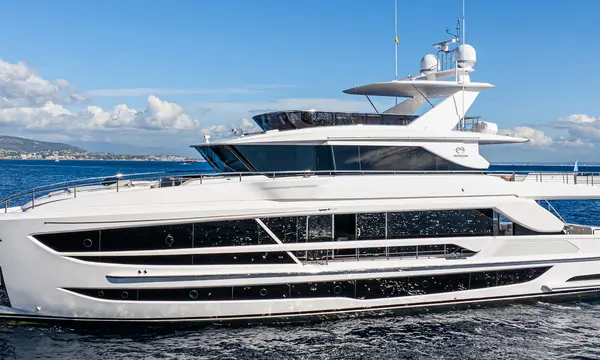
Horizon's FD100 makes a case for configurable decks and a generous beach club, offering two different upper-deck approaches within a 30.97-metre platform.
The Ferretti Yachts 1000 SkyDeck reimagines the elevated living space of a 30.13-metre yacht as a sheltered lounge, suited to owners who cruise in …
Superyacht Guide
Continue into the wider Superyacht Guide.
Business opportunities · Superyacht Guide
Companies serving the superyacht market can discuss clearly identified advertising, sponsorship and business-profile opportunities. Commercial activity remains separate from independent editorial coverage.