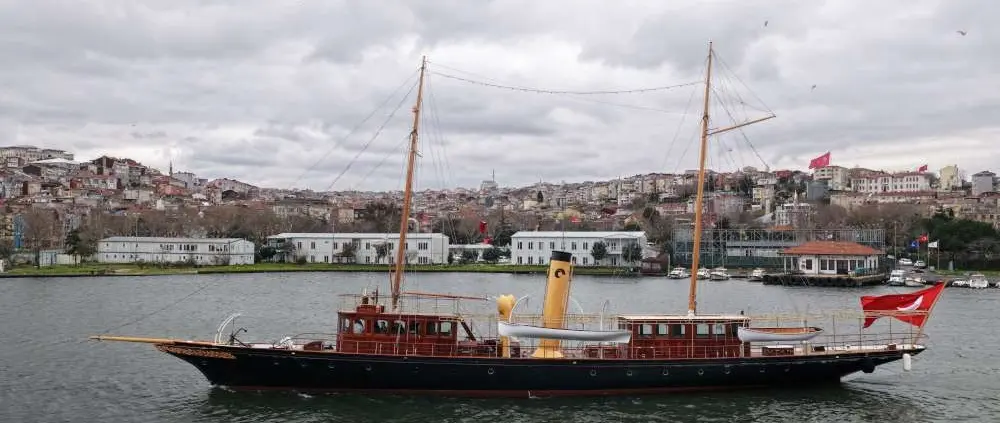
RMK Restores 38m Steam Yacht CANGARDA for Istanbul's Maritime Museum
By Stephen Yardley · Edited by Stephen Yardley
RMK restores the 38m, 1901-built steam yacht CANGARDA using historic methods and specialist engineering before her transfer to Istanbul's Rahmi Koç Museum.
RMK Yachts has completed an extensive restoration and relaunched CANGARDA, a 38-metre steam yacht built in the United States in 1901. The shipyard announced the project in March 2026 after approximately seventeen months of conservation work in Istanbul, transferring the yacht to the Rahmi Koç Museum on the historic Golden Horn. The objective was not to turn her into a contemporary charter yacht but to preserve a rare example of the engineering and interiors that defined luxurious private steam navigation at the beginning of the twentieth century.
The completion should be understood as a conservation milestone with a public educational purpose rather than a commercial sale or a completely new vessel. RMK says its team approached the project as stewardship of maritime heritage, choosing interventions according to historical accuracy and the requirements for the vessel's continued physical survival. The result provides visitors with an uncommon opportunity to see early yacht technology rather than only modern reproductions of its aesthetic.
CANGARDA's origins belong to a period when steam propulsion allowed wealthy yacht owners more predictable passages without relying on the wind. Her steel structure, deck arrangements and elaborate internal joinery reflect a vessel intended both for travel and for a refined social life afloat. Surviving examples from this era are increasingly rare because maintenance costs, changes in ownership and incompatible modernisations have altered or destroyed many comparable yachts.
A historic vessel may have been repaired repeatedly over a century, and each intervention can become part of its story. Conservators must decide which changes have historical value, which are dangerous or deteriorated, and which should be reversed. There is no simple rule that every original component must remain in working service. The appropriate balance depends on what can be safely conserved and what is needed to make the vessel accessible without sacrificing its character.
After arriving in Istanbul in October 2024, CANGARDA underwent structural and hull inspections, mechanical assessments and conservation planning. The scope included repairs to her hull and protective coatings, attention to rigging and deck equipment, and work on safety systems needed for responsible handling. RMK describes a process intended to respect the original geometry and shipbuilding methods instead of imposing visibly modern forms.
Structural examination is especially important for a vessel with numerous historic joints, repair patches and hidden cavities. Corrosion may develop behind interior panelling or at interfaces that have not been opened for decades. Conservators should document the as-found condition and record how each intervention affects original material. Future caretakers benefit from that evidence when the ship is surveyed, maintained or moved.
CANGARDA's propulsion machinery posed a distinctive challenge because relatively few engineers still work directly with early twentieth-century marine steam systems. RMK sought outside assistance, ultimately receiving specialist input from Tüpraş engineers within the wider Koç industrial group. The team aimed to reinstate necessary functions and preserve the original configuration, rebuilding some parts only where deterioration or safety demands made that unavoidable.
Steam plant requires an understanding of pressure containment, controls, lubrication and the thermal behaviour of components made using historic methods. Restoring its outward appearance is not equivalent to demonstrating safe operation. Boilers, pipework and valves require specialist inspection and procedures appropriate to their condition and intended museum use. The project's success depends as much on careful technical documentation as on whether visitors can recognise the machinery.
The conservation programme retained Cuban mahogany joinery, brass and bronze fittings, deck details, furniture and original spatial arrangements wherever possible. RMK's work with the Rahmi Koç Museum's specialists included cleaning, repair and restoration of metal accessories, supported by historically appropriate materials when replacements were necessary. Rather than redesigning the saloons for current tastes, the shipyard treated the interior as a record of its period.
Such material choices have educational value. Wood grain, fastening details and the design of a simple brass latch can reveal manufacturing methods and the economic circumstances of early luxury yachting. Aggressive polishing may remove a historic surface, while an unsuitable modern coating can trap moisture or cause future maintenance problems. A museum-level approach therefore favours stable conservation and detailed records over the appearance of showroom perfection.
Modern shipyards normally organise work around construction drawings and components whose manufacturers remain available. A historic yacht can present almost the opposite conditions: incomplete documentation, obsolete systems and one-off fittings made by trades no longer widely practised. Engineers and craftspeople must first understand what exists before deciding what can be repaired or replicated. This may lengthen the research phase but reduce the risk of irreversible damage.
RMK's programme demonstrates how industrial infrastructure can support cultural preservation when coupled with specialist advice. Lifting, structural repair, machining and protective-coating facilities provide practical capabilities, while historical conservators guide which methods are suitable. The process illustrates a useful distinction between a refit that changes how an owner experiences a yacht and a restoration that protects the vessel as documentary evidence.
RMK Yachts is a Turkish builder associated with modern bespoke yachts and complex technical projects. Tüpraş contributed engineering knowledge relevant to the steam plant, while the Rahmi Koç Museum's workshop team addressed important historical materials. The museum now provides the long-term setting for interpretation and display, with CANGARDA becoming a feature of the Golden Horn collection.
The businesses and institution have different responsibilities. A shipyard can perform repairs and coordinate specialists; technical advisers address particular equipment; museum conservators protect the authenticity and interpretation of an artefact. Effective cooperation depends on a shared understanding of why certain components should be preserved even when replacing them would be quicker or cheaper. That principle distinguishes cultural stewardship from a normal commercial maintenance job.
CANGARDA's return to Istanbul's maritime heritage scene illustrates what is required to preserve a historic yacht for future generations. Owners of classic sailing or motor yachts face comparable issues of ageing structure, specialist components, missing drawings and the tension between authenticity and safety. Preventive maintenance, complete records and a realistic conservation plan can protect value that no modern interior redesign can reproduce.
The March launch was followed by the yacht's move to the Rahmi Koç Museum, where visitors can encounter the vessel as a historic object rather than a private charter product. A documentary is also planned to record the restoration. For the wider superyacht industry, the project offers a compelling reminder that craftsmanship is not limited to new construction; safeguarding the work of earlier generations demands just as much judgement, patience and technical skill.
Explore
Go deeper into the yachts, companies, events and destinations directly connected to this article.
Continue reading
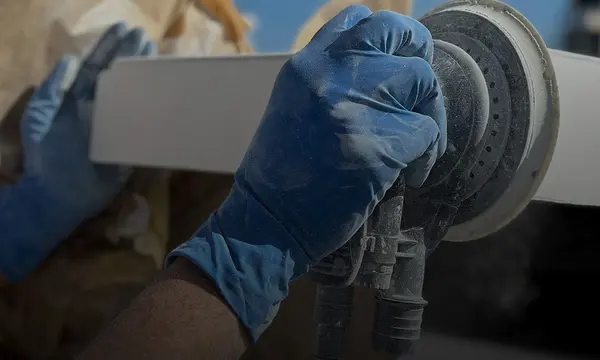
Cantiere Rossini has begun a €2 million crew and staff facility at its Pesaro superyacht refit yard, with completion scheduled for October 2027.
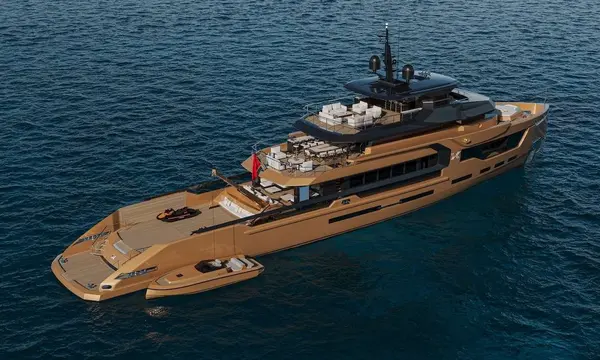
RMK and Hot Lab's 50m PETRA explorer concept offers three distinct configurations for family cruising, private use and more demanding expedition programmes.
Acquera Group outlines how its 25-country yacht agency network, Wilsonhalligan recruitment operation and digital tools are being integrated around crew needs.
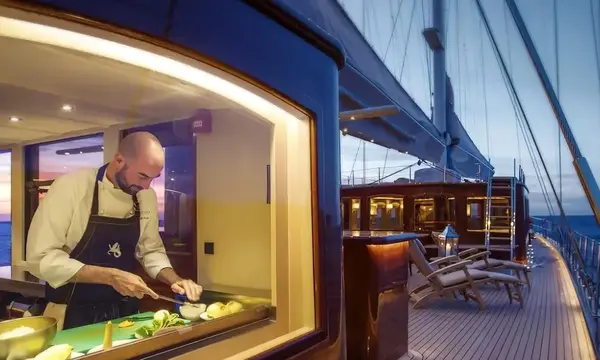
NAVIGO and ISYL ITS Academy will run a Yacht Chef Master Programme in Viareggio on 1–4 December, covering provisioning, guest service and operational galley …
Superyacht Guide
Continue into the wider Superyacht Guide.
Business opportunities · Superyacht Guide
Companies serving the superyacht market can discuss clearly identified advertising, sponsorship and business-profile opportunities. Commercial activity remains separate from independent editorial coverage.