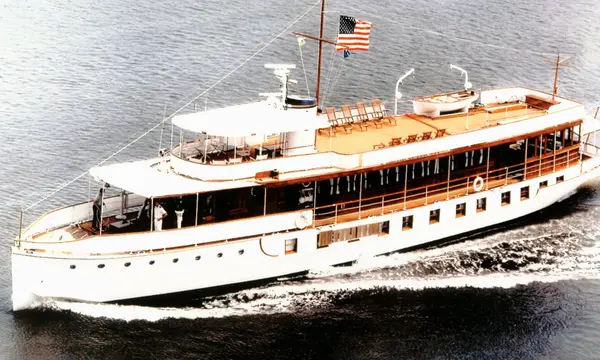
USS Sequoia: The Presidential Yacht Used by Nine U.S. Presidents
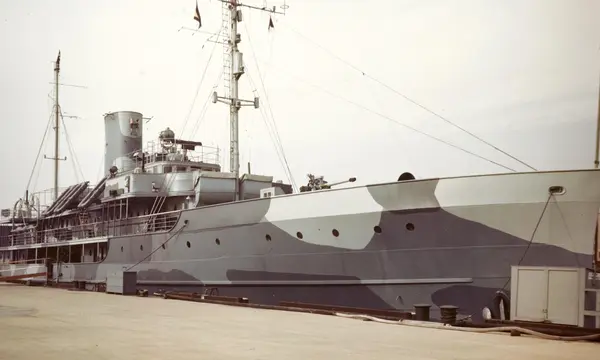
USS Sequoia served nine U.S. presidents and became a floating setting for diplomacy, political decisions and private presidential life. From Roosevelt and Kennedy to …
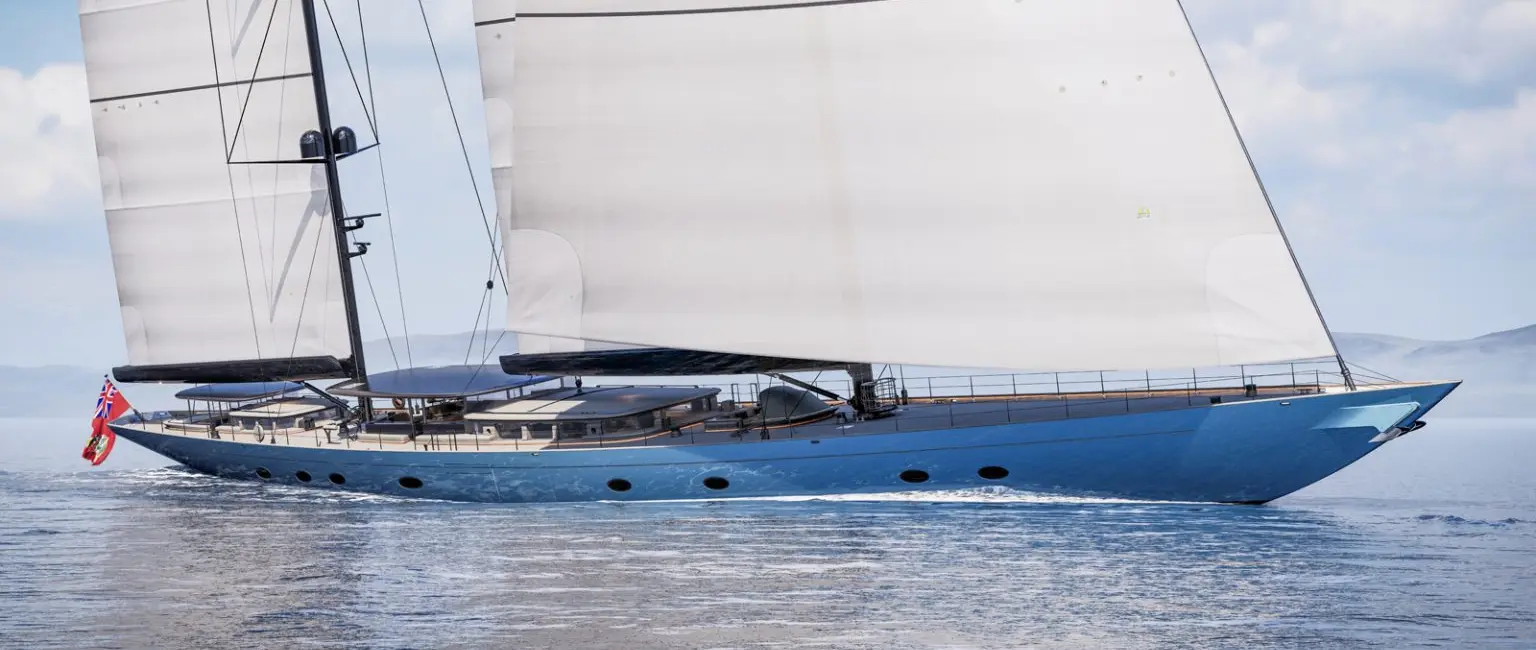
Inside the technology behind 68.9m sailing yacht Zero, including a 5MWh battery, hydro-generation, solar thermal systems and a 700V DC architecture designed to reduce or eliminate fossil-fuel use.
The 68.9-metre sailing yacht Zero is one of the most technically ambitious superyacht projects to emerge in 2026, not because of a single headline innovation but because of the way the entire yacht has been conceived around energy. Built by Vitters and developed with technology researched through Foundation Zero, the project attempts to answer a question that has hovered over the superyacht industry for years: can a yacht of this scale genuinely operate for extended periods without relying on fossil fuel?
The answer is more complicated than a simple yes or no. Zero is not merely an electric yacht with a large battery, nor is she a conventional sailing yacht fitted with a few solar panels. Her architecture is based on the idea that propulsion, hotel loads, energy generation, storage and thermal management must all be treated as parts of one integrated system. The objective is not simply to reduce diesel consumption, but to create a yacht capable of harvesting enough renewable energy while operating to support its onboard systems for meaningful periods without burning fossil fuel.
At the centre of that approach is a battery bank of approximately 5MWh, one of the largest installations yet seen on a sailing yacht. That figure immediately attracts attention, but the battery itself is only part of the story. A 69-metre yacht still carries substantial electrical demand from air-conditioning, refrigeration, navigation systems, lighting, pumps, water production, galley equipment, communications and domestic services. Even a battery of this size cannot support those loads indefinitely unless energy is continually replaced.
That is where Zero’s sailing performance becomes part of the electrical system.
When the yacht is moving under sail, its underwater propulsion units can operate in reverse as generators. The flow of water through the system is used to produce electricity, allowing the yacht to recharge while sailing. Foundation Zero has described hydro-generation capability of up to approximately 250kW, with the recovered energy fed back into the yacht’s battery bank.
In practical terms, the sails are doing more than propelling the yacht. They are also enabling the yacht to manufacture electricity.
The concept is simple enough to understand but difficult to optimise. Any system that extracts energy from the water also creates drag, so the yacht cannot simply generate as much electricity as possible without affecting sailing performance. If too much resistance is introduced, speed falls and the amount of energy available to recover can also decrease. The design challenge therefore becomes one of balance: extracting enough energy to support the yacht without compromising the very sailing efficiency that makes regeneration possible.
That is one reason the project had to be developed as an integrated platform from the beginning. Hull efficiency, propeller geometry, pitch, sailing speed, electrical demand and battery state are all connected. Foundation Zero has indicated that the sails on a yacht of this size can represent around 1.5MW of effective driving power in favourable conditions. Only part of that energy can be harvested electrically, but it demonstrates how significant wind energy becomes when the yacht is designed to use it for more than propulsion alone.
Solar energy adds another layer, although the system goes beyond conventional photovoltaic panels. Zero uses photovoltaic-thermal technology designed to produce both electricity and useful heat from the same surface area. Standard solar panels convert only part of incoming solar energy into electricity, while a significant amount becomes heat. The PVT approach captures part of that heat and reuses it elsewhere on board, including for domestic hot water and potentially to support cooling systems.
That matters because hotel loads are one of the largest energy demands on any superyacht. Air-conditioning in particular consumes significant power, especially in the Mediterranean, Caribbean and other warm-weather cruising regions. Reducing the energy needed to cool the yacht can therefore be just as important as producing more electricity.
Foundation Zero’s research has consequently extended into insulation, glazing, ventilation, heat recovery, coatings and thermal management. The principle is straightforward: the easiest unit of energy to generate is the one the yacht never needs to consume.
This is where Zero begins to look less like a yacht fitted with alternative technology and more like a floating energy-management system.
Its electrical architecture is built around a high-voltage DC network operating at approximately 700 volts line-to-line. This differs from the traditional arrangement found on many yachts, where multiple AC generators form the backbone of the vessel’s power system. A DC architecture allows batteries, solar generation, propulsion systems and other electrical loads to interact more efficiently while reducing the number of conversion stages between different forms of current.
The result is effectively a floating microgrid.
Energy can be harvested through hydro-generation, produced through solar systems, stored in the main battery bank and distributed wherever it is needed. Software then manages generation, storage and demand according to changing operating conditions. Battery state, weather, wind, sailing speed, hotel loads and expected energy requirements all become part of the same calculation.
That software may ultimately prove as important as any single piece of hardware.
A yacht cannot operate intelligently on renewable energy if each system behaves independently. Energy use must be prioritised, predicted and balanced continuously. This is why Foundation Zero has also developed digital modelling and control systems intended to optimise how the yacht uses available energy over time.
The important question, however, remains the same: does this really mean Zero can operate without fossil fuel?
Under the project’s intended operating philosophy, yes, for extended periods and under suitable conditions. But that statement requires careful qualification.
The yacht does not possess unlimited energy. Its ability to operate without fossil fuel depends on the relationship between what it consumes and what it can harvest. In strong sailing conditions, hydro-generation can contribute substantial power. In sunny conditions, solar systems add further input. When hotel demand is moderate and the yacht is being operated efficiently, the energy balance becomes favourable.
In poor wind, low sunlight and heavy hotel demand, that balance changes.
Foundation Zero’s own published research reflects this reality. Battery charge can decline during periods when consumption exceeds generation, then recover later when sailing or solar conditions improve. The objective is therefore not to keep the battery permanently full. It is to manage the yacht over time so that renewable generation and energy demand remain within a sustainable operating envelope.
That is very different from the simplistic idea that a 5MWh battery somehow makes the yacht independent of fuel on its own.
Recent coverage has suggested that Zero may be capable of operating for around two weeks using renewable energy alone under suitable conditions. That figure is interesting, but it should not be treated as a guaranteed endurance number. Real-world performance will depend on wind, route, climate, hotel demand, sailing speed and how intensively the yacht is being used.
The forthcoming operational data will therefore be more important than any headline claim.
Unlike a conventional yacht whose energy profile can be modelled using decades of established experience, Zero is testing a system in which every part of the yacht affects another. Sailing performance influences generation. Generation affects battery state. Battery state affects operating choices. Thermal efficiency changes hotel demand. Software manages all of it.
That makes the project a full-scale experiment as much as a superyacht.
Its greatest significance may also lie in the fact that Foundation Zero intends to share technical knowledge from the programme. Research relating to hydro-generation, electrical architecture, thermal management, PVT systems and energy modelling has already been published openly, which is unusual in an industry where many technical developments remain proprietary.
That could make Zero more influential than the number of yachts that directly copy its design.
Not every superyacht can become fossil-fuel-free in the same way.
The biggest advantage Zero possesses is that she is a sailing yacht. Wind provides the primary propulsion energy, and that movement can then be used to regenerate electricity. A motor yacht does not have that same opportunity. If a motor yacht uses its engines to create forward motion and then attempts to recover energy from that motion through drag, it simply creates additional losses.
The full Zero model therefore cannot be transferred directly to a conventional motor yacht.
But many of its technologies can.
High-voltage DC distribution, larger battery systems, intelligent energy management, improved insulation, lower hotel loads, more efficient cooling, thermal recovery and better integration of renewable energy all have relevance beyond sailing yachts. A future motor yacht may still require diesel, methanol, hydrogen-derived fuel or another stored energy source for long-range propulsion, but it could consume far less of it if the rest of the vessel is designed with the same discipline.
That may ultimately be Zero’s most important contribution.
The superyacht industry often focuses on propulsion when discussing sustainability, yet propulsion is only one part of a yacht’s energy demand. Large hotel loads continue whether the yacht is moving or anchored. Air-conditioning, lighting, refrigeration, water production and domestic systems can consume enormous amounts of energy over a year.
Reducing those loads can have an immediate effect across the existing fleet, even when the yacht itself remains conventionally powered.
This is why Zero should not be judged only by whether it can achieve a specific number of fossil-fuel-free days.
Its real value is in demonstrating what happens when an entire yacht is designed around energy rather than fuel.
The 5MWh battery bank, 250kW hydro-generation capability, PVT panels and 700V DC architecture are impressive individually, but they matter most because they are designed to work together. The yacht is attempting to create a cycle in which wind moves the vessel, movement generates electricity, solar systems add further energy, batteries store it, and efficient onboard systems reduce the amount that must be consumed.
If that balance works reliably in real-world cruising, Zero will have demonstrated something more important than simply building a large electric sailing yacht.
It will have shown that a superyacht can be designed to live within the energy it is able to harvest.
That does not mean the entire superyacht fleet is about to abandon fossil fuel. Motor yachts face very different energy-density and range requirements, and even sailing yachts operate under widely varying conditions.
But the technologies developed for Zero could still influence how future yachts are designed.
The question is therefore not whether every yacht can become another Zero.
They cannot.
The real question is how much less fuel the wider superyacht fleet could consume if the lessons from Zero — integrated energy management, better thermal efficiency, larger storage systems, renewable generation and smarter electrical architecture — become normal rather than exceptional.
If that happens, the yacht’s legacy may be much larger than one 69-metre vessel.
It may be the point at which the industry began to treat energy as a system rather than simply a tank of fuel.
Continue reading
USS Sequoia served nine U.S. presidents and became a floating setting for diplomacy, political decisions and private presidential life. From Roosevelt and Kennedy to …
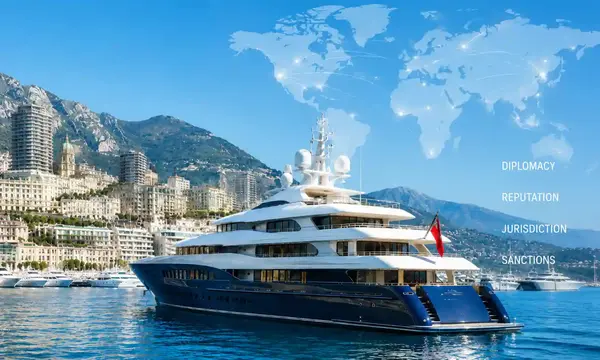
Superyachts are unusually visible forms of private wealth, so where they berth can carry reputational as well as legal significance. Soft power begins with …
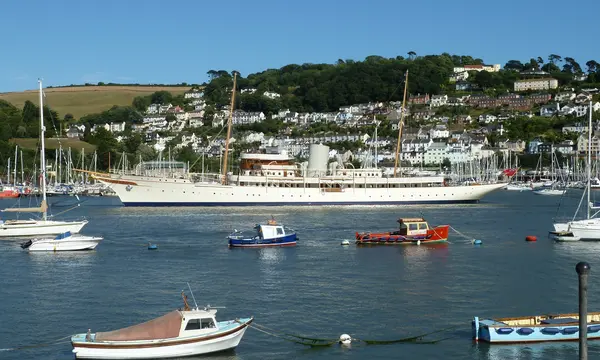
Nahlin is a 91.44-metre classic motor yacht built by John Brown & Sons in 1930 to a G.L. Watson design. Her 1936 Mediterranean charter …
Built for Horace Dodge in 1921, SS Delphine survived sinking, wartime service as USS Dauntless and decades of uncertainty before a landmark restoration returned …
Superyacht Guide
Continue into the wider Superyacht Guide.