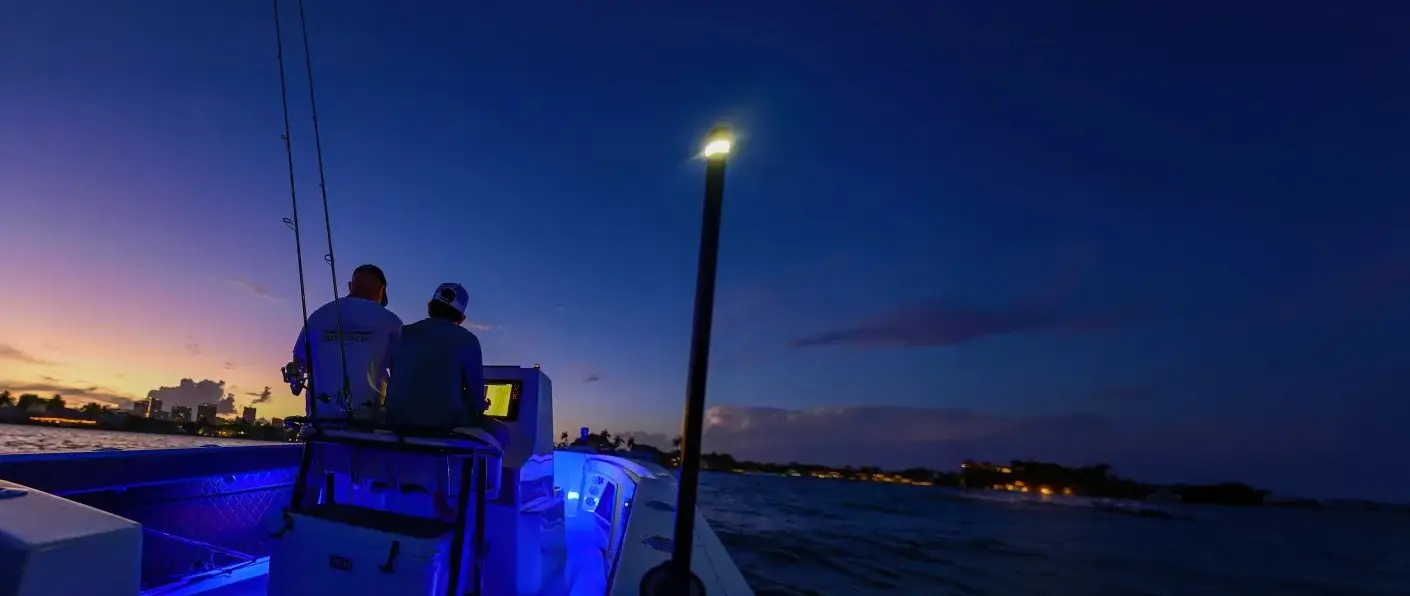
Scanstrut Wireless Navlight Wins 2026 IBEX Innovation Award
By Stephen Yardley · Edited by Stephen Yardley
Scanstrut’s contact-free Navlight wins the 2026 IBEX award for deck hardware, raising practical questions about lighting reliability aboard yacht tenders.
Scanstrut’s wireless-powered Navlight has won the Deck Equipment and Hardware category at the 2026 IBEX Innovation Awards in Tampa, Florida. The result was announced during the trade show’s 6 October industry awards presentation, where an independent judging panel recognised products entered by marine equipment manufacturers. For yacht operators, the interesting engineering question is not the trophy itself but whether eliminating exposed electrical contacts can improve the reliability of removable navigation lights on tenders, workboats and other auxiliary craft.
The award concerns a specific product: a removable, all-round white LED pole light energised through Scanstrut’s SystemOne wireless-power connection. This should not be confused with wireless remote control or an independently battery-powered beacon. The pole receives electrical power from its dock without conventional metal-to-metal contacts, removing one place where salt deposits and corrosion can interrupt the circuit.
Traditional removable navigation-light poles commonly rely on electrical contact surfaces within their mounting sockets. Repeated fitting, washdowns, salt spray and periods of disuse can make those connections vulnerable to contamination or deterioration, even when the rest of the fitting remains serviceable. The practical effect can be intermittent operation at precisely the moment a tender needs a clearly visible light for safe passage.
Scanstrut’s approach puts the power-transfer interface inside a sealed arrangement and supplies energy after the pole is seated in its socket. The company says this simplifies handling while avoiding the corrosion-prone exposed contacts of conventional designs. That is an engineering proposition rather than a claim that no inspection will ever be required: operators still need to maintain fittings, confirm light output and check the complete electrical installation.
The manufacturer lists two pole heights, 600 millimetres and 1,200 millimetres, corresponding to approximately 24 and 48 inches. Both versions are described as 12-volt products with all-round white LED output and a two-nautical-mile visibility rating. Published product information identifies an IPX6 waterproof rating for the installed assembly, an IPX4 rating when the mounting lid is closed and a three-year warranty.
Scanstrut also identifies marine-grade materials, 316 stainless-steel hardware and fully sealed electronics. Its installation arrangement incorporates a lid that closes when the pole is removed and a locking feature to retain the light in use. The company states conformity with ABYC C-5 requirements, but boatbuilders and captains must independently check whether this type of light satisfies the complete navigation-light arrangement required for their individual craft, flag, operating area and configuration.
Large superyachts can operate several auxiliary craft with different tasks, such as guest transfers, shore logistics and crew support. Their tender garages, open decks and marina-side operating routines expose removable hardware to repeated handling. A pole light designed to be installed and removed quickly is potentially useful where deck clearance or storage arrangements prevent a permanently raised fitting.
Navlight is not being presented as a replacement for the principal navigation-light system of a large superyacht. Its stated 12-volt supply, physical sizes and two-mile light rating should be considered against the specifications of a particular tender or support craft. Installers must also review wiring protection, mounting position, sightlines, any interference from surrounding structures and the need for a complete red-green-white light arrangement under applicable collision-prevention rules.
The official IBEX announcement describes the recognised innovation as the elimination of corrosion-prone electrical interfaces in a traditionally vulnerable fitting. Judge Tim Murphy emphasised the operational consequences of failed pole-mounted navigation lights and the value of a contact-free power connection. Scanstrut chief executive Tom Reed framed the product as an attempt to simplify a common boating task rather than add unnecessary complexity.
The 2026 awards programme considered 100 entries, with 12 winners and three honourable mentions across equipment categories. It was managed by the National Marine Manufacturers Association and judged by Boating Writers International. Winning a design award establishes that the innovation impressed that panel; it does not independently quantify long-term service life, maintenance savings or failure rates across the global tender fleet.
For a professional yacht programme, the first questions are compatibility and installation. The tender’s electrical architecture must support the specified voltage, the mounting base must suit the deck construction, and the resulting light must retain its required visibility from every relevant direction. Engineers should also confirm how the product is isolated and protected, how its sealing behaves under frequent removal and whether replacements can be held in the yacht’s normal spare-parts inventory.
Operational testing should be carried out in conditions representative of the intended service, including after washdowns and during night-time use. Crew should be able to confirm the light is actually illuminated, understand how the locking base works and recognise when the assembly needs servicing. No supplier’s specification replaces the duties of the vessel’s captain, surveyor or installer under applicable navigation and electrical standards.
Scanstrut is a specialist supplier of marine mounting, charging and sealing systems, so a contact-free navigation-light connector fits within its broader approach to simplifying exposed deck installations. The company is also working with Perko on the Navlight product, combining the newer power-transfer arrangement with experience in conventional marine lighting. Its announcement is noteworthy because it targets a small, recurring reliability problem rather than promising a wholesale change in yacht electronics.
The product’s ultimate commercial value will depend on real-world service records, ease of installation and the availability of support for fleets spread between cruising regions. For a superyacht, consistency across multiple tenders can be as important as the performance of any single fitting. The IBEX recognition gives yard technical departments a reason to examine the design, with final suitability determined by the actual vessel and its operating requirements.
Explore
Go deeper into the yachts, companies, events and destinations directly connected to this article.
Continue reading

Propspeed's Foulfree Multi-Surface anti-fouling protection has won a 2026 IBEX Innovation Award in Boat Care and Maintenance, jointly with Spectrum Color.

Feadship’s AURORA artificial-intelligence research initiative has received Dutch maritime innovation funding for CFD-driven hull resistance prediction and optimisation.
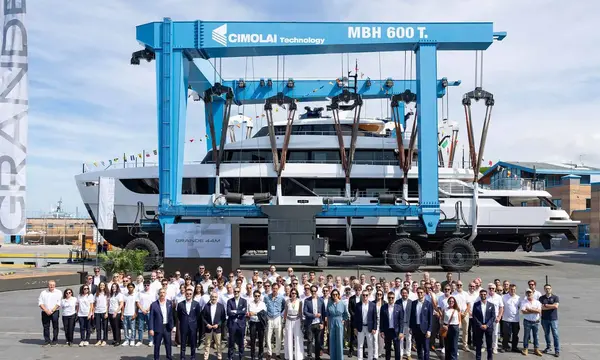
Azimut Grande 44M has won the Special Jury Award at the 2026 Innovation Route Awards during its Cannes Yachting Festival world debut.
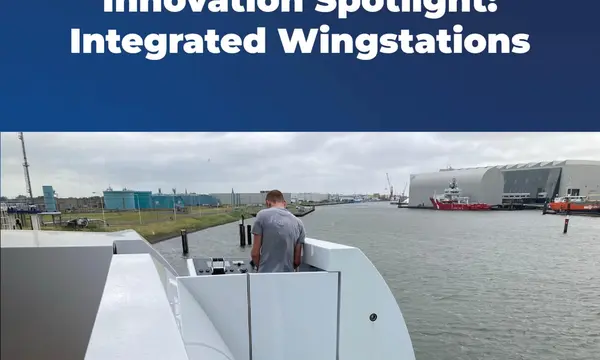
Akerboom Yacht Equipment examines integrated wingstations, machinery reliability and early equipment design choices in its fifth superyacht engineering report.
Superyacht Guide
Continue into the wider Superyacht Guide.
Business opportunities · Superyacht Guide
Companies serving the superyacht market can discuss clearly identified advertising, sponsorship and business-profile opportunities. Commercial activity remains separate from independent editorial coverage.