32m Replica Schooner AMERICA Listed for Sale With Fraser
By Superyacht Guide Newsroom · Edited by Superyacht Guide Newsroom
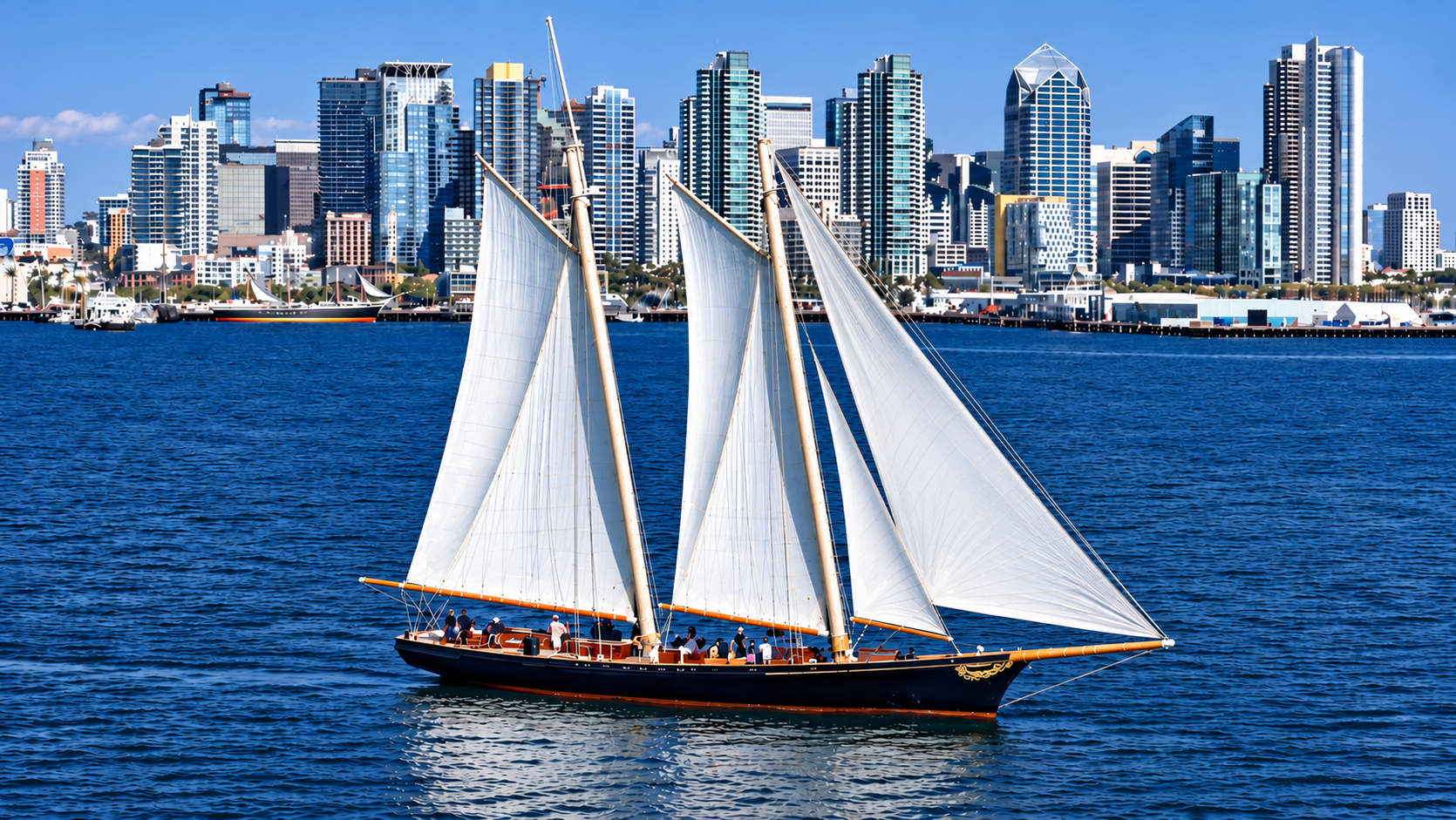
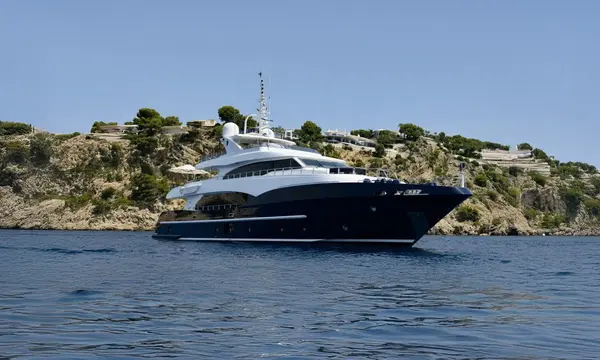
AMERICA — Fraser Yachts official photograph of the 1995 replica schooner
Fraser lists the 1995 Scarano schooner AMERICA for sale, highlighting its historic design, seven-guest accommodation and US passenger-vessel certification.
Fraser announced on 13 November 2026 that AMERICA, the approximately 32-metre schooner built by Scarano in 1995, has entered its brokerage fleet. Neal Esterly is the nominated broker. The yacht underwent a refit in 2023 and is a replica of the nineteenth-century schooner whose victory around the Isle of Wight in 1851 became the historical starting point for the America's Cup.
A distinction is important from the outset. The vessel offered today is not the original AMERICA, nor is the sale an announcement of a historic racing artefact changing hands after 175 years. It is a modern interpretation of a famous sailing design, built to provide practical accommodation and a working maritime experience. That combination creates an unusual ownership opportunity, but it also calls for a different assessment from the purchase of a conventional contemporary sailing yacht.
A schooner's appeal is inseparable from the appearance of its rig and the way it is sailed. The distribution of sail area between masts produces a distinctive profile and involves a different set of operational decisions from those associated with many contemporary Bermudan-rigged yachts. The visible character of the vessel can make an arrival particularly striking and give guests a memorable introduction to sailing.
The important question is not simply whether the design resembles an older boat. It is how the rig, deck arrangement and equipment function together in the vessel as she exists today. The prospective owner should obtain the current sail inventory, the rigging plan and documentation of any changes undertaken during her life. Establish which operations are normally performed by the crew, what equipment assists them and how the sails can be handled when conditions deteriorate. An inspection with people familiar with traditional rigs is likely to be more informative than one conducted purely from the perspective of a modern cruising sloop.
Replica ownership is interesting precisely because it involves decisions about how much original character to preserve and where contemporary requirements should be accommodated. Modern lifesaving equipment, navigation systems, communications and machinery need to be fitted into a vessel whose visual identity depends on traditional proportions. The quality of the integration can be difficult to judge from exterior photographs alone.
An owner considering AMERICA should establish which components follow historic forms and which incorporate later engineering approaches. Review the refit records from 2023, determine what work they cover and investigate the condition of items not included in that programme. Do not assume that an announced refit represents the complete renewal of hull structure, rig, machinery and interiors. Those are separate areas of expertise and may be subject to different maintenance intervals.
A detailed structural assessment and a rig survey can identify matters that will influence future expenditure. The choice of contractors is particularly significant because work on a yacht of this character may require specialist knowledge of traditional fittings alongside contemporary commercial operating requirements.
Fraser describes generous open deck space and a principal saloon that is more than 22 feet across. Overnight accommodation is arranged for seven guests in four cabins, with five crew accommodated separately. This is a different approach to guest capacity from the layout of many similarly sized motor yachts. A considerable proportion of the experience takes place on the working vessel's open decks rather than within layers of enclosed superstructure.
Consider how that arrangement would work for an intended party. A group interested in sailing may welcome the sense of being close to the operation of the yacht, while guests primarily interested in protected exterior lounges and private terraces may have other priorities. A deck viewing should be conducted with the captain, who can explain how guest circulation changes when the vessel is under sail or manoeuvring near a quay.
Interior storage, the arrangement of bathrooms and access to cabins need to be examined separately from the capacity figure. Guests staying aboard for a long passage will have different requirements from people attending a daytime sailing excursion. A successful ownership decision begins with an understanding of which experience the yacht is expected to provide most frequently.
The broker states that AMERICA is US flagged and holds US Coast Guard certification for carriage of up to 77 passengers in unrestricted coastwise United States waters. This feature distinguishes her from many sailing yachts advertised exclusively for private cruising. It does not mean that any event involving 77 passengers can be operated without regard to the certificate's terms and the applicable inspection, crewing and operational requirements.
A buyer interested in the commercial dimension must ask to inspect the actual current Certificate of Inspection and associated documentation. Confirm the validity dates, permitted operating areas, restrictions, minimum crew and any relevant conditions concerning passenger numbers. The overnight accommodation figure is entirely separate: a daytime passenger capacity should never be confused with the number of people who can be accommodated overnight.
An appropriately qualified maritime lawyer and experienced operator should assess the intended business model. The sale of a certificated vessel does not automatically establish that the purchaser's proposed ownership structure, nationality, operations or route will meet every applicable requirement. Regulatory continuity should be investigated before the commercial potential of the asset is incorporated into an acquisition valuation.
Fraser identifies twin John Deere engines and reports a cruising speed under power of 8.3 knots, a maximum of 10.5 knots and an approximate powered range of 1,400 nautical miles. These are the advertised performance figures, not the results of a trial conducted for this article. A buyer should establish the loading, speed, usable fuel and reserve assumptions underlying the stated range.
The engines are particularly relevant when planning harbour movements, periods without suitable wind and voyages with fixed arrival requirements. Yet the operation of this yacht is not primarily defined by maximum speed under power. Sailing conditions and the decisions made about sail combinations, weather and passage planning may influence the daily schedule substantially.
During an independent sea trial, assess engine performance and steering under realistic conditions, then observe sailing operations where circumstances permit. Discuss the crew's normal procedures for changing between sail and power. An owner's ambition to undertake memorable voyages should be supported by a practical appreciation of the time required for such passages, not a calculation based solely on the greatest advertised speed.
A yacht with a traditional rig makes its maintenance very visible. Standing rigging, running rigging, sails, blocks, spars and their attachments cannot be considered isolated decorative elements. Each forms part of a system that must safely handle substantial loads over repeated seasons. A purchaser needs accurate information about inspection intervals, component history and the standard to which replacement work has been carried out.
Pay attention to spare equipment and the availability of suitably experienced sailmakers and riggers in the intended cruising areas. Some components may not be interchangeable with readily available hardware on modern production yachts. Establish whether the maintenance budget accounts for that reality and whether the crew has the skills necessary for ordinary inspection and care.
The people operating the yacht are just as important as the rig itself. An owner moving from motor-yacht ownership should consider how sailing experience will affect the choice of captain and deck crew. Familiarisation should include emergency procedures, guest safety and realistic expectations about weather. The beauty of traditional sailing is enhanced by competent preparation; it should never be treated as an excuse to accept avoidable operational risks.
A yacht of this character can give a maritime celebration an identity that is difficult to reproduce within a shore venue. Guests may have the opportunity to observe sail handling, appreciate the proportions of the rig and experience the vessel from the deck. For an operator planning such an event, however, the design creates practical requirements around boarding, movement, catering and weather.
Investigate the precise restrictions applicable to the proposed number of passengers. Establish whether the event is intended to take place alongside, under power or under sail. Accessibility, lifesaving equipment, supervision and the procedures for cancelling or modifying the event should all be agreed in advance. A commercially equipped galley can support hospitality, but the scope of food service needs to match the vessel's actual facilities and crew.
The yacht's appeal rests on bringing people close to sailing history through a functioning replica. Responsible operation preserves that appeal without asking the crew to compromise safety for a particular photograph or entertainment schedule.
AMERICA's entry into Fraser's sales fleet establishes the availability of a 1995 replica schooner with a documented refit date and an unusual combination of private and commercial possibilities. It does not establish a new owner's intentions, guarantee any particular programme or substitute for a detailed examination of the vessel's current certificates.
For the right purchaser, the attraction is the opportunity to own and operate a yacht with a maritime identity extending well beyond its accommodation figures. The appropriate acquisition team should combine brokerage, survey, rigging, regulatory and operational expertise. A carefully considered purchase can preserve the experience of traditional sailing while establishing a sound modern ownership programme. That balance is the essential distinction between admiring an historic design and taking responsibility for a vessel that must continue to work at sea.
Primary source: Fraser Yachts.
AMERICA — Fraser Yachts official photograph of the 1995 replica schooner. Official editorial material from Fraser Yachts. Official source.
Explore
Go deeper into the yachts, companies, events and destinations directly connected to this article.
Continue reading
Fraser confirms the sale of 43m Christensen GRADE I, following a 2026 refit and recent generator replacements, with six guest staterooms and an extended …
Fraser introduces 31m Horizon SEA-RENITY to its brokerage fleet, highlighting the FD100's five-cabin layout, shallow draught and extensive outdoor living.
Fraser announces the 40.2-metre Benetti ASIA POSEIDON for sale on 6 November 2026, detailing a €11.8 million asking price, extensive 2024 refit, six guest …
Fraser cuts the asking price of 38m Gulf Craft Majesty 125 GRAND CRU to €6.4m following upgrades through 2024 and fresh hull paint in …
Superyacht Guide
Continue into the wider Superyacht Guide.
Business opportunities · Superyacht Guide
Companies serving the superyacht market can discuss clearly identified advertising, sponsorship and business-profile opportunities. Commercial activity remains separate from independent editorial coverage.