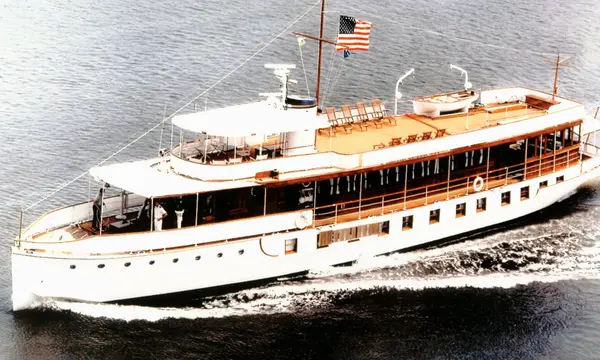
USS Sequoia: The Presidential Yacht Used by Nine U.S. Presidents
USS Sequoia served nine U.S. presidents and became a floating setting for diplomacy, political decisions and private presidential life. From Roosevelt and Kennedy to …
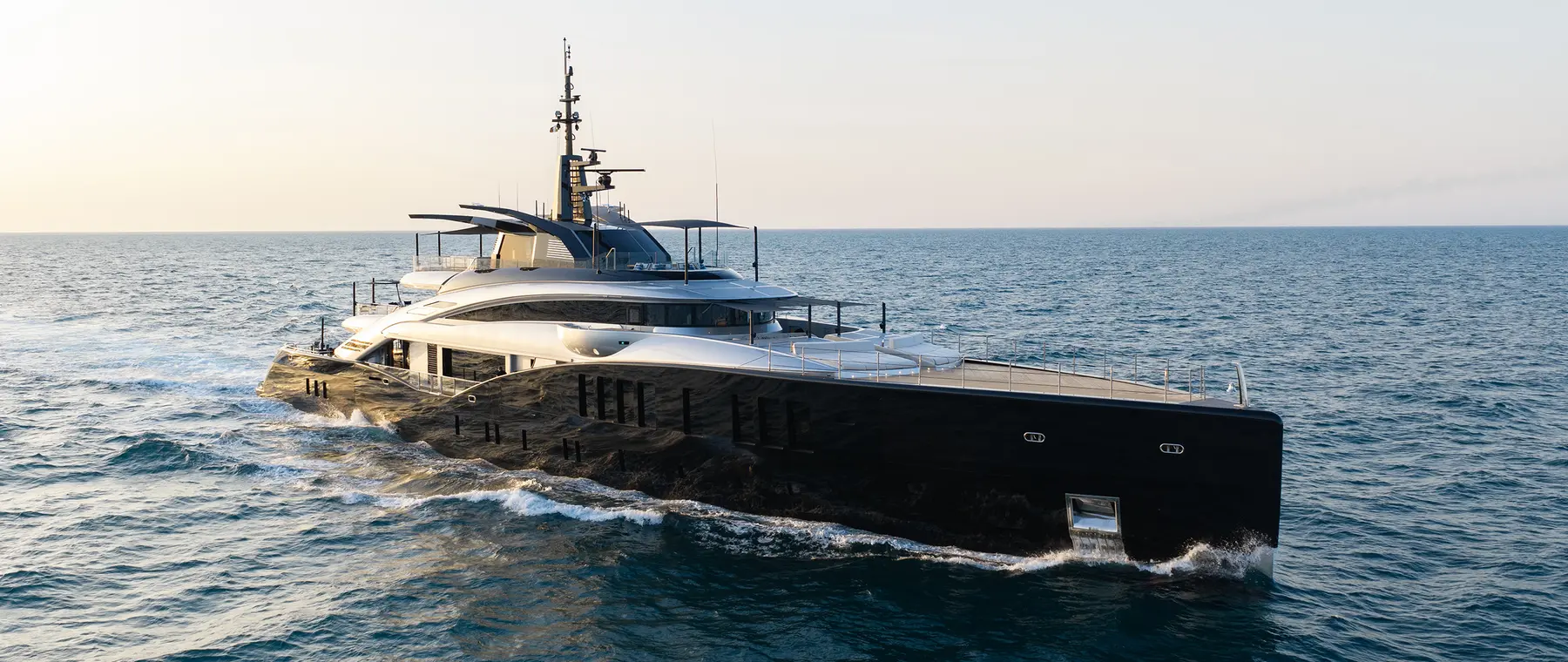
The delivery of 67m Sea Raider X marks a major step for ISA Yachts, showing how the Italian builder has moved into a larger, more complex class of custom superyacht while preserving its Gran Turismo identity.
The delivery of the 67-metre Sea Raider X marks more than the completion of another large Italian superyacht. For ISA Yachts, the new Gran Turismo flagship represents the clearest expression yet of how the brand has evolved from the fast, sharply styled yachts that first established its reputation into a shipyard capable of delivering considerably larger, more complex and more voluminous custom projects without losing the visual identity that made its earlier yachts distinctive. Delivered in July 2026 following her launch in Ancona in May, Sea Raider X now sits at the head of the ISA fleet and provides a useful measure of how far the yard has moved beyond the size category with which it was once most closely associated.
At approximately 67 metres, with a steel hull, aluminium superstructure and an internal volume of around 1,149GT, Sea Raider X is a very different proposition from the smaller performance-orientated ISA yachts that helped build the brand. Yet the new flagship deliberately retains the long horizontal lines, dark glazing, athletic proportions and strong visual drama associated with the Gran Turismo family. That balance is important because as yachts grow larger, preserving a genuinely sporty profile becomes increasingly difficult. More accommodation, larger technical spaces, greater crew circulation and stricter regulatory requirements all add volume and height, and the risk is that a design which appears dynamic at 40 or 50 metres can become visually heavy when stretched beyond 60 metres.
The exterior design by Vallicelli Design Studio addresses that problem by using strong horizontal architecture and a highly controlled relationship between the hull and superstructure. The black-painted steel hull and silver aluminium upper works create an immediate visual separation, helping to lower the perceived height of the yacht while retaining the aggressive character expected from the Gran Turismo name. Sharp geometry around the stern and upper decks reinforces the sense of movement, while long areas of glazing reduce the visual mass of the superstructure and give the yacht a more streamlined appearance than its volume might suggest.
That styling approach is particularly significant because Sea Raider X is not a lightweight fast yacht in the traditional sense. She is a substantial steel-hulled platform with the internal capacity, technical complexity and accommodation expected from a modern large displacement yacht. The challenge for ISA was therefore not simply to make the yacht look dramatic, but to preserve the emotional character of the Gran Turismo line while meeting the practical requirements of a vessel exceeding 1,100GT.
The interior, developed by Team for Design – Enrico Gobbi, follows the same philosophy of combining scale with a strong sense of identity. The yacht accommodates 14 guests in seven cabins, with the owner’s suite positioned forward on the main deck and the remaining guest accommodation arranged to provide the privacy and separation expected at this level. Crew facilities are designed for approximately 14 people, reflecting the operational demands of a yacht intended for extended cruising rather than short coastal use.
The layout also reflects a broader change in what owners now expect from yachts in the 60- to 70-metre category. Traditional saloons, dining rooms and guest cabins are no longer enough. Large contemporary yachts are expected to provide resort-style wellness, expansive outdoor living, direct contact with the sea and multiple environments that can be used differently throughout the day. Sea Raider X has therefore been designed not simply as a transport platform or luxury residence, but as a private resort capable of supporting long periods on board without relying heavily on shore-based facilities.
One of the clearest expressions of that change is at the stern. On older large yachts, the aft lower decks were often dominated by tender garages, machinery access and operational spaces. In modern superyacht design, that hierarchy has increasingly been reversed, with the stern becoming one of the most valuable guest areas on board. Sea Raider X follows that trend with a substantial beach-club arrangement, panoramic pool and a layout intended to create a strong visual and physical connection between the yacht and the water.
The side-launch tender arrangement is important because it frees the aft sections for leisure use rather than forcing guests to share the yacht’s prime waterside space with operational equipment. This allows the architecture to open progressively towards the sea, with terraces, pool areas and lower-deck spaces designed as part of a continuous guest experience rather than as isolated features. The result is closer to the layout of a waterfront resort than the conventional stern arrangement of an older-generation motor yacht.
The same thinking continues inside, where wellness facilities including a hammam and gym reflect the increasing importance of health, fitness and private spa spaces on large yachts. These are no longer optional extras added wherever space permits; they are becoming fundamental parts of the design brief. Owners increasingly expect a yacht to provide the same level of wellness and hospitality infrastructure found in a high-end private resort, particularly when cruising for extended periods or operating far from major shore facilities.
Achieving that level of amenity while preserving usable crew routes, technical access and efficient service circulation becomes progressively more difficult as the yacht becomes more complex. At around 1,149GT, Sea Raider X has sufficient internal volume to support these guest facilities while still providing the operational infrastructure required for a yacht of this scale. That ability to balance guest experience with technical practicality is one of the clearest indicators that ISA has moved into a more demanding part of the market.
The importance of Sea Raider X becomes clearer when viewed against the development of ISA Yachts itself. The yard, now part of Palumbo Superyachts, has spent years broadening its portfolio beyond the models that first established its reputation. Its range now extends across performance-orientated yachts, steel displacement platforms and fully custom projects, allowing the company to compete for clients whose requirements extend well beyond the traditional Gran Turismo concept.
Building successfully at 67 metres is not simply a matter of increasing length. The technical, regulatory and logistical demands rise sharply as yachts become larger. Engineering systems become more complex, redundancy requirements increase, crew and service circulation require greater separation from guest areas, and the relationship between structure, weight, stability and interior volume becomes far more demanding. A yacht exceeding 1,100GT therefore represents a very different industrial challenge from a smaller semi-custom vessel, even when both carry the same brand name.
This is where Sea Raider X becomes strategically important for ISA. A flagship provides more than prestige. It becomes physical evidence of what a shipyard can actually deliver. For prospective owners, brokers and project managers, a completed yacht of this size demonstrates that the yard can manage the engineering coordination, procurement, systems integration, interior fit-out and overall project complexity associated with a vessel at the upper end of the market.
The yacht is powered by twin MTU 16V 4000 M65L engines, reflecting a conventional but proven propulsion approach suited to a large displacement platform. The Gran Turismo identity therefore no longer depends simply on extreme speed or lightweight construction. In Sea Raider X, the concept has evolved into a design language: a combination of strong exterior styling, assertive proportions and a sense of performance applied to a much larger, more substantial yacht.
That evolution may be more important than the fact that Sea Raider X is currently ISA’s largest completed vessel. The project effectively proves that the Gran Turismo identity can survive the transition into a larger size category without becoming merely decorative branding attached to a conventional displacement yacht.
The commercial importance of Sea Raider X will become particularly visible when she appears at the Monaco Yacht Show. For a builder, Monaco is not simply a public debut but one of the most concentrated sales environments in the global superyacht industry. Owners, brokers, designers, captains, project managers and competitors are all able to inspect the yacht directly and judge whether the design promises made during construction have translated successfully into a finished vessel.
That means Sea Raider X will function as a sales tool as much as a completed yacht. Visitors will be able to assess whether the dramatic exterior proportions translate into comfortable interior spaces, whether the beach-club arrangement works operationally, whether the circulation and crew planning match the expectations of a yacht of this size and whether ISA has genuinely succeeded in carrying its Gran Turismo identity into the 67-metre class.
The timing is important because ISA is already developing projects larger than Sea Raider X. The yard’s future portfolio includes concepts and builds that extend further into the 70-metre-plus market, meaning the new flagship should be seen less as a final destination than as a bridge between the yachts that established the brand and the larger projects now defining its future.
There is also a wider Italian shipbuilding story behind the project. Over the past decade, Italian yards have increasingly moved into size categories once dominated more heavily by Northern European builders. Shipyards previously known primarily for yachts below 50 metres are now routinely developing vessels in the 60-, 70- and even 80-metre range, supported by larger facilities, stronger engineering teams and growing owner confidence in Italian large-yacht construction.
Italian design has always been one of the country’s strongest advantages, but the difference today is that styling and interior creativity are increasingly being matched by the industrial capability required to execute much larger steel and aluminium projects. Sea Raider X reflects that transition clearly. She is visually dramatic and design-led, but the significance of the yacht lies just as much beneath the surface, in the engineering, project management and shipyard infrastructure required to turn a 67-metre concept into a completed vessel.
A flagship should therefore do more than become the largest yacht in a builder’s history. It should demonstrate the direction in which the yard intends to move next. Sea Raider X appears to do exactly that for ISA Yachts, combining the visual confidence and sporting identity associated with the brand with the volume, complexity and onboard amenity expected from a much larger custom yacht.
She may hold the title of ISA’s largest completed yacht today, but that is probably not the most important part of her story. The more significant achievement is that she makes the idea of even larger ISA yachts increasingly credible. In that sense, Sea Raider X is not simply the new flagship of the fleet. She is the clearest indication yet that ISA Yachts has moved beyond the size category that once defined it and is now competing for a very different class of owner and project.
Continue reading
USS Sequoia served nine U.S. presidents and became a floating setting for diplomacy, political decisions and private presidential life. From Roosevelt and Kennedy to …
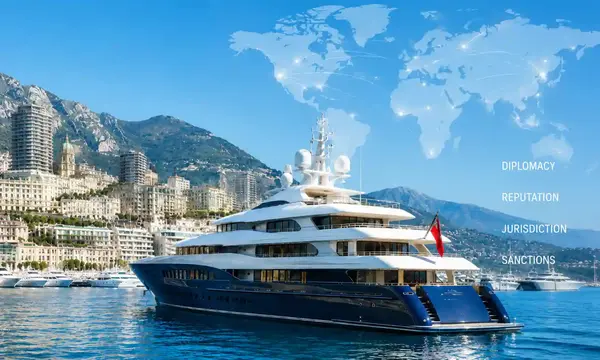
Superyachts are unusually visible forms of private wealth, so where they berth can carry reputational as well as legal significance. Soft power begins with …
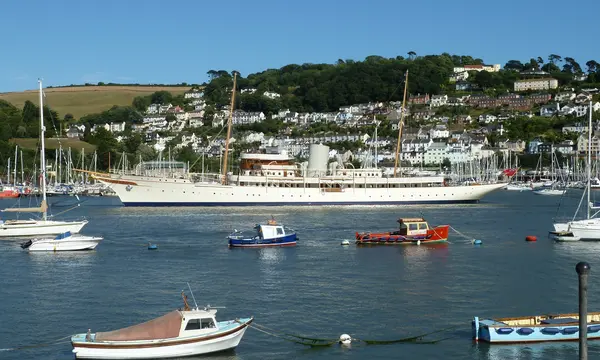
Nahlin is a 91.44-metre classic motor yacht built by John Brown & Sons in 1930 to a G.L. Watson design. Her 1936 Mediterranean charter …
Built for Horace Dodge in 1921, SS Delphine survived sinking, wartime service as USS Dauntless and decades of uncertainty before a landmark restoration returned …
Superyacht Guide
Continue into the wider Superyacht Guide.