UK MCA Clarifies Marine Equipment Approval Language for Yacht Operators
The UK Maritime and Coastguard Agency has issued MGN 721 on how older European marine-equipment references should be interpreted under the current UK conformity …
St Helena Government confirms its visitor yacht mooring system is currently out of service and requires visiting yachts to anchor at James Bay, with official approach, clearance and biosecurity rules.
Visiting yachts planning a call at St Helena in the South Atlantic must currently plan for anchoring, rather than using the island's visitor mooring system. St Helena Government's Port Control page says the yacht moorings are out of service and directs arriving yachts to use designated anchorage areas around James Bay, subject to instructions from the authorities. The page does not give a restoration date, so the status should be checked again with Port Control immediately before departure and on approach.
The distinction is consequential for any yacht adding the island to an ocean passage. A crew cannot assume that an established yacht stopover will provide a serviced buoy or sheltered alongside berth on arrival. Anchor equipment, ground tackle, bridge watchkeeping, tender arrangements and weather contingencies therefore have to form part of the destination decision before an itinerary is promised to guests.
Port Control advises visiting yachts to anchor northwest of the out-of-service mooring system on the western side of James Bay. The government's information gives a reference position of approximately 15 degrees 55.400 minutes south and 5 degrees 43.500 minutes west, with stated depths varying from 13 to 22 metres. These figures are guidance from the port authority, not a substitute for current charts, soundings, a bottom assessment and direct positioning instructions.
An alternative is identified toward the eastern side of James Bay, northwest of Munden's Point, at approximately 15 degrees 55.100 minutes south and 5 degrees 43.130 minutes west. The government gives an approximate depth of 15 metres for this location. A yacht over 24 metres may have suitable anchoring equipment for either depth, but adequate water alone does not establish safe holding, swing room or clearance from other vessels.
The published advice explicitly tells crews to use an anchor alarm and verify that the anchor is securely holding before anyone leaves the vessel. On a large yacht, the captain should also assess how the chosen position interacts with tender movements, other anchors and expected wind shifts. Permission to anchor in the area is not an assurance that any individual position is appropriate in all sea states.
The first radio call should go to St Helena Radio on VHF channel 16 as the vessel approaches. The coast station then gives further instructions, while Port Control's operational working channel is VHF 14. Advance contact with the harbour authority can help the captain discuss intended arrival, vessel particulars and the scope of local support, but the final directions must come from the appropriate local officials.
Port Control lists its office at Seaport House in Rupert's Bay and gives weekday working hours of 8.30am to 4pm, with an on-call arrangement outside those hours. The page says inward clearance normally takes place between 9am and 3pm on working days; weekend timing is coordinated with the on-call officer. Vessel masters should verify the present rules and required forms before committing passengers to a particular shore schedule.
Once the anchor is down, the yacht is instructed to contact Port Control on VHF 14 before disembarking. At night or over a weekend, call St Helena Radio on VHF 16; the coast station then notifies Port Control. Crucially, the current guidance states that crew members are not permitted to go ashore until Port Control has authorised it.
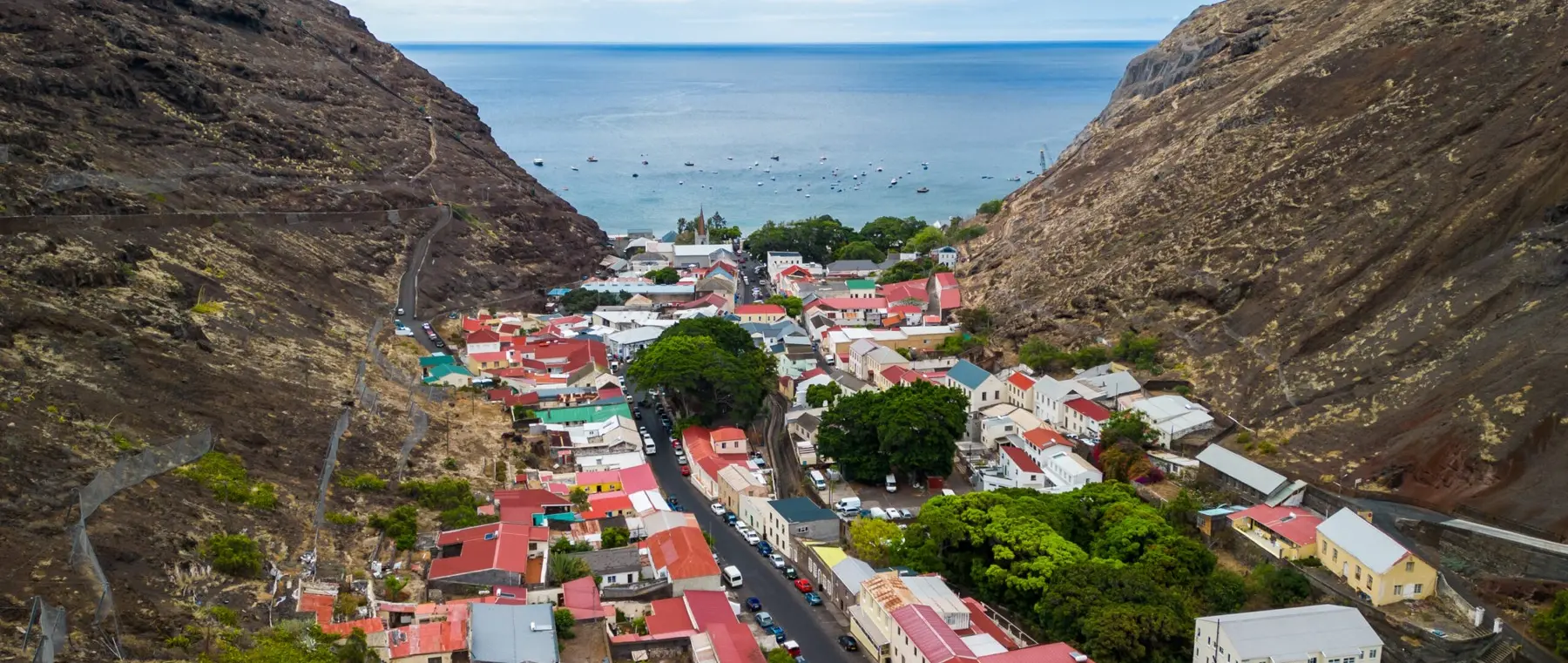
St Helena is one of the world's more distinctive island approaches, with Jamestown lying in a steep valley between volcanic slopes. The geography provides a dramatic first impression, but a striking backdrop should not be confused with the facilities of a Mediterranean marina. Guests need a realistic understanding of the transfer from anchored yacht to shore and the possibility that landing arrangements may change with the weather.
St Helena's 2023 Marine Management Plan provides useful historical context: it describes a visitor-mooring system designed for comparatively small craft, with length and displacement limits. Those dimensions were already below the usual requirements of a substantial superyacht. The present announcement that the whole system is unavailable extends the need for anchoring to visiting yachts of all sizes; the old mooring figures must not be read as current availability.
Service planning deserves particular attention because an isolated Atlantic stop cannot be treated like a high-volume yacht hub. A captain should identify fuel and stores requirements well beforehand and confirm, directly, what can actually be supplied. It is prudent to keep enough reserves to continue safely if poor weather or operational restrictions prevent an expected delivery or landing.
Jamestown Wharf is the focal point for some maritime operations, but Port Control and Customs procedures govern how yachts and their people enter the island. The government has separately published notices about restricted areas and essential marine maintenance at the wharf, reinforcing the need to verify today's landing arrangements. A tender itinerary that looked straightforward in planning may require modification after the local briefing.
The Port Control page also sets out specific biosecurity restrictions. It says honey, fresh produce and plant material may not be landed, and animals require prior permission. These controls matter on long-distance yachts because a well-stocked galley or an animal travelling aboard can create clearance questions even when the visit is purely recreational.
Captains should establish how immigration, customs and health requirements apply to the actual passenger list, vessel and voyage. The official contact process is more reliable than informal cruising notes circulating between yachts, particularly because administrative rules and facilities can change. On arrival, all shore movements should wait for the necessary authorisation rather than relying on the fact that the yacht has physically anchored.
A carefully planned stop can give owners and charter guests an unusual view of South Atlantic history, landscape and island life. The wharf and steep-sided setting of Jamestown make arrival memorable, while independent exploration can introduce the island's distinctive heritage and fragile natural environment. Yet those experiences depend on the practical basics: a safe anchorage, a permitted landing and sufficient time to enjoy the island without pressuring a crew to take chances.
Marine wildlife encounters also require care. St Helena's official Marine Management Plan recognises an island-wide marine protected area and describes policies governing interactions with whale sharks, whales, dolphins, rays, turtles and seabirds. Diving and wildlife excursions should be organised around current local rules and competent guides rather than promises based on a seasonal photograph.
For superyacht captains, the message from the current Port Control guidance is simple but operationally significant. James Bay remains a possible destination, but the visitor mooring system is not an option at present; anchoring and port clearance must be arranged properly. The best preparation is to consult the government's live Port Control page, contact the officials concerned and leave enough flexibility for Atlantic conditions to determine when guests can safely go ashore.
Continue reading
The UK Maritime and Coastguard Agency has issued MGN 721 on how older European marine-equipment references should be interpreted under the current UK conformity …
Marina Port Valencia says its Marina City inner basin is already operating for yachts up to 130 metres as a three-marina waterfront and open …

An IYC and SuperYacht Times panel at Monaco Yacht Show 2026 examined how crew rest, staffing, mental wellbeing and working culture affect the guest …
D-Marin's October guidance explains how visiting yachts use a permitted offshore anchorage and dedicated tender service to reach Dubai's J1 Beach restaurants.
Superyacht Guide
Continue into the wider Superyacht Guide.
Business opportunities · Superyacht Guide
Companies serving the superyacht market can discuss clearly identified advertising, sponsorship and business-profile opportunities. Commercial activity remains separate from independent editorial coverage.