
St Helena Requires Visiting Yachts to Anchor While Moorings Are Out of Service
St Helena Government confirms its visitor yacht mooring system is currently out of service and requires visiting yachts to anchor at James Bay, with …
The UK Maritime and Coastguard Agency has issued MGN 721 on how older European marine-equipment references should be interpreted under the current UK conformity regime, with defined exceptions for yacht owners, captains and managers.
The Maritime and Coastguard Agency issued MGN 721 on 23 October 2026 to explain how older European marine-equipment approval wording should be read in a specified group of UK publications. Yacht captains, managers and technical departments need to understand the narrow purpose of the guidance before ordering replacement safety or communications equipment.
The notice is directed at masters and skippers of several vessel types, including pleasure craft, as well as shipbuilders, equipment suppliers and survey organisations. Its existence does not mean every item aboard every yacht has become newly non-compliant or requires automatic replacement.
For the specified passages in the affected documents, outdated references to the EU Marine Equipment Directive or MED certification are generally interpreted in line with the applicable UK approval regime. The MCA also preserves exceptions for legacy installations, genuinely EU-specific requirements and alternative accepted approvals.
That distinction is an operational one, not merely a change in vocabulary. A purchasing team that relies on an old phrase without checking its present regulatory meaning could ask a supplier for the wrong conformity evidence or make an unnecessary assumption about what a UK ship must carry.
The Merchant Shipping (Marine Equipment) Regulations 2025 came into force on 5 January 2026 and establish the UK conformity assessment arrangements described in the new guidance. Older MCA codes can still contain language written for an earlier legal framework because technical documents are revised at different times.
The agency is using MGN 721 to bridge that gap while the affected publications proceed through their normal updates. References to MED-approved equipment, EU notified bodies, EU declarations of conformity and wheel marks may therefore need to be read as references to corresponding UK requirements when that is the intention of the provision.
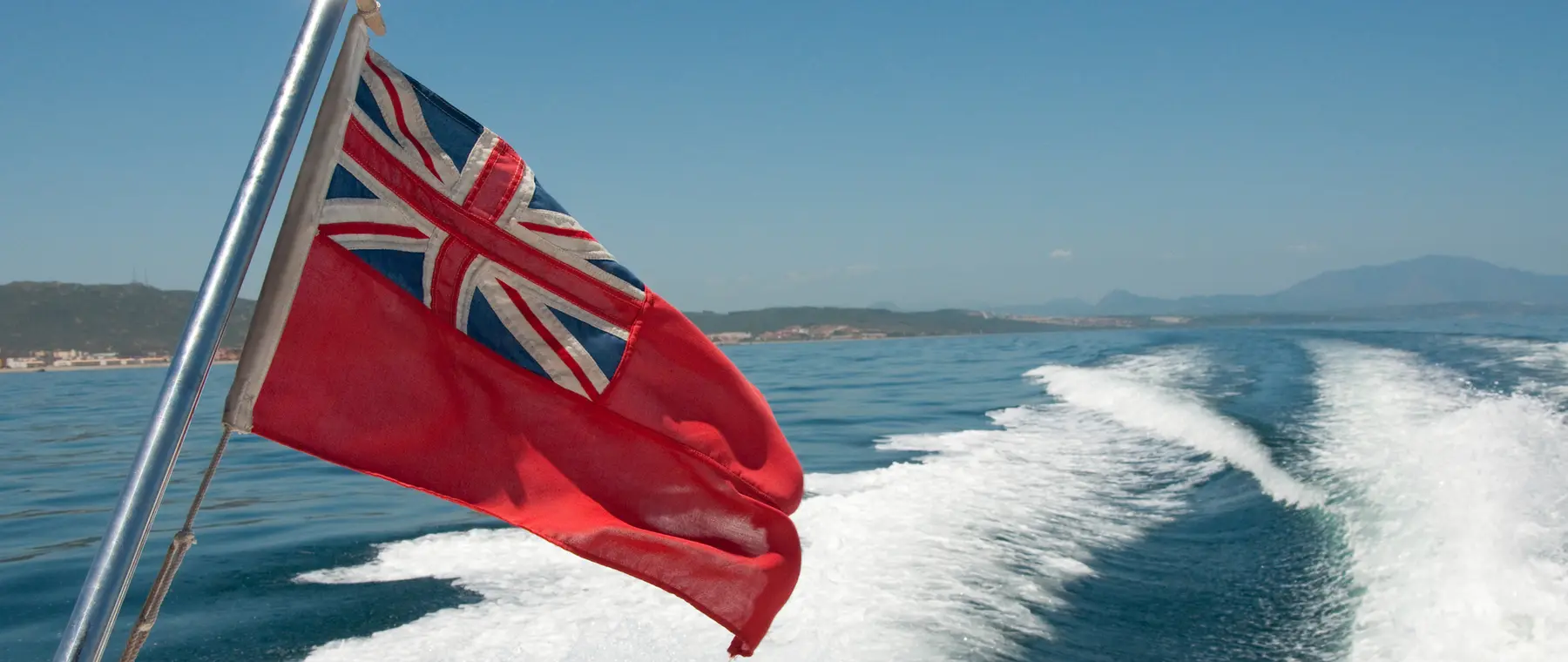
The relevant UK terminology includes Approved Bodies, UK declarations of conformity and the Red Ensign conformity mark. These terms relate to a product approval system and should not be confused with the national Red Ensign flown at the stern of a British-registered vessel.
The image accompanying this article is an official UK Ship Register photograph of the national flag aboard a vessel. It illustrates the registration context, not a specimen of the separate conformity mark that compliant equipment may need to display.
MGN 721 does not invite readers to replace every appearance of EU terminology mechanically. If a passage is expressly about the EU regime as a separate legal system, it must retain that original meaning rather than being turned into a statement about UK requirements.
The guidance also protects relevant transitional arrangements for equipment already installed or otherwise accepted under earlier rules. Some products may fall within a specific route for non-UK-approved equipment, and those circumstances must be assessed under the detailed requirements rather than ignored.
Historical statements are another exception: substituting modern terminology must not alter what the older document was actually saying at the time. These boundaries prevent an otherwise useful clarification from rewriting the legal or technical history of a piece of marine equipment.
When an approval remains uncertain, the MCA directs readers to the current MSN 1874 and the legislation, with consultation of the agency before procurement or acceptance when necessary. MGN 721 itself states that the legislation and MSN 1874 take precedence if an apparent conflict arises.
The new note explicitly says that it does not change carriage, design, construction, performance, testing, installation, servicing or maintenance requirements in the underlying codes. It addresses approval terminology in identified passages rather than granting relief from the substantive duties behind them.
That point matters for liferafts, release equipment, recovery systems and radios, where a label or certificate is only one part of a complete safety system. Proper fit, inspection, servicing and compatibility with the vessel's arrangements remain separate technical questions.
A UK-flagged yacht already carrying a particular item should not assume that a terminology update invalidates it. Equally, a company purchasing new equipment should not infer that any product described as CE-marked, wheel-marked or US-approved will automatically be acceptable for the installation proposed.
Instead, record the vessel's flag, the product category, whether the item is new or already aboard, and the precise regulatory provision being applied. Those facts determine which conformity route and supporting evidence should be assessed by the responsible surveyor or technical team.
The annex to MGN 721 lists a finite group of MCA publications, including codes for fishing and passenger vessels and technical notices dealing with radio equipment and lifesaving appliances. MSN 1809, which addresses standard radio equipment, is among the named documents.
Other examples are MGN 343 on hydrostatic release units, provisions addressing lifeboat release arrangements, and MGN 544 on recovery of persons from the water. The Inland Waters Small Passenger Boat Code and Small Seagoing Passenger Ship Code are also included.
The inclusion of those materials does not make every passenger-vessel or fishing-vessel code applicable to a private superyacht. A vessel's own coding, registration, intended operation and relevant legal regime still determine which provisions must actually be followed.
MGN 721 says the agency intends to update outdated references through normal revision procedures. Until then, the notice provides an interpretive bridge for the listed passages without independently broadening their original scope or changing the status of the publications themselves.
Before purchasing or installing regulated equipment, identify the item and the standard or code requirement it is intended to satisfy. Then check the current UK marine-equipment rules and MSN 1874 instead of relying solely on an old MCA notice, catalogue entry or supplier sales description.
The government's UK marine-equipment database, last updated in October 2026, identifies products that have received UK conformity assessment. Any apparent match still needs assessment against the equipment's actual approval scope, certification documents and the installation proposed.
Certain categories may qualify under the UK-US mutual recognition arrangements where the stated conditions are met. This is a defined acceptance path, not a blanket equivalence of all foreign approvals, and the applicable requirements should be verified for the specific equipment concerned.
For owners and managers, the main message is reassuring but precise: a legacy reference to MED in listed guidance does not automatically demand EU certification for a new item intended for a UK ship. It is the applicable UK regime, together with any valid exception, that must guide the equipment decision.
Continue reading
St Helena Government confirms its visitor yacht mooring system is currently out of service and requires visiting yachts to anchor at James Bay, with …
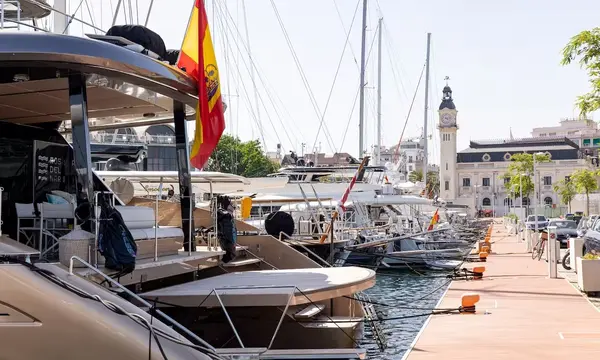
Marina Port Valencia says its Marina City inner basin is already operating for yachts up to 130 metres as a three-marina waterfront and open …

An IYC and SuperYacht Times panel at Monaco Yacht Show 2026 examined how crew rest, staffing, mental wellbeing and working culture affect the guest …
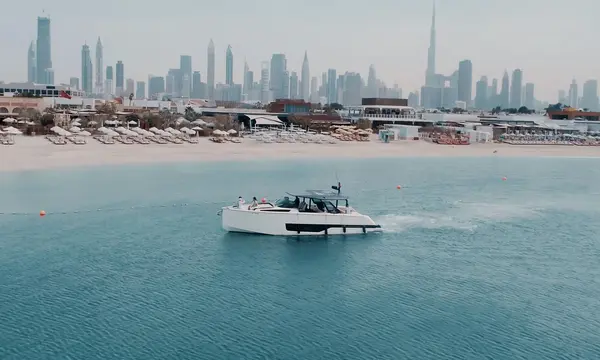
D-Marin's October guidance explains how visiting yachts use a permitted offshore anchorage and dedicated tender service to reach Dubai's J1 Beach restaurants.
Superyacht Guide
Continue into the wider Superyacht Guide.
Business opportunities · Superyacht Guide
Companies serving the superyacht market can discuss clearly identified advertising, sponsorship and business-profile opportunities. Commercial activity remains separate from independent editorial coverage.