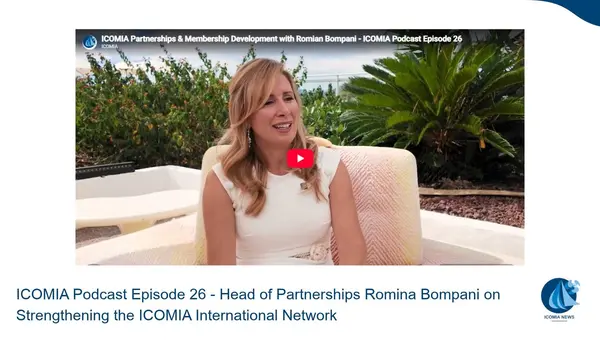
ICOMIA Partnerships Lead Romina Bompani Targets Stronger Global Yacht Networks
ICOMIA head of partnerships Romina Bompani discusses international marine business links, member value and the Asia-Pacific marina sector.
© ICOMIA / originating news and event partners. Official first-party editorial press image from the association’s release.
ICOMIA confirms Registered Marine Coatings Inspector qualification sessions and Yacht Coatings Technical Insight training in Cocoa, Florida, in February 2027.
The Marine Surveying Academy has confirmed two specialist coatings programmes in Cocoa, Florida, for February 2027, according to an International Council of Marine Industry Associations announcement dated 27 October 2026. The Registered Marine Coatings Inspector qualification and Yacht Coatings Technical Insight course are designed to support professionals working with marine coatings, including large yachts and superyachts. The distinction between the programmes matters: one leads toward an inspection qualification through training and examinations, while the other offers technical insight over a shorter period. For yards and owners, the news concerns the competence of people assessing increasingly expensive paint and protective-coating work.
A superyacht's exterior finish contributes to appearance, but its coating systems also protect substrates against corrosion and weather. Application quality can affect maintenance costs, the vessel's operational availability and the success of a major refit. Problems may develop from surface preparation, material selection, humidity, curing or incompatible procedures. A paint surface that looks impressive at a launch can still conceal defects that become apparent later. Skilled inspection helps determine whether agreed specifications and application processes have been followed. Training does not eliminate every possibility of failure, but consistent technical knowledge can make quality discussions more precise and disputes easier to understand.
The Marine Surveying Academy, described by ICOMIA as a branded division of the International Institute of Marine Surveying, is arranging the Florida programmes. The association says places will be limited. The qualification's relevance is particularly strong where coating work on a large yacht involves significant cost, long preparation periods and coordination with a shipyard schedule. Inspectors need to understand the underlying materials and methods, not merely check the final colour or surface shine. The training announcement indicates a pathway for developing those skills, but it does not certify every past or future participant. Competence must be assessed through actual qualifications and relevant experience.
ICOMIA describes the RMCI programme as having two elements: online webinars and later in-person practical training and examinations. This structure separates theoretical preparation from applied assessment. That is useful because a coatings inspector must be able to connect specification language with the conditions observed in a workshop or on a yacht. Online study can introduce terms and processes, while hands-on sessions can test judgement. The association's account confirms that the programme includes several examinations; it does not guarantee a pass or qualification merely from attendance. Prospective delegates should confirm the full requirements with the academy before booking travel.
The published programme lists webinars on 8, 9 and 10 February 2027. The first covers materials, corrosion and surface preparation; the second addresses coatings and application methods; the third examines specifications and procedures. Times are stated in UK time, a detail that matters for delegates participating from America or elsewhere. The sessions are expected to be recorded and made available to attendees for preparation. Course participants should still verify the schedule and local time conversion directly. These three subjects form a logical sequence: understand the substrate, select and apply a system, then judge the process against an agreed standard.
The in-person RMCI practical sessions are scheduled for 22–24 February in Cocoa, with daily training listed from 09:00 to 17:30 in local time. Three examinations are planned on the final day, comprising practical, written and multiple-choice assessments. For employers, this is a more meaningful description than a generic claim that a candidate has attended a seminar. The programme involves demonstrated knowledge and applied exercises, though a published course schedule does not establish the details of any individual's result. Yards and owner representatives should ask about completed qualifications when selecting an inspector for a specific project.
The Yacht Coatings Technical Insight course is scheduled for 25–26 February, also in Cocoa. ICOMIA describes it as a two-day, in-person course for people seeking a deeper understanding of yacht coatings. A technical insight programme can be relevant to project managers, shipyard staff and owners' representatives who need to communicate effectively with specialist contractors. It should not automatically be described as equivalent to the RMCI qualification, because the announcement separates the two. Anyone considering attendance should compare the course outcomes and existing experience requirements rather than assume all coatings training confers the same professional status.
A large repaint can affect a yacht's entire refit timetable. Preparation, fairing, primer systems, topcoats, inspection and correction all compete for access to the vessel and suitable environmental conditions. A project manager does not need to perform every technical task personally, but should understand how coatings work relates to other trades. Without that knowledge, there can be misunderstandings about when a surface is ready, how progress is measured and what constitutes acceptance. Coatings education can improve communication between technical specialists and the people controlling budgets and schedules. The benefit depends on applying the learning to real specifications and quality procedures.
Corrosion management begins before a visible topcoat is applied. On metal structures, the condition of the surface and the sequence of preparation can influence coating performance. A specification may set requirements for cleaning, roughness and environmental conditions, which an inspector must understand and verify appropriately. Failure to document early stages may be difficult to correct after successive layers have been added. The RMCI webinar's focus on materials, corrosion and surface preparation therefore addresses a central quality issue rather than a peripheral academic topic. The specific acceptance criteria for any yacht depend on its materials, coating system and contract.
Different coatings require different handling and application methods, with the surrounding environment influencing the result. Temperature, humidity, ventilation and the time between coats can matter. Inspection demands an understanding of the manufacturer's instructions as well as the agreed project specification. The second webinar's focus on coatings and application methods acknowledges those practical dependencies. A yard should not adopt a general process from a training session without checking the products and surfaces actually involved. Training can strengthen professional judgement, but technical decisions must remain traceable to approved materials, written procedures and properly recorded site conditions.
The third RMCI webinar covers specifications and procedures, an area where contract drafting and engineering practice meet. Vague language about a 'premium' finish or 'best practice' is less useful than a measurable scope and appropriate acceptance process. Owners should know who is empowered to approve work and how defects will be recorded and resolved. Inspectors need access to relevant specifications and a clear basis for their reporting. Qualification programmes can help develop a common vocabulary, but they do not remove the need for contracts that identify responsibilities. A well-defined process reduces the risk of a dispute becoming a contest of subjective impressions.
Large yachts have extensive exterior surfaces, varied substrate details and areas that can be difficult to reach during repair. Finishing work may require scaffolding, protected environments and coordination with mechanical and deck systems. That complexity makes the inspector's independence and competence important. The academy's course has particular relevance to this sector because small variations across a large surface can become significant rework. An owner should consider how the quality assurance programme is structured well before the final painting stage. The training announcement creates an opportunity for industry professionals to strengthen their skills, not a substitute for an agreed project inspection plan.
An inspector's value depends on professional judgement, appropriate testing and clear communication of findings. A person assessing a paint system should know which observations can be supported by evidence and which require further investigation. Experience working for a supplier or yard may be useful, but contractual independence and conflicts of interest still need consideration. An RMCI qualification may contribute to confidence, although the scope of an individual's authority depends on the relevant appointment. Owners should verify qualifications, insurance and references before commissioning advice. A short announcement about a training programme cannot establish the professional suitability of every candidate.
ICOMIA says the RMCI website has been updated to include the Registered Marine Coatings Consultant level. Registered inspectors can apply for this further level if they meet relevant criteria. This is an opportunity for professional development, but the specific rules and assessment process should be obtained from the scheme itself. The distinction between inspecting and consulting may be important on complex projects where advice is needed before application begins. A consultant might help a project team review specifications or plan quality procedures, while an inspector documents actual work. The precise division of responsibilities must be agreed contractually rather than assumed from a title.
Prospective delegates need to confirm availability, prerequisites, fees, examination arrangements and the location through the RMCI and Marine Surveying Academy channels. Travel planning should allow for the online phase and the practical sessions if both elements are required. Participants coming from overseas should check their own entry requirements and practical transport arrangements. An employer sponsoring training can also plan how the knowledge will be used, for example through revised checklists or more consistent documentation. Simply sending a staff member on a course will have limited value if established working practices remain unchanged afterward.
A failed coating project can mean additional yard time, disruption to cruising plans and a difficult question over responsibility for repairs. Competent inspection and clearer specifications can help parties identify problems earlier and document decisions more reliably. No programme can guarantee a defect-free finish, and qualifications should not be treated as an insurance policy against workmanship issues. Still, improved knowledge among owners' representatives, surveyors and contractors is valuable in a sector where coating work is both technically demanding and visually prominent. The confirmed Florida dates provide a concrete opportunity for professionals to develop that knowledge.
ICOMIA's 27 October statement establishes the two courses in Cocoa in February 2027, the three online RMCI webinar sessions, the subsequent practical training and three examinations, and the two-day YCTI course. It also notes limited places and a consultant-level development route. Those are the verified facts; course availability and detailed terms may change before attendance. For the superyacht industry, the news is the continuing professionalisation of coatings inspection and technical understanding. Builders and owners will judge the value in practice through clearer specifications, appropriate testing and better management of work across a vessel's life.
Continue reading
ICOMIA head of partnerships Romina Bompani discusses international marine business links, member value and the Asia-Pacific marina sector.
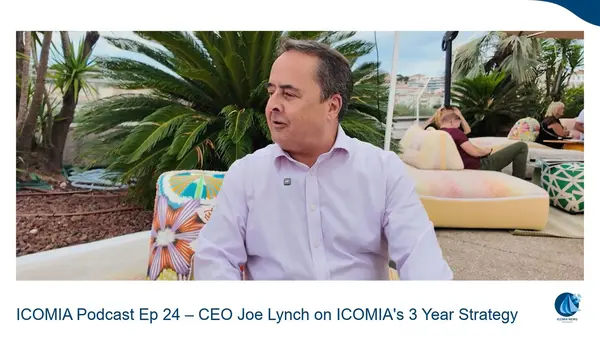
ICOMIA chief executive Joe Lynch outlines a three-year strategy centred on international collaboration, industry market data and technical standards.
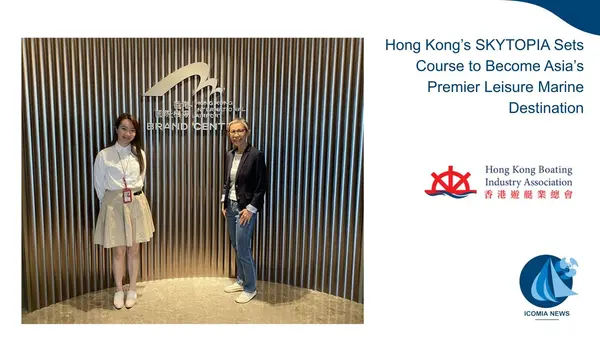
Hong Kong airport developer AAHK has issued an expression of interest for SKYTOPIA Yacht Bay investors and operators, distinct from marina promotion milestones.
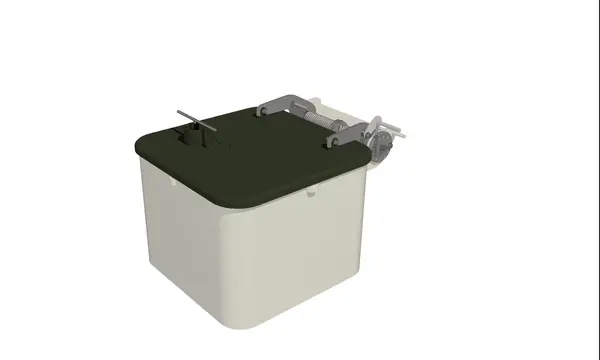
Oceanco adds established Dutch marine manufacturer Winel to its group, bringing custom yacht door and hatch engineering, tank vent valves and specialist suppliers.
Superyacht Guide
Continue into the wider Superyacht Guide.
Business opportunities · Superyacht Guide
Companies serving the superyacht market can discuss clearly identified advertising, sponsorship and business-profile opportunities. Commercial activity remains separate from independent editorial coverage.