
USVI Charter Yacht Show Adds Insurance and Regulatory Seminars for November 2026
IGY Marinas has outlined a Brown & Brown-backed seminar programme surrounding the 14–17 November 2026 USVI Charter Yacht Show at Yacht Haven Grande, St …
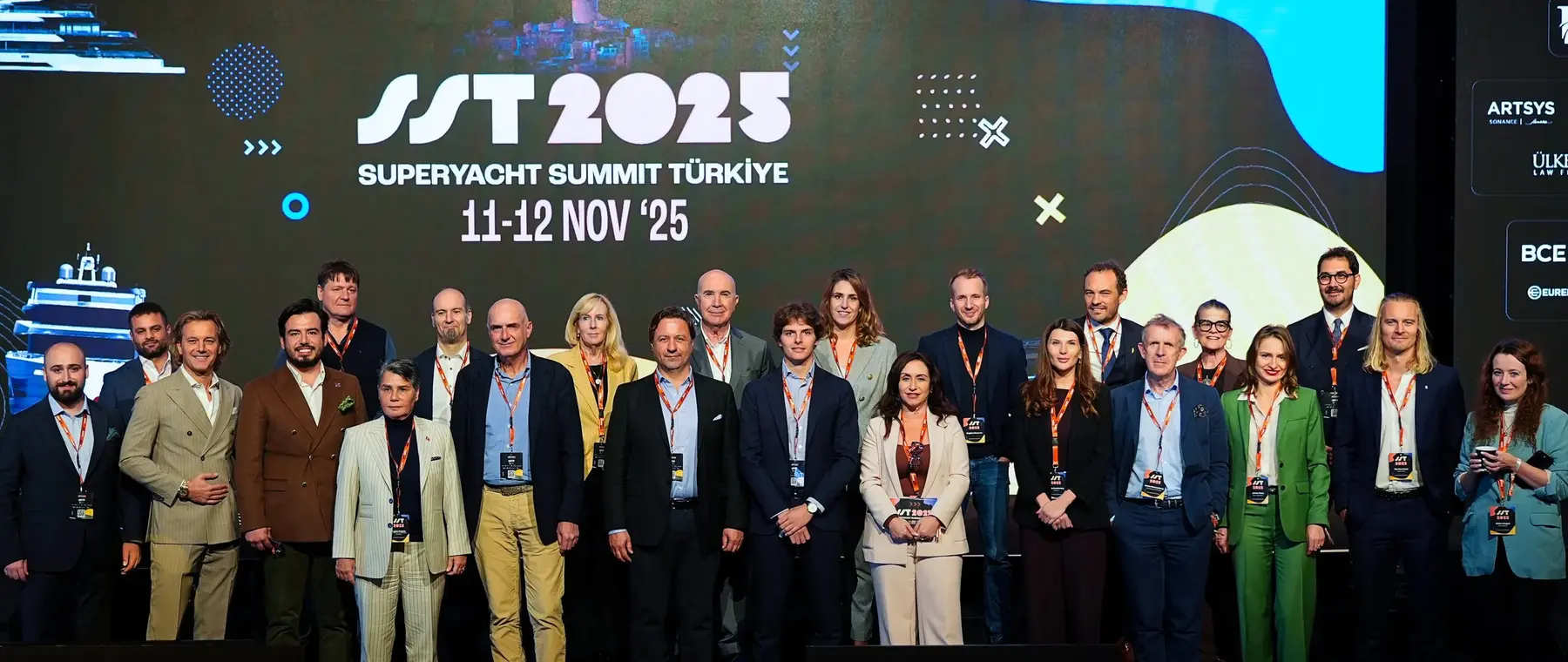
More than 550 delegates attended the completed 4–5 November Istanbul industry meeting, according to post-event coverage, as Turkish shipyards, brokers and owners' representatives examined deliveries, capacity, project risk and long-term yacht support.
Superyacht Summit Türkiye concluded its fourth edition in Istanbul on 5 November, bringing together builders, yacht brokers, designers, financiers, technical advisers and ownership specialists to examine the country’s changing place in the international market. The event took place over 4–5 November, with the first day at The Peninsula Istanbul and the second at Novotel Istanbul Bosphorus. A report published on 6 November by Superyachts Channel puts attendance at more than 550 delegates, with over 40 speakers and representatives from more than 20 shipyards. Those participation figures are reported event totals rather than independently audited visitor data. The more useful outcome for owners and suppliers was the range of practical issues addressed: capacity, project delivery, construction risk, yacht management, resale considerations and the financing of future growth.
Türkiye has long combined commercial maritime expertise, a substantial supplier ecosystem and a yacht-building industry serving both domestic and international clients. For owners considering a custom yacht, however, a country's potential is best judged through completed projects, service capability and the ability to manage an intricate build rather than promotional positioning alone. The Istanbul discussions put those questions in front of the firms that must answer them. The programme moved between the business of securing an order, the technical challenge of building it and the operational commitments that remain after handover. It also brought the 24–40-metre segment into the same discussion as larger vessels, avoiding the assumption that every part of the market behaves in the same way.
One of the clearest numerical reference points came from a presentation by Martin Redmayne of The Superyacht Group on the strategic intelligence work developed with the summit. According to the contemporaneous event report, Turkish yards delivered 43 yachts longer than 24 metres in 2024 and 33 in 2025. The figures should be treated as the reported output of that study, not as a complete global league table or evidence of any particular 2026 sales trend. Production can fluctuate with the timing of major completions, yard capacity and differing project cycles. Nevertheless, a discussion grounded in delivered vessels is more useful to buyers than counting renderings, concepts or preliminary expressions of interest. A yacht actually delivered has passed far more commercial and operational milestones.
The opening market discussion examined three length groups: approximately 24–40 metres, 40–60 metres and 60 metres and above. That distinction matters commercially. A 30-metre yacht may be driven by an experienced private owner seeking manageable crewing and Mediterranean cruising, while a large custom project requires a much wider network of designers, engineers, project managers, insurers and specialist subcontractors. Fraser's Alain Auvare, Denison Yachting's Alex G. Clarke and UBS Switzerland's Arnaud de Gordon joined Redmayne for the panel advertised in the organiser's programme. The agenda placed brokerage demand, new-build timing, capital availability and the outlook to 2030 in the same conversation. No single prediction can safely be attributed to every participant, but the choice of topics makes clear that demand and capacity are interdependent.
RMK Yachts' 55-metre Arcane platform supplied a practical case study for how a design brief is translated into technical decisions. The summit brought representatives of the yard, Espen Øino International and Volvo Penta together to discuss the relationship between interior and exterior space, propulsion architecture, comfort and the constraints of remaining under 500 gross tons. According to the post-event account, the projects were presented as Arcane Era and Arcane Nova. The engineering discussion also considered fuel flexibility and the potential use of hydrotreated vegetable oil. Such ideas should not be mistaken for measured emissions performance of an operating yacht: the value at this stage lies in showing what designers and engineers are evaluating before the final equipment and operating profile are established.
The summit coverage also describes RMK Yachts' plan for a new yacht-building facility of approximately 70,000 square metres in Yalova, with a stated objective of becoming operational in 2027. This is a forward-looking yard ambition, not confirmation that the facility is already open or that every proposed berth and workshop will be available by a particular date. For prospective buyers, additional modern yard capacity would be relevant only once schedules, capabilities, staffing and delivery commitments are demonstrable. For suppliers and technical service companies, the announcement illustrates why Türkiye's superyacht development cannot be assessed solely through completed yacht statistics. The supporting industrial infrastructure must expand alongside the order book if deadlines and after-sales obligations are to remain credible.
A dedicated panel addressed the months and years between signing a custom-yacht contract and accepting the finished vessel. The organiser framed the discussion around a hypothetical large-yacht project and the pressures introduced by late specification changes. In the event report, an illustrative 70-metre yacht faced a major layout change six months before delivery, followed by a delayed handover. This was a scenario for discussion, not a claim that a named customer project had suffered those problems. The distinction is important because design changes can affect stability calculations, classification approval, systems integration, labour sequencing and contractual milestones. For an owner, better governance means understanding the process for documenting decisions and assessing consequences before the programme loses recoverable time.
The project session devoted to ARES Yachts' SIMENA approached the yacht as a series of design and construction choices rather than a collection of brochure features. The speakers included representatives of ARES, Design Unlimited and Taka Yacht Design, all identified in the official agenda. A large ketch presents distinctive challenges in rig engineering, deck use, machinery arrangements and the integration of contemporary owner accommodation with a sailing yacht's working requirements. The discussion therefore had relevance beyond a single vessel. An owner comparing motor-yacht and sailing-yacht proposals should look closely at how competing priorities were resolved, what was fixed early in the design and which choices remained adaptable during build. These considerations are often more revealing than headline length or tonnage.
Shipyard risk was another substantive part of the programme. The official agenda paired Türk P&I and Lockton Omni specialists for a discussion of the responsibilities shared among owner, builder, subcontractors and insurers when a yacht enters a yard. Major refit periods can involve hot work, temporary changes to onboard safety arrangements and many independent companies working on the same asset. The coverage gap that matters in practice may sit between a yard's contractual liability, an owner's existing insurance and the insured activities of a contractor. The session was therefore a reminder to owners' teams that cover, exclusions and notification duties must be checked against the proposed works and applicable contracts. It was not an announcement of new universal insurance rules.
Technical management, operational transparency and the quality of relationships after handover featured prominently in the afternoon programme. Speakers from management, legal and service businesses considered the responsibilities that follow a yacht from its first season through crew changes, maintenance, upgrades and eventual resale. A new-build transaction may receive most of the initial attention, yet the owner's practical experience is determined by recurring matters: accurate maintenance records, budget control, warranty responsiveness, flag and class obligations, and clear communication when a fault appears. Owners should also distinguish between commercial representations made during sale and contracted support after delivery. The discussion illustrates an emerging commercial reality for shipyards: repeat business is built partly in the workshop and partly in the way an owner is supported once the yacht leaves it.
A panel on interiors considered whether highly personalised accommodation can remain attractive to a second owner. The official programme listed Red Yacht Design and artist Ornella Gallo Di Fortuna among the contributors. This is more than an aesthetic question. Specialised joinery, highly bespoke technology and complex finishes can be expensive to maintain or alter as preferences change. Conversely, an interior that anticipates flexible uses, repairable materials and accessible systems may be easier to refit without removing its identity. The commercial trade-off differs between a private yacht expected to remain in one family and a vessel likely to return to the market. The summit did not establish a universal resale formula; it placed longevity and adaptability within the design brief.
The technology agenda extended from onboard virtualisation to artificial intelligence and cybersecurity. OmniAccess' technical presentation, identified in the organiser's programme, addressed the relationship between onboard computing, the cloud and the security of connected yacht systems. These developments are increasingly relevant because the same vessel can contain navigation equipment, audiovisual systems, communications infrastructure, hotel services and remote-maintenance channels supplied by different vendors. The potential benefit of consolidation is easier management, but it also increases the importance of clearly defined ownership of access controls, software updates, backups and incident response. A conference demonstration should be evaluated as a technical proposition, not mistaken for proof that a particular architecture has already met every owner's reliability and security requirements.
The post-event account records recognition for industry figures including Begüm Doğulu, Sinan Özer and Mehmet Karabeyoğlu. Their awards highlighted, respectively, international industry connections, long-standing yacht-building work and wider contributions to Türkiye's standing in the sector. The organiser's programme also scheduled a conversation with Karabeyoğlu, founder of Turquoise Yachts, looking back at changes in the practice of shipbuilding. This human dimension is useful context for the country's growth. Large yachts are made possible by longstanding networks of engineers, craftspeople, project leaders and business owners, and those skills are difficult to replicate at the same speed as a new building or dry dock. Industry recognition is not a substitute for independently reviewing a yard, but it identifies the depth of experience that supports its current ambitions.
The two-day structure helped widen the debate beyond naval architecture. Reporting on the summit described further roundtables on finance, legal considerations, energy, digital transformation and the relationships that connect a yacht to destinations and support services. These are interdependent rather than separate commercial questions. Financing can influence the delivery timetable; the contractual framework affects risk allocation; alternative propulsion changes refuelling and service expectations; and digital reporting can shape a manager's ability to track condition and expenditure. Attendees also had opportunities to see elements of the local shipyard ecosystem through planned visits. Site visits offer a stronger impression of actual production facilities than a marketing presentation, although a prospective customer would still need independent technical and financial due diligence.
For an owner assessing a Turkish yard, the summit's practical value lies in the questions it raises. Ask for the yard's recently delivered comparable vessels, construction-slot availability, subcontractor strategy and relevant class experience. Establish which elements of a proposed propulsion system are proven at the required duty cycle and which remain design options. Agree how changes are approved and priced, and identify who is responsible for warranty rectification, technical records and post-delivery support. For brokers and owners' representatives, separate documented production history from announced capacity and early concepts. For service firms, look beyond new orders to the continuing needs of yachts already in operation. These are editorial takeaways from the meeting's subject matter, not formal recommendations issued by the organiser.
The fourth Superyacht Summit Türkiye has now supplied a post-event picture of industry engagement that was unavailable when the programme was first announced. More than 550 delegates and the shipyard participation reported by event coverage indicate significant interest, while the figures for prior-year deliveries provide useful context for the scale of existing activity. Neither measure alone proves future market share, profitability or project quality. Those outcomes will be determined by the next round of contracts, vessel deliveries, the performance of new facilities and the confidence of owners returning for refit and after-sales support. For the international superyacht sector, Istanbul's November meeting underscored a credible direction of travel: the conversation around Türkiye has become as much about execution, management and long-term industrial capacity as it is about new designs.
Continue reading
IGY Marinas has outlined a Brown & Brown-backed seminar programme surrounding the 14–17 November 2026 USVI Charter Yacht Show at Yacht Haven Grande, St …
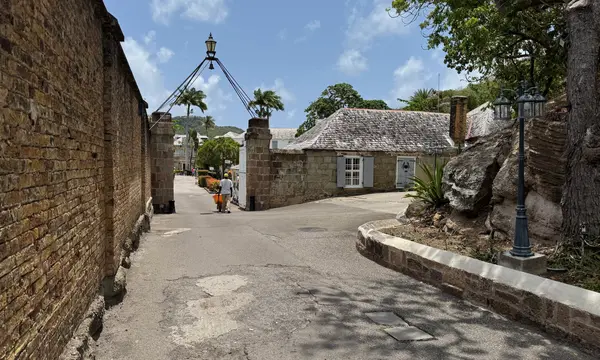
The Antigua Charter Yacht Show has outlined its 4–9 December programme for its 65th-anniversary edition, bringing charter yacht inspections, crew competitions and industry meetings …
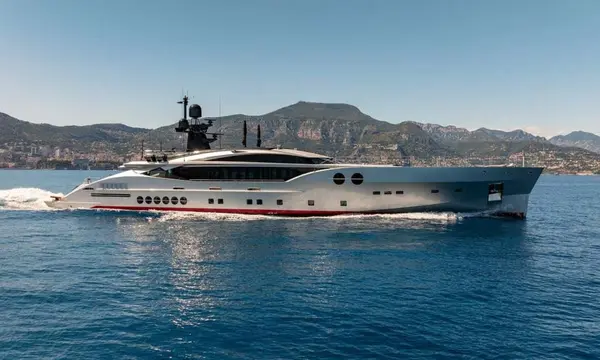
The MIPCOM media industry gathering in Cannes from 12–15 October featured charter yachts including 52m DB9, HATT MILL, TITIAN PEARL, WILLOW, NO.9 and SONISHI.
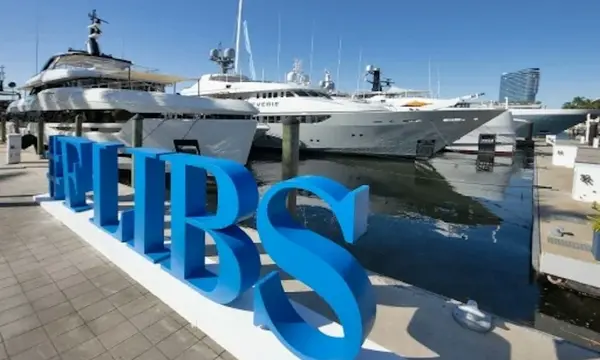
Five industry panels are scheduled at the 2026 Fort Lauderdale International Boat Show, covering the refit market, yacht brokerage, charter across North America and …
Superyacht Guide
Continue into the wider Superyacht Guide.
Business opportunities · Superyacht Guide
Companies serving the superyacht market can discuss clearly identified advertising, sponsorship and business-profile opportunities. Commercial activity remains separate from independent editorial coverage.