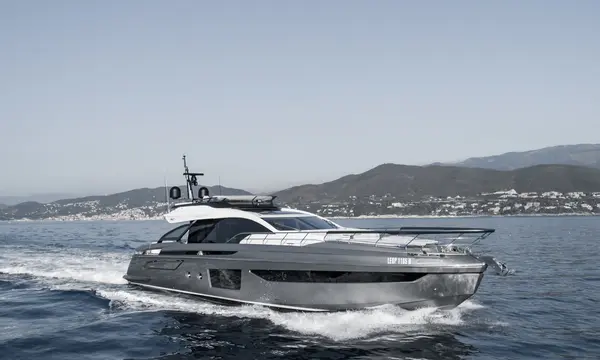
Azimut S8 NEVER GIVE UP Enters Market at €2.59m
Denison Yachting lists 2021-built, 24.59-metre Azimut S8 NEVER GIVE UP in Varazze at €2.59 million, with Florent Moranzoni appointed to broker the sale.
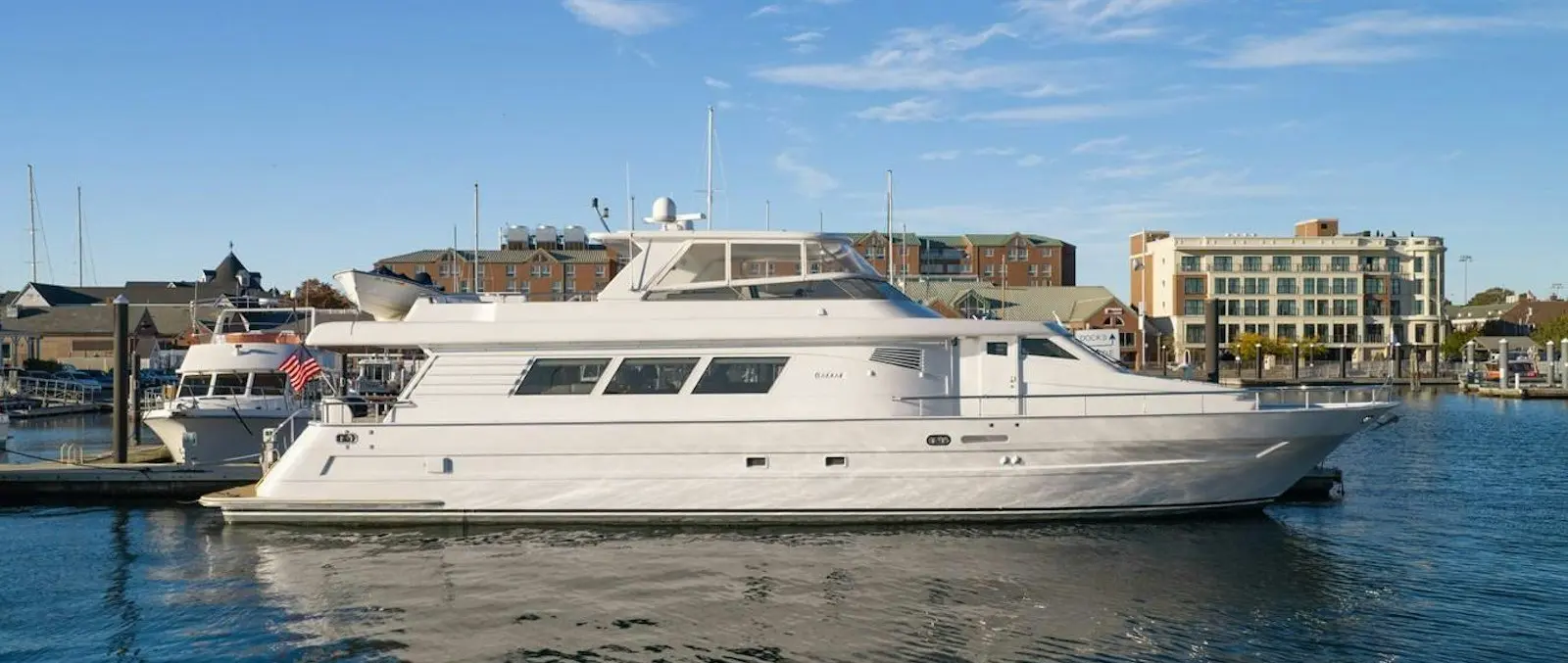
MAIN COURSE © Northrop & Johnson, primary brokerage listing photograph. Actual 1999 Tarrab yacht; original photographer not separately named.
Northrop & Johnson currently advertises the 24.99-metre Tarrab motor yacht MAIN COURSE for $745,000; she offers four guest cabins, twin Caterpillar diesels and a 1999 build pedigree.
The 24.99-metre Tarrab motor yacht MAIN COURSE is being advertised for sale at $745,000, according to the current Northrop & Johnson yacht listing. Built in 1999, the yacht offers four guest staterooms and a traditional flybridge configuration in a size class that sits just above Superyacht Guide's 24-metre editorial threshold. The offering gives prospective buyers a distinctive alternative to recent, considerably more expensive production yachts.
The asking price is the seller's current public offer, not a confirmed transaction value. There has been no announcement that MAIN COURSE has sold, and the listing should not be treated as evidence of a negotiated closing price. The yacht's age, machinery, systems and individual maintenance history would all need careful investigation before any buyer could judge the commercial merits of the asking figure.
Northrop & Johnson identifies the yacht as an 82-foot Tarrab, with a published length overall of 24.99 metres. That precise figure is important because model descriptions in feet often round differently across advertising channels. By using the current broker's published particulars, prospective purchasers can avoid confusing the vessel with another Tarrab of similar length or treating an approximate model number as an independently measured dimension.
MAIN COURSE is a fiberglass motor yacht built in 1999. Unlike a recent series-production yacht presented primarily through a new model brochure, this is an individual existing vessel whose current condition must be established through inspection. Its particular combination of equipment, interior and operating history is as significant as the original design.
Tarrab's traditional motor-yacht styling is different from the low, angular profile of many contemporary sports cruisers. MAIN COURSE has a raised superstructure, generous upper-deck spaces and a layout intended to accommodate several guests for cruising. The design places value on usable interior volume and an established arrangement of the machinery and accommodation.
This does not imply that a yacht of this vintage will automatically be easier or cheaper to maintain than a newer vessel. Practical ownership is determined by the availability of components, documented service, accessibility and the condition of installations. Buyers attracted by the traditional design should assess those factors alongside the initial purchase price.
The broker describes accommodation for up to eight guests in four staterooms. The arrangement includes a principal suite with a king-sized berth, a forward VIP with a queen berth and additional twin accommodation. Such a configuration can suit a family or two generations travelling together, while keeping separate cabins available for friends.
Guest capacity and cabin distribution are different considerations. A buyer may value four independent sleeping spaces more than an arrangement that relies on additional Pullman berths. But final suitability depends on berth dimensions, bathroom access, storage and the actual approved capacity of the vessel. The published brochure introduces the possibilities; a current onboard inspection is needed to evaluate their real condition.
Northrop & Johnson's listing presents the master accommodation with warm timber finishes, built-in storage and a substantial berth. The yacht's interior style reflects the design preferences of its construction period rather than the minimalist finishes often found on recent superyachts. For the right owner, that character may be part of the attraction.
A traditional interior also invites practical questions about maintenance. Timberwork, veneers, joinery, headlining and ventilation can age differently depending on use and care. Photographs help convey layout and atmosphere but are not evidence that every fitting is defect-free. The current broker should be able to arrange the level of examination needed for a serious offer.
The yacht's navigation spaces and access to the flybridge are an important part of its operating character. On a motor yacht of this length, sightlines, helm ergonomics and the location of communication and control equipment all affect the captain's everyday work. The arrangement may be particularly attractive to an owner who appreciates a conventional bridge rather than a highly integrated, touch-screen-led layout.
That preference should never displace a technical review. Navigation electronics, steering controls, alarms, communication equipment and safety systems must be considered as installed, not as they appeared on the original construction drawings. Upgrades may have been made during the yacht's life, but the present listing should not be interpreted as certifying that all equipment meets the latest standard.
The yacht's main saloon is presented as a comfortable, timber-lined social space, with upholstered seating and a connection to the wider accommodation. Owners considering the vessel for coastal cruising may appreciate having a dedicated indoor area for meals, conversation and time away from the weather. It is a markedly different atmosphere from some open-plan sport-yacht interiors.
The way guests move between the saloon, galley, stairways and outside decks is an essential consideration at this size. A buyer should examine whether privacy and service circulation meet their needs, particularly when travelling with professional crew. A floorplan can indicate the intended function, but a walkthrough is often the best way to judge the relationship between spaces.
An equipped galley supports the possibility of spending extended periods away from restaurants or major marinas. The Northrop & Johnson particulars describe substantial galley arrangements appropriate to the yacht's original design. For a private owner, the galley's usability depends on how meals are planned, how provisions are stored and how the cooking space connects with the dining and service areas.
A vessel's long-term cruising suitability also depends on refrigeration, electrical capacity, water systems and access to spare parts. These should be checked during due diligence instead of inferred from photographs of the original equipment. An attractive asking price can be misleading if major support systems require extensive renewal shortly after purchase.
One of MAIN COURSE's noticeable features is its elevated flybridge area. This can provide another social setting as well as a vantage point for observing the surroundings while in harbour or at anchor. The published yacht photographs show a substantial superstructure and outdoor living provision compared with the relatively modest hull length.
Flybridge usability depends on weather protection, furniture layout, safe access and the condition of any fitted enclosures. A buyer could also ask whether the arrangement suits their intended cruising region. The benefit of a generous upper deck in a warm-water harbour may be different from its utility during more exposed passages.
Deck living matters to most superyacht owners, even those who plan relatively short trips. MAIN COURSE provides exterior areas in which guests can relax and move between the yacht's accommodation and the sea. The degree of privacy and comfort depends on the individual layout, available shade and the equipment actually carried.
At anchor, the captain must still consider safe access, tender arrangements and the suitability of the chosen location. An attractive deck photograph cannot indicate the operational limits of the vessel or establish that a particular anchorage is appropriate. The broker's images are useful for initial assessment, but they are not substitutes for a detailed technical specification and current operating information.
The Northrop & Johnson listing identifies twin Caterpillar 3412 DITA engines, rated in the published particulars at approximately 1,350 horsepower each. For an older motor yacht, the engine installation and its maintenance history are among the most significant factors in a purchase decision. Buyers should seek serial numbers, maintenance records and the findings of an appropriate engine survey rather than rely on the model designation alone.
A 1999 yacht may have experienced several ownership and service cycles. Major work on cooling, exhaust, fuel systems or machinery controls can be expensive, and the remaining useful life of components should not be guessed from the vessel's general appearance. The fact that a broker advertises the yacht as available does not amount to a mechanical warranty.
The current broker's specifications give a cruising speed of approximately 12 knots. This is a listing figure rather than a performance test conducted for this article. Actual speed and fuel consumption will depend on sea conditions, loading, hull condition and the machinery's operating state.
For an owner comparing MAIN COURSE with a modern planing yacht, the difference in cruising style is important. A moderate-speed passage can suit relaxed coastal itineraries, but it demands realistic travel times when planning trips between destinations. The listing should not be used to infer a particular transatlantic capability, consumption rate or range without a separately verified technical source.
Northrop & Johnson identifies stabilisation and manoeuvring equipment in the yacht's specifications, including Naiad stabilisers and a bow thruster. These systems may offer practical advantages during cruising, at anchor and while manoeuvring in restricted waters. They are nevertheless mechanical and electrical installations whose condition and servicing requirements must be assessed individually.
The presence of equipment on a specification sheet is not evidence that it has recently been inspected or that it will operate to a buyer's expectations without additional work. A suitable survey can examine installation, operation and maintenance records. For a yacht at this asking level, the cost of addressing deficiencies may materially influence the overall purchasing decision.
The yacht is also described with Northern Lights generating equipment. A motor yacht accommodating eight guests depends on reliable onboard electricity for refrigeration, cooling, lighting, communications and domestic services. Generator condition therefore matters just as much as a visually appealing guest saloon.
During inspection, a purchaser can review recorded running hours, service history, electrical distribution and the ability to meet actual hotel loads. A single advertised generator-hour figure is not a complete indication of health. The buyer should establish whether the machinery is being maintained under a consistent programme and whether support remains readily available in the regions where the yacht is expected to cruise.
The listed figure is striking when placed beside the multimillion-dollar asking prices of many newer 25-metre motor yachts. That difference is not evidence of a bargain or of a defect. Vessel age, build type, technology, presentation, market conditions and the seller's priorities all help determine how a yacht is offered.
The total cost of ownership is a more useful comparison than initial price alone. Berthing, insurance, crew, periodic maintenance, regulatory obligations and potential refit work can become substantial even on a yacht acquired for less than $1 million. A buyer should set an appropriate budget for technical surveys and review likely operating expenditure before making a commitment.
A buyer examining MAIN COURSE can obtain current documentation and consider inspections of the hull, machinery, electrical systems, safety equipment and onboard accommodation. Depending on the yacht's condition and planned use, specialist evaluations may be worthwhile. The goal is to understand the vessel as it exists today rather than assume that the original specification remains unchanged.
The survey process may also establish the status of certificates and compliance obligations under the intended flag and operating profile. Such requirements cannot be determined from length alone. Private ownership, commercial use and cruising region can lead to different administrative considerations, and these should be confirmed independently.
A traditional 24.99-metre motor yacht may suit someone who values separate cabins, established yacht styling and a substantial indoor living environment. It may be less suitable for an owner seeking the latest integrated propulsion, full warranty coverage or extremely high cruising speed. These are preference and suitability questions, not statements that one vessel type is categorically superior.
Prospective owners should consider how often they plan to travel, the number of guests normally aboard and whether they will employ crew. The berth size, maintenance arrangements and local availability of technical support also matter. The yacht's current listing provides a concrete starting point for those discussions.
At the time of the current listing review, Northrop & Johnson offers MAIN COURSE at $745,000 and identifies the yacht as a 1999 Tarrab measuring 24.99 metres. The vessel's specifications and photographs support its identification as a genuine large-yacht brokerage opportunity. The transaction remains an open offering rather than a reported sale.
For readers following the 24-metre-plus resale market, MAIN COURSE illustrates how the choices extend beyond recent custom builds and high-priced production yachts. A buyer who appreciates a traditional layout and accepts the need for thorough condition assessment may find the opportunity worth investigating. The sound conclusion is limited but useful: a specific yacht is being offered publicly at a verifiable asking price, with an established specification that can be checked against the vessel before purchase.
Original primary record: Northrop & Johnson. MAIN COURSE © Northrop & Johnson, primary brokerage listing photograph. Actual 1999 Tarrab yacht; original photographer not separately named. Original first-party media: source photograph or official illustration. Copyright and image source are credited; first-party availability does not imply unrestricted reproduction permission.
Continue reading
Denison Yachting lists 2021-built, 24.59-metre Azimut S8 NEVER GIVE UP in Varazze at €2.59 million, with Florent Moranzoni appointed to broker the sale.

Confindustria Nautica figures presented at the 27 November Genoa Sailing Super Yacht Forum show a 7.5% decline in Italian sailboat production revenue during 2025.
Burgess identifies a 74m Amels, 43m Codecasa and 36.6m Benetti among yachts offered for both sale and charter, inviting clients to experience life aboard …

MB92 supports La Ciotat Shipyards' December 11 opening of an arts venue in a restored 1949 fitting-out building, with metal sculptures and plans to …
Superyacht Guide
Continue into the wider Superyacht Guide.
Business opportunities · Superyacht Guide
Companies serving the superyacht market can discuss clearly identified advertising, sponsorship and business-profile opportunities. Commercial activity remains separate from independent editorial coverage.