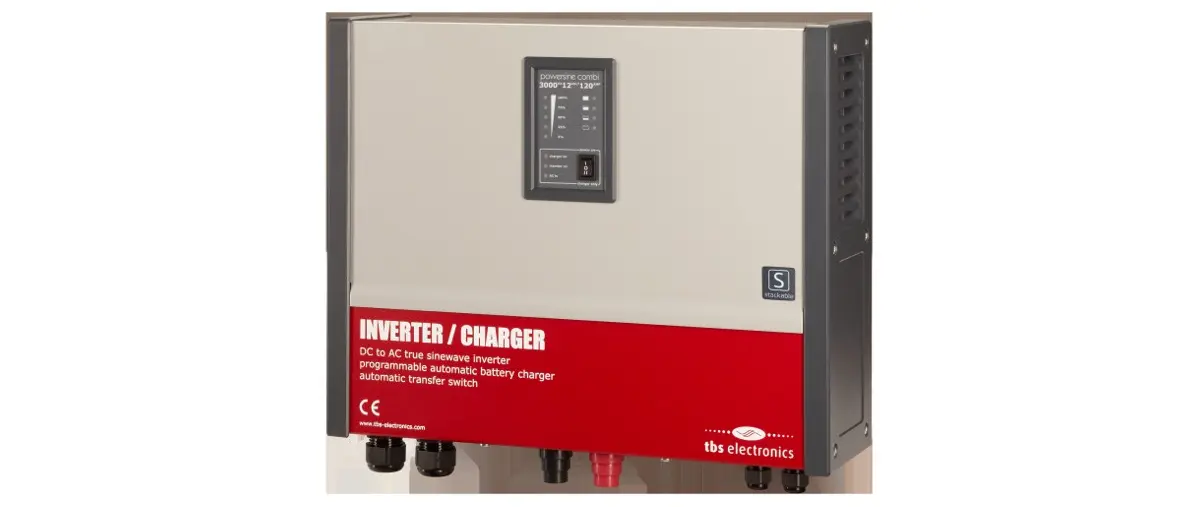
TBS Electronics Adds Parallel Stacking to Powersine Combi Inverter-Chargers
By Stephen Yardley · Edited by Stephen Yardley
Dutch manufacturer TBS Electronics has introduced updated S versions of its Powersine Combi 2000W to 3500W inverter-chargers, adding parallel stacking and revisions to battery charging controls. Announced in October 2026, the development af
Dutch manufacturer TBS Electronics has introduced updated S versions of its Powersine Combi 2000W to 3500W inverter-chargers, adding parallel stacking and revisions to battery charging controls. Announced in October 2026, the development affects marine electrical integration rather than the design or delivery of a particular superyacht.
The company says the updated models allow suitable units to work in parallel, increasing combined inverter output, charging capability and AC transfer capacity. That flexibility can help electrical designers assemble a system around the expected load, although the actual permitted configurations and protections must follow the manufacturer's installation instructions.
An inverter supplies alternating-current electricity from a battery bank, enabling selected domestic and technical equipment to operate without a dedicated AC generator at every moment. An integrated charger reverses that function when shore power or generator AC becomes available, replenishing batteries under a controlled charging profile.
Power quality and correct transfer behaviour are important on yachts because navigation-support equipment, refrigeration, communications and hotel loads can respond poorly to unsuitable voltage or interrupted supply. System design must distinguish essential equipment from discretionary loads and provide appropriate fault isolation.
Stacking inverters can increase available power but also introduces requirements for compatible units, synchronisation, load sharing, cable sizing and short-circuit protection. A project cannot safely assume that any two existing inverter-chargers may be wired together merely because a later product generation supports parallel operation.
For a refit, electrical engineers should inspect the distribution board, battery technology, DC fault currents and ventilation capacity before specifying an expansion. The practical limit may be upstream wiring or battery discharge capability rather than the nameplate inverter rating.
TBS says the S version brings easier battery-type selection, additional charging programmes and a switch-based option for setting maximum charging current. The latter is significant for technicians who need a direct configuration route alongside remote controls or the TBS Dashboard software.
Charging settings must match the installed battery chemistry and manufacturer guidance, especially where lithium systems use a battery management system with specific voltage and current limits. Incorrect profiles can damage batteries or trigger protective shutdowns, making commissioning documentation essential.
TBS Electronics designs marine power-conversion and DC distribution products in the Netherlands, including inverters, chargers, monitors and protection components. Its updated Combi range adds an option within that portfolio for operators seeking a configurable power platform.
The new functions are relevant to parts of a superyacht's auxiliary electrical network, but the 2000W–3500W unit class should not be described as the vessel's entire hotel power system. Suitability depends on the specific circuit, integration and certified technical design.
Although superyachts often carry generators and substantial AC distribution systems, independent inverter circuits can still serve selected loads. Examples may include communications support, controls and other equipment for which a quieter battery-powered period is useful. Engineering designers must determine whether a circuit should be supplied from an inverter, an uninterruptible power supply or a different arrangement with dedicated redundancy.
Electrical integration should include an analysis of starting currents, continuous demand and power quality. Some motors and compressors draw substantially more current when starting than their running rating suggests, so capacity cannot be assessed by summing only nominal wattages. Protective devices, earthing arrangements and transfer settings require design in accordance with applicable marine standards.
Battery charging behaviour varies by chemistry, temperature and state of charge. Flooded lead-acid, AGM and lithium-based systems use different control strategies, and even products within one category can impose different limits. Expanded charger presets can help technicians configure an installation, but they do not remove the need to confirm each parameter against the battery manufacturer's instructions.
In systems with a battery management system, the charger must cooperate with protective limits and any required communication arrangements. A sudden battery disconnection under load can produce consequences elsewhere in the DC network if the complete installation has not been designed for that event. Commissioning should therefore include abnormal-condition testing rather than only confirming that the system turns on.
An inverter-charger is part of a wider electrical chain whose reliability depends on clean connections, appropriate ventilation, sound cabling and periodic inspection. Documentation should show circuit protection, isolation points, software or switch settings and the arrangements for replacing a faulty unit. A well-organised technical file reduces uncertainty for incoming engineers and external service teams.
TBS Electronics' announcement is most useful as an early indication of additional integration flexibility within a known product family. Superyacht users should verify exact model compatibility and certified installation requirements before adopting the S version. The update may benefit particular auxiliary circuits without changing the fundamental need for disciplined marine electrical engineering.
Explore
Go deeper into the yachts, companies, events and destinations directly connected to this article.
Continue reading
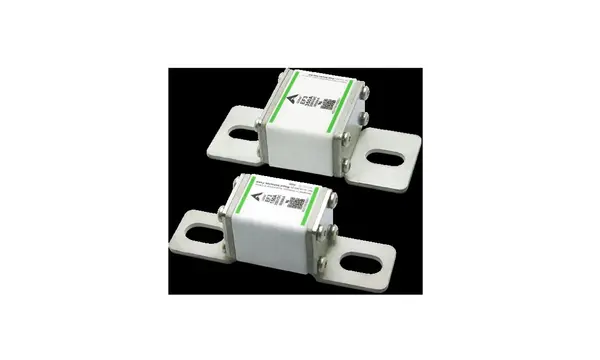
TBS Electronics adds Adler EF3 fuses, rated to 250V DC with 50kA breaking capacity, expanding options for marine battery and electrical protection.

Yachting Malta took part in the 35th Monaco Yacht Show alongside Transport Malta, the Malta Ship Registry and the Super Yacht Industry Network Malta, …

Gulf Craft has appointed Omnia Marine Co. as the exclusive mainland-China dealer for its Majesty and Nomad yacht brands, extending the United Arab Emirates …

Burgess senior partner and naval architect Edmund Beckett says differences between buyers' and sellers' expectations have become a central challenge in the superyacht resale …
Superyacht Guide
Continue into the wider Superyacht Guide.
Business opportunities · Superyacht Guide
Companies serving the superyacht market can discuss clearly identified advertising, sponsorship and business-profile opportunities. Commercial activity remains separate from independent editorial coverage.