

British Marine Names 39 Metstrade Exhibitors Including Seven in Superyacht Zone
British Marine has named 39 member companies preparing to exhibit at Metstrade 2026 in Amsterdam from 17 to 19 November. Its announcement, published in …
The Yacht Harbour Association and Marina Projects have formally launched a revised marina code, with planning and operations volumes available now and a dedicated superyacht volume scheduled for 2027.
The Yacht Harbour Association has formally launched the eighth edition of its Code of Practice, an industry guidance resource for marina owners, developers and operators. The announcement, distributed through British Marine on 5 November 2026, follows an earlier October notice that the publication was almost ready. Two volumes are now available to eligible members, marking a practical change from a forthcoming publication to material that marinas can begin using. The launch was announced at the ICOMIA World Marinas Conference in Venice. It is a professional guidance milestone, not an announcement of a new yacht berth, regulatory approval or marina development.
Marina Projects, the specialist consultancy that helped develop the revised publication, contributed technical and operational experience to the new structure. The two organisations say industry consultation informed the rewrite and that it draws on relevant standards, regulatory frameworks and experience running marinas. This matters to large-yacht owners because safe shoreside operations depend on more than the dimensions of an individual berth. Staff training, mooring procedures, fire arrangements, environmental controls and the ability to coordinate visiting contractors can influence whether a marina is genuinely suitable for a particular yacht. The code supplies a framework for discussing those issues, although actual compliance must be assessed in context.
Volume one covers marina planning and design; volume two covers marina operations. British Marine states that these two volumes completely replace the previous, seventh edition. The intended four-volume structure also includes boatyard planning, design and operations in volume three, and superyacht marina planning, design and operations in volume four. The latter two are not yet published. British Marine's October announcement placed them in 2027, a timetable that should be treated as planned rather than a publication already delivered. Any operator claiming to hold the new superyacht volume today should therefore be asked to identify precisely which document it means.
Separating the subject into dedicated volumes acknowledges that a small leisure marina, a working boatyard and a large-yacht destination have overlapping but distinct operating questions. A marina may be good at routine berth management yet lack the lifting capacity, emergency routes or technical contractor arrangements required by larger vessels. Conversely, a superyacht facility can offer extensive infrastructure but still need disciplined everyday processes for traffic, access control and customer service. The new format creates a place for more focused discussion of each environment, but it would be premature to present the forthcoming specialist volume as a set of detailed requirements before members can read it.
A captain selecting a seasonal base or preparing a short port call needs concrete answers about berth depth, length restrictions, manoeuvring room, shelter, utilities and mooring assistance. The arrival also affects how shore power is connected, waste is transferred, contractors are supervised and guests move between vessel and shore. The two released volumes provide a reason for marina management teams to revisit the procedures behind those services. They do not replace a vessel-specific port entry assessment, pilot advice where required, or a confirmed offer from a marina that knows the yacht's actual dimensions and systems.
For owners, this is also a useful moment to ask whether an advertised service standard can be demonstrated operationally. A published written procedure is a starting point, but service depends on trained staff, maintenance, current emergency contact information and equipment that works under pressure. Facilities serving both charter yachts and resident vessels must coordinate different rhythms of guest arrival, fuel deliveries, baggage handling and crew leave. A revised code can help operators identify gaps, yet it is neither a guarantee of uninterrupted services nor an independent certificate that a specific berth is fit for every superyacht.
Modern superyacht planning places pressure on waterfront layouts in ways that berth-count announcements alone seldom explain. Larger hulls may need wider approaches, substantial mooring fittings, more demanding utilities and safe separation from public promenades. A developer may also have to reconcile yacht security with public access, local water quality rules with washdown or waste systems, and attractive architecture with emergency vehicle access. These are engineering and management questions for site-specific professionals. They should not be reduced to an assertion that fitting longer floating pontoons automatically turns an ordinary leisure harbour into a superyacht marina.
The revised publication arrives during a period in which marina operators are discussing environmental stewardship, operational resilience and digital service tools. British Marine says those priorities informed the rewrite, alongside customer experience and changing waterfront development needs. The claim is about topics addressed by the industry framework, not proof that any named marina has reduced emissions or achieved a measurable improvement. Developers planning a new facility should distinguish the design guidance they can consult now from any future prescriptions in the superyacht-specific volume. That separation will matter for project budgets, procurement and representations made to prospective berth holders.
The launch announcement includes perspectives from operators already familiar with TYHA guidance. John Cervenka, chief operating officer of Premier Marinas, says the company has contributed to the revision and is implementing the updated code. Wayne Shepherd, managing director of Dubai Harbour Marinas, highlights safety, emergency preparation, environmental stewardship, staff capability and smart marina technology as important areas. Their remarks provide evidence that established marina businesses are engaging with the publication. They are not independently audited performance results, nor do they imply that every facility run by those organisations offers identical services or has completed every action described.
Dubai Harbour is particularly relevant to Superyacht Guide readers because it accommodates large yachts and is a gateway to an increasingly active Middle Eastern yachting circuit. The local operating environment differs sharply from a sheltered British marina, however, and national requirements remain important. International guidance can help establish common questions and terminology, while permitting, harbour authority instructions, emergency response arrangements and local environmental regulations determine what is legally possible at a given site. Operators should resist treating the publication as a substitute for those obligations, and visiting captains should continue seeking confirmed local information before making operational commitments.
The eighth edition is being distributed to current, paid-up TYHA members through a digital platform called Digify. British Marine explains that members needing access should contact the association's operations team. The earlier launch notice also described a dedicated hosting website expected in early 2027. As of this announcement, the confirmed arrangement is member access through the existing platform; a future website should not be described as available now. Owners, captains and advisers who are not members may therefore need a marina operator or other authorised professional to explain how its own procedures reflect the newly published guidance.
Making the material available online has a practical advantage: operators can consult current guidance without depending on an old paper copy kept in an office. It does not automatically solve the question of how a marina records that staff have understood and adopted a change. Training logs, updated operating procedures, contractor briefing records and periodic drills remain part of the management task. An organisation may also have internal requirements that go beyond the code. Buyers of long-term berths should ask for evidence of the facility's actual systems and obligations, rather than assuming that access to a digital publication equals operational accreditation.
The planned fourth volume has the clearest direct relevance to yachts over 24 metres, the principal readership of Superyacht Guide's fleet and industry coverage. Unlike general marina operations, superyacht facilities may need to coordinate very large shore-power demands, unusual draughts, specialist security, substantial provisioning, substantial black- and grey-water handling, and complex interface requirements for tenders and watersports equipment. Those are examples of operational topics a specialist framework may help address, not a verified table of subjects or mandatory thresholds in an unpublished volume. Readers should wait for the actual document before quoting definitive technical criteria.
The planned release also creates an opportunity for operators and marina investors to compare public promises with realistic capacity. A berth advertised for a very long yacht still has to offer the required approach, mooring conditions, utilities, permissions and support. New-build waterfronts can plan for such needs, while existing marinas may need capital works or different procedures. There is no evidence in the announcement that the forthcoming guidance will make all those investments compulsory. Its importance is more modest and more useful: the industry is setting aside dedicated attention for a segment where mistakes can be costly and operational consequences considerable.
The immediate milestone is the release of volumes one and two, backed by a published industry announcement dated 5 November. TYHA says it has conducted roadshows and plans online sessions to help members understand the guidance. The next substantial editorial checkpoints are evidence that operators have implemented particular changes, any clarification to the planned 2027 timetable, and the publication of volumes three and four. Where a marina announces new capacity or improved facilities, independent reporting should examine what has actually opened, been inspected or entered service. An industry code by itself is not a berth construction programme.
For a yacht owner or manager comparing potential home ports, this development suggests a useful set of questions rather than a definitive ranking. Ask what procedures govern guest access, crew welfare, safety drills, utility supply, pollution response and contractor work; ask when they were reviewed; and ask who is responsible when arrangements change. Those questions remain valid across Monaco, the United Kingdom, the Gulf and other cruising regions, even though the local answers differ. The eighth edition gives the marina industry a new common reference while its specialist superyacht chapter remains a future, clearly identified step.
Original documentation: British Marine / The Yacht Harbour Association. Supporting material: additional published source. This report is dated 7 November 2026. Future schedules and prices may change. Statements described as plans or claims have not been presented as completed outcomes or independently audited results.
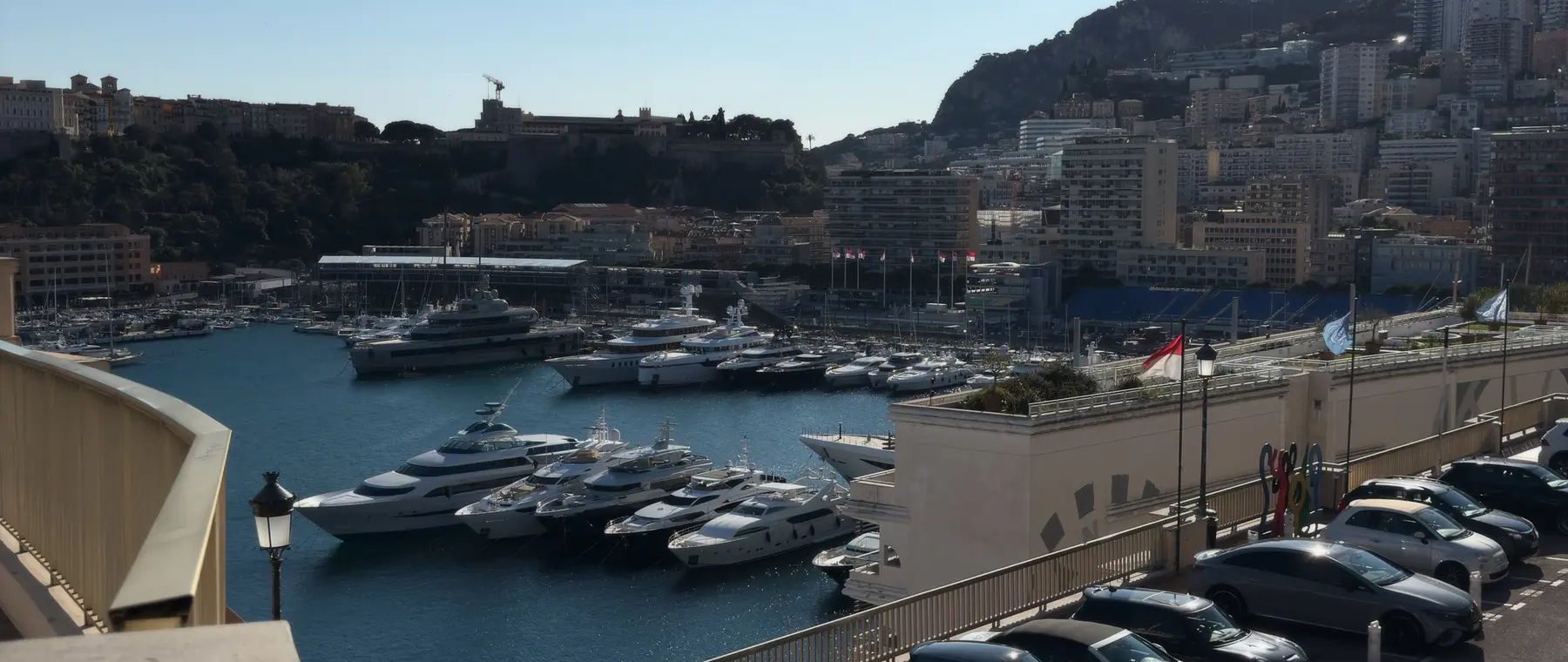
Editorial photograph: File:Port Hercule Monaco with yachts and Le Rocher 2026.JPG — Port Hercule, Monaco, 2026 — Mike is Michi / Wikimedia Commons, CC BY-SA 4.0; resized; illustrative marina view, not a photograph of the Venice launch. Licensed under Creative Commons BY-SA 4.0. This credited illustrative photograph has been resized or cropped; it does not depict the contemporary event, property or meeting described in the report.
Continue reading
British Marine has named 39 member companies preparing to exhibit at Metstrade 2026 in Amsterdam from 17 to 19 November. Its announcement, published in …
SeaKeepers has published attendance and fleet participation figures for its completed Fort Lauderdale Founders gala, recognising conservation leaders and yacht crews who support marine …
At the 2026 Qatar International Boat Show, Gulf Craft has marked two decades with local dealer Gulf Yachts, presenting an eight-vessel line-up and outlining …

IGY Marinas has outlined a Brown & Brown-backed seminar programme surrounding the 14–17 November 2026 USVI Charter Yacht Show at Yacht Haven Grande, St …
Superyacht Guide
Continue into the wider Superyacht Guide.
Business opportunities · Superyacht Guide
Companies serving the superyacht market can discuss clearly identified advertising, sponsorship and business-profile opportunities. Commercial activity remains separate from independent editorial coverage.