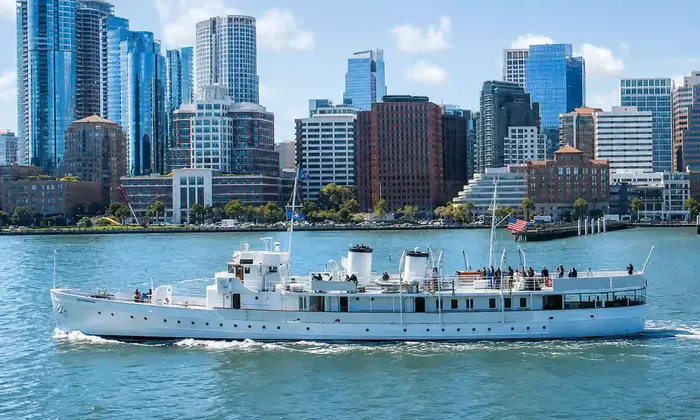
Built as a Prohibition-era Coast Guard cutter, USS Potomac became Franklin D. Roosevelt’s presidential yacht, a diplomatic stage, wartime decoy and, decades later, one of America’s most remarkable restored historic vessels.
Few yachts have travelled as far through history as USS Potomac. Built not for a billionaire or a head of state but as a hard-working United States Coast Guard cutter, the 165-foot vessel would become Franklin D. Roosevelt's Floating White House, carry British royalty on the eve of the Second World War, help conceal one of the conflict's most important diplomatic meetings and later pass briefly through the hands of Elvis Presley. Her story might have ended in a San Francisco scrap yard after a drug-smuggling seizure and sinking, yet an extraordinary restoration ultimately returned the former presidential yacht to the water.
At approximately 50.3 metres, Potomac falls comfortably within what would now be regarded as superyacht dimensions, but luxury alone was never what made her exceptional. Her significance came from the people she carried, the political conversations she sheltered and the extraordinary sequence of roles she survived. Today she remains afloat in Oakland, California, not as a static monument but as an operational historic vessel whose surviving structure connects modern visitors directly with Roosevelt's presidency.
Potomac began life as US Coast Guard cutter Electra, built by Manitowoc Shipbuilding Company in Wisconsin and launched on 30 June 1934. Coast Guard records give her original dimensions as 165 feet overall with a beam of 25 feet 3 inches, while twin Winton Model 158 six-cylinder diesel engines produced a combined 1,340 bhp and gave the cutter a maximum speed of approximately 16 knots. She belonged to the Coast Guard's 165-foot B Class, vessels conceived principally for offshore Prohibition enforcement and the pursuit of the larger mother ships supplying smaller rum-runners, although the end of Prohibition meant Electra entered service into a rapidly changing operational world.
Her next transformation came quickly. The Navy acquired the cutter for presidential use, converted her at Norfolk Navy Yard and commissioned her as USS Potomac (AG-25) on 2 March 1936. Roosevelt had previously used the smaller wooden Sequoia, but Potomac's steel construction, greater capacity and ability to accommodate presidential staff and security made the larger vessel better suited to his needs. The conversion also produced one of the yacht's most distinctive engineering features: a hand-operated elevator concealed inside a false after funnel, allowing Roosevelt to move between the main deck and boat deck using a rope-and-pulley system rather than being carried.
For Roosevelt, Potomac became both escape and office. Washington's summer heat could be oppressive, and cruising allowed the president to create a physical distance from the relentless machinery of government while remaining capable of working with advisers, congressional leaders and staff. The yacht provided privacy for informal strategy sessions, but life aboard was not purely political; accounts preserved by the vessel's association describe fishing, poker, family gatherings and long periods devoted to Roosevelt's stamp collection as part of the rhythm of presidential cruising.
The importance Roosevelt placed on that separation is revealing. Going to sea offered something that even his homes at Hyde Park and Warm Springs could not completely provide: a barrier against the constant arrival of officials, paperwork and visitors. Potomac consequently became an unusual presidential environment in which state business and private recreation occupied the same relatively compact steel vessel, giving Roosevelt a degree of seclusion that the White House itself could rarely offer.
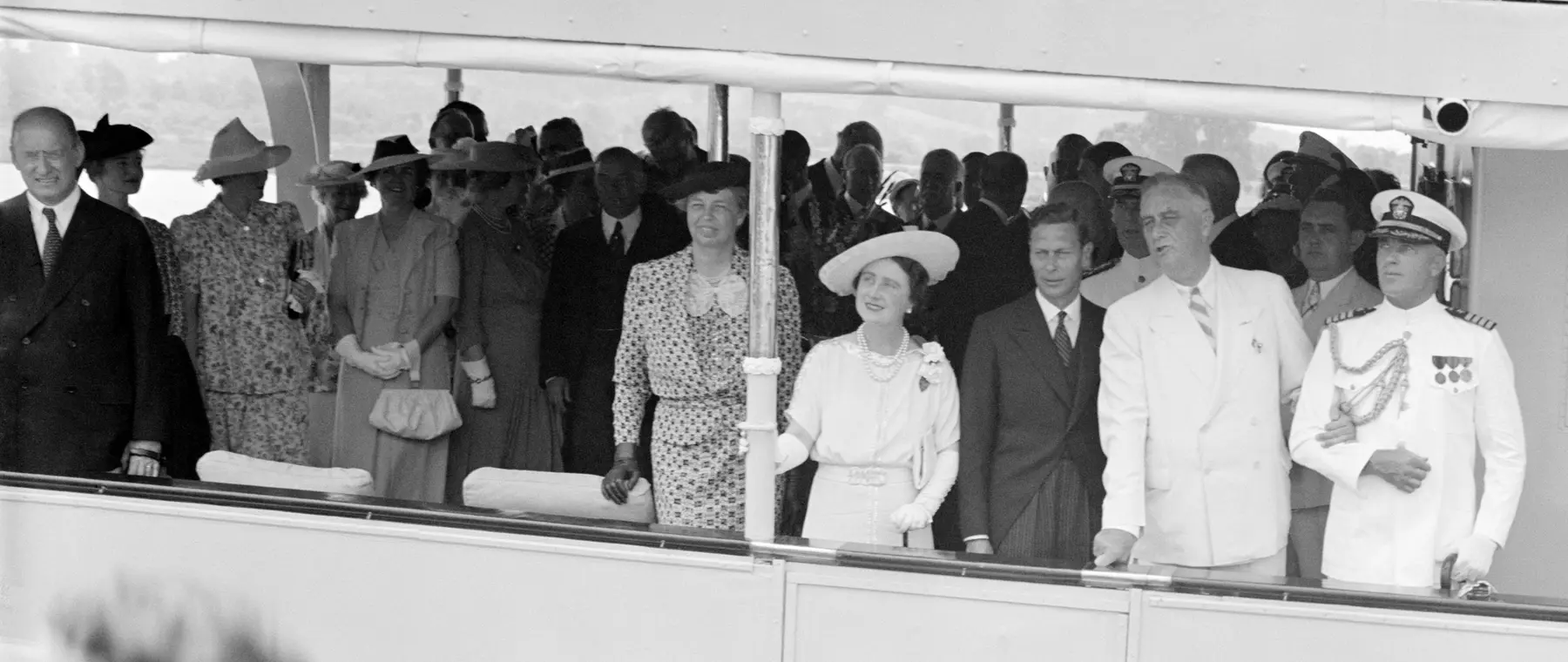
One of Potomac's most memorable diplomatic roles came on 9 June 1939, when Roosevelt and First Lady Eleanor Roosevelt hosted Britain's King George VI and Queen Elizabeth aboard the presidential yacht during their historic visit to the United States. The four travelled down the Potomac River towards George Washington's Mount Vernon, part of a visit that the Franklin D. Roosevelt Presidential Library describes as an important step in strengthening the political and social relationship between Britain and the United States as Europe moved towards war.
The photographic record from that day has become inseparable from the yacht's identity. The hero photograph used with this article was taken by Harris & Ewing and shows the Roosevelts with the King and Queen aboard Potomac during the voyage from Washington to Mount Vernon. The image survives in the Library of Congress Prints and Photographs collection under digital identifier hec.26817, with no known copyright restrictions on publication, and captures the presidential yacht at perhaps the ceremonial high point of her career.
Potomac's most consequential wartime role was more subtle. On 4 August 1941 Roosevelt boarded the yacht ostensibly for a fishing trip and a visit to Martha's Vineyard, creating the public impression that the president was taking a routine break at sea. The following morning he secretly transferred to the heavy cruiser USS Augusta and travelled to Newfoundland to meet British Prime Minister Winston Churchill, where the two leaders developed the principles that became the Atlantic Charter months before the United States formally entered the war.
The distinction matters because the Roosevelt-Churchill conference itself did not take place aboard Potomac. The presidential yacht's role was instead part of the elaborate concealment surrounding Roosevelt's movements, making an apparently ordinary presidential cruise useful cover for a meeting of enormous geopolitical importance. It is one of the more unusual examples of a yacht becoming part of statecraft not because of what happened in its saloon, but because its routine presence helped disguise what its owner was actually doing elsewhere.
By 1941 the yacht also had a technical problem. The Coast Guard's historical record notes that equipment and additions to the superstructure had increased topweight to the point that the vessel was considered unsuitable for open-water operation, and Roosevelt directed that she should no longer venture into open seas. Once the United States entered the Second World War, the combination of German U-boat activity, presidential security concerns and the demands of wartime government brought Roosevelt's recreational use of the yacht largely to an end.
Potomac nevertheless remained useful. During the war she was employed principally in naval sonar research, with specialised transducers and motor-generator equipment installed aboard, while Roosevelt increasingly relied on the secure land retreat at Shangri-La, later renamed Camp David. The presidential yacht was decommissioned after Roosevelt's death in 1945, returned to the Coast Guard and subsequently transferred to Maryland, where she served the Tidewater Fisheries Commission before eventually entering private ownership.
The yacht's post-presidential life became increasingly improbable. In January 1964 Elvis Presley bought the former presidential vessel for $55,000, initially hoping to donate her to the March of Dimes as a national memorial to Roosevelt. Graceland's official chronology records that the charity declined because of the prospective maintenance burden, while an attempted transfer to the Coast Guard Auxiliary also failed before Presley ultimately presented Potomac to St. Jude Children's Research Hospital so the organisation could raise funds from her sale.
Presley's ownership was therefore brief and substantially different from the conventional image of a celebrity acquiring a yacht for personal use. St. Jude records the presentation in Long Beach, California, in February 1964, where hospital founder Danny Thomas accepted the vessel. The episode added another remarkable owner to Potomac's history, but it also demonstrated a problem that would repeatedly shape her later years: a historically important steel vessel could be acquired relatively cheaply, while the expense of maintaining and operating her remained formidable.
After passing through further owners, Potomac arrived at the lowest point of her career in 1980 when U.S. Customs seized the vessel in San Francisco in connection with a drug-smuggling operation. While impounded at Treasure Island, the hull was pierced by pilings and the former presidential yacht sank at her berth. The Navy refloated her approximately two weeks later, but the deteriorating vessel that emerged bore little resemblance to the immaculate white yacht on which Roosevelt had entertained royalty four decades earlier.
The Port of Oakland subsequently acquired the wreck for just $15,000 and became central to the effort to save it from destruction. A combination of organised labour, maritime companies, specialists and volunteers eventually undertook a restoration reported to have cost about $5 million, but the project involved far more than cosmetic reconstruction. The challenge was to recreate the yacht's 1939 appearance while satisfying modern requirements for an operational passenger vessel, forcing careful compromises involving stability, access, watertight integrity, lifesaving equipment, navigation lights, propulsion and deck weights.
The Coast Guard's detailed history of the restoration provides a rare insight into the engineering difficulty of preserving an operational historic yacht. Original machinery had been badly damaged after the sinking, regulatory requirements had changed dramatically since Roosevelt's era and some authentic arrangements could not simply be reproduced on a vessel intended to carry modern passengers. Even features as visually straightforward as deck thickness, ladders, lifeboats and navigation lights became negotiations between historical accuracy and contemporary safety.
That problem makes Potomac particularly relevant to today's classic-yacht world. Preservation of a vessel is fundamentally different when the objective is continued operation rather than static exhibition, because machinery, stability, fire safety, escape routes and lifesaving requirements cannot be subordinated entirely to appearance. The finished yacht therefore represents not an untouched survivor from 1939 but a carefully engineered compromise designed to preserve the experience and outward identity of Roosevelt's vessel while keeping her capable of carrying people safely decades later.
The restored Potomac opened to the public in 1995 and is now maintained by the Association for the Preservation of the Presidential Yacht Potomac. A National Historic Landmark based at Jack London Square in Oakland, she continues to operate as both museum and passenger vessel, with dockside visits and cruises allowing the public to experience spaces whose history stretches from presidential relaxation and royal diplomacy to wartime secrecy, post-war decline and eventual rescue.
Her survival is remarkable precisely because there were so many opportunities for the story to end. Potomac was designed as a Prohibition-era government cutter rather than a luxury yacht, became an intimate refuge for one of the twentieth century's most consequential presidents, served the Navy during war, passed through celebrity ownership, became entangled in criminal activity, sank and came close to being scrapped. More than ninety years after launch, the yacht's greatest luxury is no longer found in her accommodation or equipment but in the fact that the vessel herself remains afloat, carrying an extraordinary concentration of maritime and political history within a 50-metre steel hull.
Hero photograph: Harris & Ewing, 9 June 1939. The Roosevelts with King George VI and Queen Elizabeth aboard USS Potomac en route from Washington, D.C. to Mount Vernon. Library of Congress Prints and Photographs Division, digital ID hec.26817. No known restrictions on publication.
Explore
Go deeper into the yachts, companies, events and destinations directly connected to this article.
Continue reading
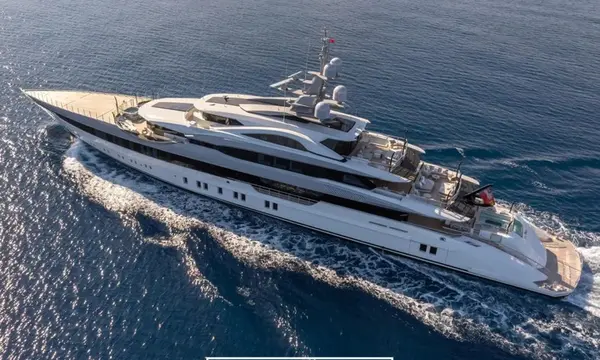
Bilgin Yachts’ 80-metre Al Reem has won the Motor Yacht Over 60 Metres category at the 2026 Design et Al International Yacht & Aviation …
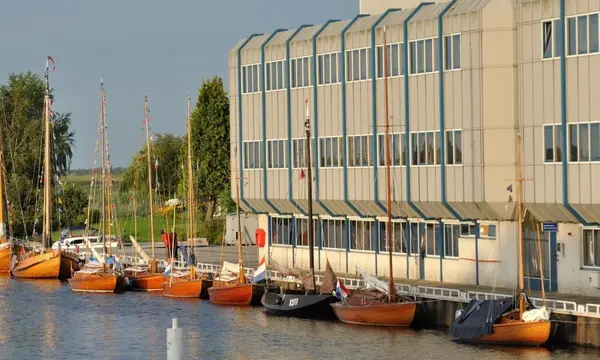
An owners association continues to preserve and operate wooden boats built by the Huisman yard between 1884 and 1943.
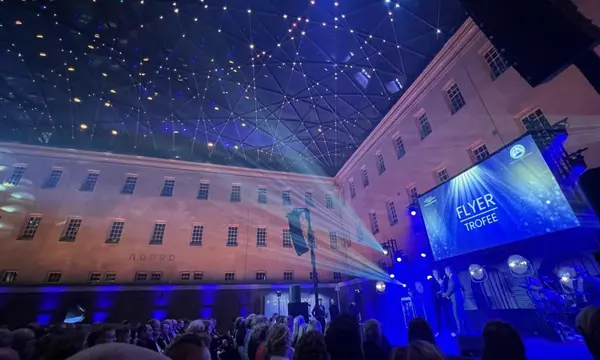
Royal Huisman has highlighted the 2026 winners of the Conny van Rietschoten Trophy, named after the Dutch offshore sailor behind the Flyer programme.
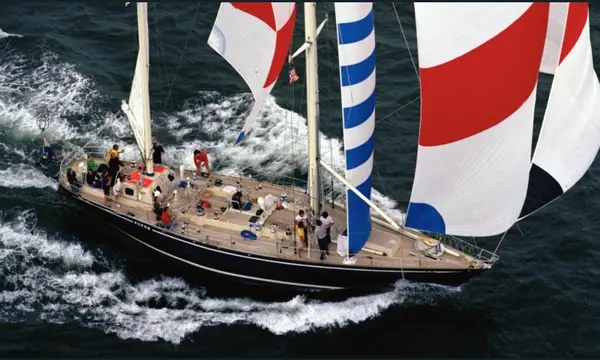
Royal Huisman is marking 50 years since Conny van Rietschoten commissioned the first Flyer, beginning a landmark chapter in offshore racing history.
Superyacht Guide
Continue into the wider Superyacht Guide.
Business opportunities · Superyacht Guide
Companies serving the superyacht market can discuss clearly identified advertising, sponsorship and business-profile opportunities. Commercial activity remains separate from independent editorial coverage.