Van der Valk Acquires 20,000m² of Land for Waalwijk Shipyard Expansion
By Superyacht Guide Newsroom · Edited by Superyacht Guide Newsroom
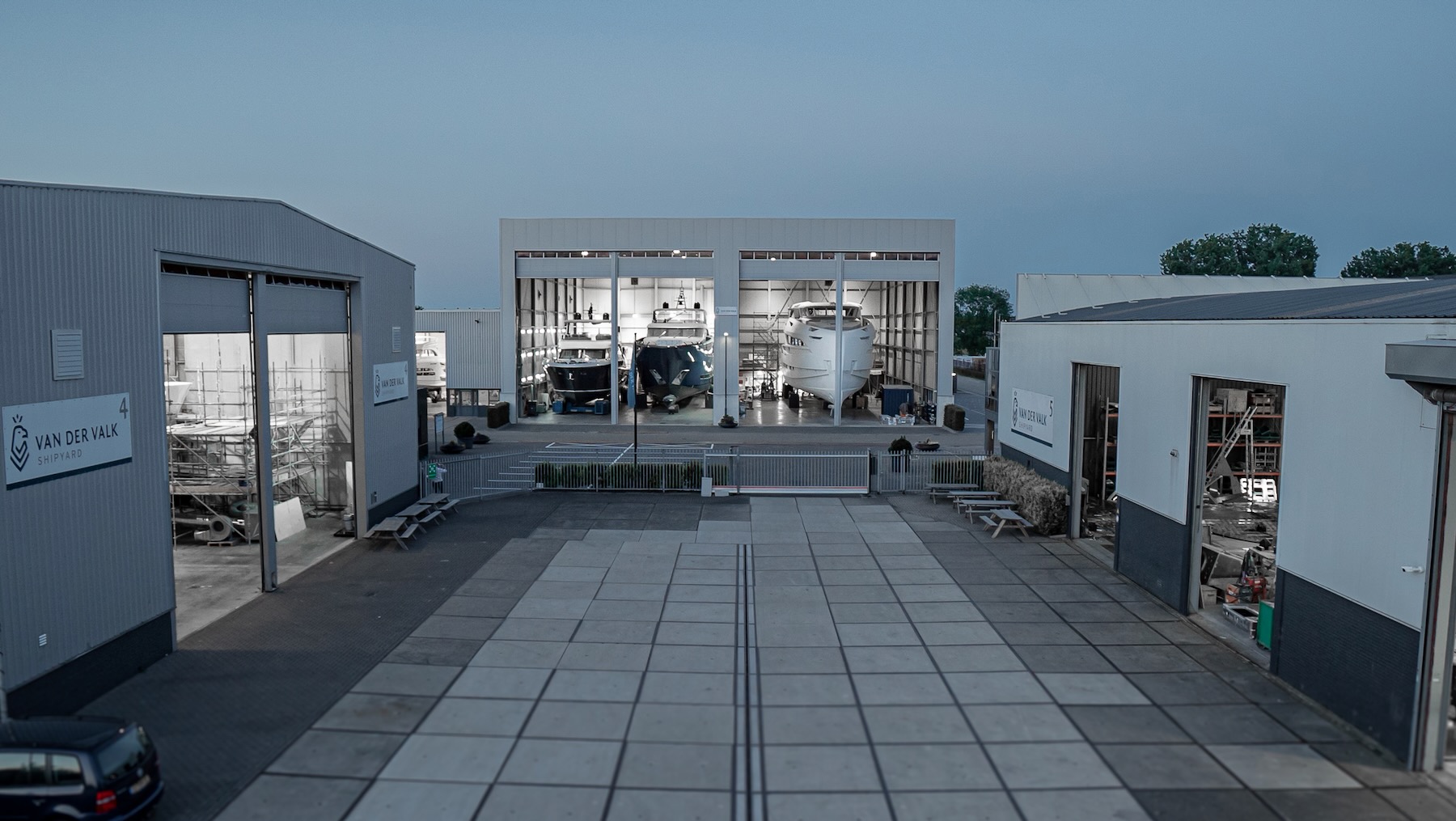
Van der Valk Waalwijk shipyard facilities official November 2026 expansion press photograph
Van der Valk acquires 20,000 square metres at Waalwijk, bringing the entire quayside into its ownership and establishing space for future shipyard growth.
Van der Valk Shipyard has announced that it has acquired 20,000 square metres of property adjoining its production operation in Waalwijk. The announcement, released on 16 November 2026, identifies approximately 235 metres of waterfront within the acquired property. The transaction brings the whole quayside into the shipyard's ownership, according to the company. Although the acquisition creates scope for future industrial development, the builder has not announced a detailed construction schedule for new production halls or disclosed the consideration paid for the property. The announcement is therefore best understood as an investment in the physical capabilities available to the yard over the longer term. For a builder specialising in fully custom and semi-custom yachts between 25 and 50 metres, the availability of suitable land beside an existing operation is particularly important.
The Waalwijk facility is situated in the southern Netherlands, near Tilburg and 's-Hertogenbosch. Van der Valk describes the existing complex as comprising two offices and seven production halls, with a combined floor area of 10,000 square metres. Each hall has an identified function, although some serve more than one purpose. Two are dedicated to outfitting, one to carpentry, one to warehousing, one to aluminium construction, one to painting and another to both construction and outfitting. The arrangement demonstrates how the construction of a custom yacht brings together work that has very different spatial and environmental requirements. The newly acquired land area is twice the figure quoted for the floor area of the existing production halls. Those measurements should not be confused: one refers to the surface area of land, the other to the floor space within buildings. The acquisition does not mean that the indoor production area has already tripled.
A shipyard's waterfront connects the construction operation to the navigable waters through which completed yachts must pass. It can provide access for planned launches, delivery of large components and operations involving yachts that have reached a stage of construction where they can be moved afloat. The value of a quayside depends on many other characteristics, including water depth, access arrangements, available services and equipment for handling vessels. Ownership can provide more certainty when considering investments in such infrastructure, subject to the restrictions and permissions applicable to the property. The company's announcement does not specify changes to the depth of the waterway, lifting capacity or the maximum size of yacht that can be accommodated at the site. It does establish an important change in the extent of property controlled by the builder. Future announcements should clarify how the waterfront will be developed and what additional capabilities will become available.
A custom yacht proceeds through successive stages rather than occupying an identical workspace throughout its construction. Hull fabrication, installation of major machinery, electrical and plumbing work, completion of the accommodation and the application of exterior finishes may demand different equipment and working conditions. A yard operating multiple commissions needs enough space to permit those activities to proceed without unnecessary interference between projects. Additional property can give planners greater flexibility when evaluating the movement of parts, storage of materials and allocation of suitable working areas. However, additional land alone does not create the facilities, machinery or skilled labour needed to increase output. Those require further investment and careful planning. The acquisition provides a foundation upon which such decisions can be made, rather than a confirmed addition to annual delivery capacity. The shipyard has not quantified the number of additional yachts it expects to build as a result.
Van der Valk identifies separate facilities for aluminium construction and carpentry within the current complex. This separation is significant because the conditions appropriate to structural fabrication are not necessarily appropriate for producing finished furniture and interior components. Welding and metal preparation require the management of heat, fumes and airborne material. Interior production and final finishing call for controlled conditions in which surfaces can be protected. Machinery installation also creates different demands on access and material handling. An effective industrial layout must ensure that completed items can be moved safely between the relevant stages of construction. These considerations become more important as the dimensions of a project increase. The possibility of developing additional space gives the yard more options when considering the location and organisation of future activities. The specific layout of any proposed expansion has not yet been published.
The company identified Project ZEN among the yachts presently under construction. The 48-metre raised pilothouse yacht is scheduled for delivery in the second quarter of 2028, when it is expected to become the largest vessel in the Van der Valk fleet. This provides a useful indication of the scale of work already being handled at Waalwijk. The acquisition announcement does not state that the ZEN project depends on the newly acquired land or that its delivery schedule has changed. Its significance in the context of the news is that the builder is already undertaking a commission near the upper end of its stated production range. A larger custom yacht introduces demands on logistics as well as design and engineering. The size of prefabricated sections, the equipment required to move them and the accessibility of individual machinery spaces all affect production planning. Industrial development must take these constraints into account.
Chief executive Evan Kortmann described the acquisition as a means of securing space for expansion and improving the certainty of long-term planning. His statement also described continued demand for fully custom motor yachts and a well-filled order book. Those are the company's own assessments; the announcement does not provide numerical order book data or a financial forecast. An owner commissioning a custom yacht typically has requirements that cannot be satisfied by merely increasing the speed of a standard production line. A new layout or different technical configuration may affect numerous related tasks and suppliers. Consequently, a capacity decision must address the relationship between the number of projects, available project management resources and the experience of specialist trades. Investments in workforce development and production processes may be as relevant as additional building space. It remains premature to assess the commercial return from the land acquisition without more detailed information on its intended use.
For an owner considering a custom commission, the announcement provides useful context about the builder's long-term commitment to its existing location. It does not offer a substitute for examining the actual construction programme, technical specification and contractual arrangements associated with a proposed yacht. Owners should distinguish the capacity available today from facilities that may be established in the future. A project representative visiting a yard may gain valuable insight from seeing the sequence of work, the organisation of materials, the quality of protected storage and the means by which a project can be inspected during construction. Those details can help establish how a shipyard intends to deliver the particular vessel being commissioned. In the longer term, a rationally organised site can also support communication between designers, production workers and engineers, potentially reducing avoidable movement and delays. Those benefits depend on the implementation of the industrial development rather than the ownership transaction alone.
Van der Valk was established in 1967 and describes itself as an independent Dutch builder serving owners internationally. The land transaction extends the physical assets associated with that business at its existing Waalwijk site. Its significance will become clearer when the company publishes decisions about development phases, construction facilities and their intended functions. For the present, the verifiable figures are the acquisition of 20,000 square metres and approximately 235 metres of waterfront, against a current production complex comprising seven halls with a combined 10,000 square metres of floor space. The company has secured an opportunity to plan around the entire quayside. It has not yet announced a specific increase in production capacity, a new maximum yacht length or a completion date for further facilities. The distinction is important when evaluating the implications of the investment for the wider Dutch superyacht industry.
Primary source: Van der Valk official shipyard announcement, 16 November 2026.
Photo: Van der Valk Shipyard, official land acquisition press release. Official source.
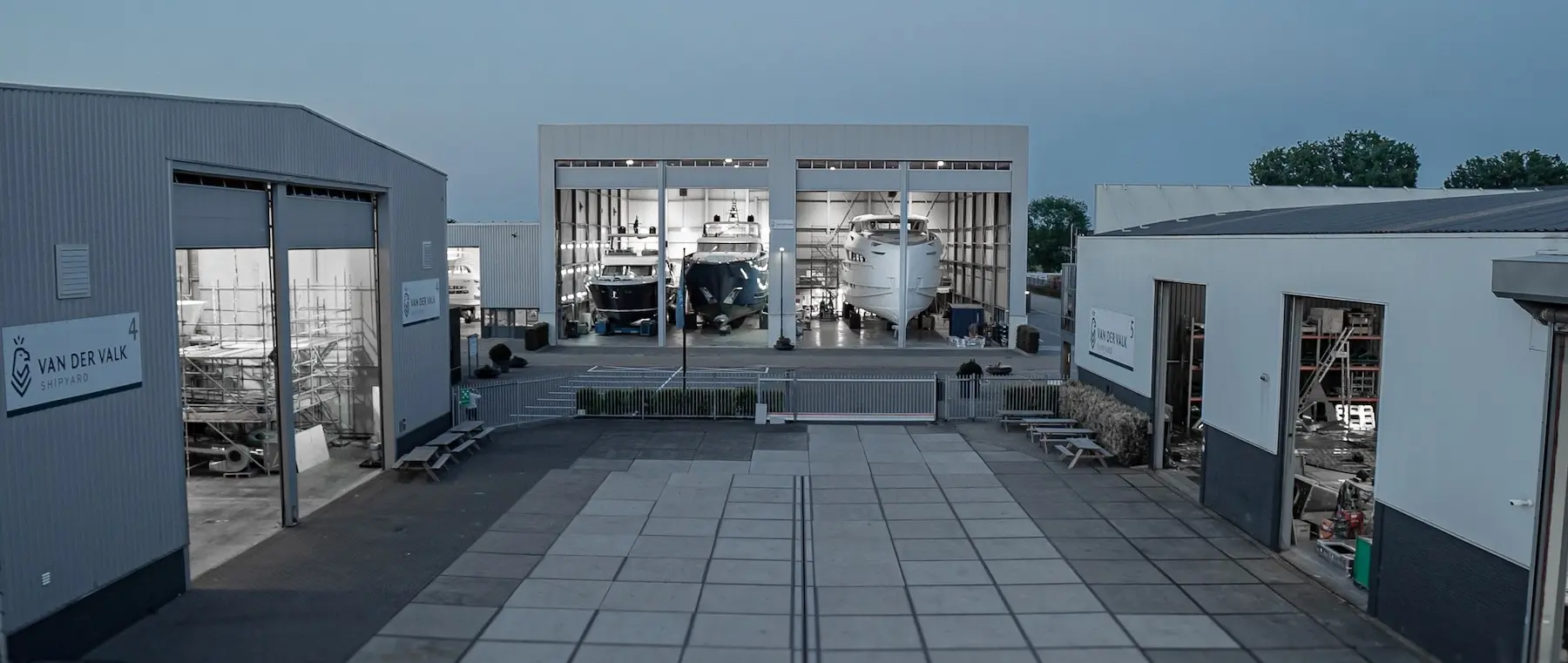
Photo: Van der Valk Shipyard, official land acquisition press release.
Explore
Go deeper into the yachts, companies, events and destinations directly connected to this article.
Continue reading
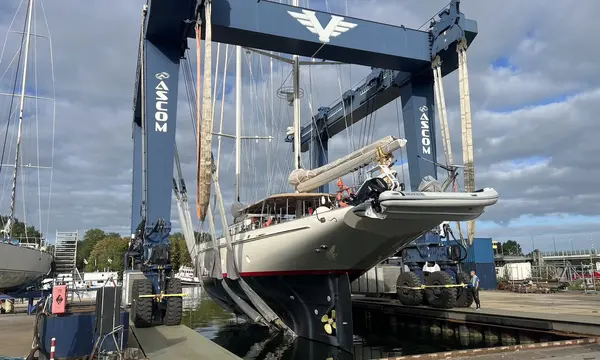
Amsterdam Yacht Service reports a rig-on haul-out for 41.54m MELODY, including antifouling, exterior maintenance, rig retuning and a swing-keel inspection.
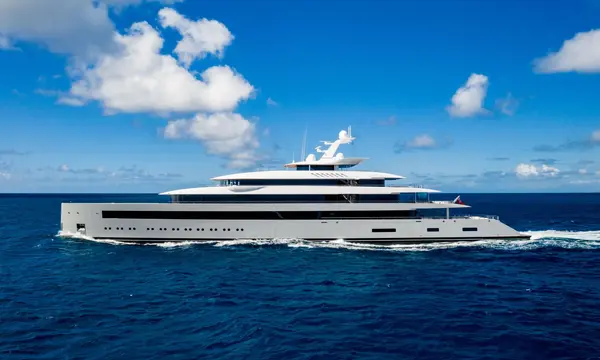
The 99.95m Feadship REVERIE, delivered as MOONRISE in 2020, has been photographed in Gibraltar following a reported ownership change earlier in 2026.
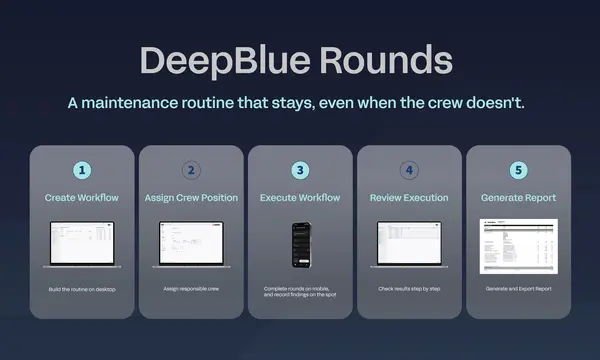
DeepBlue introduces Rounds, a mobile inspection workflow linking equipment readings, maintenance checks and follow-up jobs to yacht equipment records.

Superyacht Investor Miami will hold its one-day conference at the Fontainebleau Miami Beach on 16 November 2026, bringing together yacht brokers, shipyards, financiers, lawyers, …
Superyacht Guide
Continue into the wider Superyacht Guide.
Business opportunities · Superyacht Guide
Companies serving the superyacht market can discuss clearly identified advertising, sponsorship and business-profile opportunities. Commercial activity remains separate from independent editorial coverage.