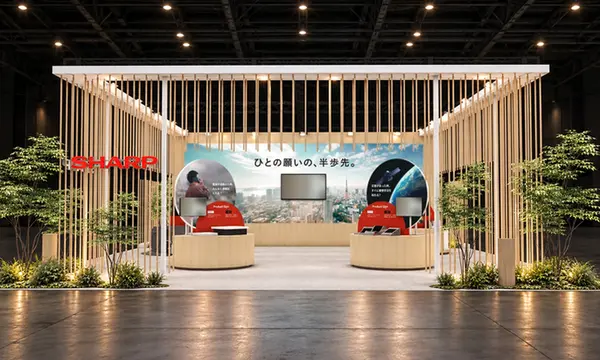
Sharp Previews MEO/LEO Satellite Terminals for Moving Yachts
Sharp prepares to demonstrate its MEO/LEO tracking satellite user terminals at CEATEC 2026, with marine vessels among the planned mobile use cases.
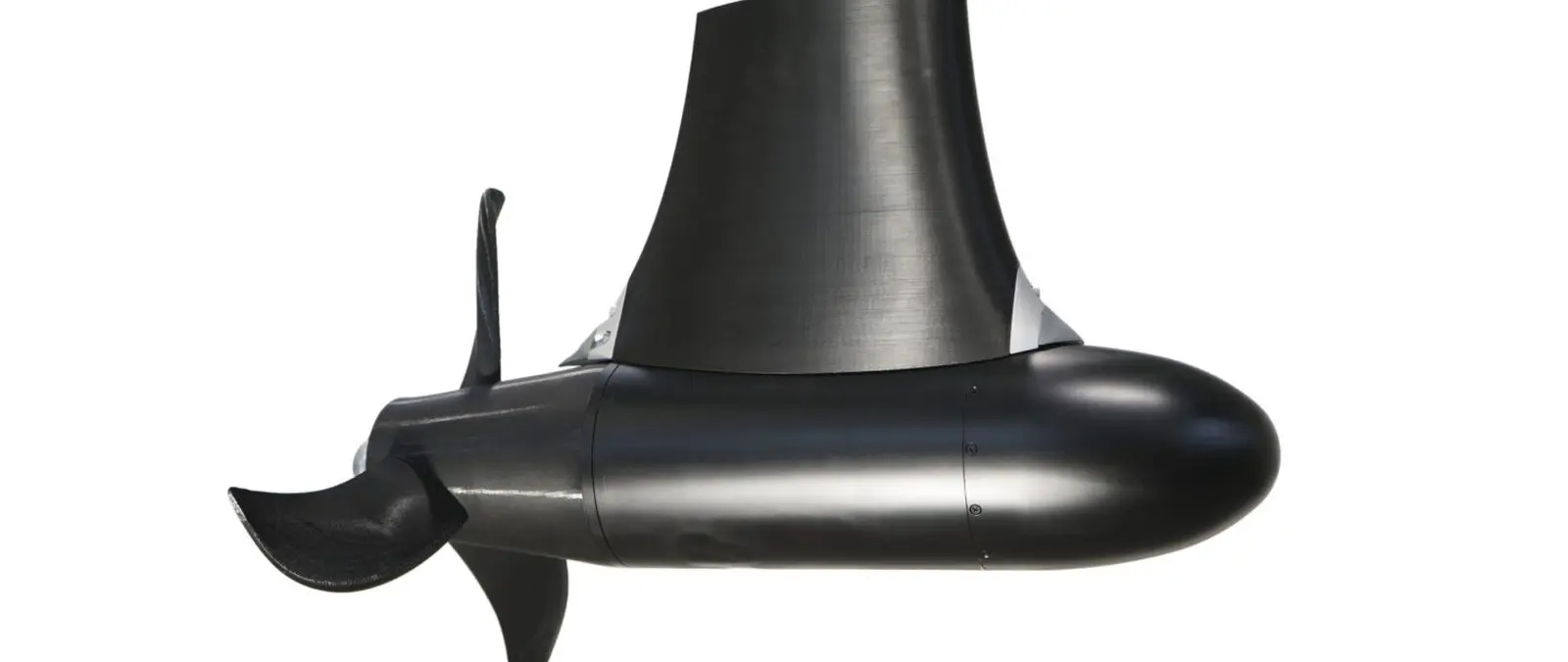
Velettrica's Genoa-debuted Drive-Pod-16 combines a submerged motor, modular batteries and control electronics, offering 14.2kW continuous output for smaller yachts and support craft.
Italian propulsion developer Velettrica presented the Drive-Pod-16 at the 2026 Genoa International Boat Show, introducing a compact hybrid-electric system intended for displacement motorboats and sailing craft of approximately 10 to 14 metres. The company also describes possible use as auxiliary propulsion on vessels up to around 20 metres, giving the technology potential relevance to tenders and support craft operating alongside larger yachts.
The design integrates an underwater motor, propeller and associated power electronics into one submerged pod. With fewer propulsion components taking up space inside the hull, Velettrica aims to make some new-build and retrofit installations easier. The presentation does not establish universal suitability for yachts of every size, and the product should not be described as a full-scale main propulsion system for a 50-metre superyacht.
Velettrica's official technical specification lists a continuous shaft power output of 14.2 kilowatts at 545 rpm, more than 4,500 newtons of stated static thrust and a pod mass of 38 kilograms. The package dimensions are given as about 530 millimetres high and 765 millimetres long, with a 620-millimetre-diameter propeller.
The manufacturer compares the static thrust to a higher-power conventional diesel installation, but thrust at a fixed operating point is not the same as continuous engine horsepower or vessel top speed. Those distinctions are important when evaluating a propulsion package for a tender required to operate against wind, current or a demanding sea state. Actual performance should be demonstrated in a fully loaded representative hull.
The energy architecture is modular and combines battery storage with electronic management and potential range-extending sources. Velettrica describes options including conventional marine generators, solar power and, in future architectures, other technologies such as fuel cells. The company says some configurations can operate silently under battery power when manoeuvring or undertaking short coastal passages.
An ECU manages the drive, battery and charging inputs, with CAN bus, NMEA 2000 connectivity and remote diagnostics described in the published technical information. The manufacturer also discusses possibilities for azimuth steering and dynamic-positioning functions. Engineers should establish precisely which features are commercially available and certified in the offered configuration, rather than treating every development option as standard equipment.
The project has received backing through MOST, Italy's National Centre for Sustainable Mobility, with technical involvement from CNR-INM in testing activities. Settima Meccanica and SPIN Engineering Solutions contributed to electromagnetic design and drive development, according to an announcement from the Green Silence Group after the show.
Velettrica says the propeller and fin use recycled nylon from discarded fishing equipment combined with recycled carbon fibre, while recyclable aluminium is used extensively in the structure. The synchronous motor is designed without permanent magnets, avoiding rare-earth magnet materials. Future sodium-ion batteries are described as a development direction; the current published arrangement uses lithium iron phosphate storage.
For a superyacht engineer, the most immediate applications would be suitably sized workboats, larger tenders and specialist auxiliary craft rather than a parent yacht's propulsion plant. Before any installation, the design team would need to verify thrust requirements, battery autonomy, service access, electrical protection, charging integration and emergency procedures.
The manufacturer's suggestion of fuel savings is dependent on the comparison vessel and operating profile, so it must be treated as a claim rather than an independently verified fleet-wide outcome. The supplied original image comes directly from Velettrica's Drive-Pod-16 product page and shows the manufacturer's technology, not an installation on a named superyacht.
Continue reading
Sharp prepares to demonstrate its MEO/LEO tracking satellite user terminals at CEATEC 2026, with marine vessels among the planned mobile use cases.
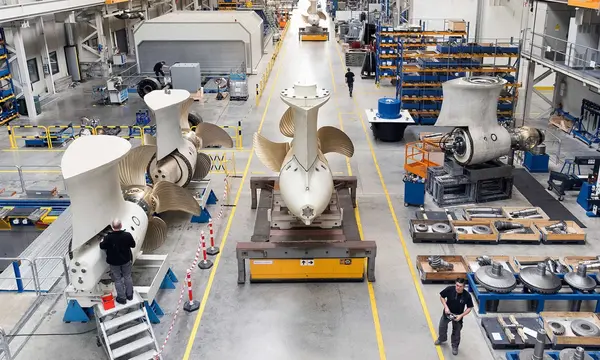
Schottel reports 20 superyachts on order with its forward-facing EcoPeller azimuth propulsion system, highlighting efficiency, manoeuvrability and reduced onboard noise.
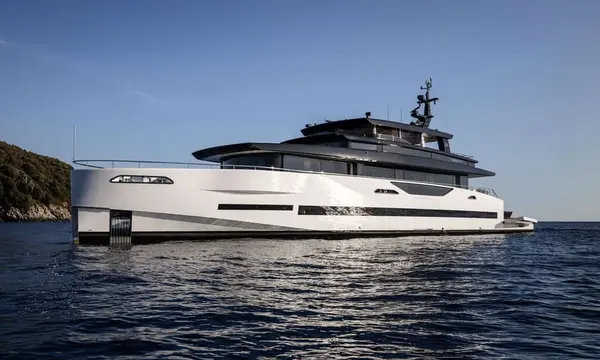
GX Superyachts has presented the 42-metre GX42 with a parallel hybrid drivetrain, substantial battery storage and solar generation integrated into one energy-management architecture.
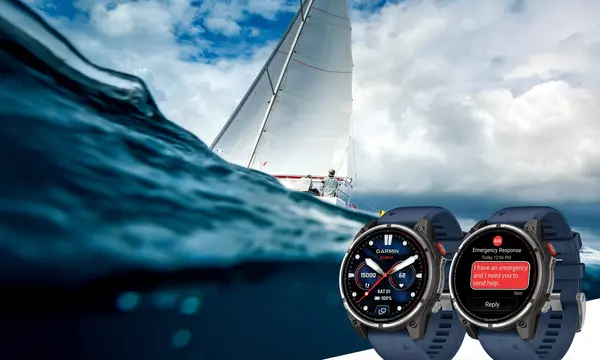
Garmin’s quatix 8 Pro combines inReach satellite and LTE connectivity, marine controls, SOS support and up to 15 days of smartwatch battery life.
Superyacht Guide
Continue into the wider Superyacht Guide.
Business opportunities · Superyacht Guide
Companies serving the superyacht market can discuss clearly identified advertising, sponsorship and business-profile opportunities. Commercial activity remains separate from independent editorial coverage.