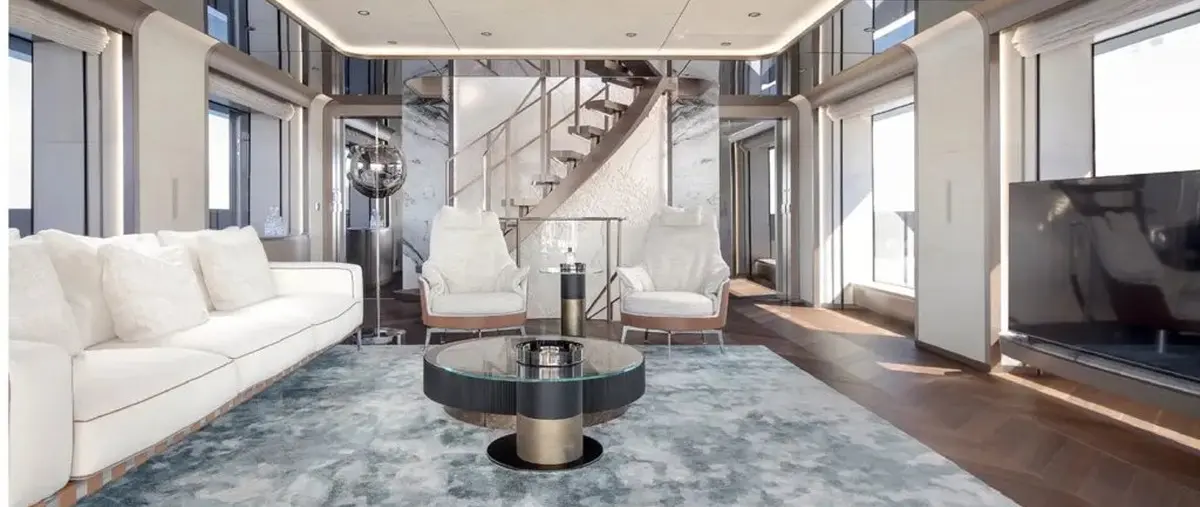
VYD Studio Reveals Interior Photographs of 52.6m GRAY WOLF
By Superyacht Guide Newsroom · Edited by Superyacht Guide Newsroom
Mengi Yay GRAY WOLF saloon VYD Studio newly published interior photograph 2026
VYD Studio releases interior images of Mengi Yay’s 52.6m GRAY WOLF explorer, showing its guest spaces, main saloon and contemporary material scheme.
VYD Studio has shared interior photographs of GRAY WOLF, the 52.6-metre explorer yacht built by Mengi Yay as the first vessel in its Virtus XP series. The latest images offer a more detailed view of accommodation and guest spaces than the exterior photographs circulated around her Monaco Yacht Show 2026 appearance. The yacht, launched earlier in the year, combines a steel hull, aluminium superstructure and naval architecture by Van Oossanen Naval Architects. The design studio's new photographic material illustrates the project's attempt to join a robust explorer profile with a relaxed, contemporary interior. These are photographs of an existing vessel, not an announcement of a new sale, a new launch or a change of ownership. For prospective owners and shipyards, they provide a useful opportunity to examine how exploration-oriented architecture translates into actual guest spaces.
GRAY WOLF has already been a subject of industry attention because she represents a significant stage in the development of Mengi Yay's Virtus XP family. The recent material is different from another report about the launch: it shows how the spaces were finished and organized following the design process. Photographs cannot tell the complete story of how a yacht works, but they can reveal the relationship between large architectural features, furniture, surface materials and the flow between rooms.
The images were published after the yacht's world debut at Monaco, making this a photographic update rather than a claim that construction has just been completed. Reportage must distinguish those events, especially where the model designation and the vessel's length already appear in earlier coverage. The newsworthy element is the public release of new interior views from the credited design studio.
The Virtus XP concept is associated with the practical qualities of a steel-hulled explorer yacht, including the ability to support long-range cruising. Within that structure, VYD Studio's design uses pale colours and natural-looking materials to create an atmosphere closer to a contemporary residence than a utilitarian working vessel. Marble, wood, brushed metal, leather and mirrors appear in the published descriptions of the interior composition.
The visual contrast between the yacht's purposeful exterior and the softer interior is deliberate. However, materials need to be selected not only for their appearance but also for maintenance, weight, fire performance and behaviour at sea. A surface that photographs well can require significant care during a programme that includes remote cruising and frequent guest use. Buyers should therefore treat the images as an invitation to inspect the actual finishes and the practical way they are installed.
One of the prominent features is a spiral staircase that acts as a central element in the main saloon. Its presence provides a recognizable point around which the surrounding interior is organized. Mirrored panels and full-height textured details are used to increase the sense of depth, reinforcing a visual impression of space. This approach reflects a wider interest in making circulation elements part of the guest experience rather than hiding them in a separate lobby.
On board a yacht, stairs also have a working role. They need suitable geometry, handholds and lighting, especially when the vessel is moving. An elegant feature that connects decks in a photograph must remain usable for guests with different levels of mobility and in the conditions anticipated by the yacht's operating procedures. The relationship between style and movement is therefore central to assessing this feature.
The new views highlight a relatively restrained palette, with bright backgrounds and selected darker or more reflective accents. Large glazed areas can bring daylight across the saloon, while timber, metal and stone-like finishes provide points of visual interest. The aim appears to be to keep the atmosphere light while avoiding the impersonal character that can result from extensive uninterrupted pale surfaces.
How these materials perform when the yacht is at sea depends on more than their colour. Sun exposure, humidity, regular cleaning and contact with luggage or equipment can all affect surfaces over time. Owners considering similar schemes should ask about the precise specifications and the availability of replacement materials. This is particularly relevant in bespoke interiors where a damaged panel or piece of stone may be difficult to reproduce several years after delivery.
The announced accommodation arrangement provides five cabins for up to ten guests. The owner's suite is positioned on the main deck, with a private terrace and an informal furnishings arrangement, while additional guest accommodation occupies the remaining cabins. A main-deck principal suite can provide access and views that differ from lower-deck rooms, although the design still needs to balance privacy with proximity to commonly used living spaces.
An owner's representative should review the full accommodation plan and the relationship between guest areas, crew routes and technical services. The number of cabins is only a starting point for assessing a yacht's suitability. Storage, noise, daylight and ease of access can matter more during an extended passage than the appearance of a room during an initial viewing.
The interior includes a formal dining area intended for ten guests. Elsewhere, the upper saloon provides another gathering space with a television area, while outdoor decks offer opportunities for meals and relaxation. This distribution allows a group to change activities without requiring the same room to serve every purpose. For guests spending several days on board, such flexibility can be valuable.
The arrangement should be evaluated with crew service in mind. Preparing and delivering meals, clearing spaces and maintaining privacy all depend on circulation that may not be apparent in photographs. A dining area with substantial visual impact still needs suitable lighting, ventilation and access for staff. Owners can obtain a better understanding by walking through a typical service routine with a captain or interior manager.
The described aft area includes a glass-walled pool and folding side platforms that can enlarge the space close to the water. The area may also be used in connection with tender storage when not configured primarily for leisure. Such adaptability can be attractive on a yacht whose owner wants to combine adventure activities with the experience of a conventional luxury vessel.
Changing the function of a space is not always effortless. A deck configured for swimming may require different equipment, restraints and safety precautions from one carrying a tender. Moving platforms, lifting arrangements and pool systems require attention to their own operating limitations. Photographs illustrate the available possibilities but cannot establish that every changeover is fast or suitable under all conditions. A proper review should examine the design drawings and the crew procedures associated with those changes.
The announced general arrangement includes a sheltered eight-person seating area aft on the main deck, dining and relaxation on the upper deck, and a private foredeck lounge. The sundeck carries fitness and sunbathing facilities, extending the available outdoor experiences beyond a single aft terrace. This gives the yacht several locations from which guests can enjoy a cruising destination and a choice between more active and quieter activities.
A yacht designed for extended cruising must allow these spaces to be secured when weather becomes less favourable. The presence of gym equipment or loosely arranged furniture on an upper level raises practical questions about stowage and crew supervision. The balance between leisure facilities and working arrangements is part of the engineering challenge of an explorer yacht. The interior photography should be considered within that wider context.
Mengi Yay's steel-and-aluminium construction and Van Oossanen's naval architecture are important parts of the project, even though the new photographs focus on guest accommodation. A vessel's range, seakeeping and serviceability depend on structural, mechanical and operational decisions that are not usually visible in editorial photographs. The quality of the interior can enhance the experience of a voyage, but it cannot replace the underlying technical capability.
Owners considering a yacht of this size should examine classification, maintenance records and operating experience alongside design. The statement that a vessel is intended for exploration does not guarantee suitability for every remote destination or extreme condition. Routes should be planned according to the yacht's documented capabilities, crew experience and the availability of suitable support services.
The release of the GRAY WOLF images provides a more complete view of the work undertaken by VYD Studio and Mengi Yay. It illustrates the particular challenge of combining substantial technical capability with spaces intended to feel inviting and personal. The result will interest designers, owners and project managers evaluating how different zones and materials can be coordinated aboard a large explorer.
The event should be reported for what it is: a new public view of a yacht that has already launched and made a show appearance. It does not establish a new transaction, delivery date or performance claim. The photographs add substance to earlier coverage by showing how the spaces came together, while the final assessment of GRAY WOLF as a cruising yacht depends on practical operation and technical evidence beyond the images.
Primary source: VYD Studio official GRAY WOLF interior image release via News at Yacht, 7 November 2026.
Interior photograph: VYD Studio / Mengi Yay, distributed with the interior reveal on News at Yacht, November 2026. Official source.
Explore
Go deeper into the yachts, companies, events and destinations directly connected to this article.
Continue reading
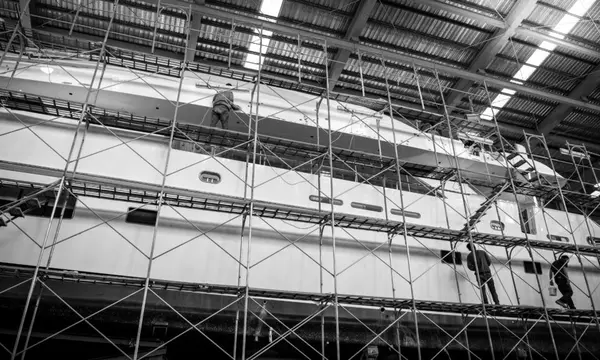
Turkish superyacht builder Mengi Yay has joined the international Superyacht Builders Association, with custom projects underway between 45 and over 60m.
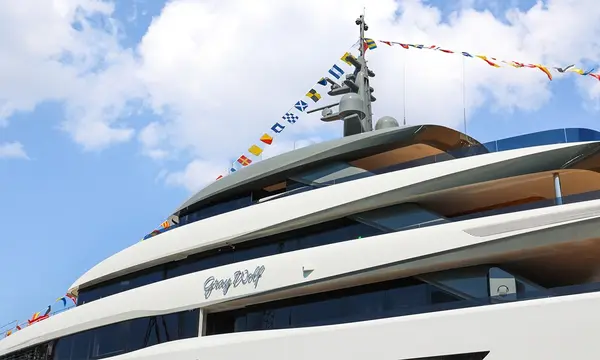
Monaco Yacht Show lists the 52.4m Mengi Yay explorer GRAY WOLF at berth E09 ahead of its international public debut after an April launch.
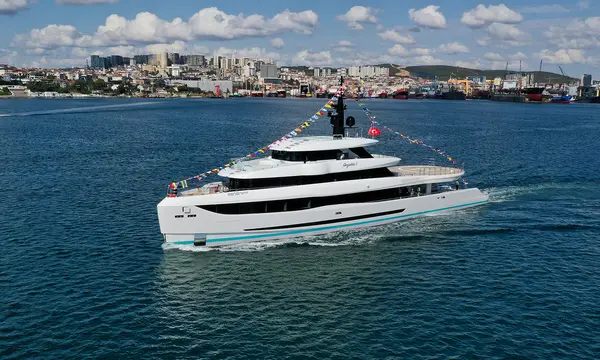
Mengi Yay launched AMPHIB II NB116 in July 2026. Examine the 52.4m explorer, its design specifications, planned trials and relationship to GRAY WOLF.
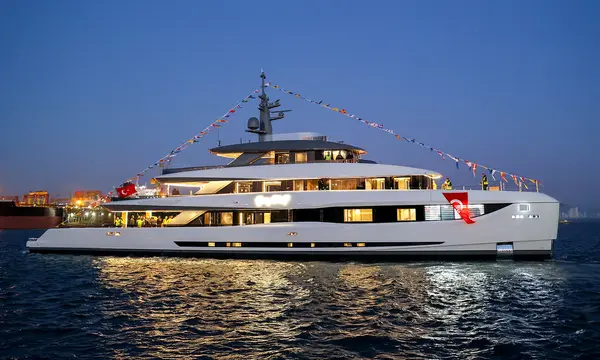
Mengi Yay launched 52.5m GRAY WOLF NB113, the first Virtus XP explorer, on 5 April 2026. Read about VYD Studio, Van Oossanen and the …
Superyacht Guide
Continue into the wider Superyacht Guide.
Business opportunities · Superyacht Guide
Companies serving the superyacht market can discuss clearly identified advertising, sponsorship and business-profile opportunities. Commercial activity remains separate from independent editorial coverage.
