The Rise of Shadow Ownership in the Superyacht Market
Corporate structures are a routine part of superyacht ownership, but the compliance risk changes when they obscure the person who ultimately owns or controls …
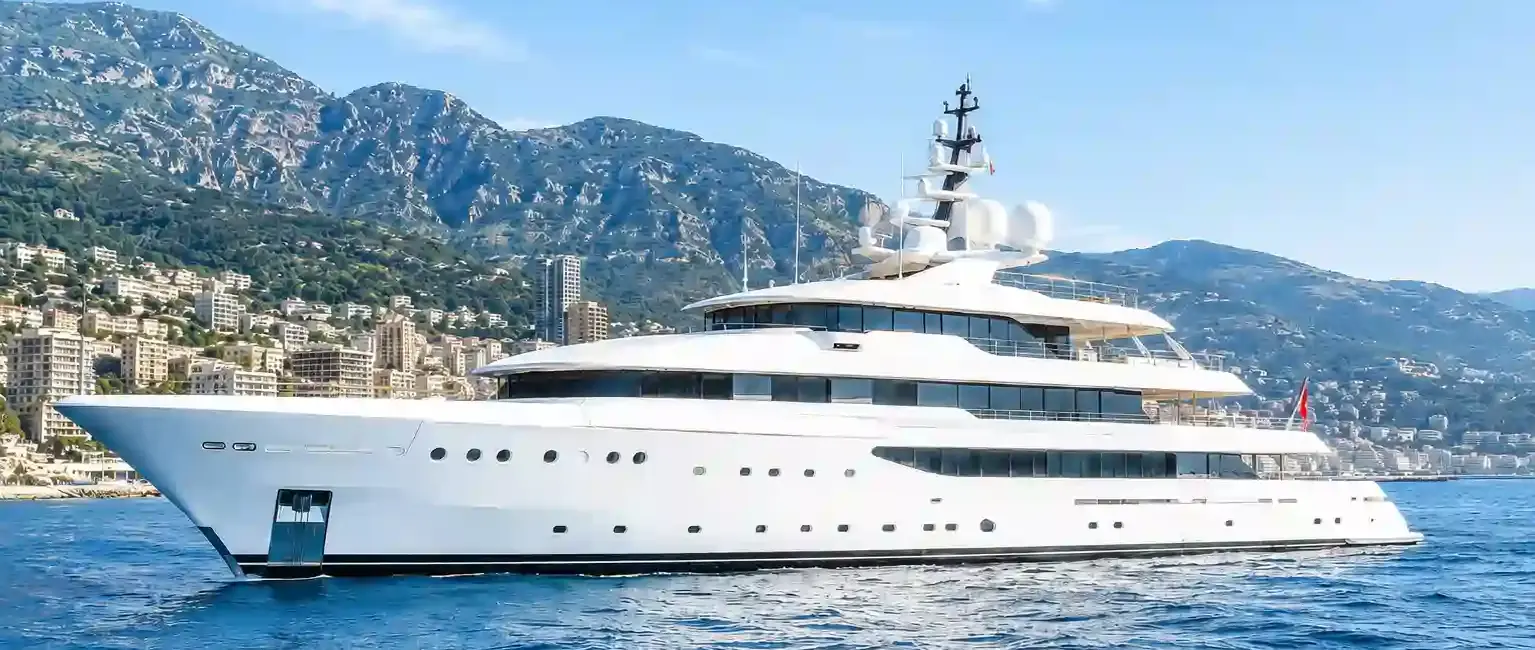
After Russia’s invasion of Ukraine, superyachts linked to sanctioned Russian elites became unusually visible test cases for asset freezes, ownership investigations and international enforcement.
When Western governments expanded sanctions against Russian political and business elites after the February 2022 invasion of Ukraine, some of the most recognisable enforcement actions did not involve bank accounts, securities or corporate holdings. They involved superyachts: enormous physical assets photographed in ports from the Mediterranean to the Pacific and suddenly placed at the centre of an international effort to identify, freeze and sometimes seize property linked to sanctioned people.
Within the first 100 days of the multilateral Russian Elites, Proxies, and Oligarchs Task Force, participating governments said they had frozen or blocked more than $30 billion of sanctioned Russians’ assets and had seized, frozen or detained vessels including Amadea, Tango, Amore Vero, Rahil and Phi. The yachts became the public face of a much wider sanctions programme because they transformed an otherwise technical system of financial restrictions into something that could be seen tied to a quay.
That visibility also created a misleading simplicity. A Russian-owned yacht is not automatically sanctioned, a press report about an alleged owner does not establish legal ownership, and freezing an asset is not the same thing as confiscating it.
The yacht cases instead revealed how sanctions intersect with beneficial ownership, corporate structures, banks, flag states, shipyards, marinas, insurers and the international network required to operate a large yacht. Their significance therefore extended well beyond the individual owners and vessels involved.
Superyachts were almost uniquely suited to become sanctions symbols because they combine immense value with physical visibility. A bank balance can be frozen without anyone outside the financial system seeing it happen, while a large yacht may be photographed entering a harbour, identified through its IMO number and watched while authorities restrict its movement.
They also communicate private wealth in a particularly direct way. When the U.S. Treasury designated Alisher Usmanov in March 2022, it specifically identified Dilbar as blocked property, describing the yacht as one of the world’s largest and estimating its value at between $600 million and $735 million.
That made yachts politically powerful enforcement images even when the underlying legal process remained complicated. Photographs of a superyacht under guard or unable to leave port conveyed the effect of sanctions far more immediately than notices concerning securities, corporate interests or frozen accounts.
The symbolism was strengthened by the fact that these vessels were designed to move internationally. A superyacht can cross jurisdictions, change ports and depend on service providers in multiple countries, so attempts to restrict one demonstrated whether sanctions cooperation could extend beyond the country that originally imposed the measure.
The yacht cases quickly showed that the name on a registration document was not always the end of the ownership inquiry. Large yachts are commonly held through corporate vehicles, and sanctions investigators increasingly focused on whether the registered owner accurately reflected the person who ultimately benefited from or controlled the vessel.
When Spanish authorities acted against the 77-metre Tango in April 2022 at the request of the United States, the U.S. Justice Department said the vessel was owned by sanctioned businessman Viktor Vekselberg. Court filings cited by the department alleged that shell companies had been used to obscure his interest in the yacht and to avoid scrutiny of U.S.-dollar transactions connected with its operation.
The ownership dispute surrounding Amadea became even more detailed. In a 2023 civil forfeiture complaint, U.S. prosecutors alleged that beneficial ownership of the yacht had been transferred through newly created companies in a structure intended to conceal the interest of sanctioned Russian businessman Suleiman Kerimov; because those allegations formed part of civil litigation, they required judicial determination rather than simply being treated as established because the government had asserted them.
For the yacht industry, the lesson extended well beyond those individual vessels. Knowing the registered owning company may no longer be sufficient where sanctions exposure requires a business to understand who owns the company, who benefits from the yacht and whether a sanctioned person has an interest in the transaction being considered.
One of the most persistent misunderstandings created by the high-profile yacht cases is that a sanctions freeze automatically transfers ownership to the government imposing it. Under U.S. sanctions rules, OFAC explicitly distinguishes blocking from seizure: blocked property is frozen and dealings are restricted, but title normally remains with the blocked owner unless a separate legal process changes that position.
Seizure introduces another legal stage. In the case of Tango, Spanish authorities acted following a U.S. seizure warrant alleging that the yacht was subject to forfeiture on grounds involving sanctions violations, bank fraud and money laundering; Amadea was seized in Fiji following a U.S. mutual legal assistance request and a domestic Fijian court order.
Forfeiture goes further again because the government must establish a legal basis for taking the property permanently. When U.S. prosecutors filed their 2023 civil forfeiture complaint concerning Amadea, the Justice Department specifically noted that a forfeiture complaint contains allegations and that the government bears the burden of proving the asset is forfeitable.
The long lifecycle of these cases demonstrates why those distinctions matter. The U.S. Marshals Service reported that it eventually sold Amadea by sealed-bid auction in September 2025, more than three years after the yacht had been seized in Fiji, illustrating how an enforcement action that takes minutes to photograph can create years of legal and asset-management consequences.
A superyacht cannot operate simply because an owner retains legal title to it. Fuel must be purchased, crew paid, machinery serviced, berths arranged, insurance maintained, communications supplied and contractors brought aboard, creating a large chain of transactions around the vessel.
That operating ecosystem is precisely why sanctions can immobilise a yacht without physically taking it away from its owner. When OFAC identified Dilbar as blocked property, the Treasury specifically explained that prohibited transactions could include maintenance, the hiring of operating personnel and docking fees when those transactions involved U.S. persons or U.S. dollars.
The United Kingdom similarly introduced measures preventing the provision of maintenance services to aircraft or ships belonging to specified sanctioned Russian oligarchs or their businesses. Current UK Russia sanctions guidance also sets out obligations around designated persons, economic resources and reporting where the rules apply.
The practical consequence is that sanctions compliance extends through the yacht’s commercial support structure. A marina, management company, shipyard, supplier, bank or insurer may each face its own obligations, and the answer can differ depending on jurisdiction, ownership structure, currency and exactly which person is involved.
The yacht cases also exposed how dangerous it can be to assume that one sanctions test applies everywhere. OFAC’s 50 Percent Rule generally treats an entity as blocked when one or more blocked persons own, directly or indirectly and in aggregate, 50 percent or more of it, while OFAC states that control without the required ownership level does not by itself automatically trigger the rule.
UK guidance uses its own ownership and control framework and states that asset-freeze prohibitions can apply to entities owned or controlled by a designated person. The practical compliance question therefore cannot be reduced to checking one sanctions list and finding that the yacht’s registered owning company does not appear on it.
This is particularly relevant to superyachts because the legal owner, beneficial owner, family office, management company and person using the yacht may all be different. A structure that appears straightforward from a registry extract can become substantially more complicated once indirect ownership, control and payment flows are examined.
The result has been a major shift in the importance of beneficial-ownership due diligence around high-value yachts. Sanctions compliance increasingly asks not merely “who owns the vessel on paper?” but “who ultimately owns, controls, benefits from or is represented in this transaction?”
Tango became one of the earliest prominent examples of international cooperation after the 2022 invasion. Spanish authorities froze the yacht in Palma de Mallorca on 4 April 2022 following a U.S. request, and the Justice Department described it as the first superyacht belonging to a sanctioned person with close ties to the Russian government to be seized at U.S. request following the invasion.
Amadea demonstrated the geographic reach of the same approach. Fijian authorities acted on a U.S. mutual legal assistance request thousands of miles from Washington, after which the yacht was transferred to U.S. control while litigation over forfeiture and ownership proceeded.
These cases mattered beyond the value of the individual vessels. They demonstrated that a yacht’s mobility could become a liability when governments were willing to coordinate judicial requests, sanctions information, banking evidence and local enforcement across jurisdictions.
The multinational REPO Task Force deliberately highlighted yachts among the assets affected by its early enforcement programme. That choice reflected both their financial importance and their ability to demonstrate that high-value movable assets could no longer be assumed to remain beyond the practical reach of coordinated sanctions.
Calling these vessels “oligarch yachts” made for powerful headlines, but the expression can obscure important distinctions. Some owners were formally designated under sanctions regimes, others were described by governments as connected to sanctioned individuals, and still other yachts attracted speculation without an enforcement authority establishing that they were blocked property.
That distinction matters because a yacht itself does not become unlawful simply because its owner is wealthy, Russian or politically connected. The legal consequences arise from specific sanctions designations, ownership or control rules, prohibited transactions, court orders and the jurisdiction of the people and businesses involved.
The same caution applies to public claims about beneficial ownership. Government allegations in forfeiture proceedings can be detailed and supported by evidence gathered during investigations, but where litigation remains unresolved they should be reported as allegations rather than converted automatically into findings of fact.
For the superyacht sector, precision is more than an editorial concern. Decisions about whether to accept a yacht into a marina, carry out maintenance, arrange insurance, manage crew payments or execute a sale may depend upon exactly which legal test applies and what can be established about the parties behind the vessel.
Sanctions are fundamentally systems of restrictions on people, property and transactions, yet they are normally difficult for the public to visualise. Superyachts changed that because a vessel hundreds of feet long, worth tens or hundreds of millions of dollars and unable to continue operating normally became an unmistakable representation of economic pressure.
They also exposed how interconnected the modern superyacht industry had become. Ownership might sit in one jurisdiction, the flag in another, management in a third, insurance elsewhere and payments routed through international banks, while the yacht itself could be berthed thousands of miles away.
That complexity made yachts both challenging enforcement targets and unusually revealing ones. Investigations into Tango and Amadea did not simply concern possession of luxury vessels; they examined corporate entities, beneficial ownership, payment systems and the international services required to keep those assets operational. This is ultimately why oligarch-linked yachts became symbols of the sanctions era: they turned an abstract contest over asset freezes, financial networks and beneficial ownership into something physical, mobile and impossible to overlook, while showing the yacht industry that ownership and compliance had become inseparable parts of operating a major vessel.
Continue reading
Corporate structures are a routine part of superyacht ownership, but the compliance risk changes when they obscure the person who ultimately owns or controls …
Yacht brokers, managers and shipyards face sanctions risk through ownership structures, payments and services, making effective due diligence essential.
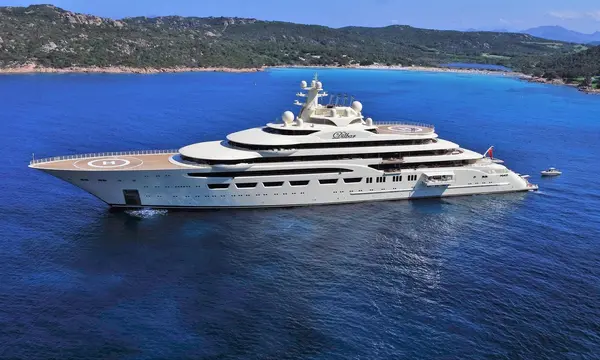
Seizing a sanctioned superyacht is only the beginning. The yacht may remain immobilised for years while ownership is disputed, maintenance bills continue, crew arrangements …
How yacht ownership structures use companies, trusts, flag states, managers and compliance systems to handle privacy, liability, tax and operational risk.
Superyacht Guide
Continue into the wider Superyacht Guide.
Business opportunities · Superyacht Guide
Companies serving the superyacht market can discuss clearly identified advertising, sponsorship and business-profile opportunities. Commercial activity remains separate from independent editorial coverage.