
Zparq Names Johan Inden Chairman as Electric Propulsion Scales — licensed SYG News 26Nov batch07
Swedish electric propulsion specialist Zparq names Nimbus Group CEO Johan Inden chairman as it scales compact pod-motor production for global OEM buyers.
Swedish marine technology company Zparq has appointed Johan Inden, chief executive of Nimbus Group and a former senior leader at Volvo Penta, as chairman of its board. The appointment comes after Zparq launched an electric original-equipment-manufacturer propulsion system in April 2026 and began supplying its first customers, including companies in the United States. The business says early tests in an autonomous vessel application have led to follow-on development orders. Inden replaces Jan Hellåker as the company prepares to increase production capability and pursue international marine manufacturers. The news is significant because the company's immediate challenge appears to be converting a compact propulsion technology from promising demonstrations into a repeatable commercial product.
The announcement identifies Inden as the incoming chairman, not as a replacement for Zparq chief executive and co-founder Jonas Genchel. That distinction defines his role. Board leadership can influence strategy, governance and the way a growing business evaluates risk, while operational executives remain responsible for day-to-day decisions. Zparq frames the appointment around industrialisation, supply chains, distribution and customer support. The intended outcome is not simply more visibility for electric boating but the ability to produce consistent units, deliver them on time and provide dependable service. Actual success must be assessed through later customer deliveries and operating results.
Zparq is developing an electric propulsion platform combining compact direct-drive pod motors, associated power electronics, batteries and intelligent control systems. Its reported technology includes a 10kW motor weighing approximately four kilograms. Those figures describe one component, not the installed weight of a complete propulsion system with battery storage, cables, controls, structural attachments and safety equipment. For a yacht designer, the package-level picture is always decisive. A light motor may provide layout flexibility, but the overall solution must meet requirements for thrust, endurance, environmental protection, heat management and maintainability before it can be selected for a particular vessel.
The company states that its OEM propulsion system entered the market in April 2026. The November leadership appointment therefore comes within the same calendar year as the announced commercial launch. Zparq says the first customers include US manufacturers and that one autonomous-vessel programme has generated additional development orders after successful testing. These are important signs of engagement, but they do not reveal total revenue, number of production units shipped or a mature global service network. It is useful to distinguish an OEM customer conducting a development programme from a large-scale fleet rollout. The former can establish technical confidence; the latter requires repeatable industrial processes and long-term commitments.
An OEM propulsion business serves manufacturers that incorporate its components into their own boats or marine products. That commercial model is different from selling a replacement motor directly to an individual yacht owner. A builder must verify how an electric drive integrates with controls, batteries, onboard monitoring, mechanical structures and service procedures before a vessel is delivered. Technical questions often arise long before a consumer sees the finished product. For Zparq, engaging boatbuilders early may allow the platform to be considered as part of the overall vessel design. It also means the company needs to provide documentation and engineering support that industrial customers can use consistently.
Inden's current leadership of Nimbus Group and previous senior responsibilities at Volvo Penta and CPAC Systems give the appointment a link to established marine manufacturing and technology operations. This background is relevant to international distribution and producing equipment to agreed standards across multiple customers. It does not imply that Nimbus has committed to buying Zparq systems, that Volvo Penta endorses the technology or that the companies have announced a new supply contract. Such interpretations would go beyond the disclosed facts. The rational connection is managerial experience with the problems a small specialist must solve when moving from limited initial deliveries toward broader production.
Jan Hellåker, who is stepping down as chairman, described the company's movement from leisure boating toward applications including maritime surveillance, subsea inspection and autonomous craft. He also expressed confidence in Inden as his successor. That description highlights how the platform's possible market has diversified. It does not establish that every application has reached serial production or that the same system can be installed without adaptation across all vessel types. The engineering and regulatory requirements of a commercial or defence platform can differ substantially from those of a pleasure boat. A sound product strategy should identify the variants, documentation and support needs of each customer sector.
Zparq reports a successful autonomous-vessel test by a customer, followed by additional development orders. Autonomous craft can provide demanding tests of electric propulsion, particularly where accurate speed control, repeatable response and integration with electronic systems are important. Yet one successful test does not settle questions of operation in rough water, long-term corrosion resistance or component life. Those questions require measured data over a defined range of conditions. The useful inference is that an OEM customer sees enough potential to continue engineering work. It would be premature to present the announcement as proof of widespread autonomous-vessel adoption or of a universal performance advantage.
The platform is described as using direct-drive pod motors. Reducing mechanical transmission stages can simplify some design arrangements, though it shifts engineering attention toward motor design, cooling, sealing and electronics. In a crowded engine space or a small dedicated propulsion compartment, packaging may be a commercial advantage. At the same time, the propulsion installation must be evaluated against propeller efficiency, cavitation, thrust at low speed, vibration and service access. These are not details to be inferred from a motor's headline mass. Builders and operators should request component drawings, applicable test results and installation guidance tailored to the intended hull.
Electric propulsion is often discussed as if the motor alone determines performance, but energy storage and distribution are equally important. A battery-driven vessel's useful range depends on battery capacity, propulsion demand, weather, load and operating speed. Integration also raises questions about charging, thermal protection, isolation and end-of-life replacement. Zparq's platform includes batteries and electronics, yet the public material does not establish a single endurance figure applicable to every future installation. Responsible comparisons need complete-system figures under consistent operating conditions. A supplier that can support those calculations will be better placed to work with yacht designers and builders than one relying only on a light and compact motor demonstration.
Zparq is not announcing a new 50-metre superyacht propulsion installation. Its currently public examples are centred on compact marine applications and OEM customers. Potential relevance to larger yachts is more likely to involve tenders, auxiliary craft, specialist support vessels or equipment that demands compact electric drive. Those are possibilities to evaluate, not confirmed integrations. For a tender operating near a large yacht, quieter low-speed movement could be attractive, but safety, available charging and the operation's real duty cycle remain critical. A superyacht management team should ask whether any proposed application is supported by an identified manufacturer, tested equipment and a service route in the cruising region.
Moving from the first deliveries to sustained output calls for quality assurance, supplier resilience, traceability and consistent documentation. An electric drive used by multiple builders must be sufficiently repeatable that training and spare-parts procedures remain dependable. Customers also need clear handling of updates, failures and warranty decisions. Inden's quoted priorities include reliable delivery and lasting relationships, which speak directly to this transition. The company has not provided a detailed production schedule or disclosed the investment required to reach a particular volume. Monitoring future orders, independent trials and manufacturer integrations will be more informative than assuming that the management appointment alone solves these industrial challenges.
Zparq's first OEM customers reportedly include the United States, but entering an overseas market involves more than transporting hardware. Different customers may require local technical guidance, documentation, warranty coordination and knowledge of applicable standards. Service needs can be especially complicated for vessels that travel between jurisdictions. A company selling integrated propulsion equipment must also decide which responsibilities belong to the system supplier and which remain with the boatbuilder. Transparent interfaces and agreed fault-investigation procedures make those boundaries easier to manage. The appointment of a chairman with international marine experience is understandable in that context, although no specific new distributor agreement has been announced.
Electric propulsion can reduce local exhaust emissions at the point of operation, but its overall environmental impact depends on electricity generation, manufacturing, battery life and the system it replaces. A small light motor may make an installation attractive, yet a fair assessment requires a defined duty cycle and comparable reference system. Buyers should be cautious of claims that combine motor mass, complete boat range and emissions as though they were one measurement. The company's present announcement is about a leadership appointment and industrial development, not a new independent lifecycle study. Progress would be easier to judge with published system specifications, transparent test methods and documented real-world customer use.
The clearest near-term milestones are additional verified OEM integrations, repeatable production, reliable component deliveries and evidence that customer development work progresses into operational systems. Zparq has already described an initial launch, first deliveries and follow-on orders. The new chairman arrives as the company seeks to make those beginnings industrially durable. For the wider yacht industry, the appointment is a reminder that propulsion innovation depends on manufacturing and support systems as much as on an appealing technical specification. A four-kilogram 10kW motor deserves engineering attention, but sustained trust will come from complete equipment performing reliably on boats that customers actually use.
Primary source: Marine Business, reporting Zparq's corporate appointment announcement, 24 November 2026.
Archival Göteborg harbour photograph; not a picture of Zparq's motor or new chairman. Photo: Smiley.toerist; CC BY-SA 4.0 via Wikimedia Commons. Licensed photograph.
Explore
Go deeper into the yachts, companies, events and destinations directly connected to this article.
Continue reading
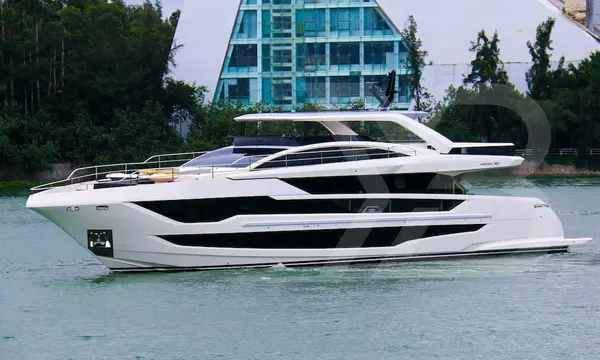
The first Pearl 100 Hybrid has completed initial sea trials ahead of its world debut at the 2026 Fort Lauderdale International Boat Show.
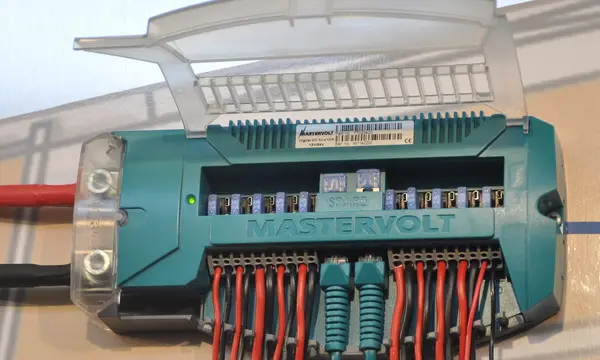
IYC explains how buyers can compare yacht shows worldwide, select vessels worth inspecting and plan appointments around their real ownership needs, for.
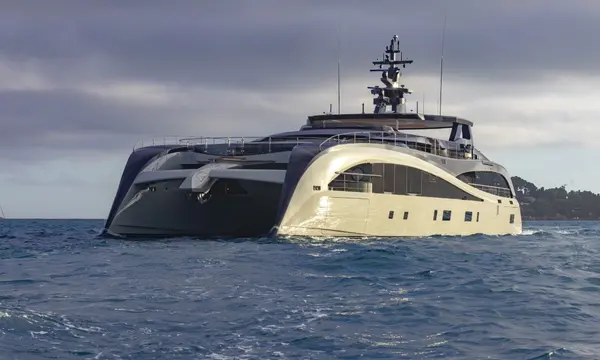
The 42.84m Rossinavi hybrid-electric catamaran SEAWOLF X has sold after marketing at €36.9m, with buyer and seller represented by specialist yacht brokers.
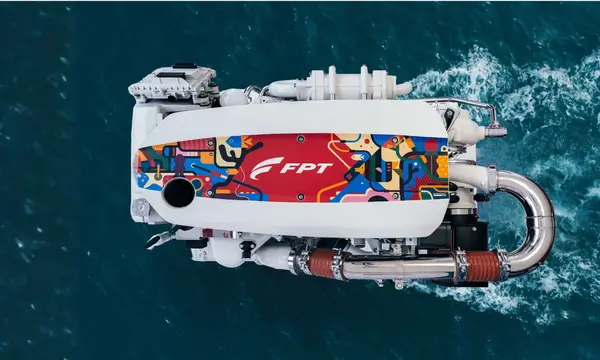
FPT, part of Iveco Group, joins Italy's Confindustria Nautica to strengthen relationships with yachtbuilders as interest in marine propulsion systems grows.
Superyacht Guide
Continue into the wider Superyacht Guide.
Business opportunities · Superyacht Guide
Companies serving the superyacht market can discuss clearly identified advertising, sponsorship and business-profile opportunities. Commercial activity remains separate from independent editorial coverage.

