Company
The International SeaKeepers Society
Explore the company profile and related Superyacht Guide coverage.
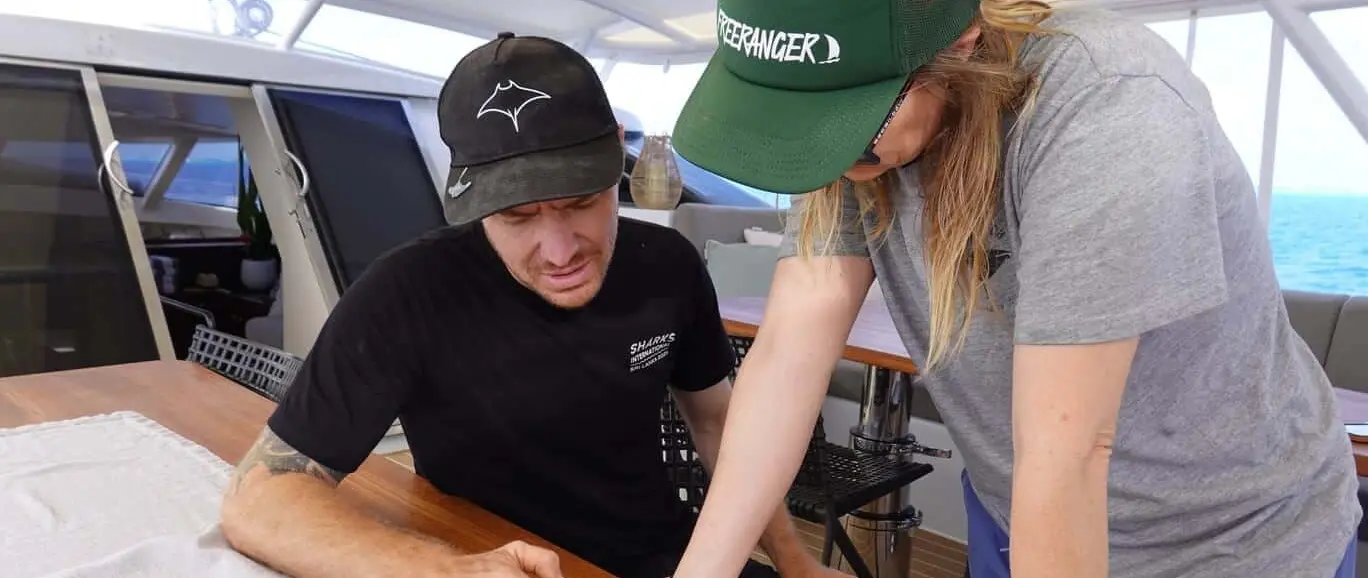
The 37m sailing yacht RADIANCE hosted the first joint manta-ray surveys by Fiji and New Zealand researchers in the northern Lau Group, documenting baseline data despite no encounters.
The 37-metre sailing yacht RADIANCE served as the research platform for an expedition into Fiji's northern Lau Group from 15 to 21 August 2026. Organised through SeaKeepers South Pacific, the voyage brought Manta Project Fiji and Manta Watch NZ together for their first joint field survey in waters around Duff Reef and the Bay of Islands at Vanua Balavu. The expedition deliberately visited sites where these teams had not previously carried out coordinated manta-ray observations, seeking new baseline information about a remote part of the species' possible range.
The result was more nuanced than a conventional wildlife success story. Despite several kilometres of aerial reconnaissance and accompanying in-water surveys, the scientists recorded no manta-ray encounters during the week. That absence was documented rather than concealed: the conditions, search effort and locations can help future researchers plan repeat visits and judge how the area may fit into wider movement patterns. A survey without sightings is not automatically an unsuccessful survey.
Oceanic manta rays move over distances that connect the tropical Pacific with temperate waters around New Zealand. Researchers have documented at least one journey from New Zealand to Fiji followed by a return during the subsequent summer. Satellite tags have also recorded deep diving, reminding scientists that surface observations reveal only a small portion of an animal's behaviour. The new work in the northern Lau Group was designed in part to improve understanding of how such distant habitats may be connected.
An animal spotted near one island does not necessarily remain resident there. Its route may depend on feeding opportunities, currents, reproduction and environmental conditions that are still incompletely understood. For conservation planning, it matters whether a location is a reliable seasonal gathering place, a transit corridor or only an occasional stop. Repeated surveys and information shared between neighbouring countries are needed before drawing firm conclusions.
The team conducted drone flights covering several kilometres around Duff Reef and the Bay of Islands, with divers and snorkellers examining the marine environment below the surface. Aerial reconnaissance can reveal the position of large animals in clear shallow water and help researchers examine habitat features that are difficult to map from a vessel alone. In-water work provides details on reefs and conditions that an overhead camera cannot establish.
This complementary approach has practical limits. Water clarity, sun angle, wind, flying restrictions and the size of the survey area all influence what a drone can detect. An animal diving beyond the camera's view is not evidence that it has left the region. Scientists therefore need to record flight durations, observation windows and environmental conditions, rather than relying on a simple total of animals seen.
SeaKeepers specifically notes that no manta rays were observed during the week, but this does not establish that the species is absent from northern Lau waters. Biological surveys are snapshots of particular places and times. A meaningful result requires information about the weather, observers, detection method and distances covered so later teams can make fair comparisons. The project's baseline is therefore a starting point rather than a definitive distribution map.
The group also recorded observations of the reef system at Duff Reef and plans to share them with researchers investigating local reef health. That makes the expedition valuable beyond its original animal-tracking objective. An ecological research voyage often reveals secondary questions about coral condition, fisheries or other animals. Treating these observations as leads for further study is more responsible than announcing conservation outcomes not supported by the data.
RADIANCE is a 37-metre aluminium sailing yacht designed by Dubois Naval Architects and built by Bayards. Her offshore-cruising role is supported by a practical deck layout, tender equipment and professional crew. A substantial refit at Rivergate Marina and Shipyard in Brisbane prepared her for renewed cruising in the Pacific. With comfortable accommodation and operational independence, the yacht can support multi-day visits to islands whose remote geography makes ordinary research logistics expensive.
The value of a yacht in this role is not merely luxurious accommodation. Researchers need safe access to launching equipment, somewhere to prepare sensors and cameras, adequate charging facilities and a crew able to adapt movements around weather. The yacht's master remains responsible for navigation, and the scientific leader directs the methods used to collect observations. Clear separation of those responsibilities helps preserve both safety and research quality.
Manta Project Fiji and Manta Watch NZ supplied regional scientific expertise. The project lists Luke Gordon and Lydia Green in its research leadership, bringing field experience from different parts of the South Pacific. SeaKeepers South Pacific coordinated the expedition, while RADIANCE's owners made the vessel available for the week. The combination created access to islands that neither team had yet included in the same joint survey.
Donating vessel time does not give an owner control over scientific conclusions. The researchers must retain the ability to record negative findings and uncertainty, even when guests hope for spectacular wildlife encounters. Owners gain an opportunity to learn about the fieldwork directly, while science gains practical transport and accommodation. An effective partnership is based on defined protocols, safety planning and openness about what was actually observed.
Oceanic manta rays and related devil rays face a range of pressures, including directed fisheries and accidental capture in fishing gear. Their ability to cross international boundaries complicates protection: management measures in one country's waters cannot by themselves secure an animal moving through other jurisdictions. Understanding migration corridors and seasonal feeding areas may help conservation authorities prioritise further monitoring or practical safeguards.
Responsible yacht tourism also has a role. Captains should follow local marine-protected-area restrictions and avoid disturbing animals for the sake of photography. Vessel speed, the timing of tender deployment and interaction distances can affect wildlife, even when encounters appear harmless from a guest deck. The ecological value of remote cruising depends in part on how visitors behave when they reach places with little existing infrastructure.
The week-long programme established a foundation for continued collaboration among the yacht, SeaKeepers South Pacific, Manta Project Fiji and Manta Watch NZ. Follow-up visits could revisit the same reefs during other seasons and compare survey effort, weather and observations. A single trip cannot resolve whether the northern Lau Group is a migration route or an occasional feeding environment, but it can help identify where future questions should be asked.
For the wider superyacht community, the story demonstrates a valuable form of support for marine science. RADIANCE did not return with a dramatic animal photograph, yet the voyage generated a documented effort in previously unsurveyed waters and additional reef observations. The contribution is measurable access and evidence, not a claimed discovery. That is a sounder basis for future collaboration than publicity alone.
Explore
Go deeper into the yachts, companies, events and destinations directly connected to this article.
Company
Explore the company profile and related Superyacht Guide coverage.
Continue reading
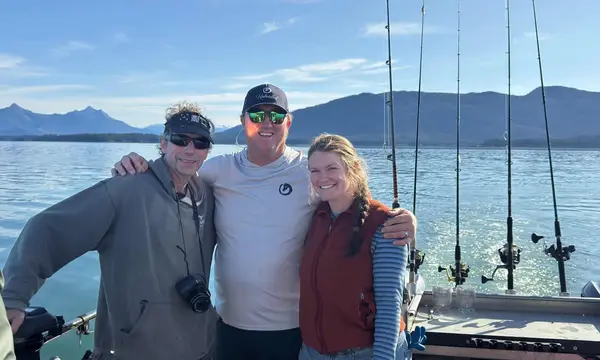
The 58m UNBRIDLED hosted Dr Fred Sharpe and SeaKeepers in Alaska for humpback-whale observations and wildlife-navigation education.
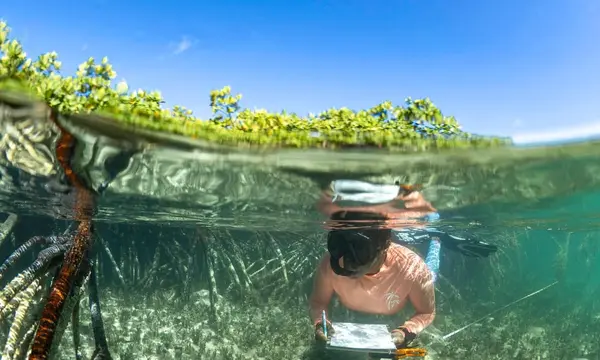
DIONE SUN supported marine researchers at eighteen sites in the Bahamas, mapping more than 700 acres of reef around Rum Cay and Conception Island.
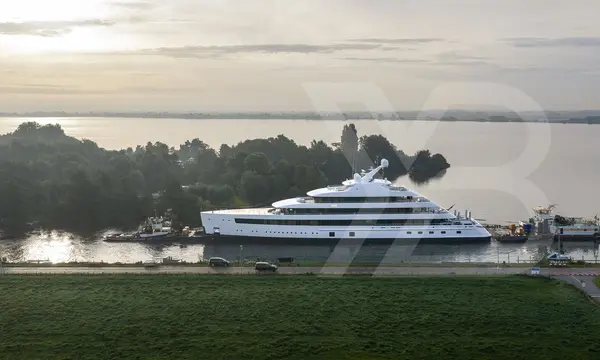
The 80-metre Feadship Love, formerly Project 716, has been spotted heading toward Rotterdam as the yacht prepares for sea trials.
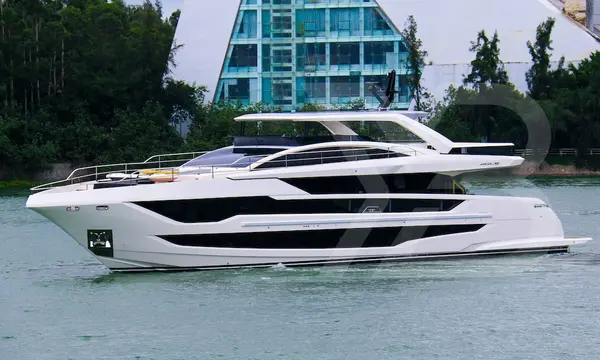
The first Pearl 100 Hybrid has completed initial sea trials ahead of its world debut at the 2026 Fort Lauderdale International Boat Show.
Superyacht Guide
Continue into the wider Superyacht Guide.
Business opportunities · Superyacht Guide
Companies serving the superyacht market can discuss clearly identified advertising, sponsorship and business-profile opportunities. Commercial activity remains separate from independent editorial coverage.