
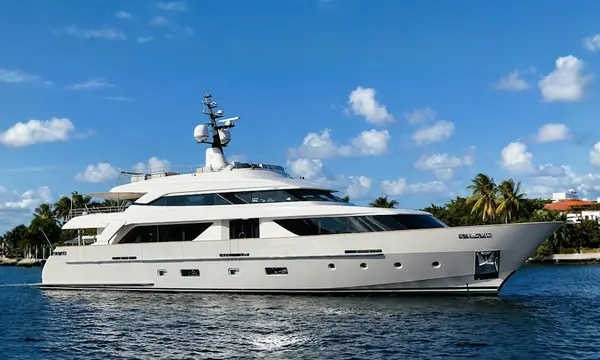
34m Sanlorenzo Christina Sold With Northrop & Johnson Representing Buyer
Northrop & Johnson has announced the sale of the 34-metre Sanlorenzo SD112 Christina, with broker Ed Dickinson representing the buyer.
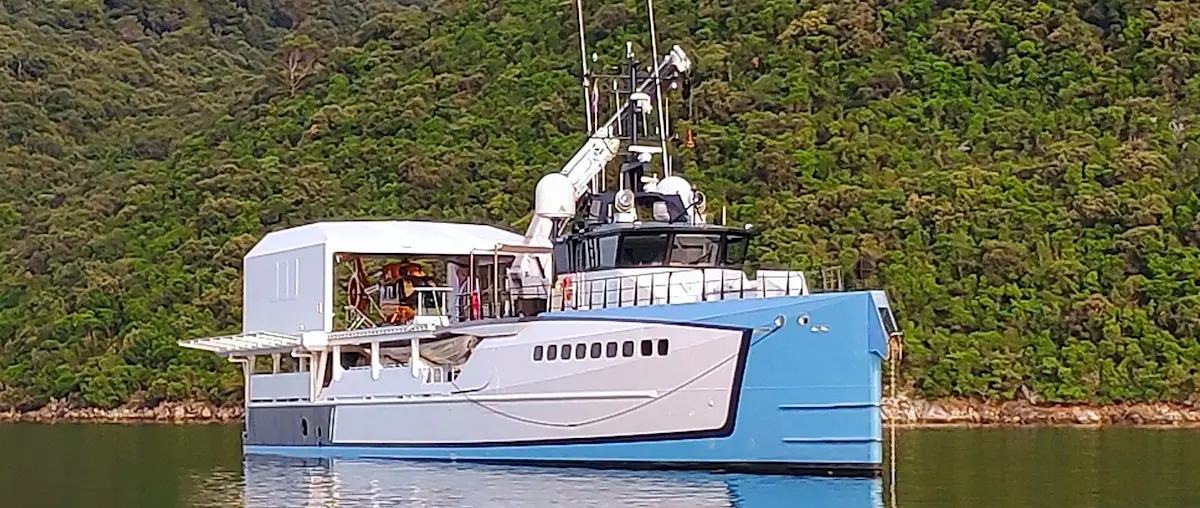
Camper & Nicholsons has confirmed the sale of 67-metre support vessel GLOBAL, with Carmen Lau acting for the seller and Ralph de Joode of RYacht introducing the buyer.
Camper & Nicholsons announced on 3 November 2026 that the 67-metre yacht-support vessel GLOBAL had been sold. The brokerage identifies its senior adviser Carmen Lau as representing the seller, while Ralph de Joode of RYacht introduced the buyer. The names of the buyer and seller have not been disclosed in that announcement, and neither the agreed price nor detailed transaction terms were released. It is consequently a confirmed brokerage transaction, not a basis for assigning an individual owner or reporting an invented sale value.
GLOBAL is a particularly interesting sale because she belongs to a category that sits at the boundary between the traditional luxury yacht and a professional expedition-support ship. Camper & Nicholsons describes her as a 67-metre, 1,303-gross-ton vessel that began service as a commercial workboat before a major transformation. That backstory gives prospective owners and market observers a different question to consider: what is the value of a platform designed to carry equipment, aircraft and specialist personnel as part of an ambitious cruising operation?
The brokerage says GLOBAL was originally built in 1982 for commercial work and was transformed in 2007 by Shadow Marine into an expedition mothership. This is not equivalent to saying that a wholly new superyacht was launched in 2007. An older commercial hull can have a substantially different engineering, operational and survey history from a purpose-built yacht of the same current dimensions. The conversion is what established the support-yacht role for which GLOBAL became known, while the underlying vessel's origins remain an important part of her identity.
The official sales material places subsequent refit activity in GLOBAL's history, but marketing summaries use different dates and descriptions for earlier work. Purchasers would need a documented chronology showing the scope of structural changes, machinery replacement, class work and interior renewal. A brokerage announcement alone cannot prove the condition of steel, reliability of machinery, service life of lifting systems or compliance with a particular flag's requirements. An apparent ability to carry impressive equipment should never substitute for a technical review of the modifications that make that equipment possible.
A conventional superyacht concentrates guest accommodation, hospitality spaces and crew operations within one vessel. A support craft can relocate many demanding functions to an accompanying platform: helicopters, large tenders, stores, recreational equipment, expedition vehicles or additional working space. That division may create more room and privacy on the principal yacht while extending the fleet's practical range of activities. It can also allow guests to undertake experiences that would otherwise conflict with a sleek yacht's deck layout or displacement limits.
The additional capability is never free of operational consequences. A two-vessel programme requires coordination over routing, weather windows, port permits, crew and safety procedures. Helicopter facilities bring their own aviation and deck-management obligations; heavy lifting equipment requires independent certification, competent operators and maintenance records. These are general considerations for the support-vessel segment, not findings about a deficiency on GLOBAL. The transaction illustrates the market for unusually capable platforms, but the economics of any specific operation depend on use, condition, location and the owner's wider fleet strategy.
At 1,303 GT, GLOBAL has substantial internal volume for her length. Gross tonnage is a measurement of enclosed volume, not the ship's weight or a direct statement about payload capacity. The brokerage describes a mothership intended to support long journeys and equipment-intensive activities, and its fuller marketing material refers to guest accommodation as part of that package. Such a combination is unusual: it adds hospitality capability without removing the professional needs of a working ship that must manage tenders, fuel, water, spares and specialist tasks.
A buyer evaluating a converted vessel should distinguish guest-facing space from technical and working zones, then review both against the intended operating profile. Stateroom numbers alone cannot establish how many people may safely travel in every jurisdiction, and a helideck or hangar may be subject to limitations that are not apparent from photographs. The correct capacity depends on certified documentation, operating conditions and current equipment arrangements. The broker's public information is a useful first description, while flag, class and survey records remain the authoritative documents for an individual ship.
Carmen Lau's role is notable because Camper & Nicholsons states that she had previously represented the same owner when acquiring the vessel before the COVID-19 pandemic and was later entrusted with its resale. That is a continuity-of-service detail disclosed by the brokerage, not evidence of the seller's identity. The firm also acknowledged Ralph de Joode at RYacht as the buyer's representative. These verified brokerage roles matter when recording the transaction for industry intelligence: representing a party is not the same thing as owning the yacht or providing its technical management.
Camper & Nicholsons does not state the sale consideration, whether financing formed part of the transaction, the location of completion or the vessel's subsequent cruising plans. It would therefore be misleading to estimate a confidential deal value from unrelated asking prices, or to imply that the support vessel has joined any named mothership. The announcement is dated 3 November; the current editorial coverage examines its significance on 7 November without presenting the sale as something that happened on the day this article was published.
Purpose-built expedition support yachts now occupy a visible place in the large-yacht sector, but GLOBAL demonstrates that conversion has also played an important role in its evolution. A commercial vessel may begin with generous working deck areas, robust construction and utility-focused machinery. Those attributes can make it attractive as the foundation for a specialised conversion, provided the structure, stability, systems and regulatory position are suitable. The process is not automatically more economical or environmentally preferable than building a new vessel; either conclusion requires project-specific evidence.
The choice often turns on operational ambition rather than conventional yacht aesthetics. Owners interested in diving expeditions, remote cruising, scientific collaborations or aviation-supported travel may value working capability ahead of uninterrupted guest terraces. Others may conclude that the extra crew, maintenance and logistics burden exceeds the benefits. GLOBAL's resale confirms that there remains a market for one unusual vessel; a single transaction cannot establish a rising value trend, a general sales premium or the profitability of support-yacht ownership across the wider fleet.
The new owner, whose identity has not been disclosed, will inherit the responsibility to match the vessel's equipment and certification to a real operating plan. A sensible transition would involve a thorough condition survey, review of machinery hours, documentation of the 2007 conversion and later refits, confirmation of outstanding defects and a full inventory of specialist equipment. A vessel of this size also needs careful planning for crew recruitment, training, insurance, berth access, helicopter operations where applicable and long-term maintenance. These are due-diligence priorities, not claims that the transaction was subject to unresolved issues.
If GLOBAL is used in company with another yacht, voyage coordination will be central. The two vessels may differ considerably in draft, speed, fuel range, crew demands and safe access to shallow destinations. They may also require different port arrangements and security procedures. Even when used independently, a support ship carrying sophisticated toys and equipment benefits from clear policies about launching, recovery, weather thresholds and emergency response. The greater the flexibility a vessel offers its guests, the more important it becomes to define how that flexibility is managed safely.
This transaction adds a distinctive vessel to the November 2026 superyacht sales record. The established facts are narrow but important: Camper & Nicholsons announced the sale of GLOBAL, described her as 67 metres and 1,303 GT, traced her origins to a 1982 commercial workboat and a 2007 Shadow Marine transformation, and named the two advisers on opposite sides of the deal. Other information would need further primary documentation. No inference is made about beneficial ownership, undisclosed pricing, financial return or future voyage plans.
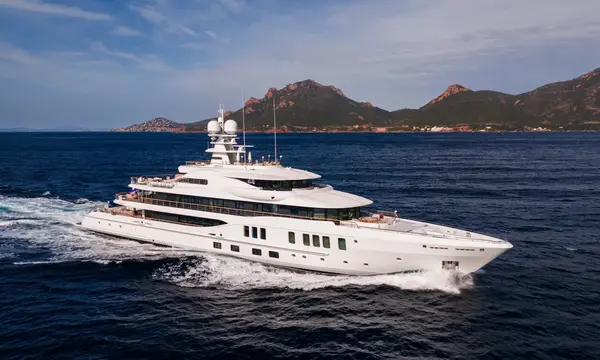
The licensed photograph accompanying this article shows the support yacht POWER PLAY in Croatia in 2021, captured by Marek Slusarczyk. It is an illustrative view of a different specialist vessel, not a photograph of GLOBAL or her sale, and its author and licence are identified in the credit. The point of using such an image is to explain a type of ship that may be unfamiliar to readers without misrepresenting the transaction. For an exact image of GLOBAL, readers should consult the broker's linked original announcement and verify any separate reproduction rights.
Primary source: Camper & Nicholsons, 3 November 2026, announcement of the sale of 67m GLOBAL. The yacht is sold; the buyer and the consideration were not identified publicly.
Illustrative lead photo: POWER PLAY, by Marek Slusarczyk (Tupungato) / Wikimedia Commons, under CC BY 3.0; a previously published 2021 photograph resized for editorial use. The vessel photographed is NOT GLOBAL and the image is not a record of her transaction.
Continue reading
Northrop & Johnson has announced the sale of the 34-metre Sanlorenzo SD112 Christina, with broker Ed Dickinson representing the buyer.
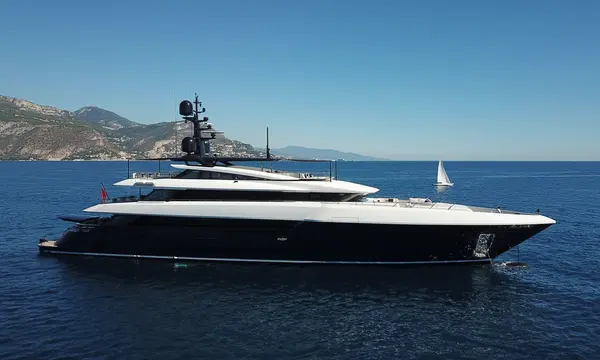
ACP Surveyors says it carried out the pre-purchase survey for the 48-metre Rossinavi N2H and records that the associated brokerage deal was successfully completed.
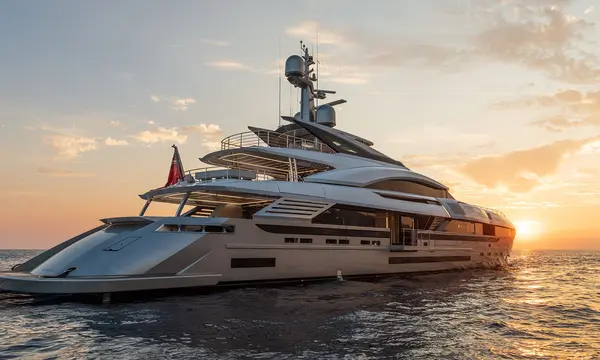
Northrop & Johnson continues to offer the 48.8m Rossinavi EIV at $32.75 million, highlighting her completed five-year class survey and Bahamas-friendly draft.
The 74m Amels SYNTHESIS is offered for sale through Burgess at €132 million after a 2025–26 Amels yard period that included her five-year special …
Superyacht Guide
Continue into the wider Superyacht Guide.
Business opportunities · Superyacht Guide
Companies serving the superyacht market can discuss clearly identified advertising, sponsorship and business-profile opportunities. Commercial activity remains separate from independent editorial coverage.