ACES Energy Shows 96V Lithium-Iron-Phosphate Battery for Marine Electrification Projects
By Superyacht Guide Newsroom · Edited by Superyacht Guide Newsroom
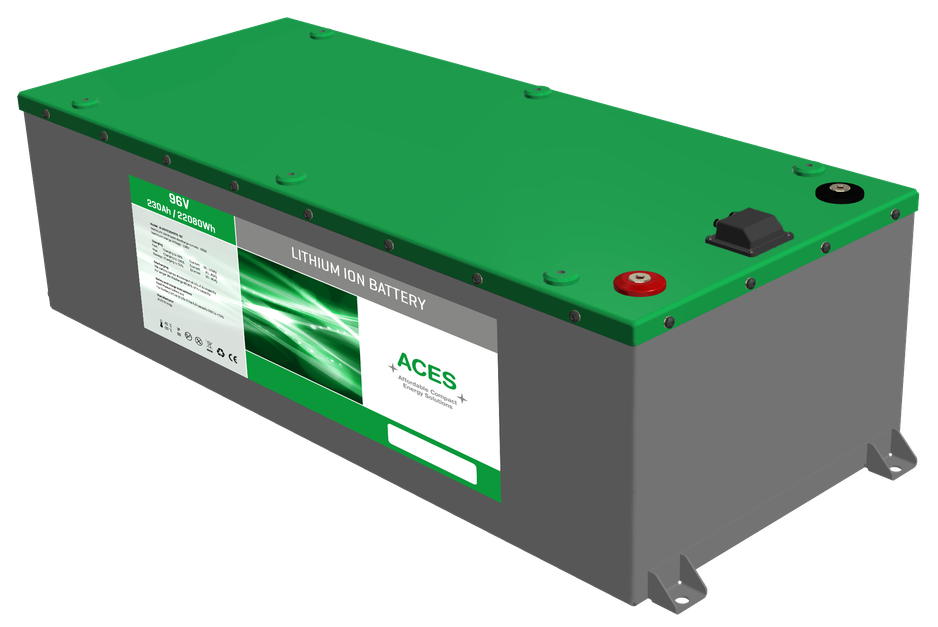
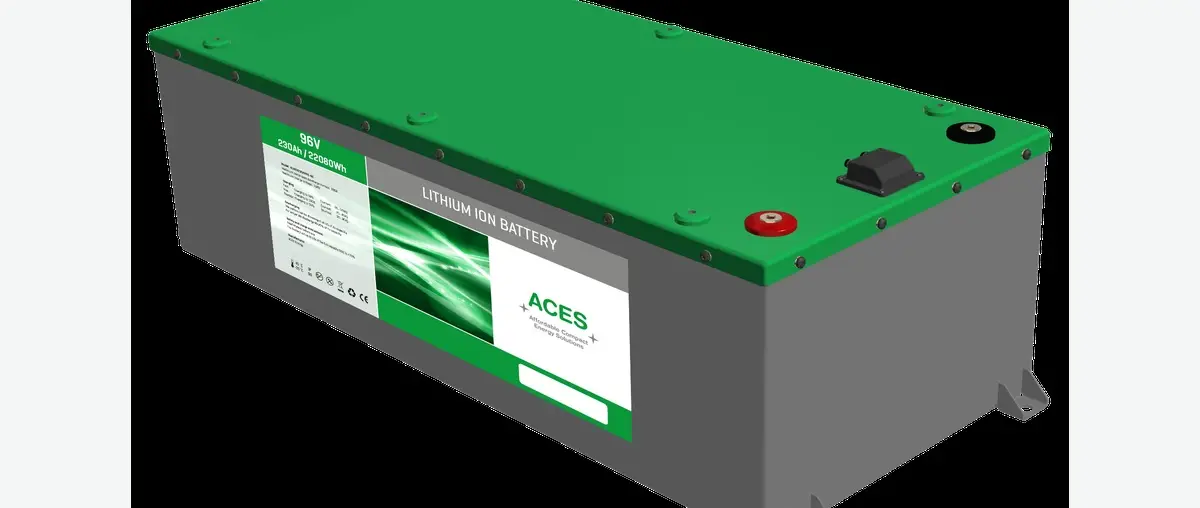
ACES Energy AL96V320HFPE-BC 96V lithium iron phosphate maker product photograph SYG 2026
ACES Energy lists a 96V, 320Ah lithium-iron-phosphate battery at METSTRADE 2026; yacht engineers should clarify output and safety specifications.
Dutch energy-storage specialist ACES Energy is showing a 96-volt lithium-iron-phosphate battery within its METSTRADE 2026 exhibitor catalogue, with model identification AL96V320HFPE-BC. The supplier lists a nominal 320 ampere-hour capacity, a quoted mass of 156 kilograms and dimensions of 891 by 374 by 270 millimetres. Those details are relevant to naval architects and integrators comparing battery arrangements for electrically powered support boats, auxiliary systems and other marine projects.
The catalogue gives an original product release date of 15 November 2023, so the system should not be presented as a new battery launched in November 2026. Its appearance in the current exhibition profile is an opportunity to assess a named product, not proof that it has been certified for a particular vessel. The public listing also contains electrical-unit descriptions that require clarification before procurement.
The model's listed 96V and 320Ah figures, if they represent nominal voltage and charge capacity, correspond arithmetically to about 30.7 kilowatt-hours of nominal stored energy. The exhibitor entry separately uses a label of 22 kW and describes a discharge figure as 200Ah, the latter being a unit of charge rather than electric current. These numbers cannot be interpreted as a complete and unambiguous performance specification without further manufacturer documentation.
An engineer should request the actual nominal energy, voltage operating range, continuous and peak output, maximum discharge current and thermal conditions for these ratings. A catalogue field may contain a shorthand or mistake, but the publication must not silently convert it into a guaranteed operating limit. Careful distinction between energy and power is particularly important in propulsion planning.
Lithium-iron-phosphate, commonly abbreviated LFP or LiFePO4, is one of several lithium-ion battery chemistries used for energy-storage applications. It has characteristics that can make it appealing for systems prioritising cycle life and certain thermal-stability considerations. Those general attributes do not make every LFP battery safe to install in any yacht compartment.
The finished system includes cells, monitoring electronics, protective devices, enclosure and cooling arrangements. A properly engineered installation must consider all of these. The term lithium-iron phosphate describes part of the battery chemistry; it does not replace detailed safety evidence for the manufactured unit and the vessel in which it will be used.
A 96-volt nominal system sits above many traditional 12- or 24-volt boat electrical arrangements. Higher voltage can enable delivery of a given amount of power at lower current than a low-voltage system, reducing some conductor demands. At the same time, it introduces installation and servicing considerations that differ from those of small domestic battery banks.
An integrator must verify cable insulation, protection, switching and the characteristics of connected equipment. Compatibility should never be inferred simply because two components share the same nominal voltage. The minimum and maximum voltage during charging and discharge may vary substantially from the label.
A large superyacht might carry electrically propelled tenders, service craft or specialised equipment requiring a dedicated energy store. A nominal 96-volt battery could be considered as one element of such a system, provided it matches the motor controller, charging equipment and vessel's certification requirements. The current ACES catalogue does not identify one particular superyacht installation.
For the parent yacht, different applications may include peripheral systems or development projects rather than replacement of the main hotel-power plant. A system intended for one type of boat should not automatically be selected for a large classified vessel's critical electrical distribution. The decision begins with a duty profile and a complete integration specification.
A stored-energy value is useful only when placed against the actual electrical load. A tender's motor might demand high power during acceleration and much less at low cruising speed. Auxiliary loads, current limits, temperature and reserve requirements also influence how long the craft can operate.
An owner should resist an attractive but unsupported claim that a battery of a given capacity will provide a fixed number of hours at sea. The naval architect must establish realistic duty cycles and appropriate reserves. A sea trial can then compare predicted consumption with measured results. The published catalogue is not sufficient to calculate a trustworthy range for an unspecified boat.
ACES publishes a mass of 156 kilograms for the model. On a small support craft, this is a meaningful installation weight, especially when additional equipment such as chargers, enclosures and wiring is included. Battery placement affects the vessel's centre of gravity and may influence handling, trim and available payload.
The design team should review the complete installed mass and location, not just the supplier's battery figure. Structural support needs to withstand the vessel's expected operating loads. A battery fitted low in a hull can contribute to a favourable weight distribution in some designs, but only a full stability and structural analysis can establish the actual result.
The catalogue's stated dimensions of 891 by 374 by 270 millimetres allow a preliminary packaging study. A builder might compare those measurements with a tender's under-seat storage or an existing machinery compartment. However, the enclosure dimensions alone are not the required installation envelope.
Technicians may need access to connectors, fuses, inspection points and any ventilation or cooling hardware. The manufacturer's minimum clearances and orientation restrictions should be obtained before a compartment is designed. A battery that physically fits but cannot be disconnected safely or inspected is not a successful engineering solution.
Battery performance and service life depend partly on temperature. Charging or delivering substantial power can generate heat, and the control system may limit operation outside the permitted range. In a warm marine engine compartment, thermal conditions could differ significantly from those used in a supplier's published rating.
An owner representative should request the allowable temperature range and cooling requirements. If active cooling is needed, its power consumption and maintenance become part of the total system. A compact enclosure is attractive only if the complete thermal solution is practical for the boat.
A marine battery system requires appropriate monitoring of cell conditions and protective responses to abnormal operation. A battery management system can help supervise charging, discharging and temperature, but its detailed capabilities need to be confirmed for the actual ACES model. The brief METSTRADE listing does not provide a complete block diagram or list of interfaces.
Engineers should ask about available alarms, protective contactors and communication with propulsion or charging equipment. The boat operator needs a clear understanding of what happens when a limit is reached. Automatic shutdown may protect the battery but can affect the vessel's manoeuvring capability if the system has not been designed with operational redundancy.
Charging a relatively large battery may require significant electrical energy and careful control. A support craft might charge at the parent yacht, at a marina or through a dedicated onboard generator arrangement. Each option introduces different power-availability and connector requirements.
The battery manufacturer should identify approved chargers and a suitable charge profile. A nominal 96-volt label cannot tell an installer what charging voltage or current to apply safely. The complete charging system needs protective devices, clear instructions and a way to manage abnormal temperatures or interruptions.
Lithium battery installations have attracted considerable attention in the marine sector because failures can be difficult to manage. Different chemistries have different characteristics, but safety depends on the complete system design. The battery should be assessed against relevant marine standards, vessel registration requirements and any class rules.
The public product listing does not establish a blanket certificate for every commercial yacht or tender. The buyer must obtain test reports and documentation appropriate to the intended installation. Compartment design, electrical protection, monitoring and emergency procedures should be agreed before the equipment is delivered. Safe installation cannot be inferred from a chemical label alone.
A yacht that launches and recovers an electric tender takes responsibility for charging, storage and maintenance procedures while the craft is aboard. Battery equipment may be located in a garage near fuelled toys or sensitive accommodation areas. Its safety requirements can affect the wider yacht rather than only the tender.
The parent vessel's chief engineer and safety officer should review how charging and fault response will be managed. Clear responsibilities are important when an owner has multiple tenders, each with different propulsion equipment. An apparently simple battery upgrade can influence the yacht's broader operational plan.
Electrification can reduce local exhaust emissions for some operating modes, but the total environmental impact depends on how energy is generated and the equipment is manufactured. LFP chemistry does not make mining, manufacturing and eventual recycling irrelevant. An owner who wants credible environmental benefits should request supply-chain and end-of-life information rather than rely on broad claims.
A procurement comparison can include service life, expected cycling, maintenance, energy efficiency and battery recovery arrangements. These are measurable questions, although the supplier's brief public catalogue does not answer all of them. An evidence-based assessment is more useful than assuming every electric system is automatically superior.
ACES Energy identifies itself as a Netherlands-based company specialising in energy storage. International yacht operations raise questions about warranty support, component replacement and technical assistance away from the supplier's home market. A system that is difficult to diagnose or service can create extended downtime for a support craft.
The management team should obtain current product availability and a documented service arrangement. Software and electronic components can change over time; replacement units must remain compatible with the installed motor controller and charger. The owner also needs a plan for safe storage and transport of spare equipment where appropriate.
A practical evaluation would begin with verified technical documentation and a proposed electrical schematic. The installer can then test the complete system under controlled loads, checking current limits, charging behaviour, alarms and thermal response. Only after appropriate safety review should it be considered for installation and sea trials.
The purpose is to demonstrate a defined operational capability, not merely confirm that a battery powers a motor. A properly recorded trial can establish useful real-world endurance data and reveal whether the system meets the boat's loading and service requirements. Where the specification is ambiguous, the evaluation should stop until the supplier provides clear answers.
The official ACES Energy METSTRADE listing establishes the presence of a named 96V, 320Ah LFP battery, with a stated 156-kilogram mass and physical dimensions. It also contains ratings that need clarification, particularly the meaning of its 22 kW label and the use of ampere-hours for a discharge-current field. Those uncertainties should be part of the engineering conversation rather than edited away.
For superyacht operators considering electric tenders or specialised onboard energy systems, the product offers a candidate for technical review, not a proven turnkey answer. Proper electrical ratings, compatibility, approvals, compartment design and support arrangements must be verified before purchase. The real value of marine electrification emerges from complete, documented systems that crews can operate and maintain safely.
Primary source: ACES Energy BV first-party AL96V320HFPE-BC lithium-iron-phosphate battery specification in METSTRADE 2026 catalogue, originally dated 15 November 2023.
ACES Energy BV original AL96V320HFPE-BC battery manufacturer product image provided to METSTRADE exhibitor catalogue. Official source.
Explore
Go deeper into the yachts, companies, events and destinations directly connected to this article.
Continue reading
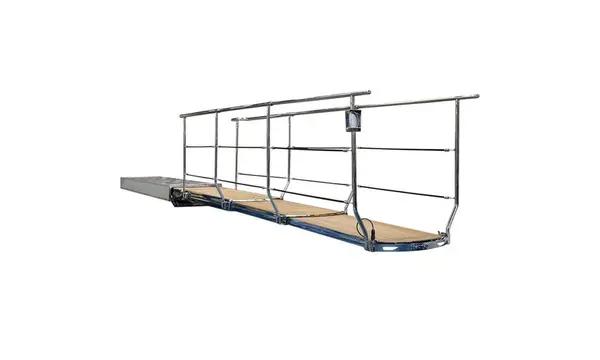
Opacmare details VIPER 1181 stainless-steel telescopic gangways with hydraulic actuation, multiple sections and a 150kg boarding limit at METSTRADE for crews.
MarQuip marks 25 years of specialist exhaust engineering, tracing its development from wet-exhaust technology to compact emissions systems for superyachts.
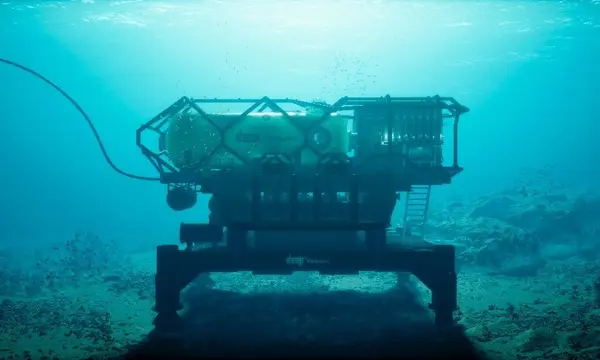
Triton Submarines provided engineering and integration assistance for DEEP's Vanguard human habitat, installed 17 metres underwater at Tennessee Reef in the Florida Keys.
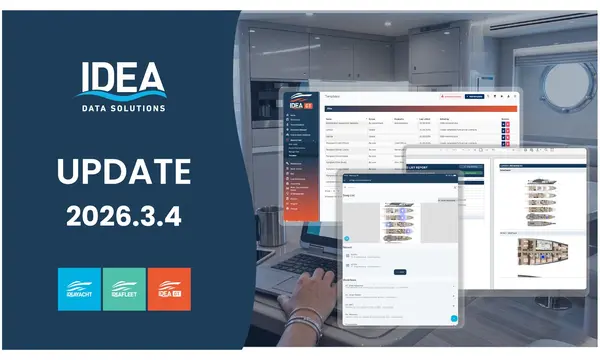
IDEA Data Solutions release 2026.3.4 introduces structured purchase and work-order wizards, crew Hours of Rest improvements and tablet-friendly yacht management software.
Superyacht Guide
Continue into the wider Superyacht Guide.
Business opportunities · Superyacht Guide
Companies serving the superyacht market can discuss clearly identified advertising, sponsorship and business-profile opportunities. Commercial activity remains separate from independent editorial coverage.