Aluland Details Certified Aluminium Supply and Processing for Yachtbuilders
By Superyacht Guide Newsroom · Edited by Superyacht Guide Newsroom
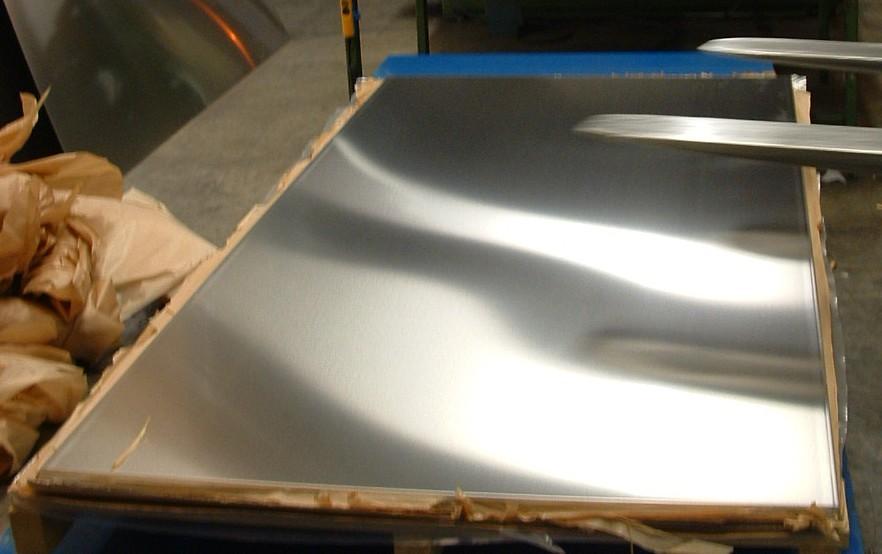
Aluland aluminium plate sheet supplier original METSTRADE 2026 manufacturer product photograph
Aluland outlines certified aluminium plates and profiles plus cutting, bending, machining and custom processing for large-yacht builders at METSTRADE 2026.
Aluland B.V. has presented its aluminium supply and value-added processing capabilities to the superyacht industry at METSTRADE 2026, describing an offer that extends beyond the sale of raw plates and extrusions. The Dutch company’s official exhibitor profile lists externally certified products sourced from Western European manufacturers, alongside cutting, machining, bending, forming and custom components. This is news about industrial capacity and procurement for large-yacht construction rather than an announcement that a particular yacht has launched or that a new alloy has received certification during the show. The importance for builders of vessels above 24 metres lies in the reliability of material sourcing, traceability and the ability to turn specification drawings into parts that arrive ready for the next stage of production.
Aluminium is widely used in yacht structures, superstructures and equipment where the combination of workable weight, fabrication methods and corrosion behaviour must be considered. Material selection remains an engineering decision, not a matter of assuming that every aluminium product is appropriate for every structural role. The actual alloy, temper, plate thickness, welding procedure and applicable classification rules determine suitability. By participating in the METSTRADE Superyacht Zone, Aluland is placing the supply side of those decisions in front of technical directors and project managers who must coordinate design and fabrication schedules.
The company’s exhibition profile says it serves the marine, yachtbuilding and offshore sectors and has an extensive portfolio of aluminium plates and profiles. That breadth is commercially relevant because a yard may need multiple formats and grades as a newbuild proceeds through different fabrication stages. Sourcing from an established supply chain can simplify coordination, but purchase orders still need to specify the precise material standard and documentary evidence required by the project.
The official METSTRADE listing places Aluland at stand 08.755 for the 17–19 November 2026 Amsterdam exhibition. The company says many of its products are externally certified and obtained from established Western European manufacturers. It also lists value-added processing, including cutting, machining, bending and forming, together with customised cut pieces and more complex shapes. These are the concrete capabilities described in the organiser’s catalogue; it does not prove that every listed product is certified to a single universal standard or available immediately from stock.
Buyers should therefore request the exact certificate and manufacturing record that corresponds to the selected batch of material. A generic statement that material is certified does not establish its acceptability for a specific classed structure. Procurement teams need to match the source document with the bill of materials, fabrication drawings and approved welding or assembly plans. Aluland’s exhibition message suggests a willingness to discuss those practical needs, but each order remains subject to an agreed specification.
A large yacht project can contain numerous parts that begin as plate or extrusion. Processing those pieces before they reach the shipyard may save workshop time and simplify internal material handling, particularly when suppliers can work from accurate digital drawings. Cutting to a defined profile, adding machined details or producing shaped sections can allow the yard to concentrate on assembly and welding. These are potential efficiencies, not guaranteed time savings for every customer. A poorly coordinated cutting order can equally create rework if the underlying design changes after material is processed.
The critical question is how engineering revisions are controlled. Suppliers and yards should establish which drawing revision is valid, how tolerances are recorded and what happens if an alteration is issued while a batch is already in production. Quality assurance should include identification of parts, dimensional checks and an agreed handling plan. The more processing a yard asks a supplier to perform, the more important it becomes that the communication and documentation are correct before any metal is cut.
For classed structures, traceability can be essential to establishing that installed components correspond to approved engineering requirements. A plate arriving with paperwork that cannot be linked unambiguously to the part eventually fitted aboard is of limited value. Builders need a documented procedure for recording relevant material certificates, heat or batch references and any other identifiers required by the classification society or engineering specification. This is particularly important when custom-cut parts are removed from the original stock product and then transferred between workshops.
Aluland's supplier role does not replace the yard's responsibility for classification compliance, but a well-organised delivery can support it. Buyers should ask how processed parts are labelled, how documents travel with shipments and how the supplier handles substitutions when a specified product is temporarily unavailable. A faster delivery is not automatically a better outcome if it requires a late engineering concession that disrupts certification or fabrication.
A yacht project may include long-lead machinery, complex outfitting and a sequence of structural milestones that depend on material arriving at the right time. Aluminium plate and profiles are not always interchangeable once detailed design and welding procedures have been approved. A late shortage of a particular item can delay fabrication even when most of the structure is ready. Conversely, ordering too early can create storage demands, damage risks and the possibility of holding material for a design that subsequently changes.
An effective procurement strategy considers the supply plan alongside the build schedule. Project managers should agree realistic production and shipping windows and identify which items truly require early reservation. Supplier processing can reduce some work at the yard, but it may also add a dependency on accurate early-stage drawings. The commercial value of Aluland’s capabilities is therefore linked to scheduling and coordination, not merely the visible quantity of metal it can deliver.
Aluminium is often chosen partly to control weight, yet large-yacht engineering is more complicated than comparing the density of two materials. Structural stiffness, fatigue behaviour, corrosion protection and welding effects all need consideration. A supplier can provide the correct stock and manufacturing information, but a naval architect or structural engineer must decide how it is used. The public Aluland catalogue does not establish the performance of a particular hull or superstructure, and it should not be treated as evidence of a quantified efficiency gain on an unnamed yacht.
Changes to structure during a refit can also affect weight distribution and stability. Replacing a component with a different material or shape requires attention to load paths and adjacent construction. Owners’ representatives should expect the designer and yard to document such decisions before purchasing the material, rather than relying on a supplier’s general description of the product range.
Even correctly certified material can be damaged by poor handling. Aluminium plate surfaces are vulnerable to scratches, contamination and deformation, while long profiles may require supports that prevent bending during transport and storage. The condition in which parts arrive at the fabrication area can influence how much preparation is required before welding or assembly. A supplier offering cut and formed pieces may therefore need to agree protective packaging and delivery arrangements with the shipyard, especially when materials travel internationally.
A sensible contract identifies responsibility for inspection on receipt and the process for reporting damage or dimensional discrepancies. These may sound like routine logistics, but the cost of remaking a large shaped component can exceed the value of its initial transport. The buyer should also understand how mixed-metal storage and workshop practices affect corrosion risk. Aluland’s exhibition profile focuses on supply capabilities; the wider lesson is that the chain of custody remains important after materials leave the supplier.
Yachts frequently contain curves, transitions and complex spaces that are difficult to fabricate from standard stock without additional processing. A supplier able to deliver accurately shaped aluminium pieces may help the yard manage particularly labour-intensive parts. The ability to prepare custom components can also be relevant to brackets, support frames and non-hull equipment, provided the design and certification requirements are understood. The manufacturing challenge is not just producing the shape; it is doing so consistently and documenting how it was checked.
When engineers evaluate a custom component, they need to consider whether bending or forming changes the material properties and whether subsequent operations affect tolerance or surface quality. Those questions vary by alloy and product form. No blanket conclusion about an individual part can be drawn from a trade-show introduction. What Aluland has demonstrated through its 2026 catalogue is the commercial breadth of its processing proposition for technical buyers who require more than raw stock.
Refit work can create unpredictable demands for relatively small quantities of unusual material. A shipyard may discover corrosion, damage or the need to strengthen an older area once a vessel is opened for inspection. The correct response depends on an approved engineering solution, but access to suitable material and processing support can influence how quickly the work can be completed. A supplier comfortable with custom cutting and forming may be worth considering for this kind of project, subject to its actual lead times and technical capabilities.
Refit buyers should be especially careful not to substitute an available alloy simply to meet a deadline. The material must match the repair specification and any requirements of the vessel’s class or flag. A documented plan involving the designer, surveyor and yard is more important than a promise of overnight fabrication. Aluland’s presence at a superyacht-focused exhibition offers a contact point for those discussions without providing a guarantee about a particular refit timeline.
After METSTRADE, a yard considering Aluland should ask which grades and dimensions are routinely stocked, which are produced to order and which require an agreed minimum quantity. Equally important are the available traceability documents, the limits of the processing equipment and the methods used to measure finished parts. Shipping arrangements, packaging and the handling of engineering changes belong in the same conversation. The answers may reveal whether the supplier is best used for standard stock, heavily processed components or both.
Technical buyers should also agree responsibility for final acceptance. A complex cut component can be accurate according to a supplier drawing yet unsuitable if that drawing does not match the current production revision. The strongest procurement relationship is one in which specifications, approvals and delivery expectations are clearly recorded, reducing the chance of disputes once the material reaches the yachtyard.
Aluland’s METSTRADE 2026 participation brings attention to an area of superyacht construction that is rarely visible in launch photographs. The company’s official profile establishes a portfolio of aluminium products and processing operations for marine customers. It does not identify a newly completed superyacht project or independently quantify shipyard time savings, and the news should be understood accordingly. The significance lies in the operational possibility of combining material sourcing and part preparation under a coordinated supplier relationship.
For a 24-metre-plus yachtbuilder, the buying decision rests on repeatable material quality, traceability, accurate processing and dependable delivery. Those are the details that determine whether a supplier contributes to a smooth fabrication programme. METSTRADE provides the introduction, but the evidence of value emerges only when a specific project’s drawings, certifications, tolerance requirements and schedule are turned into an agreed and successfully delivered order.
Primary source: Aluland B.V. — official METSTRADE 2026 Superyacht Zone catalogue.
Supplier image: Aluland B.V. aluminium sheet stock, official METSTRADE 2026 Superyacht Zone gallery. Official source.
Supplier image: Aluland B.V. aluminium sheet stock, official METSTRADE 2026 Superyacht Zone gallery.
Explore
Go deeper into the yachts, companies, events and destinations directly connected to this article.
Continue reading

Ferretti CEO Stassi Anastassov outlines brand loyalty, yacht quality, after-sales service and warranty extensions for eligible yachts under 45m.

Sevenstar Yacht Transport handles a 40-metre, 300-tonne-plus yacht at Monfalcone, using coordinated shipboard cranes before transatlantic shipment to the US.
T.I.S.G. Asia Investment Holding disputes the exclusion of its €250 million proposal as Italian Sea Group prepares further court-supervised restructuring.

October 2026 records 33 sales of yachts over 24 metres worth €415.6 million, while new listings decline and resale asking prices per gross tonne …
Superyacht Guide
Continue into the wider Superyacht Guide.
Business opportunities · Superyacht Guide
Companies serving the superyacht market can discuss clearly identified advertising, sponsorship and business-profile opportunities. Commercial activity remains separate from independent editorial coverage.