
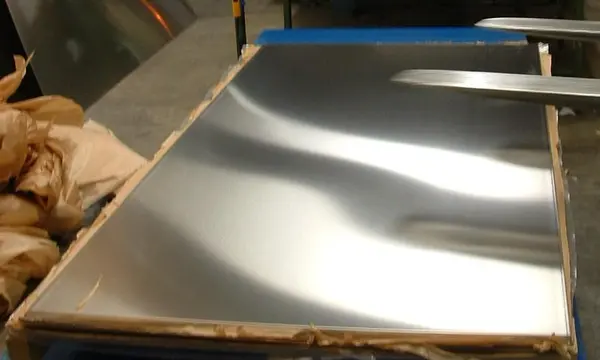
Aluland Details Certified Aluminium Supply and Processing for Yachtbuilders
Aluland outlines certified aluminium plates and profiles plus cutting, bending, machining and custom processing for large-yacht builders at METSTRADE 2026.
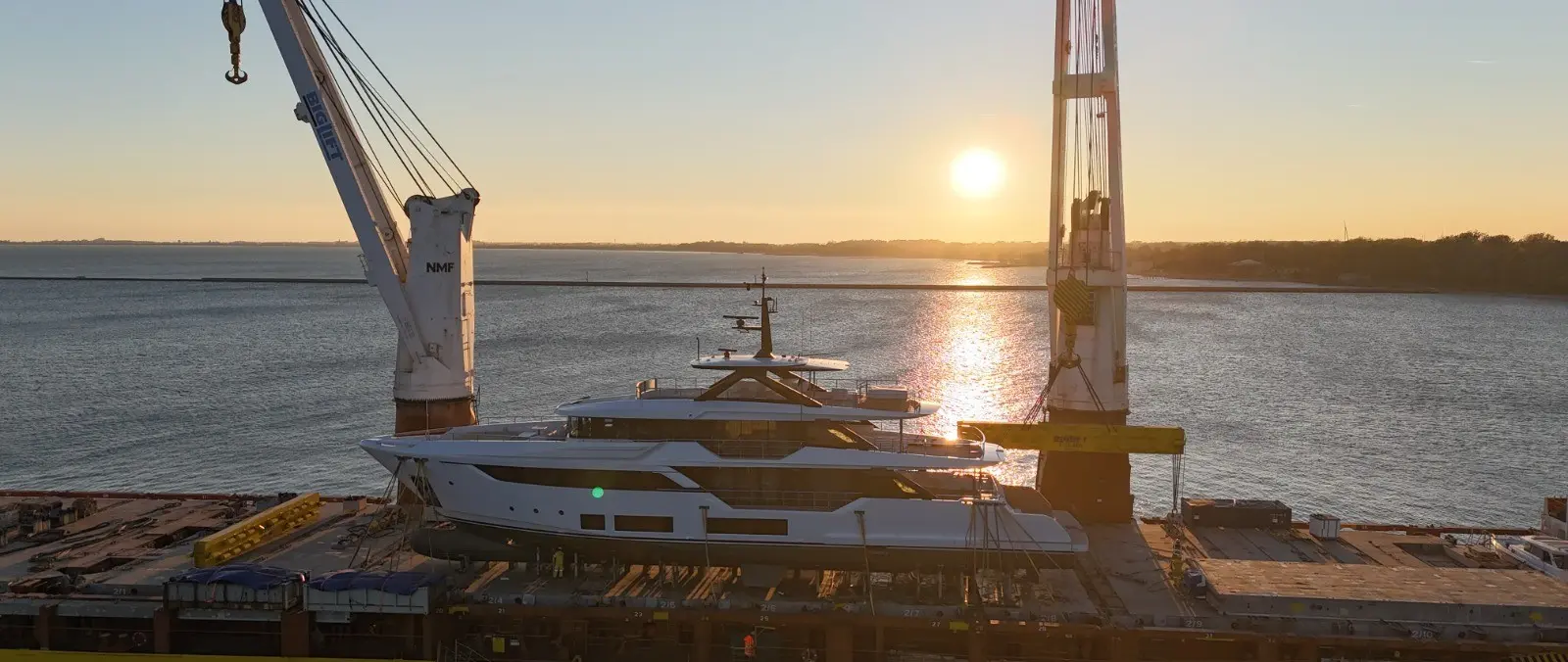
Sevenstar 40m superyacht tandem crane lift from FHP Terminal Monfalcone original November 2026 photo
Sevenstar Yacht Transport handles a 40-metre, 300-tonne-plus yacht at Monfalcone, using coordinated shipboard cranes before transatlantic shipment to the US.
A 40-metre superyacht weighing more than 300 tonnes was loaded at Italy's FHP Terminal Monfalcone for transport to the United States in a specialist heavy-lift operation reported on 12 November 2026. The move was arranged through Sevenstar Yacht Transport, part of the wider Spliethoff shipping group, using a cargo vessel associated with the Medliner service between the Mediterranean and North America. The yacht, reported to have a beam of about eight metres, was lifted directly from the water using two shipboard cranes operating together. The report does not identify the yacht by name, and that information should not be guessed from photographs or movement databases. The industrial significance lies in the handling method: transporting a large yacht across the Atlantic requires carefully planned lifting, securing and cargo operations that are fundamentally different from arranging an ordinary marina berth or domestic delivery voyage.
The reported length and mass place the vessel firmly in the superyacht sector and make it a substantial piece of high-value project cargo. A 40-metre length tells only part of the engineering story. The yacht's beam, displacement, hull shape, appendages and stability condition all influence how it must be handled. A ship capable of lifting heavy cargo must still possess a suitable lifting arrangement and deck position for the actual object. The reported weight of more than 300 tonnes should be understood as an approximate figure supplied with the operation, not an independently measured certified lightship weight. In lifting practice, engineers also need to consider equipment weight and a verified load calculation. SYG cannot determine the exact lifting certificate or slinging configuration from a short public report. What is confirmed is that the terminal and transport specialists completed a coordinated heavy-lift manoeuvre for a vessel of this general scale.
The loading operation took place at FHP Terminal Monfalcone on the northern Adriatic, part of the FHP Group's port operations. Monfalcone has access to maritime industrial infrastructure that can support large cargo movements in addition to conventional port activity. Its role in this case was not merely to provide a quay: terminal personnel and equipment specialists were involved in coordinating a high-value lift. Such work demands advance planning around berth occupancy, the cargo ship's position, weather, safe access and the availability of trained operators. A yacht's exterior finishes, windows and fittings can make it particularly vulnerable to localised handling damage, even where the hull structure itself is capable of withstanding the operation. The exact risk assessment for this shipment is not public. Nevertheless, the successful reported lift illustrates the kind of specialist service required for international yacht logistics.
The report states that the yacht was lifted by the cargo ship's two cranes acting together. A tandem lift is more complex than using a single crane because the load must be distributed and the movement coordinated. Small variations in crane motion, vessel position or sling geometry can change the forces acting on the yacht and the lifting system. Specialist operators therefore need a defined handling plan, suitable communication and the ability to pause if conditions change. The source describes the cranes working in synchronisation and placing the yacht in the intended position on deck. It does not disclose the certified lifting capacity of the individual cranes, the rigging geometry or the allowable environmental limits used in the plan. Those details would be necessary for a complete independent technical analysis. An editorial news report should not reconstruct them as though they had been verified.
Lifting a yacht directly from the water avoids some of the transport stages that would be involved if the vessel first had to enter a shipyard, be hauled ashore and moved to a separate loading area. That can reduce handling steps in appropriate circumstances, but it also means the yacht's movement and the relative motion of the cargo vessel must be considered during the lift. Conditions that are manageable for normal navigation may not be acceptable while the vessel is suspended. Equipment such as stabiliser fins, propellers, sensors, bow thrusters and keel appendages must be understood before positioning the lifting arrangements. The Monfalcone report does not provide a full engineering drawing, so it cannot be used as a model for how another yacht should be lifted. The relevant lesson is that direct water-to-deck loading is feasible for certain large yachts when a suitable vessel, terminal and specialist team are available.
Sevenstar's operation is described as using a heavy-lift cargo vessel linked to the Medliner service, which offers regular maritime connections between the Mediterranean and North America. A service network of this kind can provide a commercial alternative to delivering a yacht under its own propulsion across the Atlantic. The decision depends on the vessel's condition, owner plans, voyage schedule and cost. Sea transport can avoid engine hours and the operational requirements of a long passage, but it introduces loading, securing, insurance and discharge considerations of its own. The source reports the yacht as bound for the United States; it does not confirm a precise American arrival port or delivery date. Readers should not infer those details from the general shipping route. A complete transport agreement would need to specify loading and discharge responsibilities, expected windows and the point at which custody and risk transfer.
Once lifted onto a ship, a yacht becomes cargo for an ocean voyage. It can no longer rely on its normal mooring arrangement or propulsion to manage motion relative to waves. The support and securing system must be engineered for the loads expected in transit, while protecting the vessel's hull and outfitting. Sea fastenings, cradles and support positions are highly vessel-specific. Insufficient support can concentrate load where a yacht was never designed to carry it, while inadequate securing may allow harmful movement. The Monfalcone report confirms a planned placement on the cargo vessel but does not publish the final securing drawings. It would be inappropriate to describe a particular cribbing scheme or certified restraint calculation as a fact. Owners should expect transport providers to explain how the yacht will be supported, inspected and monitored during the voyage.
A large yacht is not the same as a steel industrial module. Its value includes paintwork, glazing, decks, interiors, controls and delicate externally mounted equipment. Even equipment that is strong enough for service at sea may be vulnerable to a different pattern of forces during lifting or transport. Before a voyage, the operator and yacht's representatives normally need to identify items requiring isolation, removal or additional protection. Deck furniture, loose equipment, antennas and some tenders may need particular attention depending on the plan. These are examples of normal preparation considerations, not a confirmed checklist of actions taken at Monfalcone. The source does not say which components were removed or how the interior was secured. The operational takeaway is that the cargo plan should reflect the real yacht and not just its length and weight.
Heavy-lift transport raises distinct insurance questions for the yacht owner, transport operator and relevant contractors. Coverage during lifting, shipboard carriage and discharge may depend on different contractual stages. The owner should understand who is responsible for preparation, what is included in the transport quotation, how pre-existing damage is recorded and what happens if a weather-related delay affects the schedule. A captain may also need to coordinate fuel, batteries, machinery isolation and security. Those matters should be addressed in the written agreements and insurer discussions before loading, not handled by assumption. There is no evidence in the report of a claim or damage to the yacht concerned. The fact that the operation was completed successfully does not eliminate the importance of clear arrangements on future shipments. Sound documentation protects everyone involved and makes responsibilities easier to establish if something unexpected occurs.
Owners choose transport for many reasons. A yacht may be moving to a new home region, awaiting maintenance or changing its charter deployment. Crossing the Atlantic under its own power or sail uses fuel, time and crew resources and exposes the vessel to ordinary passage risks. Shipping can alter that calculation, particularly when an owner needs the yacht to be available for a schedule that would otherwise require a lengthy ocean passage. However, the transport process introduces the need for safe lifting and reliable shipping arrangements. A full comparison should consider the cargo quote, port costs, preparation, insurance, delivery timing and post-arrival commissioning. There is no single point at which a yacht automatically becomes too large or too small to be transported. Suitability depends on the availability of the correct vessel and service, not merely a headline length.
A yacht shipment can involve several parties: the owner or manager, captain, port operator, cargo carrier, transport broker, surveyor and insurers. They must coordinate when the yacht arrives, when the heavy-lift ship is available, whether the weather is acceptable and whether the final deck arrangement matches the plan. A delay in one part of the operation can affect charter commitments or crew arrangements elsewhere. The report presents the Monfalcone lift as a carefully coordinated operation, which is consistent with the complexity of its reported dimensions. But no specific duration or cost has been disclosed. It would be misleading to estimate one from the public photographs. Owners planning a similar move should obtain a tailored programme and understand which contingencies are included in the contract. A realistic schedule is especially important when the vessel must be ready immediately after arrival.
The shipment demonstrates how Italian port infrastructure can support activity around superyachts beyond the construction and refit of vessels. A yacht leaving the Mediterranean for North America may need specialist handling at a commercial terminal rather than a dedicated leisure marina. FHP Terminal Monfalcone's reported involvement illustrates an interface between the traditional cargo industry and high-value yacht services. Sevenstar and the wider Spliethoff network bring the transport perspective, while terminal operators contribute local handling expertise. This combination can be important when large yachts change operating regions or when a new owner requires delivery over a long distance. The specific commercial benefit to the local economy has not been quantified in the source. The confirmed result is the completion of one technically demanding yacht-loading operation, not evidence of a broader increase in terminal traffic.
The facts available are a 40-metre yacht, a beam of approximately eight metres, mass exceeding 300 tonnes, loading at FHP Terminal Monfalcone, handling coordinated by Sevenstar Yacht Transport and a transatlantic shipment towards the United States. The manoeuvre used a pair of shipboard cranes. No yacht name, final destination berth, carriage price or complete engineering plan was provided. There is no basis for claiming that the vessel was newly built, recently sold or undergoing refit without additional evidence. That restraint matters because the movement of an expensive vessel can prompt speculation about its ownership or commercial status. A careful newsroom account should describe what the responsible operators report and avoid inventing a surrounding story. The operation is significant on its own terms as a demonstration of heavy-lift yacht logistics.
As yachts become more complex and owners travel between regions, international transport remains an important part of the service infrastructure. The Monfalcone movement shows how an industrial cargo ship and port terminal can accommodate a vessel that would ordinarily be seen in a superyacht marina. For owners and managers, the important considerations are vessel-specific lift engineering, adequate protection, contractual clarity and the reliability of the shipping schedule. For terminals, the work requires trained operators and disciplined coordination. For Superyacht Guide, the confirmed November development is the 40-metre yacht's completed tandem lift and planned onward ocean carriage. The wider lesson is that moving a superyacht as cargo calls for a different but equally rigorous form of maritime professionalism.
Primary source: SuperYacht24 — 12 November 2026 report of FHP Terminal Monfalcone and Sevenstar's heavy-lift yacht operation.
Source photo: FHP Terminal Monfalcone / Sevenstar Yacht Transport via SuperYacht24, showing the documented 40-metre yacht heavy-lift operation of November 2026. Official source.
Continue reading
Aluland outlines certified aluminium plates and profiles plus cutting, bending, machining and custom processing for large-yacht builders at METSTRADE 2026.
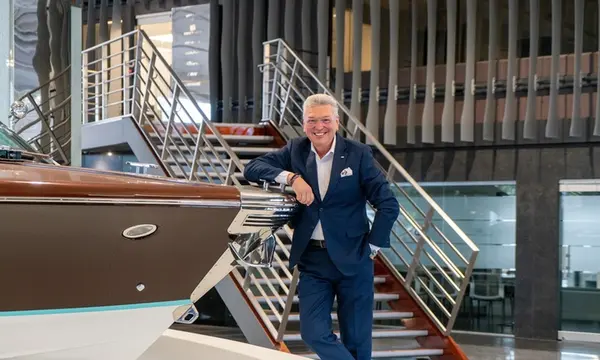
Ferretti CEO Stassi Anastassov outlines brand loyalty, yacht quality, after-sales service and warranty extensions for eligible yachts under 45m.
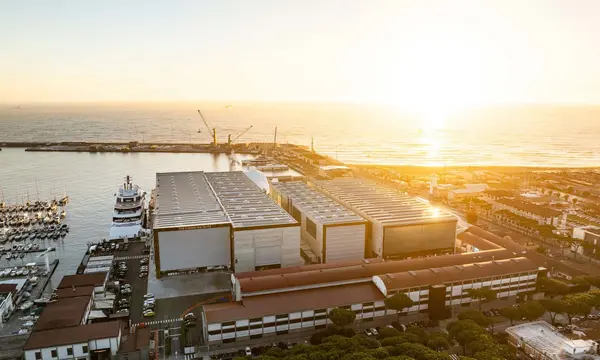
T.I.S.G. Asia Investment Holding disputes the exclusion of its €250 million proposal as Italian Sea Group prepares further court-supervised restructuring.
October 2026 records 33 sales of yachts over 24 metres worth €415.6 million, while new listings decline and resale asking prices per gross tonne …
Superyacht Guide
Continue into the wider Superyacht Guide.
Business opportunities · Superyacht Guide
Companies serving the superyacht market can discuss clearly identified advertising, sponsorship and business-profile opportunities. Commercial activity remains separate from independent editorial coverage.