Ambright SparkShape and SparkShelf Integrate LEDs and Conductors into Six-Millimetre Interior Composites
By Superyacht Guide Newsroom · Edited by Superyacht Guide Newsroom
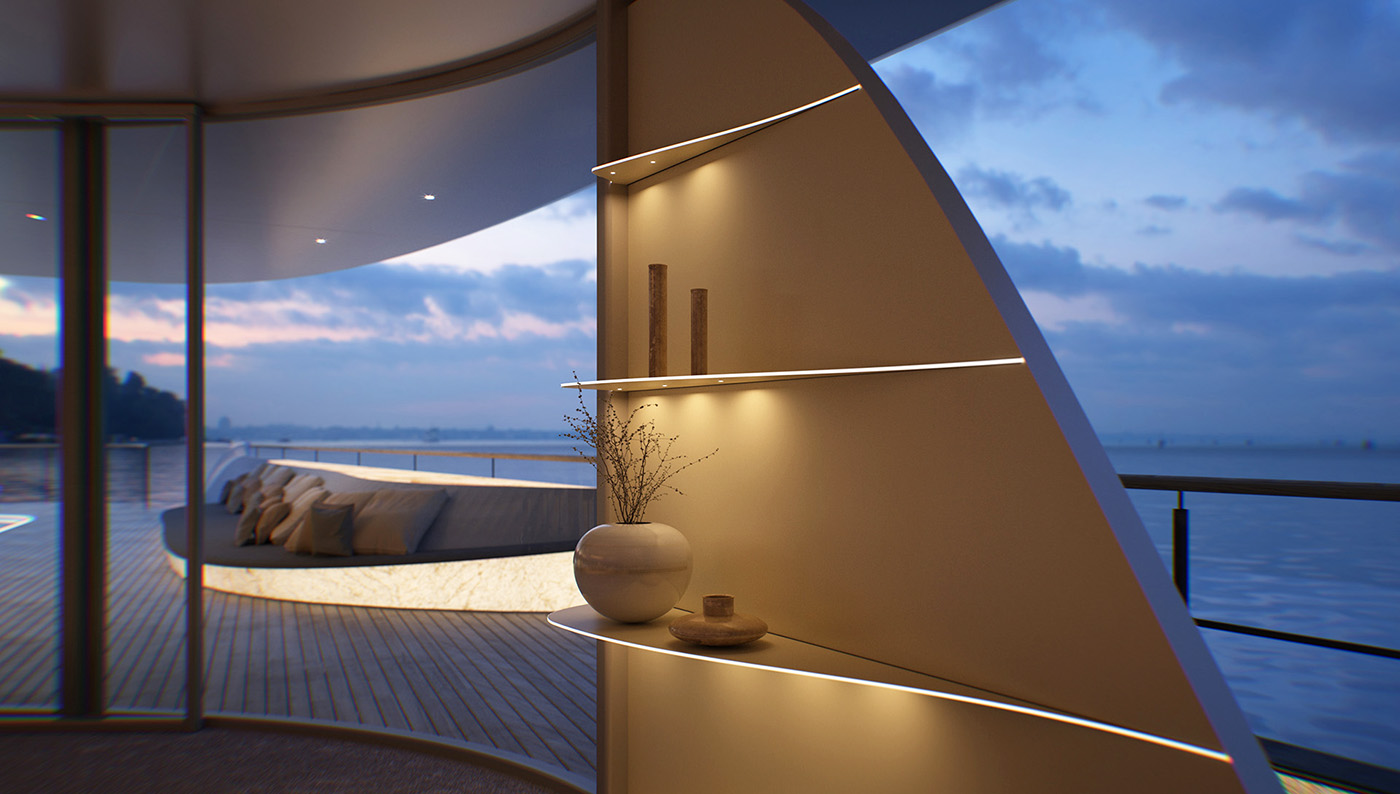
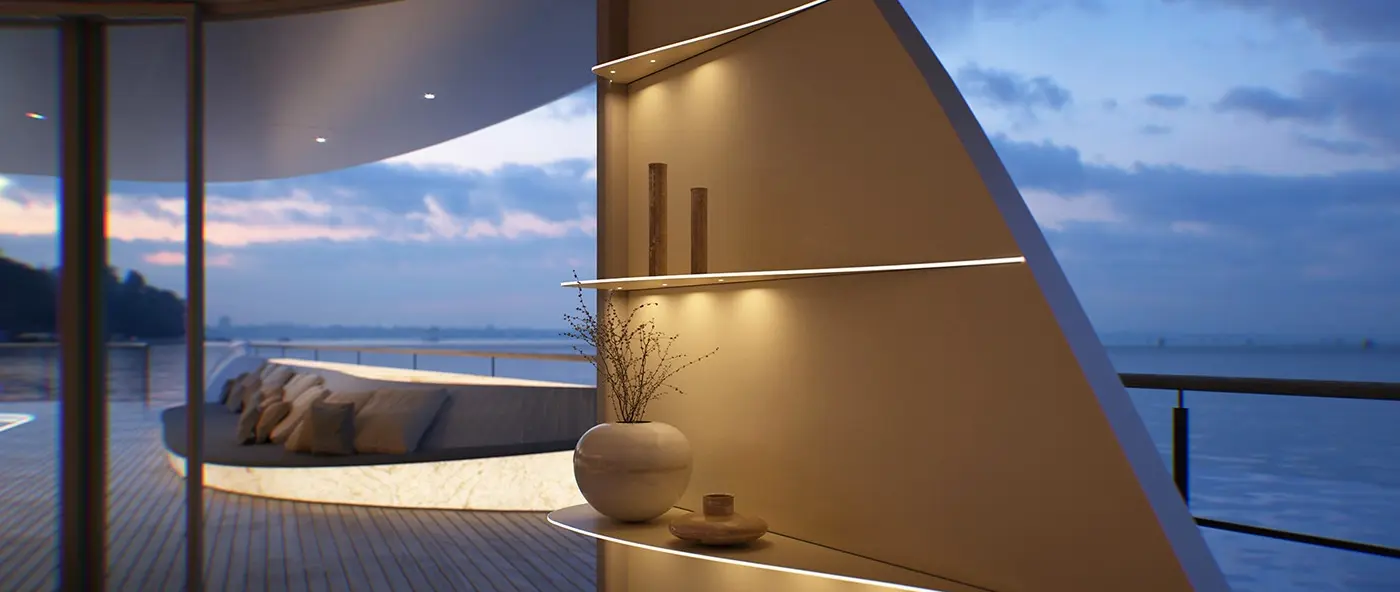
Ambright official SparkShape and SparkShelf printed-light composite concept publicity image
Ambright introduces a custom six-millimetre lighting composite with integrated conductors and LEDs, enabling illuminated shelves, pendants and ceiling elements.
Ambright is introducing SparkShape and SparkShelf to marine interior specialists at METSTRADE 2026, describing a customisable six-millimetre composite into which light sources and their electrical conductors are integrated. The Munich manufacturer's separate 17 November announcement concerns the creation of bespoke luminaires, illuminated shelves, pendants and ceiling components. It differs from its SparkSpace announcement, which concerns light guides applied behind translucent stone or other facing materials. SparkShape and SparkShelf instead make the light-emitting assembly itself part of the decorative object. Ambright offers external finishes including wood veneer, anodised aluminium and colours selected for individual projects. Its products are being presented in the Superyacht Zone at stand 08.263H. The significance for large-yacht designers is the opportunity to change the relationship between the shape of an interior element and the distribution of the light it produces. The release does not identify a universal installation method or declare marine approval for every configuration.
An interior design often develops furniture as one discipline and lighting as another. A joinery element may be drawn first, with a conventional luminaire subsequently positioned within or around it. This can create limitations when the chosen component requires a particular opening, mounting depth or electrical connection. A custom light-emitting composite offers a different starting point: the geometry of the decorative element and the positions of its light sources can be considered together. A shelf may incorporate a lit edge and illumination directed towards the objects below it. A pendant can be shaped in accordance with the furniture arrangement rather than solely around the outline of an established light fitting. Ambright's proposal is therefore principally a means of developing a different type of bespoke assembly. It does not establish that a particular design can be manufactured without constraints. The company's engineering team needs to assess the feasibility of the desired geometry and optical effect before fabrication.
A low-profile light-emitting layer can be particularly attractive where a designer wants a slender visible object rather than a bulky housing to accommodate conventional lamps. Ambright identifies six millimetres as the thickness of its active composite. For an interior outfitter, the important question is what the complete architectural or furniture component requires in addition to that layer. This may include support, decorative finishing, cable access or other installation elements. A pendant also needs a suitable method of suspension and a shelf needs adequate support for the loads it is intended to carry. Neither function can be evaluated solely from the thickness of the lighting substrate. The official announcement does not provide a permissible span, load capacity or a statement that the printed-light composite alone is a load-bearing shelf. Those aspects must be addressed within the design of the finished object. Nevertheless, reducing the thickness of an active component can introduce useful possibilities for the shape and perceived proportions of a custom interior element.
The manufacturer illustrates the concept through a wood-veneered ceiling incorporating low-glare microspots. Rather than distributing fittings according to an unrelated rectangular pattern, the designer may locate the light sources in relation to the shape of the ceiling or the furnishings beneath it. On a yacht, the requirements of an individual room may change along its length as seating, dining and circulation areas occupy different positions. An arrangement developed around those activities could offer opportunities to direct light towards the places where it is useful without detracting from the decorative character of the ceiling. The exact result depends on the optical performance, aiming characteristics and intensity of the selected sources. The term low-glare is a description of the intended design approach rather than a measured guarantee for every seat position. A designer should consider the actual viewing directions of the people using the room, including the effect of reflections in adjacent glazing and polished surfaces, when evaluating the configuration.
SparkShelf is presented as a means of illuminating displayed objects and creating a luminous edge within the same slender element. Those two functions may require different optical effects. A collection of displayed objects may benefit from illumination that reveals their shape and finish without producing excessive reflections. An illuminated edge can instead contribute to the appearance of the shelf itself or the room around it. The optimum relative intensity may vary according to the materials present and the surrounding light levels. Where an owner plans to display artwork or other sensitive objects, the appropriate lighting conditions should also be considered in relation to their preservation. The announcement does not give universal spectral or colour-rendering performance values for the complete assembly. An interior design team should assess the intended objects and request suitable data and representative samples. SparkShelf's distinguishing proposition is the integration of light within the furniture element, rather than relying on an additional external fixture placed above or below it.
Ambright also identifies the creation of individually shaped pendants capable of combining direct and indirect illumination. Direct light can contribute to the illumination of a table or another working surface, while indirect illumination may give a different character to the surrounding room. A pendant designed for a yacht must also be considered in relation to the vessel's movements and the requirements of the installation. Its suspension, fixings, distribution of mass and clearance from other surfaces are consequential technical matters. A very thin light-emitting composite does not remove those requirements or establish that a suspended design is appropriate for the intended vessel. The constructor needs to understand which parts of the proposed object are designed by the lighting manufacturer and which are the responsibility of other parties. The advantage of a custom geometry is the possibility of matching the object to a distinctive interior concept. The final installation should be assessed as an engineered assembly, rather than simply a decorative shape that happens to emit light.
The declared surface options include wood veneer and anodised aluminium. These provide designers with alternatives that may help integrate a fitting into the surrounding interior rather than make it visually distinct when the lights are switched off. The choice of surface can also influence the appearance of the light-emitting portions of the object. A relatively dark or reflective finish may create a different contrast from a pale matte surface, and an element intended to look continuous with adjoining furniture must be evaluated alongside the actual materials selected for the room. The practical question of how a finish can be applied and maintained is equally important. A yachtsman's interior may be cleaned more frequently than a comparable private residence if the vessel operates commercially. The manufacturer has not published detailed cleaning, resistance or durability specifications for every possible finish. These should be established for the selected materials before a bespoke design is approved for production.
Ambright's distinctive manufacturing approach combines LEDs and electrical conductors within the thin substrate. That changes part of the internal construction of a lighting element, but the surrounding yacht installation still requires a suitable electrical supply, controls and an appropriate means of isolation and service. Where a project incorporates several individual light-emitting furniture components, designers should identify the arrangement of their electrical connections and how they will be accessed after installation. A damaged bespoke element may not be as straightforward to replace as a standard light fitting if its shape is unique to one room. The ability to obtain compatible replacements and retain the documentation of the agreed configuration can therefore matter to the yacht's operating life. Ambright's announcement provides a description of the internal manufacturing method, not a complete electrical specification for every conceivable application. The appropriate technical and approval requirements must be established separately by the project team.
Ambright manufactures the configured lighting material in Munich using a process combining digital production and precision craftsmanship. Its proposal places considerable emphasis on the development of a technical solution from the designer's concept. This is particularly relevant when the desired geometry is closely related to adjacent furniture or ceiling construction. Changes to the dimensions or layout of those elements can alter the intended distribution of light sources and may require modification of the bespoke component. Project participants should establish the relevant drawings, finish samples and optical requirements before committing to production. The public release does not provide prices, delivery lead times or a catalogue of standard shapes, reflecting the customised proposition it describes. The confirmed November development is the introduction of SparkShape and SparkShelf as distinct integrated lighting materials for interior elements. For superyacht designers and outfitters, the significant opportunity is to design the appearance and illumination of an object together, rather than treat the light fitting as an addition selected only after its shape and decorative finish have already been determined.
Primary source: Ambright official METSTRADE release for SparkShape and SparkShelf, 17 November 2026.
Image: Ambright GmbH, official publicity asset supplied with the SparkShape and SparkShelf exhibitor announcement. Official source.
Explore
Go deeper into the yachts, companies, events and destinations directly connected to this article.
Continue reading
Munich lighting specialist Ambright debuts SparkSpace at METSTRADE, offering 10mm customised backlighting panels for stone, furniture and architectural surfaces.
Tecma debuts its compact electronic bidet with instantaneous water heating, adjustable flow and declared drinking-water protection certification at METSTRADE.

Turkish manufacturer AS-EL Metal highlights brass and bronze seawater strainers, hull connections and marine pipework fittings in its 2026 exhibitor announcement.
Posidonia and ARGUS demonstrate integrated stockless anchor monitoring, transmitting orientation and movement measurements through the anchor chain to the bridge.
Superyacht Guide
Continue into the wider Superyacht Guide.
Business opportunities · Superyacht Guide
Companies serving the superyacht market can discuss clearly identified advertising, sponsorship and business-profile opportunities. Commercial activity remains separate from independent editorial coverage.