Ambright Introduces 10mm Bespoke Printed-Light Panels to the Superyacht Interior Market
By Superyacht Guide Newsroom · Edited by Superyacht Guide Newsroom
Ambright SparkSpace official exhibitor media image METSTRADE 2026
Munich lighting specialist Ambright debuts SparkSpace at METSTRADE, offering 10mm customised backlighting panels for stone, furniture and architectural surfaces.
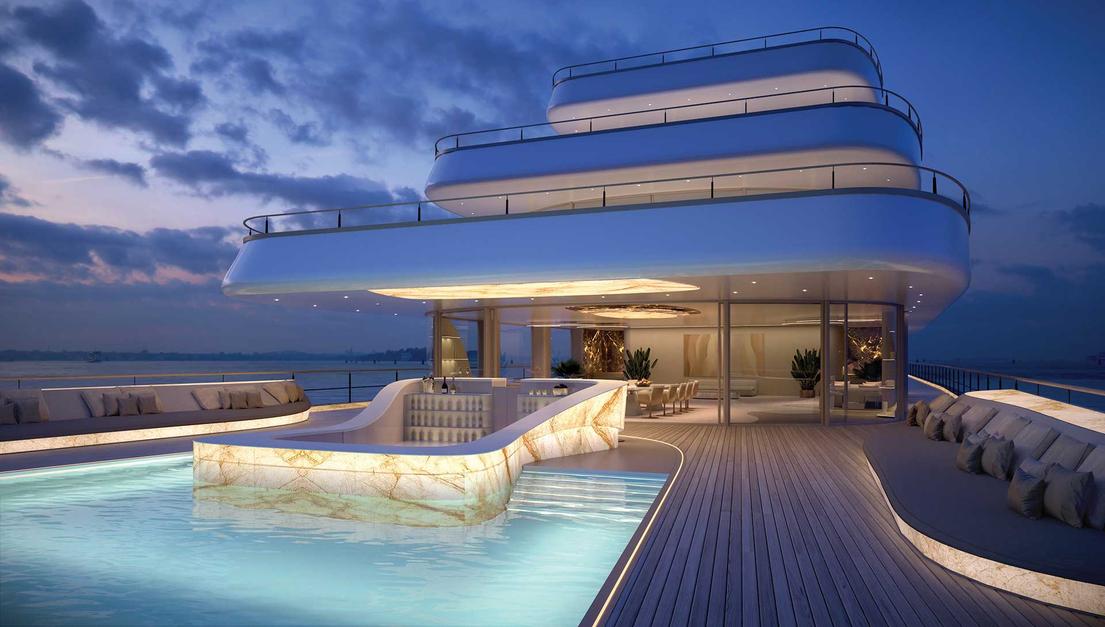
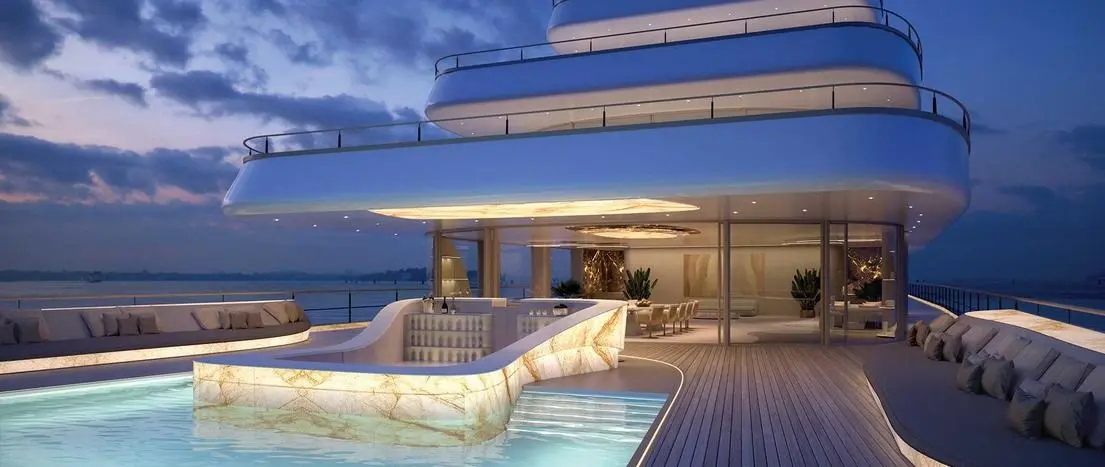
Munich-based lighting specialist Ambright is presenting its SparkSpace family of bespoke backlighting panels at METSTRADE for the first time. The company's official announcement of 17 November 2026 describes a custom-engineered system incorporating light sources directly into a guide through its patented printed-light technology. The panels are intended to illuminate translucent architectural and decorative materials and are stated to be just ten millimetres thick. Ambright identifies backlit stone walls, furniture and ceiling features among their possible applications and reports that the technology has already been used in selected superyacht installations. The company is exhibiting in the Superyacht Zone at stand 08.263H. Its announcement is of particular interest to interior designers and outfitters because it concerns the way a light source can be adapted to a decorative element, rather than requiring the designer to accommodate a conventional luminaire of predetermined dimensions. The actual installation depth and requirements will depend on the entire assembly.
Ambright's commercial proposition is to manufacture the illuminated panel, while project partners select the translucent material and incorporate the lighting assembly into the finished interior. That distinction matters in a bespoke yacht interior. The character of a particular piece of stone, for example, may depend on its mineral structure, thickness, colour and the distribution of translucent and opaque areas. Its appearance under reflected light may differ substantially from its appearance when illuminated from behind. A slab selected in daylight may not produce the effect anticipated from a small sample illuminated in a showroom. Ambright describes its engineering process as adapting the light source to the optical properties of the selected surface. This makes material trials an important part of developing the specification. The client and interior designer should evaluate the actual material in representative conditions and with the other finishes that will surround it. A lighting panel cannot establish the final optical result independently of the surface through which its light must travel.
The company's printed-light approach allows the distribution of light sources to be configured for an individual project. Ambright says that this permits bespoke contours and openings while maintaining uniform illumination, with optional illumination on the rear and edges. In conventional backlighting, the spacing between individual light sources and the decorative surface can influence the degree to which bright points are visible. Maintaining a consistent effect may be difficult where the available depth varies or the surface has an irregular shape. The company's approach is intended to make the source itself responsive to the geometry rather than requiring a standard rectangular arrangement. It does not follow that all materials will appear perfectly uniform when illuminated, because variation may be inherent in the material selected. Indeed, that variation can be one of the reasons for choosing a natural surface. An appropriate design specification should establish which differences in apparent brightness are intended and which would indicate an undesirable inconsistency.
The declared panel thickness is particularly relevant in locations where interior volume is constrained by the structure of a yacht and the equipment installed behind its decorative surfaces. However, a ten-millimetre lighting panel does not necessarily mean that the complete installation requires only ten millimetres. The decorative facing, its supporting structure, fixings, cable routes and any additional requirements for electrical and thermal management must also be accommodated. A removable piece of furniture or a free-standing feature may offer a different installation opportunity from a large fixed wall panel. When working with existing yacht interiors, designers should establish where supporting elements can be located without compromising the surrounding equipment or access provisions. The manufacturer's announcement does not disclose the total thickness of any particular completed installation or the weight of the panel and facing materials. Those particulars should be established separately as part of the project, especially where a substantial installation is proposed in an upper deck.
Ambright states that its production is available from a single piece, allowing a project team to specify lighting for individually shaped furniture and architectural elements. This is relevant to superyacht interiors, where fixed elements often follow curved surfaces and structural constraints rather than a conventional rectangular room plan. A decorative screen may incorporate openings for controls, fixtures or access to other facilities. A ceiling feature may need to accommodate equipment whose position cannot be altered without wider consequences. The possibility of custom contours gives designers a means of considering lighting as part of an individual assembly. It also places greater importance on the accuracy and stability of the agreed design. A panel manufactured for one particular geometry may not be readily adaptable to a late change in the dimensions of the surrounding structure. Coordinated drawings and verified measurements are therefore important before bespoke production begins. Responsibilities for procurement and acceptance should be clearly defined between the lighting manufacturer, decorative material supplier and outfitter.
The announcement identifies feasibility assessment and material trials as aspects of Ambright's support. Such work can be particularly valuable where a client has selected a piece of natural material with an irregular pattern or a carefully designed composite with optical characteristics that are not readily inferred from a photograph. A representative trial should examine the effect of the proposed light source under the conditions in which the installation will ordinarily be used. Those conditions may include daylight entering the room, artificial lighting from other fixtures and the lower illumination levels preferred during the evening. The contrast between an illuminated surface and its surroundings may influence the way its colour and texture are perceived. The value of the final installation should therefore be judged in the context of the overall interior design. The official release does not publish universal brightness or colour-rendering values for the complete system, reflecting the importance of defining the particular performance required for each bespoke application.
Ambright offers coordinated power supplies, controls and preconfigured cabling to assist project partners with integration. The complete electrical design must nevertheless be considered within the wider vessel installation. The relevant questions include supply characteristics, distribution arrangements, dimming, protection and accessibility for future service. A ceiling installation may contain several different types of electrical equipment in close proximity and require an appropriate approach to heat dissipation and access. The importance of these considerations extends beyond the initial commissioning of the interior. If a decorative surface is difficult to remove, the selection and placement of serviceable components behind it may have consequences throughout the vessel's operating life. The supplier identifies optional redundancy as a possibility. The precise configuration and the functions retained following an individual failure should be specified rather than assumed from that description. Project teams should also verify the applicable marine electrical, fire and material requirements for the intended location. The announcement itself is not a declaration of approval for every conceivable yacht installation.
A relatively slim backlighting component may present useful opportunities for the renewal of existing interior features during refit. In some cases, a new lighting arrangement might be incorporated while retaining the surrounding joinery or a decorative surface selected during an earlier project. The feasibility depends on what is already installed and whether it can be removed without damage. The condition of associated wiring, the geometry of the supporting structure and the need for any additional ventilation or electrical equipment should be assessed before the scope is agreed. New-build designers have another opportunity: they can coordinate optical, structural and service requirements during the development of the original drawings. In both situations, the ability to specify an individual light-source distribution could reduce the need to adapt the design around the dimensions of a standard product. The manufacturer has not provided cost comparisons or installation time measurements demonstrating that this will always be less expensive than another backlighting method.
SparkSpace is presented as an example of the use of additive manufacturing and precision engineering in architectural lighting. The company's presence at METSTRADE gives yacht interior specialists an opportunity to examine how that approach can be applied to a particular design rather than merely compare off-the-shelf fixtures. Pricing, lead times, detailed marine qualifications and final optical and electrical specifications are not stated in the press release. They should be established in consultation with the manufacturer and the project team. The material partner remains responsible for supplying the decorative facing, while the outfitter must integrate the complete assembly appropriately. The principal development at Amsterdam is the debut of the company's customised ten-millimetre backlighting platform within the superyacht exhibition environment. For an industry in which owners regularly commission highly individual interiors, the significance of such technology lies in the opportunity to bring lighting, material selection and the underlying engineering together earlier in the design process.
Primary source: Ambright official METSTRADE exhibitor release, 17 November 2026.
Image: Ambright GmbH, supplied with its official METSTRADE exhibitor announcement. Official source.
Image: Ambright GmbH, supplied with its official METSTRADE exhibitor announcement.
Explore
Go deeper into the yachts, companies, events and destinations directly connected to this article.
Continue reading
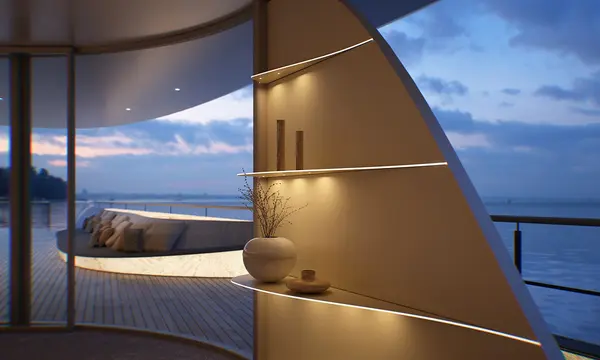
Ambright introduces a custom six-millimetre lighting composite with integrated conductors and LEDs, enabling illuminated shelves, pendants and ceiling elements.

Tecma debuts its compact electronic bidet with instantaneous water heating, adjustable flow and declared drinking-water protection certification at METSTRADE.

Turkish manufacturer AS-EL Metal highlights brass and bronze seawater strainers, hull connections and marine pipework fittings in its 2026 exhibitor announcement.
Posidonia and ARGUS demonstrate integrated stockless anchor monitoring, transmitting orientation and movement measurements through the anchor chain to the bridge.
Superyacht Guide
Continue into the wider Superyacht Guide.
Business opportunities · Superyacht Guide
Companies serving the superyacht market can discuss clearly identified advertising, sponsorship and business-profile opportunities. Commercial activity remains separate from independent editorial coverage.