Posidonia Demonstrates ATLAS ANCHOR Real-Time Seabed Monitoring at METSTRADE
By Superyacht Guide Newsroom · Edited by Superyacht Guide Newsroom
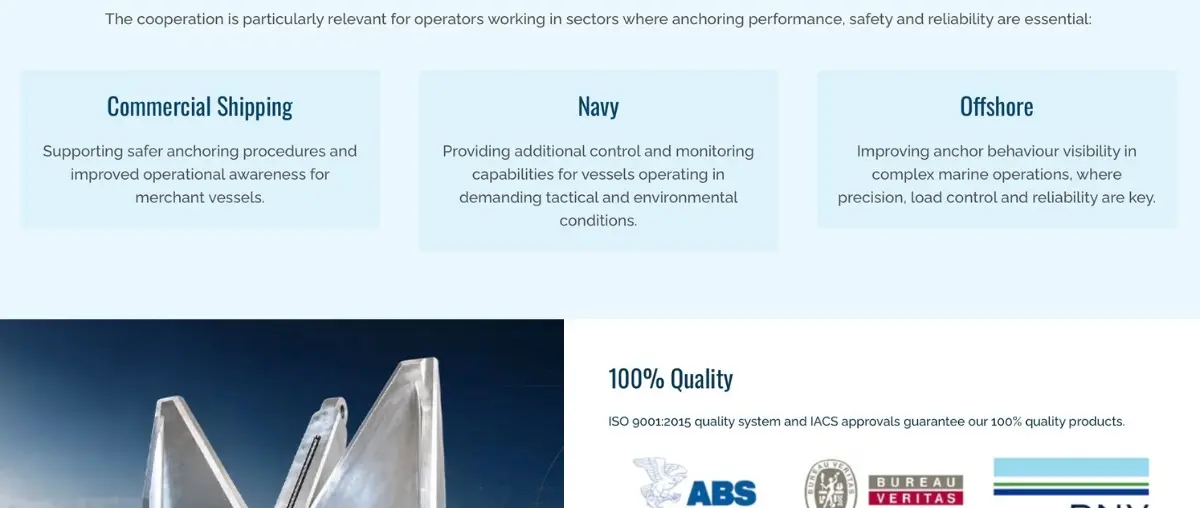
ARGUS AnchorTag official Posidonia collaboration technical media illustration
Posidonia and ARGUS demonstrate integrated stockless anchor monitoring, transmitting orientation and movement measurements through the anchor chain to the bridge.
Italian anchoring equipment manufacturer Posidonia is demonstrating its ATLAS ANCHOR system with ARGUS AnchorTag during METSTRADE Amsterdam, from 17 to 19 November 2026. Its official product presentation, verified on 18 November, identifies Hall 2, stand 02.511, as the location of a live simulation intended to show how information about the movement and orientation of a stockless anchor can be communicated to the crew. The development follows the companies' June announcement of their collaboration and their presentation of a prototype at Seawork in Southampton. The Amsterdam demonstration represents a further stage in the commercial presentation of the integrated equipment. For the superyacht industry, the specific interest lies in the possibility of obtaining additional information about the behaviour of an anchor beneath the surface, rather than relying exclusively on observations of the yacht itself. Posidonia offers the anchor and monitoring technology together as a project-specific integrated solution.
Position-monitoring systems aboard yachts can give a captain useful information about the movement of the vessel while at anchor. That movement does not directly establish what the anchor is doing on the seabed. The yacht may change its heading or move within the area permitted by the deployed cable as wind and other conditions vary. A change in the orientation of the anchor may likewise occur without immediately producing a substantial displacement of the vessel. Understanding the relationship between these observations is central to the concept behind the new system. Posidonia and ARGUS intend to supplement conventional vessel monitoring with data originating from the anchor. The distinction matters because the information describes two different parts of a physical arrangement involving the anchor, cable and vessel. Neither set of observations independently establishes the safety of the complete anchoring arrangement in every circumstance. The new equipment is presented as a decision-support system, not a replacement for the captain's assessment or the watchkeeping procedures of the yacht.
The first element of the equipment identified in Posidonia's product description is an acoustic transmitter mounted within the stockless anchor shank. It measures information relating to orientation and movement and communicates the resulting data acoustically. The manufacturer identifies roll, pitch and movement speed among the parameters available. This differs from equipment that only establishes a position on the water surface. The installation must be considered in conjunction with the design of the anchor itself because it incorporates equipment into an element exposed to the conditions encountered during deployment, recovery and operation on the seabed. The manufacturer's public description does not give a complete technical specification for the transmitter, its measurement accuracy, power source or operating endurance. Those details should be established in the context of the system proposed for an individual yacht. The announced arrangement provides insight into the architecture of the solution without establishing its performance in every seabed or operating condition.
The second element of the system is a magnetic receiver installed near the gypsy or riding chock, according to Posidonia's description. The system receives information transmitted through the anchor chain. This is a distinctive feature because the cable already forms a physical connection between the vessel and the anchor. Providing an additional route for information related to the anchor does not remove the existing mechanical requirements of the cable or the equipment through which it passes. For a design team, the appropriate receiver position must be considered in relation to the actual arrangement of the anchoring equipment and its accessibility. Nearby structures and services may impose constraints that differ between vessels. Posidonia states that integration is evaluated according to the vessel and anchoring configuration. Its product description does not establish a universally applicable installation geometry or quantify transmission performance across every possible cable length and configuration. Those parameters are relevant to the assessment of a proposed new-build or refit installation.
The third component is a wireless monitor, which can be supplied as a handheld device or integrated into a bridge display. The manufacturer's description identifies current anchor status, alerts and recorded data. The value of these functions depends partly on how information is presented and interpreted within the wider navigational environment. A bridge team already receives data from several systems, not all of which are equally relevant at every moment. A new display should contribute meaningful information without creating avoidable confusion over the significance of an individual measurement. The thresholds and circumstances associated with alerts should be understood by the operating team. Historical records may also be useful when reviewing an event or examining the performance of the anchoring system over time. Posidonia does not publish complete information about the available interface protocols, the scope of data recording or the criteria used to generate particular alerts. These matters should form part of discussions between the supplier and the project team.
The manufacturer's explanation associates roll and pitch measurements with information about the way the anchor is positioned and loaded. Movement data can be relevant during setting, potential dragging and repositioning. The same numerical value need not have an identical significance during each stage of an operation. Different anchor configurations and seabed conditions can also influence the relationship between the information recorded and the actual holding behaviour of the equipment. A measurement associated with orientation should not be treated as a direct measurement of all forces acting on the system, nor as proof that an anchor will retain its position during a subsequent change in conditions. The supplier describes analysis of the monitored parameters as a means of identifying possible changes in holding conditions. For professional operators, the distinction between an observation, an interpretation and a prediction is therefore important. The display is intended to support qualified personnel in making decisions, rather than independently prescribe the actions they should take.
Posidonia expressly states that ATLAS ANCHOR is supplied as a combined anchor and monitoring system. The two components are not offered separately within that product arrangement. The company can evaluate particular anchor designs and configurations in relation to the vessel's technical requirements. This is significant to owners contemplating a retrofit because the proposal may involve the replacement of an existing anchor, rather than simply adding a sensor to equipment already aboard. The physical dimensions of the anchor and its compatibility with the vessel's handling and stowage arrangements must be considered. A project team should also establish the applicable technical and certification requirements, including the documentation for the specific configuration supplied. A new-build design may offer additional opportunities to coordinate the equipment, receiver and display before the surrounding structures and electrical systems are completed. The product page identifies yachting as an application sector for vessels with compatible installations, alongside commercial and naval maritime applications.
The companies announced their cooperation in June 2026, describing the application of monitoring technology to high-holding-power and super-high-holding-power anchors. At Seawork, Posidonia displayed a prototype during its first participation as an exhibitor. The November presentation now provides a named integrated commercial proposition and an opportunity to see a live simulation of anchor behaviour and the corresponding displayed information. That progression is relevant to understanding the development without confusing a public simulation with a completed operational trial on a named superyacht. The manufacturers' published information does not identify the number of systems delivered, individual vessel installations or an independently verified performance comparison. The earlier collaboration illustration accompanying this article is supplied by ARGUS and is not a photograph of the METSTRADE demonstration. The technical questions arising from the system's introduction include its integration requirements, the reliability of the information supplied under representative conditions and the support available throughout its service life.
The confirmed November development is the presentation of ATLAS ANCHOR as an integrated solution with a live demonstration in Amsterdam. Captains, engineers and design teams considering the technology can examine its specific requirements with Posidonia and ARGUS, including the appropriate configuration for their vessel. The equipment is intended to make previously difficult-to-observe aspects of anchor behaviour more accessible to the operating team. Its value in practice will depend on the reliability and interpretation of its information, the characteristics of the installation and the way it is incorporated into established operating procedures. It remains necessary to maintain conventional monitoring, appropriate seamanship and equipment-specific instructions. The public announcement does not establish that the system can eliminate dragging incidents or guarantee holding performance. For owners and managers of large yachts, the development demonstrates a growing interest in connecting the mechanical functions of deck equipment with data that can help crews understand its behaviour in service.
Primary source: Posidonia official ATLAS ANCHOR product and METSTRADE demonstration announcement, checked 18 November 2026.
Further official information: ARGUS AnchorTag official collaboration announcement, 4 June 2026.
Image: ARGUS AnchorTag, official illustration associated with the manufacturers' June 2026 collaboration announcement; not a photograph of the Amsterdam demonstration. Official source.
Explore
Go deeper into the yachts, companies, events and destinations directly connected to this article.
Continue reading

Ambright introduces a custom six-millimetre lighting composite with integrated conductors and LEDs, enabling illuminated shelves, pendants and ceiling elements.
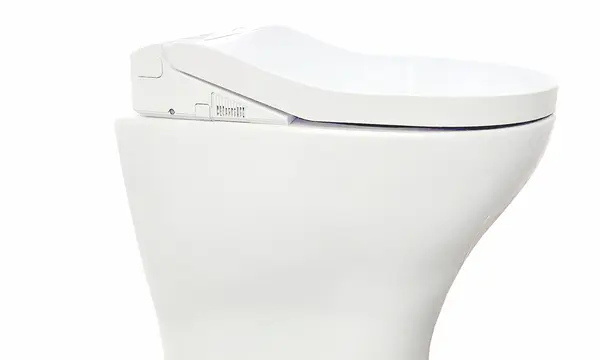
Tecma debuts its compact electronic bidet with instantaneous water heating, adjustable flow and declared drinking-water protection certification at METSTRADE.

Turkish manufacturer AS-EL Metal highlights brass and bronze seawater strainers, hull connections and marine pipework fittings in its 2026 exhibitor announcement.
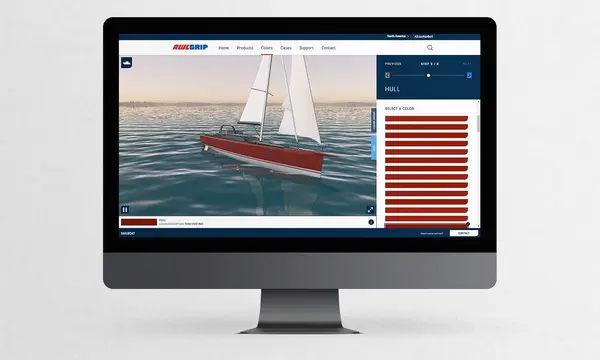
International's new biocide-free fouling control coating uses surface renewal technology, with initial launch in eleven European markets and reported trial data.
Superyacht Guide
Continue into the wider Superyacht Guide.
Business opportunities · Superyacht Guide
Companies serving the superyacht market can discuss clearly identified advertising, sponsorship and business-profile opportunities. Commercial activity remains separate from independent editorial coverage.
