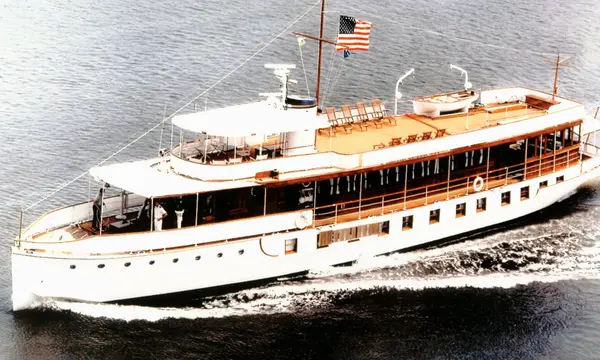
USS Sequoia: The Presidential Yacht Used by Nine U.S. Presidents
USS Sequoia served nine U.S. presidents and became a floating setting for diplomacy, political decisions and private presidential life. From Roosevelt and Kennedy to …
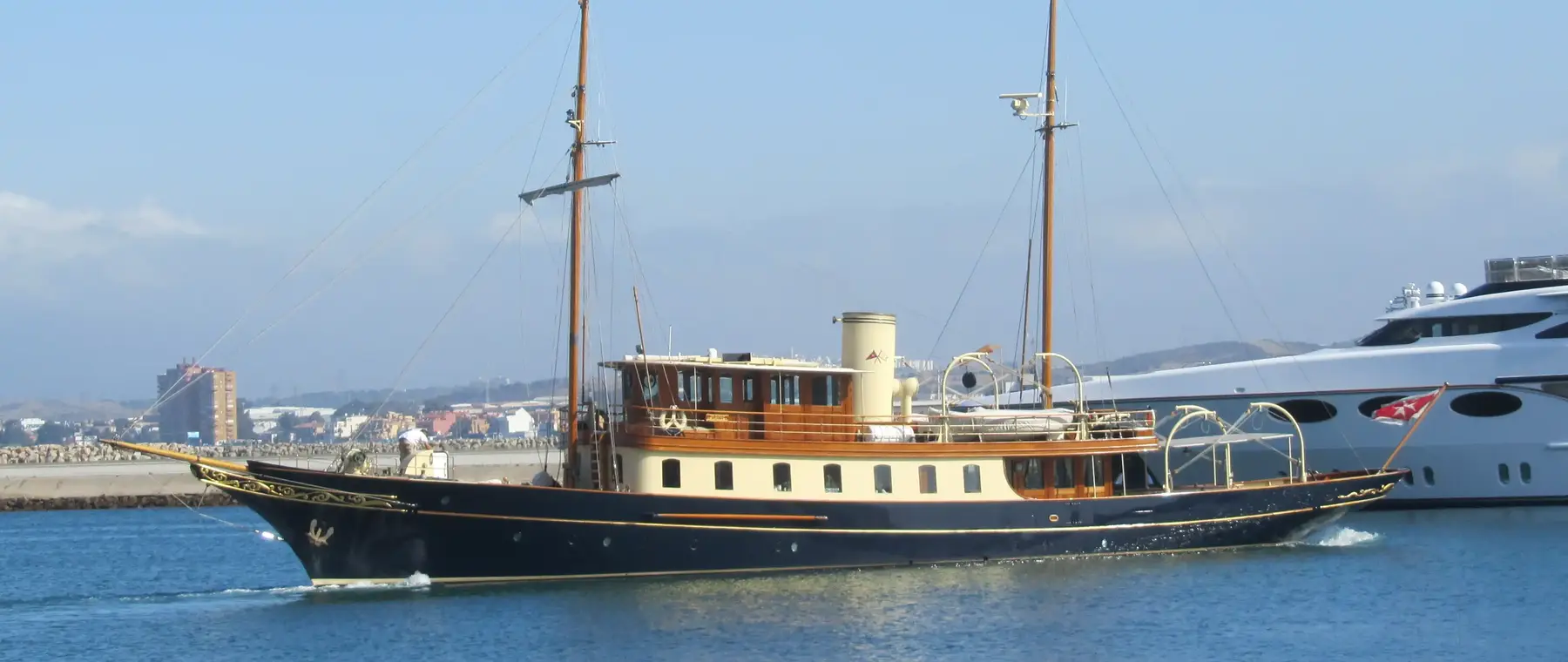
A safe superyacht departure may look effortless from the aft deck, but behind it lies careful passage planning, machinery checks, crew coordination, mooring discipline and preparation for the first minutes at sea.
To a guest watching from the aft deck, the departure of a superyacht can appear almost effortless. The gangway comes in, engines begin to murmur somewhere deep below, deck crew take their positions, a few quiet words pass over the radio and, one by one, the mooring lines disappear from the quay. Minutes later the yacht is moving through the harbour as though leaving the berth required little more than turning a key.
In reality, a safe departure is one of the most carefully coordinated moments in the operation of any large yacht. Long before the first line is released, dozens of separate decisions and checks have already taken place across the bridge, engine room, deck department and interior. Weather has been studied, the passage planned, machinery brought online, navigation equipment checked, the crew briefed and the yacht transformed from a floating residence connected to the shore into a self-contained ship ready to go to sea.
The departure itself may last only a few minutes, but those minutes sit at the end of a much longer chain of preparation. If the preparation is thorough, the manoeuvre often looks uneventful. That is precisely the point. Good seamanship rarely looks dramatic.
A safe departure begins with the voyage itself. Before a yacht leaves the berth, the bridge team must understand not simply where it is going, but how it will get there, what hazards may be encountered and what alternatives exist if circumstances change. Voyage planning is built around appraisal, planning, execution and monitoring, with the depth of preparation appropriate to the vessel, the intended route and the conditions expected along the way.
On a modern superyacht this process can begin hours or days before departure. Electronic charts and publications are checked for updates, weather systems are monitored, tidal conditions are reviewed and the intended route is examined for traffic separation schemes, restricted waters, local regulations, bridge clearances, pilotage requirements and suitable alternatives should the planned destination become unavailable.
The captain and bridge team must also think beyond the route drawn on the chart. What happens if visibility deteriorates? What if the destination berth is no longer available? Where can the yacht safely divert if a technical problem develops? Is there enough fuel for the passage, the required reserve and a meaningful contingency? Will the yacht arrive at a constrained harbour at the correct state of tide? Is the weather forecast acceptable not only for the yacht itself but for the owner’s intended activities once it arrives?
This is why the departure cannot be viewed as an isolated manoeuvre. The decision to let go the lines should be the final confirmation that the entire voyage, not merely the first few hundred metres, has been considered.
If a pilot is involved, another important layer is added. The pilot brings detailed local knowledge, but the captain retains command of the vessel. The safest bridge is not one in which everyone assumes somebody else knows what is happening, but one in which the pilotage plan, intended manoeuvre and responsibilities are understood by everyone who needs to act on them.
Meanwhile, the yacht itself is gradually changing state. Shore power may be disconnected and onboard electrical generation stabilised. Fresh-water connections, waste hoses and communications links may be removed. Deliveries stop, contractors leave, access points are secured and the gangway that has linked the yacht to the marina is prepared for recovery.
Inside the yacht, loose items that were perfectly safe while alongside may need securing. Exterior furniture, awnings, umbrellas and equipment are checked according to the expected conditions. Tenders, jet skis, rescue craft, cranes, shell doors and beach-club arrangements must be in the correct seagoing condition. Large doors and openings that form part of the yacht’s watertight or weathertight integrity cannot simply be treated as architectural features once the vessel leaves sheltered water.
The transformation can be subtle. Half an hour earlier, the vessel may have looked like a waterfront hotel. By departure time, it must once again be a ship.
Every yacht should follow its own approved procedures, Safety Management System, flag-state requirements and captain’s standing orders, so no generic list can replace the vessel’s actual checklist. However, immediately before departure, the final confirmation will commonly include:
The important part is not simply that boxes are ticked. It is that somebody competent has actually verified each condition. A checklist should prevent assumptions, not formalise them.
Deep below the polished guest decks, the engineering department has its own departure sequence. Engines and propulsion systems may need warming, electrical loads must be transferred correctly, cooling systems checked and alarms reviewed. Steering systems must be available, hydraulic systems pressurised and critical machinery confirmed ready before the captain commits the yacht to leaving the berth.
The engineering team is not merely preparing machinery to run; it is preparing the yacht to lose the safety net of the marina. Alongside, a technical problem may be inconvenient. Thirty minutes later, in a narrow channel with traffic, wind and limited sea room, the same problem can become serious.
This distinction explains why experienced captains are reluctant to rush departure simply because an owner, guest or schedule demands it. If an essential system is not ready, the safest departure time is later.
Once the machinery is confirmed, attention increasingly shifts to the bridge and mooring stations. On a large yacht, leaving a berth can involve several teams working simultaneously. Officers may be on the bridge wings, crew stationed forward and aft, marina personnel handling lines ashore, and in larger or more difficult harbours pilots and tugs may also be involved.
Communication has to be precise. A command to let go a particular line cannot mean one thing to the bridge and another to the crew handling it. Instructions should be acknowledged and understood, and if there is any doubt, the operation should pause rather than continue on assumption.
Mooring lines themselves deserve particular respect. The quiet elegance of a marina can disguise the forces involved. A heavily loaded line stores enormous energy, and if it parts or suddenly runs, the consequences can be fatal. Crew should remain clear of the bight of ropes and wires and stay outside potential danger and snap-back areas whenever lines are under strain.
This is why owners and guests may sometimes be asked to remain clear of working decks during departure. It is not unnecessary formality. The aft deck that functions as a glamorous entertainment space at anchor can become an active working environment when heavy lines, capstans and winches are in use.
The sequence of releasing those lines depends on wind, current, berth configuration and the captain’s manoeuvring plan. Thrusters may hold the yacht against or away from the quay, a spring line may be retained temporarily to pivot the vessel, or a tug may control one end of a particularly large yacht. There is no universal sequence because every departure is a small exercise in applied physics.
Modern technology has undoubtedly made manoeuvring easier. Powerful bow and stern thrusters, azimuthing pods, dynamic positioning and sophisticated bridge systems can give a captain extraordinary control. But technology does not remove risk. Safe operation still depends on qualified people understanding the yacht, the equipment and what the systems are telling them.
The moment the final line comes aboard is significant. Until then, the yacht has remained physically attached to the shore. Now it is entirely on its own.
Perhaps the most easily overlooked element of departure safety is the condition of the people carrying it out. A perfectly maintained yacht with an excellent passage plan can still be placed at risk by fatigue, poor communication or distraction.
That matters enormously on superyachts because departure may come at the end of an unusually demanding period. The interior team may have been preparing for the owner’s arrival. Deck crew may have spent the day loading tenders, provisions and luggage. Engineers may have been dealing with contractors or last-minute maintenance. The bridge department may have been coordinating agents, customs, weather and passage planning. If departure then takes place late at night for an overnight passage, the crew must still be capable of safely operating the yacht for the hours ahead.
A professional operation therefore thinks beyond whether enough crew members are physically onboard. It asks whether the right people are rested and ready to perform the voyage safely. Minimum manning and sensible operational manning are not always the same thing. The actual programme, watch system, expected workload and duration of the passage all matter.
Guests create another human factor. For someone unfamiliar with large yachts, departure is exciting. Children may want to watch the lines, guests may gather on deck to take photographs and somebody may decide that the perfect time to ask the captain a question is while the yacht is reversing between two expensive vessels in a crosswind.
The best crews manage this without making the yacht feel institutional. Guests can still enjoy departure, but they should know where it is safe to stand and when operational areas need to remain clear. Interior crew can quietly keep people away from working decks, while deck officers retain the concentration required for the manoeuvre.
Newly embarked guests should also understand essential safety information appropriate to the vessel and its operation. The objective is not to burden a holiday with maritime bureaucracy, but to ensure that if something unexpected happens, people know the basics: where lifejackets are located, what alarms mean, where they should muster and whose instructions they should follow.
The same principle applies within the crew. Everyone does not need to know every detail of the passage, but everybody involved in departure needs to understand their role. A deckhand handling a stern line, an engineer monitoring propulsion and an officer watching clearance from the quay are all looking at different pieces of the same operation.
The captain brings those pieces together.
There can be a temptation to think that once the yacht clears the marina entrance, the difficult part is over. In reality, the first part of the voyage is often when the vessel and crew confirm that the transition from alongside condition to seagoing operation has been completed successfully.
The mooring teams secure and stow lines and fenders. Gangways and passerelles are checked. Deck equipment is confirmed secure. The bridge settles from manoeuvring mode into navigational watchkeeping, while the engineering department monitors machinery under realistic operating load rather than simply at idle alongside.
The bridge team now begins executing the passage plan rather than merely preparing it. Position, traffic, weather and navigational hazards are continuously monitored, and the yacht’s progress is compared with what was expected. Passage planning does not end when the vessel leaves the berth; monitoring and adjusting the voyage are integral parts of safe navigation.
Any unexpected vibration, alarm, temperature change or steering irregularity becomes important. It is far better to identify a developing problem while the yacht still has safe options nearby than several hours later on an exposed passage.
The same applies to doors, hatches and exterior areas. A calm harbour can create a false sense of security. Once the yacht reaches open water, wind and sea conditions may increase rapidly. The correct seagoing configuration therefore needs to be established before it becomes urgently necessary.
For the guests, however, almost none of this should be visible. They may simply notice the marina falling away behind them, breakfast being served on the aft deck and the coastline beginning to change. The captain may alter course, the stabilisers settle the yacht and the crew quietly transition into the routines of a passage.
That apparent simplicity is the result of preparation.
A safe superyacht departure is not a single event and certainly not just the moment the engines go ahead. It begins with decisions made long before anyone sees the yacht move: whether the weather is acceptable, whether the crew are rested, whether the route is safe, whether machinery is reliable and whether every part of the vessel is genuinely ready to leave the protection of the berth.
Then comes the visible choreography: the bridge, engineers and deck teams working together; the final shore connection disappearing; heavy lines being handled safely; the yacht moving carefully through the harbour while officers monitor clearances that may be measured in metres.
Finally comes the less dramatic but equally important transition into the voyage itself, when the yacht settles into open water and the crew confirm that everything they prepared is working as expected.
The safest departures often attract the least attention because nothing unexpected happens. There are no shouted commands, no frantic movements and no last-minute improvisation. The yacht simply leaves.
To the owner watching from the deck, it may look effortless.
That is because, when a professional crew has done everything correctly, all the complexity has happened before the first line ever came off the quay.
Continue reading
USS Sequoia served nine U.S. presidents and became a floating setting for diplomacy, political decisions and private presidential life. From Roosevelt and Kennedy to …
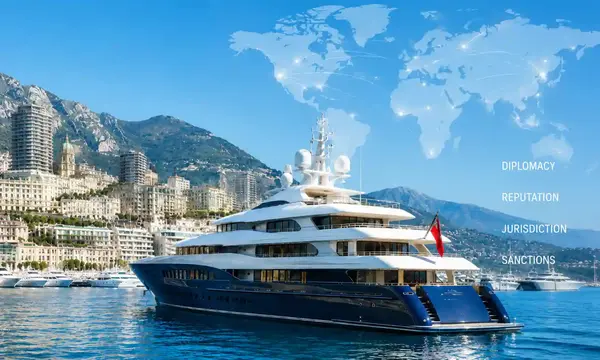
Superyachts are unusually visible forms of private wealth, so where they berth can carry reputational as well as legal significance. Soft power begins with …
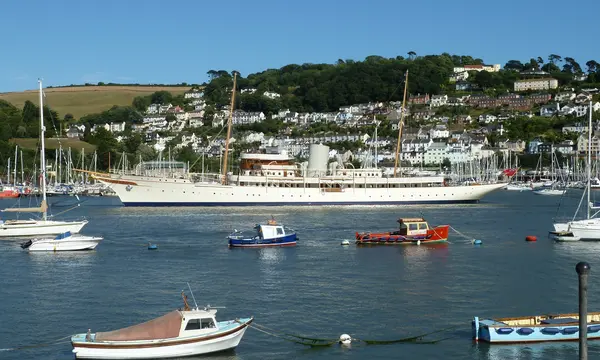
Nahlin is a 91.44-metre classic motor yacht built by John Brown & Sons in 1930 to a G.L. Watson design. Her 1936 Mediterranean charter …
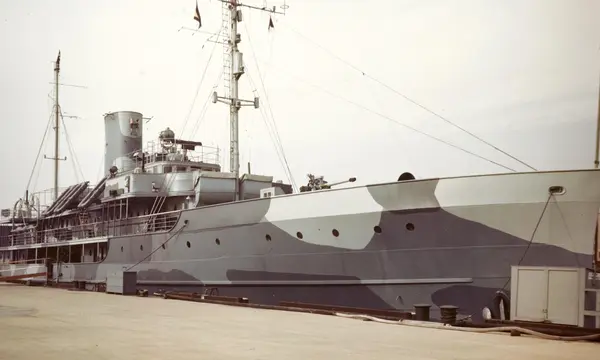
Built for Horace Dodge in 1921, SS Delphine survived sinking, wartime service as USS Dauntless and decades of uncertainty before a landmark restoration returned …
Superyacht Guide
Continue into the wider Superyacht Guide.