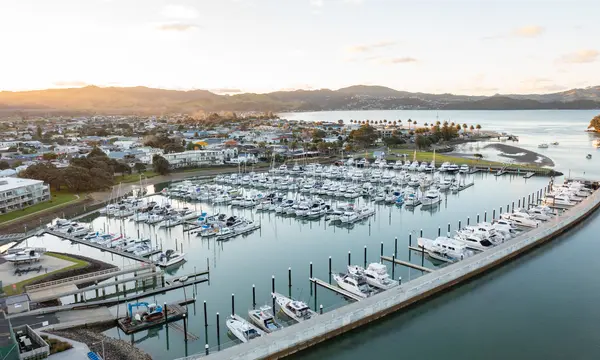
Whitianga Marina Wins Marina and Boatyard of the Year
Whitianga Marina has taken both Marina of the Year and Boatyard of the Year in the 2026 New Zealand Marina Operators Association Awards.
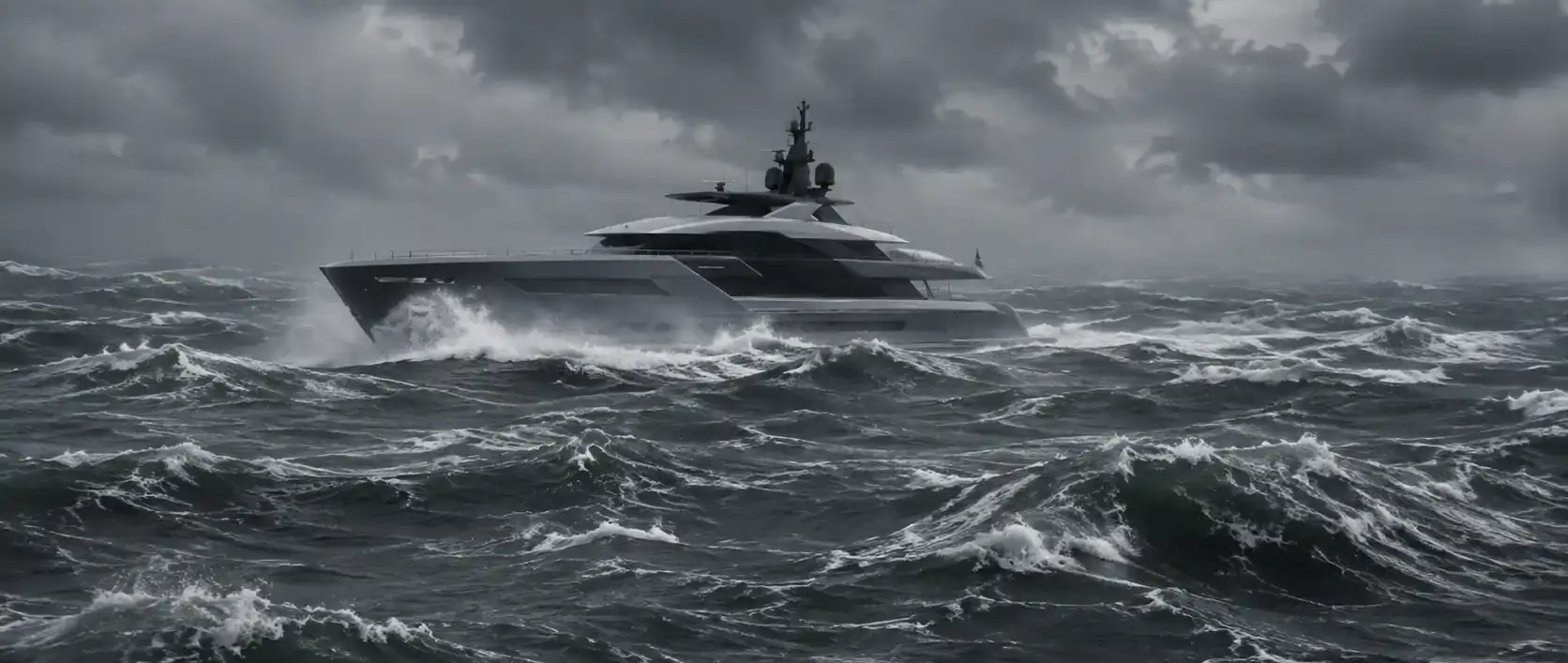
Modern superyachts can be formidable ocean-going vessels, but seaworthiness depends on far more than size. We examine hull design, stability, watertight integrity, machinery and what really happens when a large yacht encounters heavy weather.
A modern superyacht can look remarkably unlike the traditional form of an ocean-going ship. Expanses of glass replace heavy-looking superstructures, beach clubs open almost directly onto the water, terraces fold from the hull and swimming pools occupy areas that previous generations of naval architects might have regarded as valuable reserve deck space. Yet the appearance of a contemporary yacht can be misleading, because beneath the architecture and luxury fit-out sits a vessel that may have been designed, built and surveyed to demanding standards of structure, stability, machinery, subdivision and watertight integrity.
For a well-designed, properly maintained and professionally operated large yacht, the answer to the obvious question is therefore yes: modern superyachts can be highly seaworthy ocean-going vessels. That does not mean that every yacht is equally capable, that every 80-metre yacht can tolerate the same weather, or that there is a simple wave-height figure beyond which a vessel suddenly becomes unsafe. Seaworthiness is the product of the yacht's hull form, displacement, stability, freeboard, loading condition, machinery, watertight integrity, sea state and crew decisions working together.
The important distinction is between what a yacht can survive, what it can operate safely through, and what an owner or guest would consider acceptable. In many large yachts the structural capability of the vessel extends considerably beyond the conditions in which anyone aboard would choose to continue a luxury cruise, which is why professional captains normally manage weather long before the yacht is anywhere near its ultimate physical limits.
The regulatory framework gives some indication of how seriously large-yacht seaworthiness is treated. The current Red Ensign Group Yacht Code Part A applies to qualifying commercially operated yachts of 24 metres and above carrying no more than 12 passengers, and the UK Maritime and Coastguard Agency states that its standards are intended to achieve equivalence with relevant international conventions where direct compliance is not reasonable or practicable for yachts. The Code was updated in 2024, and its scope covers much more than accommodation or lifesaving equipment; it sits within a broader safety regime concerned with how a large yacht is designed and operated at sea.
Classification adds another technical layer for yachts built and maintained in class. Lloyd's Register's Rules for the Classification of Special Service Craft expressly include yachts of 24 metres LOA and above, covering sea-going craft built in steel, aluminium alloy, composites or combinations of those materials. Those rules do not mean that every yacht is identical or that classification makes a vessel invulnerable, but they illustrate why a large yacht should not be thought of simply as an enlarged leisure boat.
The machinery spaces reinforce the same point. Behind the guest areas of a substantial superyacht are propulsion, electrical generation, steering, bilge and fire systems, tankage, ventilation, communications and numerous other systems intended to keep the vessel controllable and habitable away from land. The larger the yacht becomes, the more its engineering architecture begins to resemble that of a small ship, although the exact degree of redundancy and duplication varies from vessel to vessel.
Calling a yacht seaworthy does not simply mean that it will float when the sea becomes rough. A seaworthy vessel must possess adequate structural strength, sufficient intact stability, appropriate freeboard and reserve buoyancy, protected openings, functioning machinery and an operating condition that keeps the yacht within its approved limitations. The International Maritime Organization's ship design and stability framework places design, construction, subdivision, stability, buoyancy, seakeeping and load-line matters within the same broad field of ship safety because none of those issues works independently of the others.
Stability is especially important because a yacht is constantly being subjected to forces that move it away from the upright condition. Wind produces heeling moments, waves create roll and pitch, liquids moving inside partly filled tanks create free-surface effects, and alterations to loading can change the vessel's centre of gravity. The IMO stability framework therefore looks not merely at whether the yacht sits upright in calm water but at whether it has adequate righting characteristics and safety margins when exposed to the conditions expected in service.
This is also why two yachts of identical length can have quite different behaviour at sea. A heavy displacement yacht with substantial freeboard, conservative weight distribution and a hull developed for long passages is not the same vessel as a relatively light, fast yacht designed around a different operational profile, even if both measure 50 metres. Length is important, but it cannot substitute for the naval architecture beneath it.
Perhaps the most tempting question is also the one most likely to produce a misleading answer: how large a wave can a superyacht withstand? A figure such as six, eight or ten metres sounds reassuringly precise, but significant wave height alone does not describe the loading and motion experienced by a vessel. Wave period, steepness, direction, yacht speed, heading and hull response can completely change what a particular sea feels like aboard.
A long-period ocean swell can have considerable height while imposing relatively gradual motions, whereas a shorter, steeper sea can produce rapid pitching, repeated bow impacts, difficult roll behaviour and much greater accelerations. The IMO's second-generation intact-stability work assesses dynamic failure modes in waves, including pure loss of stability, parametric roll, surf-riding or broaching, dead-ship condition and excessive accelerations. Those categories demonstrate why seaworthiness cannot responsibly be reduced to a single number printed beside the yacht's length.
Speed can alter the equation again because the yacht's encounter with the waves changes as its velocity and heading change. A captain who reduces speed or alters course in heavy weather is therefore not necessarily responding to a structural emergency; the bridge team may simply be changing the way the hull interacts with the sea so that pitching, slamming or rolling remain within a more acceptable range.
Size unquestionably helps. A 70-, 90- or 120-metre displacement yacht has a scale, mass and reserve volume that place it in a very different category from a relatively small pleasure craft, while its longer hull interacts with the wave field differently. Large yachts also have space for substantial machinery installations, tankage, pumps, technical spaces and other systems that would simply not fit into a much smaller boat.
Greater length does not, however, create immunity from the sea. Hull geometry, displacement, weight distribution, freeboard, draught and loading condition remain important, while very large exposed areas can create substantial wind forces and large appendages or openings introduce their own engineering considerations. The correct conclusion is not that the largest yacht is automatically the safest, but that a properly conceived large displacement yacht can possess formidable offshore capability.
The same caution applies when comparing conventional yachts with vessels marketed as explorers or expedition yachts. Some explorer designs deliberately place greater emphasis on range, autonomy, protected working areas, high freeboard or operations in remote environments, but the word explorer itself is not a universal technical seaworthiness rating. The capability of the individual vessel still has to be established from its design, class, flag requirements, equipment and operating limits.
The crucial difference between a commercial ship and a superyacht is that the superyacht exists to provide an exceptional experience for the people aboard. A commercial vessel may have a strong operational reason to continue through unpleasant conditions, whereas there is usually little point in a yacht maintaining its itinerary if guests cannot sleep properly, move safely around the interior or use the areas they came aboard to enjoy. The yacht's operating decisions therefore tend to become conservative well before the vessel approaches its ultimate structural capability.
As the weather deteriorates, the yacht reaches several thresholds rather than one dramatic limit. Outdoor dining may cease, exterior decks can be closed, tenders may no longer be launchable, table service may be simplified and guests may be asked to remain in safer interior areas. If conditions continue worsening, the captain may alter speed and heading, change the route or delay the passage altogether even though the yacht remains structurally sound.
This creates three useful envelopes: guest comfort, normal operation and fundamental structural capability. The guest-comfort envelope is normally the narrowest, while the structural and stability envelope is much wider. Good yacht operation aims to remain comfortably inside the first two rather than discover the edge of the third.
Contemporary yacht architecture makes the question of seaworthiness particularly interesting because so many vessels now contain huge openings in their hulls and superstructures. Tender garages require substantial shell doors, beach clubs open across large areas of the stern, balconies fold from guest suites and terraces create openings that would have been unusual on yachts only a few decades ago. Those features can coexist with serious offshore capability when the surrounding structure, closures and operating procedures are engineered accordingly.
Those features are not simply decorative holes cut into the side of the vessel. The International Convention on Load Lines places great importance on freeboard and on external watertight and weathertight integrity, with safety measures concerning doors, hatchways, freeing ports and other openings intended to protect the hull from uncontrolled water ingress. Modern yacht designers therefore have to integrate opening platforms and shell structures into an overall arrangement that can be properly secured for navigation.
The operational side is just as important as the engineering. A beach-club door that is entirely appropriate when secured according to its designed arrangement can become a serious vulnerability if it is not closed, locked or monitored when conditions require it. Modern design has not removed the need for watertight discipline; in some respects it has made disciplined operation more important because there are more sophisticated openings and systems for the crew to manage.
Large modern yachts frequently employ powerful fin stabilisation systems to reduce roll, and the improvement in comfort can be dramatic. Some systems can also provide useful roll reduction when the yacht is stationary, which has transformed the experience of anchoring in exposed or busy cruising areas. Those systems are valuable operating tools, but they do not replace the basic naval architecture that keeps the vessel upright.
Fundamental stability comes from the relationship between hull form, displacement, buoyancy, loading and centre of gravity, which determines how the vessel develops a righting moment after being heeled. IMO stability requirements address those underlying characteristics, while dynamic criteria deal with the more complex ways in which hulls can interact with waves. A stabiliser failure can therefore make conditions much less comfortable without automatically making a fundamentally stable yacht unsafe.
An intact yacht meeting heavy weather is fundamentally different from a yacht that has been damaged by collision, grounding or another event that allows water inside the hull. Once flooding begins, the naval-architecture problem changes because additional weight, free-surface effects, loss of buoyancy and changes in trim or heel can progressively reduce the vessel's safety margins. The question is no longer simply how the yacht rides the sea, but whether the damaged hull can retain sufficient buoyancy and stability.
The IMO's damage-stability framework is built around subdivision because dividing a ship into watertight compartments can restrict flooding and improve the probability that the vessel remains afloat and stable after defined damage. SOLAS Chapter II-1 contains requirements addressing subdivision, stability, watertight integrity, bilge arrangements and the continued availability of safety-critical machinery and electrical services in applicable ships. Those protections are intended to preserve margins after damage rather than make any vessel unsinkable.
Damage-control information is equally important because watertight subdivision has limited value if progressive flooding is allowed to bypass the intended boundaries. Officers need accurate information about subdivision, closures, pumps and the systems needed to maintain those boundaries so that flooding can be contained and loss of stability mitigated. Severe structural damage, fire, progressive flooding or a combination of casualties can still overwhelm the vessel's protections, which is why seaworthiness must always be understood as a system of margins rather than a guarantee against every conceivable accident.
A seaworthy hull is of limited use if the crew can no longer control it. Propulsion, electrical generation, steering, pumps, navigation systems and communications all become more important when the sea state deteriorates because losing one of those capabilities can transform an uncomfortable passage into an emergency. Large-yacht engineering therefore has to be judged not only by what works in normal conditions but also by how essential systems are protected and maintained.
SOLAS connects construction and stability with machinery and electrical installations, reflecting the principle that services essential to the safety of the ship, passengers and crew need to remain available under emergency conditions. Large-yacht rules and classification requirements similarly extend beyond the structure itself because a vessel's ability to stay safe depends upon its systems as well as its shell. Reliability, redundancy and engineering discipline consequently form part of practical seaworthiness.
A propulsion failure illustrates the difference clearly. Losing an engine while drifting in open water during benign weather may be manageable, but losing propulsion near a lee shore in severe conditions can rapidly consume the margin that previously made the yacht safe. Maintenance quality, redundancy and the engineering team's ability to diagnose and respond to faults are therefore genuine parts of the yacht's offshore capability.
A yacht's design establishes its capabilities, but the bridge team determines how those capabilities are used. Heavy-weather operation is therefore not a competition to discover how much punishment the vessel can endure; it is a process of managing exposure so that the yacht retains a generous safety margin. Good seamanship makes the technical strength of the vessel more useful by ensuring that unnecessary loads and risks are avoided.
That management begins before departure with forecast analysis and passage planning. If the weather deteriorates underway, speed can be reduced, course altered, exposed decks closed, loose equipment secured and operations such as tender launching suspended, while machinery spaces, bilges and weather-tight closures receive greater attention. A captain may also delay departure or alter the destination entirely when the forecast makes that the safer choice.
Owners and guests are part of that equation because the captain may have to accept inconvenience in order to preserve safety. Service may be reduced, exterior areas may become inaccessible and arrival times may change, but those measures should not be interpreted as a failure of the yacht's design. They are examples of seamanship keeping the vessel well away from the circumstances in which its ultimate structural capability might become relevant.
There is one final qualification that matters whenever broad statements are made about superyachts. The term describes a sector of the fleet rather than one universal statutory or classification category, and yachts may operate privately or commercially under different flags, class arrangements and regulatory requirements. Size alone therefore cannot establish the precise design standard or operating limitations of an individual yacht.
The REG Yacht Code example applies to qualifying commercial yachts rather than automatically to every privately operated yacht of the same dimensions. Lloyd's Register's Special Service Craft rules likewise demonstrate the availability of class requirements covering yachts of 24 metres and above, but the actual classification status and notation of an individual yacht must be established rather than assumed simply because of its size. The correct assessment belongs to the individual vessel and its documented design and operating condition.
Consequently, two 60-metre yachts may both look substantial and professionally operated while having different construction histories, classifications, operating profiles, loading characteristics and technical capabilities. A meaningful assessment of seaworthiness belongs to the individual vessel, not merely the length printed beside its name. This is one reason broad claims about what every superyacht can or cannot survive should be treated cautiously.
For a properly designed, correctly maintained and professionally operated modern large yacht, the answer is emphatically yes. The engineering principles behind these vessels include structural strength, stability, reserve buoyancy, watertight integrity, subdivision, machinery reliability and operational control, while modern regulatory and classification frameworks treat large yachts as serious sea-going craft rather than oversized recreational boats. A well-found large superyacht can therefore possess genuine ocean-going capability and substantial resilience in difficult conditions.
What cannot be supported is the idea that a yacht is invulnerable because it is large or expensive. The sea does not care about the value of the interior, and the interaction between a vessel and heavy weather is too complex to reduce to a universal maximum wave height. IMO's continuing focus on dynamic stability in waves, damage stability and watertight integrity demonstrates that the safety problem involves numerous interacting systems and failure modes rather than one simple threshold.
The best measure of a modern superyacht's seaworthiness may therefore be that its captain rarely needs to demonstrate the vessel's ultimate capability. A genuinely capable yacht combines sound naval architecture with maintained machinery, disciplined watertight integrity, accurate weather information and a bridge team willing to change speed, course or schedule before a difficult sea becomes a dangerous one. Modern superyachts can cross oceans and confront serious seas, but professional operation is about preserving enough margin that the vessel, crew and guests never have to discover exactly where its final limit lies.
Continue reading
Whitianga Marina has taken both Marina of the Year and Boatyard of the Year in the 2026 New Zealand Marina Operators Association Awards.
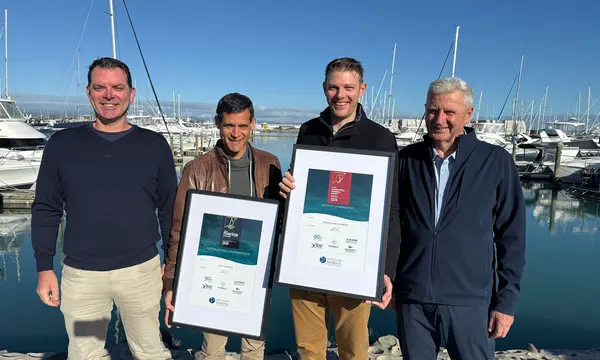
Whitianga Marina has taken both major facility titles in the 2026 NZMOA Awards, while Auckland’s Silo Marina received specialist recognition for superyacht operations.
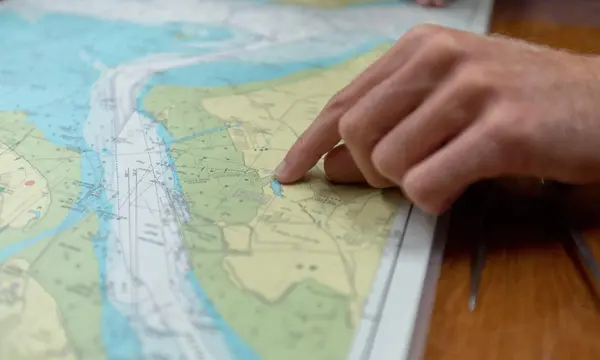
The RYA highlights a UK consultation on future paper-chart provision. Superyacht bridge teams have practical reasons to review voyage-planning and backup procedures.
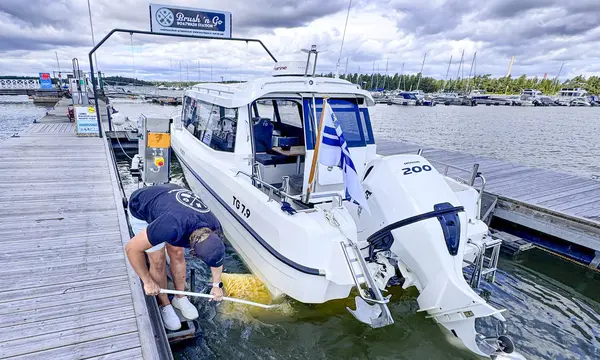
Three Finnish boaters recorded changes in speed and fuel consumption before and after hull cleaning with Brush ’n Go equipment, highlighting the operational cost …
Superyacht Guide
Continue into the wider Superyacht Guide.
Business opportunities · Superyacht Guide
Companies serving the superyacht market can discuss clearly identified advertising, sponsorship and business-profile opportunities. Commercial activity remains separate from independent editorial coverage.