

Company
International Maritime Organization
Explore the company profile and related Superyacht Guide coverage.
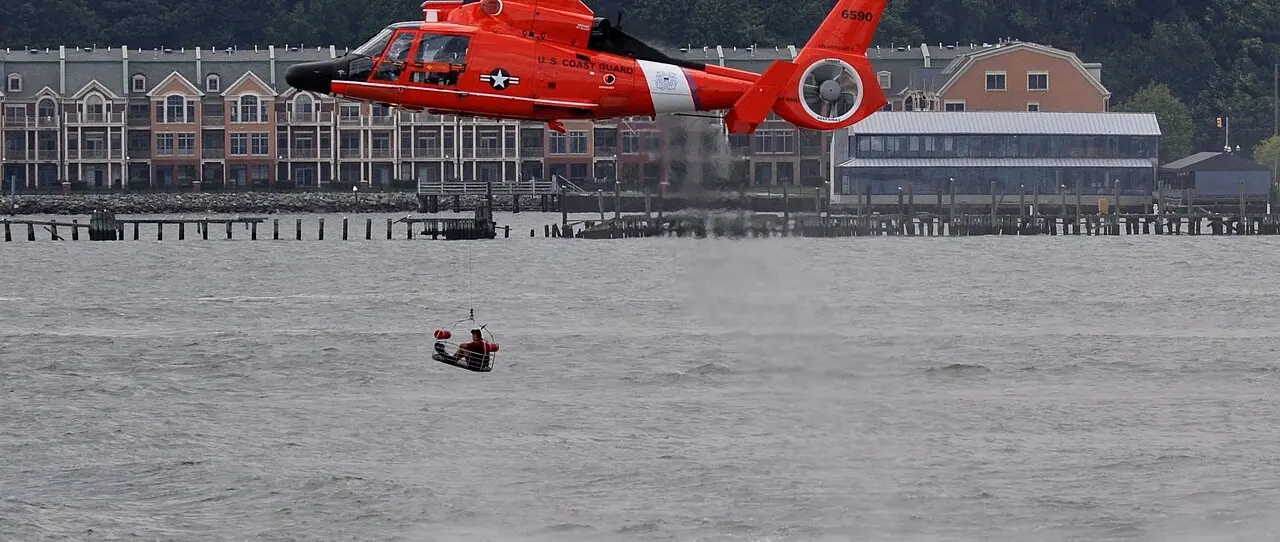
United States Coast Guard rescue helicopter demonstration — Sara Romero archival public-domain photograph
IMO reports completion of drafts for the 2028 international search-and-rescue manual, covering new beacon communication, locating devices and rescue coordination.
A joint maritime and aviation expert group concluded its latest meeting in Malmö, Sweden, with draft changes to all three volumes of the International Aeronautical and Maritime Search and Rescue Manual. The International Maritime Organization reported the development on 16 November 2026 following the meeting of 9–13 November. Proposed changes for the 2028 edition cover the psychology of emergencies, underwater craft, two-way communications for distress beacons and locating devices. The drafts are to proceed through the relevant IMO review and endorsement process before potential adoption. They are not yet the final published edition. The work is of practical interest to superyacht captains, yacht managers and training providers responsible for emergency preparedness aboard internationally operating vessels.
Search and rescue at sea frequently requires cooperation between organisations that differ in their equipment, operating procedures and geographic responsibilities. A distress incident can involve a yacht, other vessels in the vicinity, rescue coordination centres, aircraft and shore-based emergency services. Internationally harmonised guidance helps those participants work from a broadly shared understanding of their responsibilities. The IAMSAR Manual provides guidance dealing with the organisation of rescue services, mission coordination and the operation of mobile facilities. It is not a replacement for a yacht's own documented emergency procedures and does not remove the need for practical training. The significance of the joint aviation and maritime work is that successful coordination often depends on participants being able to exchange information across two quite different operational environments.
A captain's emergency preparedness programme should begin long before the vessel encounters a serious incident. Technical and deck departments need to understand the equipment aboard and the arrangements for maintaining it. Crew members require familiarity with their assigned duties, communication channels and muster procedures. The yacht may visit waters in which the nearest rescue assets are some distance away, and those assets may not be configured in the same way as services familiar to the captain in another region. Voyage planning should therefore include consideration of the resources available along the intended route and how relevant authorities can be contacted. The yacht's existing safety-management arrangements remain the primary operational reference. A future edition of an international manual may help guide updates to those arrangements, but it does not itself establish readiness aboard an individual vessel.
The expert group's proposed inclusion of additional guidance on the psychological dimensions of emergencies is particularly relevant to a yacht carrying guests as well as professional mariners. Passengers may be unfamiliar with maritime emergencies or with the equipment and procedures that professional crew members train to use. Stress, uncertainty and fatigue can affect communication and behaviour, even among experienced people. A safety briefing delivered in clear and appropriate language can help reduce confusion before an emergency occurs. During a response, the crew's ability to provide calm and accurate information may help passengers understand what is expected of them. The psychological needs of rescue personnel and people being rescued also deserve attention after an incident. The group's work recognises that emergency response is not exclusively an equipment or navigation problem, but also involves people operating under unusually demanding conditions.
Among the subjects identified in IMO's announcement is guidance concerning a two-way communication service associated with the international Cospas-Sarsat distress-beacon system. The proposed material is directed in part toward rescue coordination centres. Technology that enables additional information to be exchanged during an emergency could assist coordination, but equipment capabilities vary. Yacht operators should establish the precise specifications of the distress beacons actually carried aboard and ensure that the crew is trained to use them in accordance with the manufacturer's instructions and applicable requirements. A new capability described in an international technical discussion must not be assumed to exist on an existing beacon. Registration and maintenance details should also be kept current so that authorities can identify the transmitting equipment and obtain information relevant to the vessel.
The draft updates include information concerning various devices used to assist in locating people or vessels. Different technologies perform different functions, and their usefulness depends on equipment compatibility, deployment, the receiving systems available and the circumstances of the emergency. For the yacht's technical team, the central issue is to understand which equipment is carried and how it forms part of the overall rescue arrangements. An inventory that merely lists a generic category of safety equipment may not provide enough information for training or maintenance. Records should identify the actual devices, their locations aboard, applicable service requirements and relevant documentation. Familiarisation should also address the differences between a distress communication system intended to initiate an alert and equipment designed to assist rescuers in locating a target after an incident has been reported.
The expert group's work also addresses aspects of rescue involving submersibles and underwater craft. This is of particular interest to the expedition-yacht segment, in which some vessels are designed to support specialised exploration activities. Such operations can present significant challenges that differ from conventional surface-vessel rescue. The relevant equipment, operating environment, qualified personnel, emergency procedures and available support must be considered together. A general yacht safety manual cannot substitute for the specialised documentation and organisation needed for an individual underwater operation. It would be premature to infer specific new technical requirements from the meeting announcement. Owners and operators considering these activities should consult competent specialists and the applicable authorities. The planned guidance nevertheless signals continued international attention to coordination when rescue services encounter incidents involving underwater operations.
A rescue involving an aircraft and a vessel can impose demands on both parties that are not apparent during ordinary yacht operations. Conditions at the scene, the vessel's physical arrangement and the capabilities of the aircraft all influence what can safely be undertaken. Helicopter rescue techniques should be conducted in accordance with the instructions of the responding rescue personnel, rather than improvised on the basis of a photograph or a generic online description. Crews should familiarise themselves with the yacht's documented procedures and ensure they understand the authority and coordination arrangements during an emergency. A yacht's layout, equipment and deck operations may differ considerably from those of a merchant ship or rescue vessel. This is one reason that a common international understanding of communication and coordination can be valuable without prescribing an identical response for all participants.
For training organisations and yacht management companies, the proposed changes provide an opportunity to consider whether existing courses adequately reflect the evolving environment. Training should connect the principles of emergency response to the practical equipment and duties that personnel encounter aboard their particular yachts. An internationally qualified crew member may have experience with one vessel's arrangements but require familiarisation after joining a different yacht. Exercises can reveal communication difficulties, unclear allocation of duties or gaps in equipment knowledge before those problems arise during an actual incident. The aim should be a realistic understanding of the response rather than completing a drill for documentary purposes alone. New guidance, once adopted and published, can provide a reference for reviewing training materials and identifying areas where instruction should be updated.
Emergency preparedness is more useful when training, equipment condition and maintenance information are recorded coherently. A yacht's documentation should enable a new captain or engineer to establish what equipment is installed, when it was last inspected or serviced, and which procedures are applicable. Changes in a distress beacon or locating device should be assessed for compatibility with the yacht's overall arrangements rather than recorded as an isolated purchase. Training records may also help the management team identify where crew changes introduce a need for additional familiarisation. The same principle applies to communication equipment and arrangements for passengers. An international manual can assist in informing policy, but it is the implementation aboard the individual yacht that determines whether the crew can respond effectively when time is limited.
The Malmö meeting has produced drafts that remain subject to further consideration through the IMO process. Captains and managers should therefore monitor subsequent decisions and the publication of the eventual edition before treating the proposed material as settled guidance. In the meantime, existing procedures, equipment requirements and competent professional advice remain the appropriate basis for operational decisions. The subjects identified in the announcement are useful prompts for reviewing current preparedness, particularly for yachts planning extended voyages or supporting specialised activities. The accompanying photograph is an archival United States Coast Guard rescue demonstration, not an image of the Malmö meeting or evidence of any particular rescue involving a superyacht. The larger message of the international work is that effective emergency response depends on the integration of technology, trained personnel and coordinated information across multiple organisations.
Primary source: International Maritime Organization official update, 16 November 2026.
U.S. Coast Guard photo by Petty Officer 2nd Class Sara Romero, public domain; via Wikimedia Commons (resized and JPEG re-encoded). Archival rescue demonstration, not the November meeting. Official source.
Explore
Go deeper into the yachts, companies, events and destinations directly connected to this article.
Company
Explore the company profile and related Superyacht Guide coverage.
Continue reading
Six West African states validate a draft marine pollution response agreement, with signature planned for 2027 and implications for Atlantic yacht operations.
While guests sleep through an overnight passage, bridge and engineering teams remain fully engaged. Watchkeeping, machinery monitoring, fatigue control and arrival planning make the …
A tender may be one of the smallest vessels in a superyacht operation, but it combines lifting, navigation, passenger transfer and high-speed manoeuvring in …
IMO prepares its 20 November launch of NextWave phase two, aiming to expand supervised onboard training opportunities for officer cadets from developing countries.
Superyacht Guide
Continue into the wider Superyacht Guide.
Business opportunities · Superyacht Guide
Companies serving the superyacht market can discuss clearly identified advertising, sponsorship and business-profile opportunities. Commercial activity remains separate from independent editorial coverage.