

Company
International Maritime Organization
Explore the company profile and related Superyacht Guide coverage.
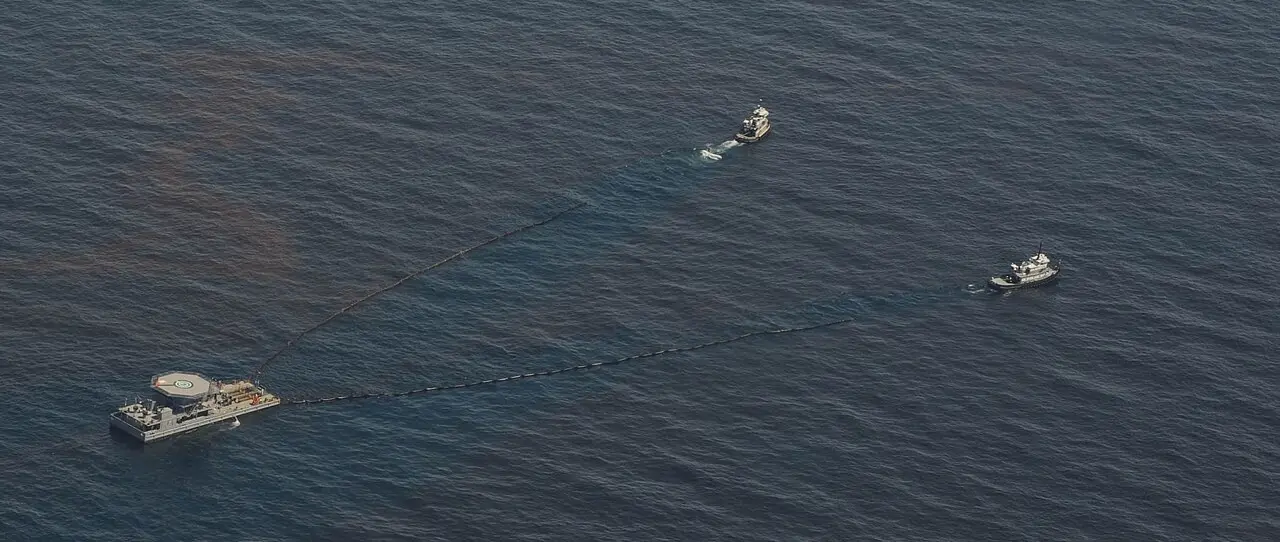
US Coast Guard oil skimming operations Gulf of Mexico 2010 — archival photo
Six West African states validate a draft marine pollution response agreement, with signature planned for 2027 and implications for Atlantic yacht operations.
Six West African countries have completed a technical review of a draft framework intended to improve their coordination during marine pollution incidents. The International Maritime Organization reported on 12 November 2026 that officials from Cabo Verde, The Gambia, Guinea, Guinea-Bissau, Mauritania and Senegal had validated the articles of a proposed memorandum of understanding during a workshop in Banjul on 26–29 October. Convened by IMO and Ipieca through the Global Initiative for West, Central and Southern Africa, the meeting was hosted by the Gambia Maritime Authority. The text still requires consolidation and translation, with signature envisaged in 2027. For managers of superyachts undertaking Atlantic voyages or visiting the region, the initiative is a useful development in shore-side contingency planning, rather than evidence of a new operational requirement or an immediately available regional response service.
Marine pollution does not necessarily remain within the jurisdiction where an incident originates. Currents, weather, shipping movements and the characteristics of the substance involved can affect where pollution spreads and how quickly communities or ecosystems are affected. An incident that begins near one coastal state can consequently require assistance from several jurisdictions. The new initiative seeks to improve the ability of participating authorities to work together before and during such events. The workshop considered the alignment of national approaches, the organisation of cooperation, the provision of assistance during incidents and the way the proposed framework would be administered. For internationally operating yachts, this illustrates why emergency planning should account for the actual arrangements in each cruising area rather than assume that a country's capability is identical to that of its neighbours.
The technical validation announced by IMO is a milestone in drafting an agreement. It does not by itself establish that the six countries have signed the document, put common procedures into effect or committed defined assets to a response. Subsequent work includes preparing a consolidated text and translations in French and Portuguese, and the signature process is planned for the following year. The future implementation of the agreement will also depend upon practical arrangements between participating authorities. A yacht manager should therefore avoid interpreting this announcement as an assurance that particular clean-up equipment or emergency personnel will be immediately available near a planned destination. The announcement confirms progress towards coordination, not the completion of every institutional and operational step. Until official guidance establishes otherwise, captains must continue to follow existing reporting and response arrangements.
The region's maritime activity is not limited to yacht tourism. Commercial shipping, fishing, offshore energy operations and the coastal economies of the participating nations all have an interest in preparedness. A superyacht may encounter the consequences of a pollution incident without having caused it, including restricted access to a marina, changes to a cruising itinerary or delays to shore transfers. A yacht itself can also be the source of an accidental discharge during machinery operation, refuelling or maintenance. The importance of readiness is therefore not simply proportional to the quantity of fuel carried by a vessel. The location of a release, the exposure of sensitive environments and the practical speed of a response can influence the consequences. Knowledge of the relevant authorities and local requirements can support a more informed response, especially during unfamiliar itineraries.
Yacht emergency arrangements should identify who is responsible for communication, what information can be provided promptly and how the onboard response relates to assistance from shore. The specific procedures depend on the vessel and the applicable flag and coastal-state requirements. A yacht may have trained crew and equipment intended to deal with limited releases, but it would be inappropriate to assume that the crew can undertake the responsibilities of a specialised pollution-response organisation. A larger or more complex incident may require direction and assistance from the authorities. Captains should ensure that reporting arrangements are understood during voyage preparations and that relevant contact information remains available if the yacht's normal communications are disrupted. Procedures should also distinguish between actions that can safely be taken aboard and those that require external coordination.
Prevention remains fundamental to yacht operation, irrespective of the level of regional response preparedness. Fuel transfer involves interfaces between the yacht, the supplier and the shore facility or delivery vessel. The yacht's established procedures should define the responsibilities of the personnel involved, the communication arrangements, and the checks appropriate to its installation. Management should ensure that records and equipment remain suitable for the intended operation. If local arrangements differ from those familiar to the crew, the particulars should be discussed before the transfer begins. It is important to understand the responsibilities of suppliers and contractors rather than rely solely on verbal assurances. A developing regional cooperation framework does not remove the yacht's own obligations to operate safely, maintain its systems and comply with applicable pollution-prevention rules.
West African cruising and transit itineraries may involve substantial distances between destinations, and the suitability of a port will depend on the particulars of the yacht. The captain should confirm navigational information, clearance arrangements and the availability of appropriate services through reliable sources before a voyage. When a pollution incident occurs, authorities may issue temporary directions or access restrictions that change an otherwise attractive itinerary. A planned berthing arrangement might need reconsideration if the approaches become unsuitable or if shore facilities are engaged in emergency operations. Alternative destinations should be assessed with the same care as the original plan. An owner's preferred schedule cannot override the captain's responsibility to evaluate prevailing conditions, comply with official directions and avoid interfering with a response. Flexibility in yacht itineraries is a practical advantage in these circumstances.
The wider significance of marine pollution preparedness extends beyond the immediate clean-up operation. Coastal environments may support fisheries, wildlife, tourism and the livelihoods of communities whose exposure to pollution differs from that of vessels operating offshore. Yacht owners seeking to visit attractive natural areas have a direct interest in maintaining their environmental quality. The suitability of an anchorage or landing site should be considered alongside local restrictions and the environmental sensitivities of the area. Where a pollution incident is under way, the best course may be to postpone a visit rather than attempt to maintain the original schedule. Support for local conservation goals and respect for the instructions of relevant authorities are more meaningful than general environmental statements that are not reflected in operational choices. The announced regional initiative is one contribution to the institutional capacity needed to protect shared waters.
A well-maintained emergency programme requires continuity when personnel change. Captains and engineers should understand where the relevant documentation is kept, which crew members are responsible for particular duties and how training or familiarisation is recorded. Information useful during an incident may include the yacht's position, the nature of the problem, the condition of the vessel and details of measures already undertaken. The exact information required should be established through applicable procedures and the instructions of relevant authorities. Good documentation can support later review and help managers identify whether improvements are needed. Crew exercises should be appropriate to the vessel and should not create unnecessary risk or actual pollution. The regional agreement under development may eventually produce more consistent arrangements between authorities, but shipboard preparedness remains an essential part of responsible operation.
IMO places the work within the wider framework of the 1990 International Convention on Oil Pollution Preparedness, Response and Cooperation and its relationship with existing regional arrangements under the Abidjan Convention. The practical application of international instruments to an individual yacht requires consideration of its particulars, operating status and the relevant implementation provisions. Owners should obtain appropriate professional advice rather than assume that a particular measure applies, or does not apply, solely because the vessel is privately owned. The broader institutional arrangements also matter because authorities may need to coordinate with commercial providers and other national agencies during an emergency. The participating states' work on governance and mutual assistance should be viewed as an effort to improve that coordination, not as a replacement for existing vessel-specific obligations.
The next announced steps include completion of the draft and preparations for signature. Yacht management teams with planned operations in the region can monitor official updates to determine whether specific procedures or contacts are published as the framework develops. They should not infer the availability of response equipment, contractual assistance or port access from the announcement alone. The accompanying archival photograph shows an oil-spill response operation or training activity in the United States and is included solely to illustrate the nature of marine pollution response; it is not evidence of an incident in West Africa or equipment allocated to the proposed framework. The Banjul milestone is important because it recognises the need for cooperation across national boundaries. Its practical value to the maritime community will ultimately depend upon how the participating authorities develop and implement the agreed arrangements.
Primary source: International Maritime Organization official report, 12 November 2026.
U.S. Coast Guard photo by Petty Officer 2nd Class Prentice Danner, 28 April 2010; public domain via Wikimedia Commons, resized. Archival oil-skimming response in the Gulf of Mexico; not an incident in West Africa. Official source.
Explore
Go deeper into the yachts, companies, events and destinations directly connected to this article.
Company
Explore the company profile and related Superyacht Guide coverage.
Continue reading
IMO reports completion of drafts for the 2028 international search-and-rescue manual, covering new beacon communication, locating devices and rescue coordination.
While guests sleep through an overnight passage, bridge and engineering teams remain fully engaged. Watchkeeping, machinery monitoring, fatigue control and arrival planning make the …
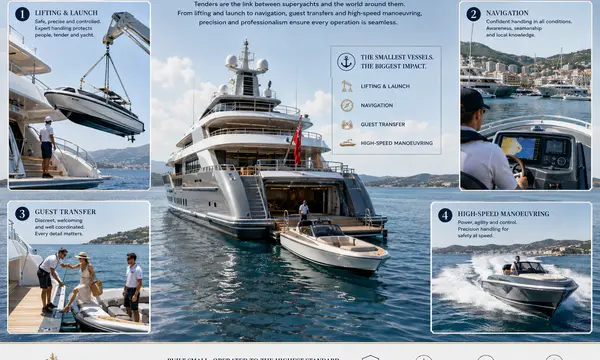
A tender may be one of the smallest vessels in a superyacht operation, but it combines lifting, navigation, passenger transfer and high-speed manoeuvring in …
IMO prepares its 20 November launch of NextWave phase two, aiming to expand supervised onboard training opportunities for officer cadets from developing countries.
Superyacht Guide
Continue into the wider Superyacht Guide.
Business opportunities · Superyacht Guide
Companies serving the superyacht market can discuss clearly identified advertising, sponsorship and business-profile opportunities. Commercial activity remains separate from independent editorial coverage.