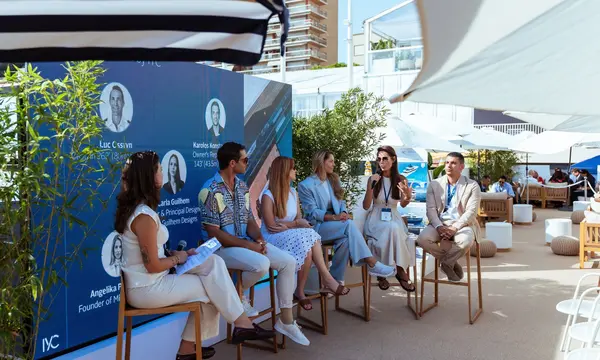
IYC Monaco Panel Links Crew Welfare to Better Yacht Charters
An IYC and SuperYacht Times panel at Monaco Yacht Show 2026 examined how crew rest, staffing, mental wellbeing and working culture affect the guest …
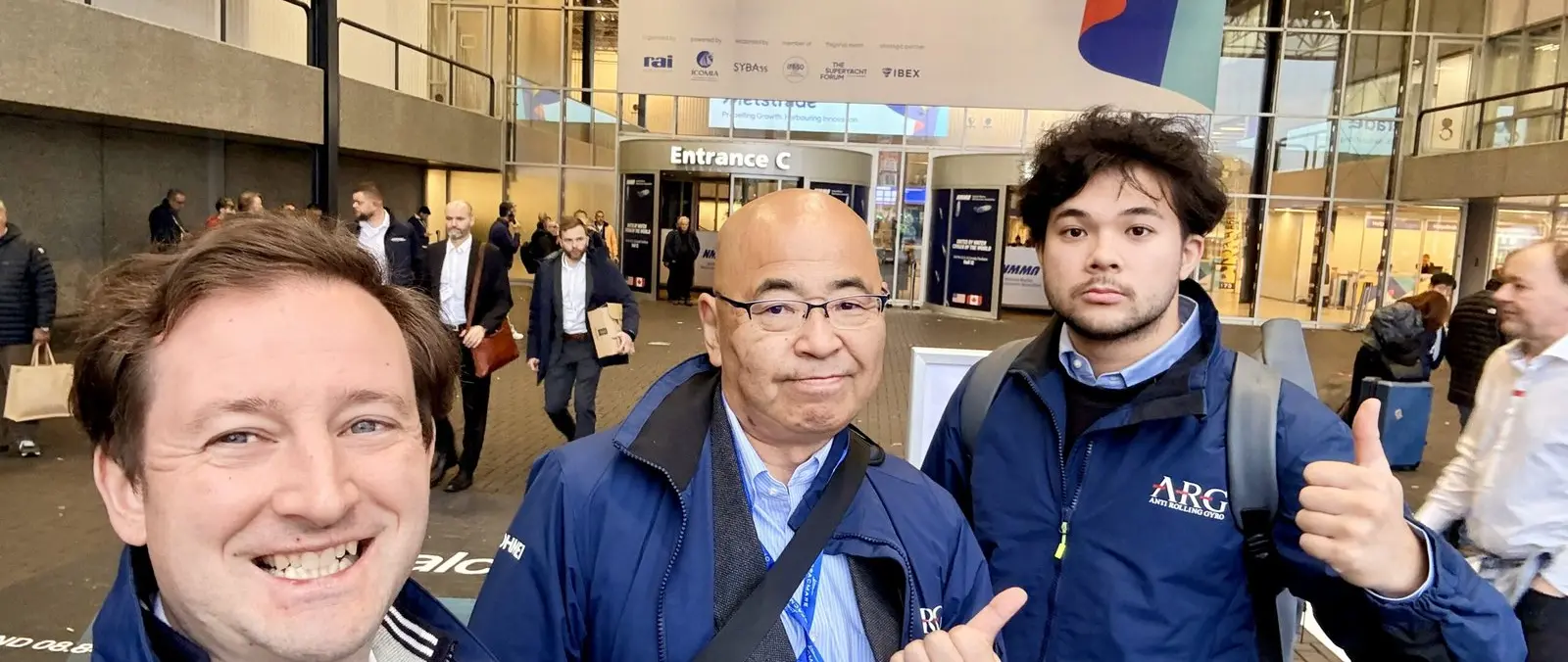
ARG America, official company team photograph at METSTRADE 2026 in Amsterdam.
ARG America reports discussions with European yacht-industry partners about its Japanese-engineered marine gyro stabilisers following METSTRADE 2026.
ARG America has reported on its participation in METSTRADE 2026 in Amsterdam, where company representatives met existing European partners and discussed marine gyroscopic stabilisation with prospective customers. In its post-show update, the company said the exhibition provided opportunities to explain its equipment and hear from marine-industry professionals. The report reflects concluded meetings during the 17–19 November event, not a new order book or a published installation programme.
For superyacht builders and operators, stabilisation systems are a significant part of the onboard comfort equation, particularly when guests spend time at anchor. A trade show is a useful setting for comparing equipment approaches, but the existence of technical conversations does not prove that a new yacht has ordered an ARG system. The verified development is an international supplier's continued engagement with European professional partners.
A gyroscopic stabiliser is designed to counter vessel roll by generating forces from a rapidly spinning internal mass under controlled conditions. It is one of several stabilisation technologies available to yacht designers and owners. The general operating principle differs from fin stabilisers, which use underwater appendages and hydrodynamic forces, although the objective of improving comfort is shared. Selection depends on a hull's design, mass distribution and intended operating pattern.
ARG markets gyroscopic stabilisation products for marine applications and highlights an engineering heritage associated with Japan. The company's 2026 show recap does not set out the size or measured effectiveness of any particular installation. A reasonable technical evaluation would request model-specific data and an engineering assessment before drawing conclusions about suitability for a named 30-metre or 60-metre yacht.
Owners often value stabilisation most during periods when a yacht is stationary and guests are enjoying the accommodation or outdoor decks. At zero speed, some stabilisation arrangements need different operating principles than they do during a passage. A gyro can be considered within that design discussion, but its expected benefit still depends on wave conditions, available installation space and the vessel's particular characteristics.
Operators should also define what level of residual motion is acceptable for the intended use. The comfort expectations of an owner relaxing in a sheltered bay may be different from those during an exposed overnight anchorage. No stabiliser removes the sea itself. A good proposal should present realistic performance predictions over representative conditions and explain what assumptions were made, rather than relying on a single favourable comparison.
A gyro is not a stand-alone object that can be installed without consequences for the rest of the yacht. Designers must account for structural loads, mounting position, access, electricity, cooling arrangements and the space needed for maintenance. The impact can be particularly pronounced in a refit, where available machinery volume is already committed to other functions. Even a compact product may require supporting systems.
The ARG trade-show message is relevant partly because such decisions are often discussed among shipyards, naval architects and equipment distributors long before a detailed order. A European partner may be asked to identify an appropriate installation path, but the final engineering responsibilities remain with the vessel's professional team. The 2026 announcement should not be presented as proof that any particular classification society has approved an unnamed yacht configuration.
Both gyroscopic systems and underwater fins can improve vessel motion, yet their design consequences differ. Active fins may interact with the hull and surrounding water while a gyro operates with internal rotating machinery. The relative advantages depend on vessel size, speed profile and the nature of the comfort requirement. A yacht builder may examine several configurations or combinations before selecting the right solution.
An honest comparison also includes electrical demand, maintenance access, noise, control behaviour and the consequences of an equipment failure. It is not enough to say that a gyro is newer or that fins are traditional. Each has relevant strengths and limitations. ARG's presence at METSTRADE helps introduce one option to technical purchasers, but the specific decision still requires data for the actual yacht.
The company notes that its team reconnected with existing European partners during the show. Those relationships matter in a sector where yachts can spend much of their working life far from the country in which a component was manufactured. Equipment service is particularly important when an installation involves high-speed rotating machinery, specialist controls and periodic inspections.
A responsible buyer should ask which partners are trained to diagnose equipment, obtain replacement parts and carry out work during a vessel's scheduled maintenance period. Yacht management companies should also check how technical records and service schedules will be transferred across successive captains and engineering teams. The original ARG report establishes meetings and ongoing relationships; it does not list a newly appointed dealer or guarantee worldwide service coverage.
On a new project, a naval architect may assess gyroscopic stabilisation before machinery-space and structural layouts are finalised. Early decisions can help avoid conflicts with generators, tanks, guest accommodation and equipment access. Changing a stabilisation concept late in construction may introduce significant redesign work. The best engineering discussion therefore begins with the yacht's operating profile and desired motion performance rather than a preferred brochure product.
The company says it shared information about its gyro technology at the Amsterdam exhibition, but the short statement does not disclose prospective shipyard projects. No orders or launch dates should be inferred. What can be reported is that suppliers and builders continue to use METSTRADE as a platform for these early technical discussions, bringing equipment specialists closer to the people who ultimately specify the vessel.
An existing yacht may offer fewer opportunities to change structure or machinery arrangements. Before proposing a gyro refit, an engineer should consider where the equipment could be mounted, whether the vessel's electrical and cooling systems have capacity, and how the component would be brought aboard. Access routes, weight distribution and vibration paths need to be evaluated as well.
Commercial terms matter alongside engineering feasibility. Owners may compare the cost and disruption of a new stabiliser with maintenance or adjustment of an existing system. A general discussion about equipment benefits is not enough to establish economic justification. ARG's latest show recap is evidence of its engagement with potential buyers, rather than a report that a specific vessel has received a new installation or achieved measured performance gains.
Trade-show exhibitors can explain how equipment works and share design information, but a display or conversation should not be confused with independent testing on a particular hull. Anyone evaluating a stabilisation package should request the manufacturer's technical specifications, documented test methods and information on the relevant operating envelope. Reference installations may be useful where their details and results can be independently confirmed.
The quality of evidence becomes especially important when owners want to compare unlike vessels. A performance claim for a smaller production boat cannot be transferred to a much larger custom superyacht without engineering work. As a result, a successful sales discussion at METSTRADE might lead to design studies rather than immediate contracts. That is a normal and worthwhile part of professional procurement.
METSTRADE brings together suppliers and clients from many areas of marine manufacturing. Companies can meet naval architects, component distributors, shipyard buyers and service businesses in a concentrated period. ARG describes its Amsterdam meetings as valuable and highlights the range of industry participants it encountered. Such networking offers potential access to projects that would otherwise be difficult to reach through a local sales effort.
Still, attendance is not itself a measure of market share. The official 2026 recap does not quantify revenue, signed agreements, new products or systems delivered. It is a record of supplier engagement and a description of an established technology portfolio. Any subsequent announcement of a specific yacht order should be considered fresh news on its own terms rather than assumed to have resulted from this event.
Stabilisation is often marketed as a guest amenity, but it also influences the operating experience of the crew and the movement of equipment aboard. Less uncomfortable motion can help make some activities easier in appropriate conditions, although the equipment cannot be treated as permission to ignore weather limits. Captains remain responsible for anchorage choice and safe operating decisions regardless of the stabilisation fitted.
Electrical demand, ventilation and ongoing maintenance must fit into that decision. A supplier who can provide clear information on these issues may be more valuable than one who offers the strongest headline promise. The technical conversation should cover the entire lifecycle of the installation. This is particularly true for professionally operated yachts that change crews and service yards during a long career.
The primary news is ARG America's account of meeting European partners and wider marine professionals at METSTRADE 2026, discussing its gyroscopic stabilisation offering and reaffirming interest in the European supply market. Its website describes the technology as engineered in Japan with a long-standing manufacturing heritage, a background detail that comes from company communications rather than new independent verification.
There is no disclosed new superyacht contract, named shipyard project or measured performance improvement from this particular exhibition. The development is nevertheless relevant to the 24-metre-plus sector because stabiliser choice influences design, refit and cruising comfort. Accurate reporting should stop at that evidence and reserve more specific claims for verified future announcements.
The first-party source is ARG America's original METSTRADE 2026 company recap, which records the supplier's attendance and European industry conversations. Explanations of stabilisation integration and procurement considerations are editorial analysis, not unreported outcomes from the exhibition.
The lead photo was published by ARG America alongside its show report and depicts the company's team at the Amsterdam event. It is credited to the manufacturer, with no suggestion that the scene depicts a newly commissioned gyro or a particular vessel installation. It is a real first-party event photograph, not an AI-generated image or an image copied from a competing boating publication.
ARG America, official company team photograph at METSTRADE 2026 in Amsterdam.
Continue reading
An IYC and SuperYacht Times panel at Monaco Yacht Show 2026 examined how crew rest, staffing, mental wellbeing and working culture affect the guest …
During a charter, the captain has to balance guest expectations with crew capability, rest requirements and a weather picture that can change by the …
Guests may experience the first day of a superyacht charter as a seamless transition from airport to anchorage. For the crew, it is a …
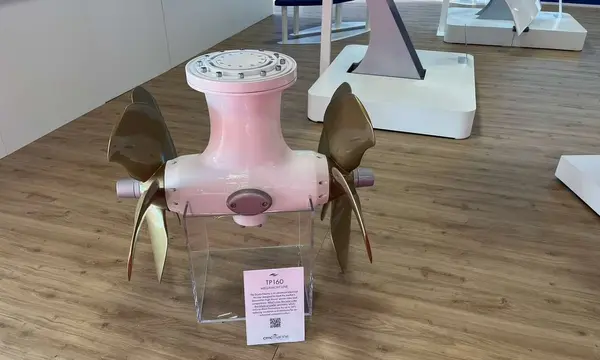
CMC Marine has provided new technical detail on the energy-management architecture behind its electric stabilisers and thrusters, explaining how capacitor storage can reduce abrupt …
Superyacht Guide
Continue into the wider Superyacht Guide.
Business opportunities · Superyacht Guide
Companies serving the superyacht market can discuss clearly identified advertising, sponsorship and business-profile opportunities. Commercial activity remains separate from independent editorial coverage.