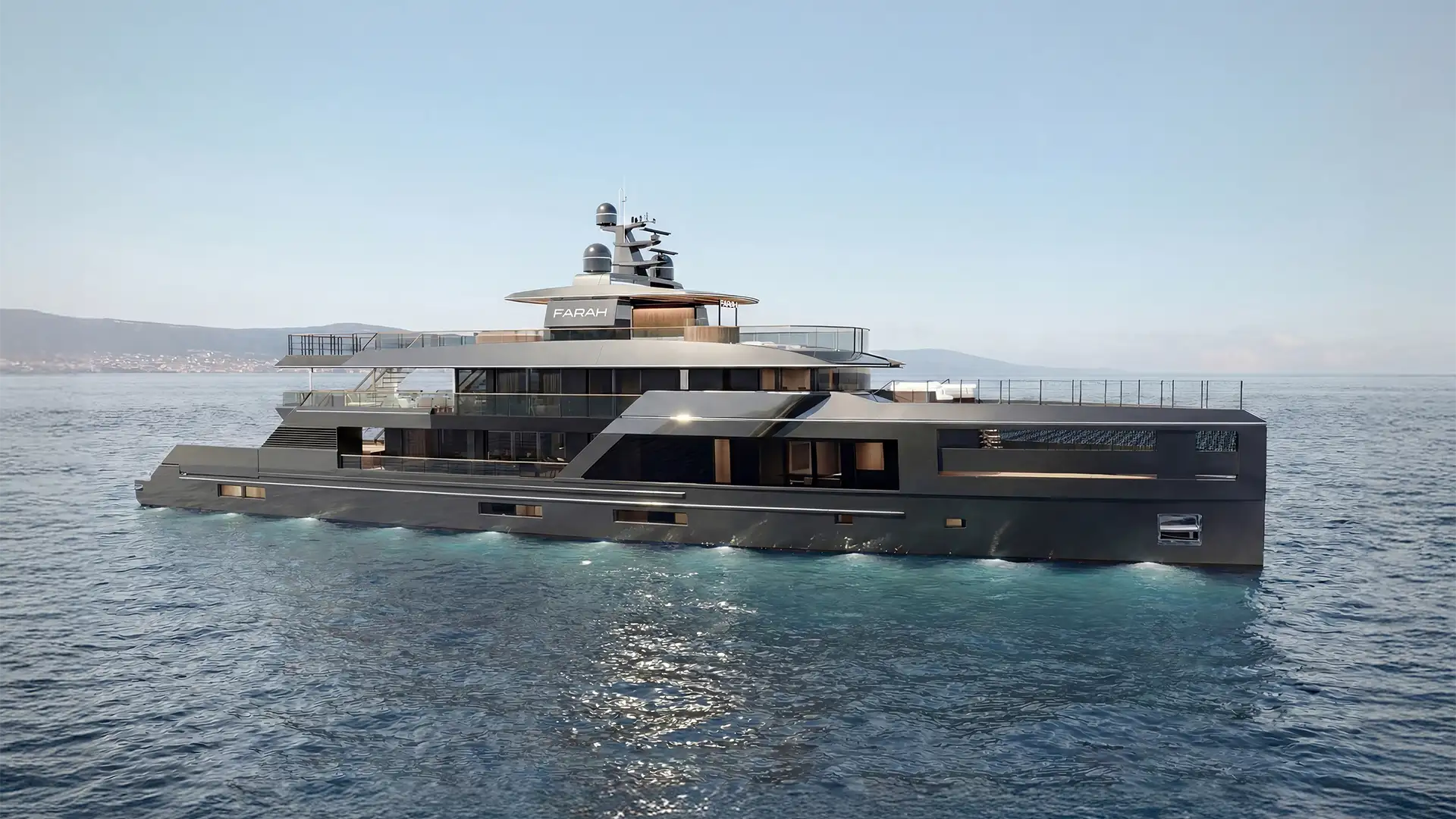
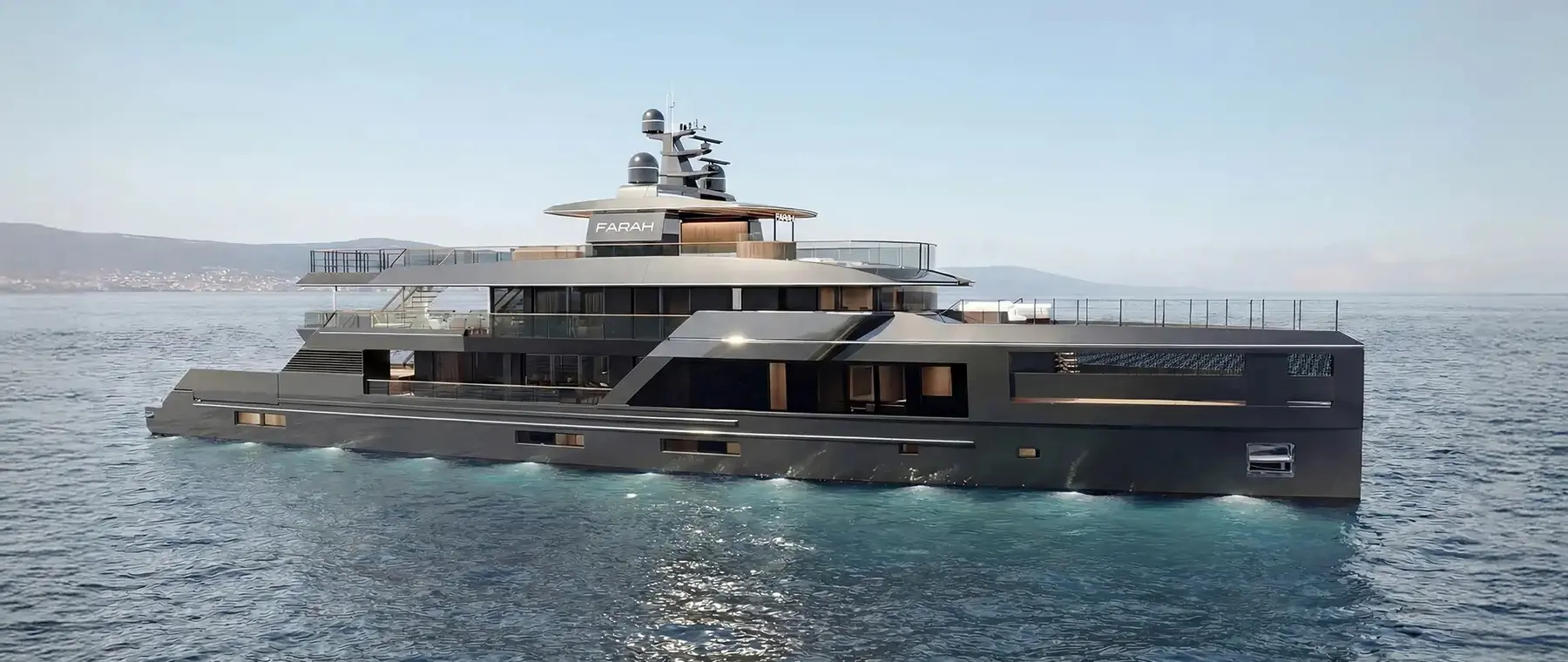
Baglietto FARAH official interior design rendering 16 November 2026 press release
Baglietto has unveiled the first interior imagery of FARAH, its 50-metre custom yacht under construction in La Spezia, with a Brazilian design collaboration.
Baglietto has released a first look at the proposed interiors of FARAH, a 50-metre motor yacht being built at its La Spezia facility. The announcement, dated 16 November 2026, presents the design as a collaboration between Brazilian architectural and yacht design practices, with Pierluigi Ausonio responsible for naval architecture. Royal Yacht International represents the commissioning owner during the build. FARAH is a custom project rather than a completed yacht available for inspection, and the images should be understood accordingly. The release offers a view of the intended experience aboard, not evidence that the spaces have been fitted out or accepted. Its value to the wider superyacht industry lies in how the design team intends to combine residential familiarity, visual restraint and practical hospitality within the demands of a large motor yacht. Details such as delivery date, guest capacity and propulsion are not supplied in this particular announcement.
The participation of designers from different disciplines makes this project an interesting illustration of the way custom yacht design develops. A building and a motor yacht share certain architectural priorities: the use of space, the relationship between materials, the passage of light and the proportions of individual rooms. A yacht, however, adds movement, curved surfaces, engineering constraints, weight management and the necessity of accessing technical services after completion. A successful collaboration therefore cannot consist merely of transferring a residential aesthetic into a marine envelope. The architecture must be developed with the shipyard and naval architect, so that the character sought by the owner is compatible with the underlying vessel. Changes to a partition, a piece of furniture or the depth of a ceiling may involve several technical disciplines. Close coordination from the beginning is particularly valuable because alterations after detailed production drawings have been approved can introduce additional expense and delay.
The domestic quality pursued in FARAH is significant because sheer interior volume does not automatically produce comfort. A vast salon can sometimes feel impersonal if every element is arranged around a single formal axis or if a purchaser's real habits are not reflected in the seating plan. In a custom project, design can instead begin by considering how the owner and guests actually spend their days: where they gather upon returning from a swim, how they entertain friends, where they read privately and how they prefer to dine. The ambition of a residential interior is not necessarily to copy the owner's property ashore, but to capture the qualities that make a home inviting. At sea, the experience includes changing views, natural light and proximity to the water. These conditions can provide the atmosphere without the designer having to rely on elaborate ornament. Designers must still make allowance for movement and ensure that apparently domestic furnishings fulfil the requirements of a vessel.
Baglietto describes an interior concept built around natural textures, with timber, stone, leather, fabrics and metal among the selected materials. The proposed scheme raises a central question for every owner commissioning a high-end yacht: whether an attractive finish remains practical once it has been exposed to the conditions of daily service. A surface next to an exterior entrance may be affected by damp clothing, salt brought aboard on guests' feet and repeated cleaning. A finish in a quiet private cabin has a different duty from one at the edge of a busy dining area. Material samples should be assessed not only under showroom lighting but under the illumination planned for the yacht, and with reference to how the material will be maintained. Colour and texture can also vary between production batches, a relevant consideration if sections need replacement during a refit years later. Designers and yard specialists can reduce such problems through careful specification and the retention of spare materials.
The announcement credits Fernando de Almeida Yacht Design and the architectural practice of Matheus Farah and Manoel Maia with the styling of FARAH. It also refers to furniture associated with notable Brazilian design traditions. An important advantage of incorporating furniture with a recognisable design heritage is that the interior can have a specific cultural identity rather than following a generic international luxury formula. The choice of individual pieces, however, cannot be separated from their use aboard. Seating should provide sufficient support as the vessel moves, with materials adapted where necessary for the expected service conditions. Loose furniture must have a suitable securing arrangement when required during navigation. Designers can sometimes retain the proportions and visual language of an established chair while modifying the way it is installed or selecting a more appropriate upholstery. The release does not identify individual furniture models or describe these engineering details, which remain matters for the design and build teams.
FARAH's design places emphasis on indirect illumination. This is a useful approach to the evening atmosphere on a yacht, because a ceiling populated with numerous bright points can detract from the calm character of a salon. Light reflected from a wall or ceiling may reveal the grain of a material and make a space feel less visually fragmented. Such an effect depends on more than the choice of luminous fixtures. The dimensions of recesses, their relationship to ceilings and the colour characteristics of neighbouring surfaces can have a substantial impact on the result. The owner should be able to change the atmosphere for different activities, with enough illumination to read or dine and softer levels when entertaining after dark. Maintenance is equally important: design teams need to provide practical access to drivers, controls and concealed luminaires. Emergency lighting and the safe movement of people are separate considerations and must not be compromised by the aesthetic arrangement.
A further theme of the release is the adaptability of the interior. For owners who use a yacht both for quiet family cruises and larger social occasions, a room that accommodates several patterns of occupation can be particularly valuable. Flexibility might involve how seating groups are arranged and how adjoining rooms are used, rather than necessarily requiring complicated moving elements. The most effective solutions tend to be those that crew can manage quickly and safely while preserving the normal circulation of guests. Before finalising such arrangements, the design team needs to consider furniture storage, access to service stations, circulation under different layouts and the potential for insecure items at sea. The arrangement must also preserve escape paths. Baglietto has not published a detailed general arrangement with this release, so it is not possible to describe particular movable partitions or to assign specific uses to individual deck areas. The relevant principle is the intention to make the spaces responsive to the owner's changing needs.
The involvement of Royal Yacht International as the owner's representative provides another point of interest for prospective custom-build clients. A representative can help maintain continuity between the original brief, the evolving design and the technical decisions made during production. An owner may review the appearance of an interior only periodically, while design professionals, suppliers and the shipyard are making interconnected decisions throughout the build. Recording approvals, identifying departures from the agreed specification and reviewing the impact of changes are important responsibilities within that process. The precise duties depend on the contractual arrangements. In a project where interior finishes are integral to the overall identity, material samples and physical mock-ups may provide a more useful basis for approval than digital visualisations alone. Photographs of the finished rooms, and the experience of being aboard once the yacht is in service, will ultimately allow the design to be assessed against its intentions.
The November announcement marks the public disclosure of the interior direction of FARAH, rather than the completion of construction. For this reason, it is not possible to draw conclusions about measured noise levels, sea trial performance, final workmanship or long-term maintenance from the released imagery. Those aspects will be determined through subsequent production and testing. What the design information does establish is the ambition to create a distinctive personal environment within a large custom yacht, combining a contemporary architectural identity with references to Brazilian design. The next meaningful milestones are the realisation of that interior in physical materials and the integration of the finished spaces with the vessel's operational requirements. For an experienced owner, the ultimate measure of the project is likely to be its suitability for repeated use, not simply the spectacle of its first public images.
Primary source: Baglietto, official press release of 16 November 2026.
Image: Baglietto, official FARAH design imagery released on 16 November 2026; visualisation of a yacht under construction, not completed interior photography. Official source.
Explore
Go deeper into the yachts, companies, events and destinations directly connected to this article.
Continue reading
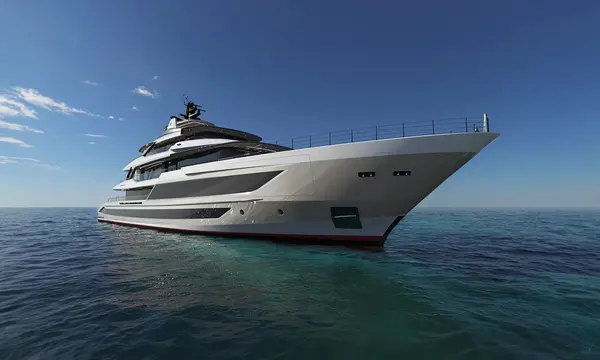
Baglietto CEO Diego Michele Deprati outlines a planned 62m T62 accommodating the BZero hydrogen system and confirms early work on a new 75m model.
Baglietto has launched the first 60-metre T60, a roughly 1,100 GT flagship and the largest yacht completed by the shipyard in its history.
Baglietto has sold the fourteenth yacht in its 40.6-metre DOM133 series, with delivery scheduled for 2028 and Stefano Vafiadis responsible for design.
Baglietto has sold the third yacht in its 60-metre T60 series, with Francesco Paszkowski Design and delivery from the La Spezia shipyard.
Superyacht Guide
Continue into the wider Superyacht Guide.
Business opportunities · Superyacht Guide
Companies serving the superyacht market can discuss clearly identified advertising, sponsorship and business-profile opportunities. Commercial activity remains separate from independent editorial coverage.