Baltic Yachts Details Six-Metre VISIONE Bowsprit Refit Ahead of METSTRADE
By Superyacht Guide Newsroom · Edited by Superyacht Guide Newsroom
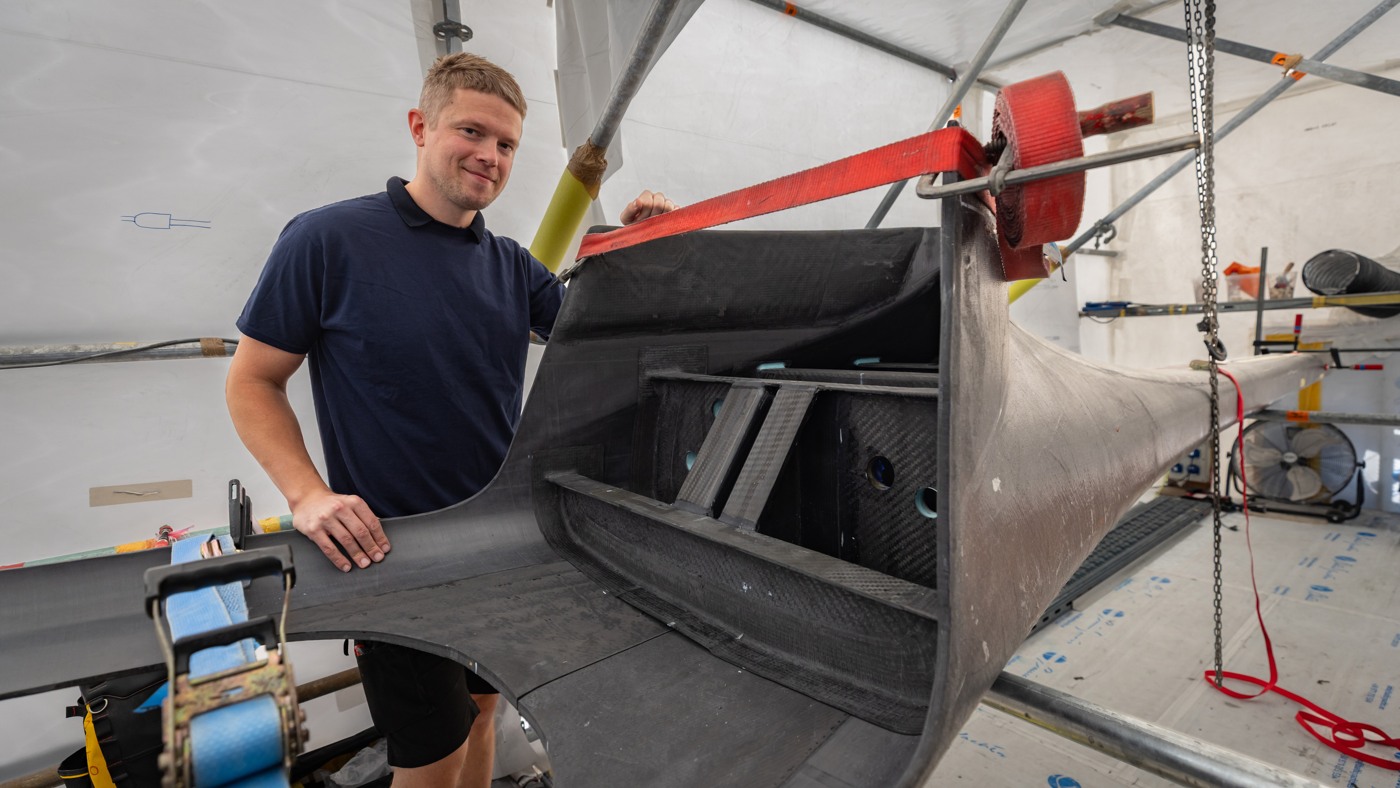
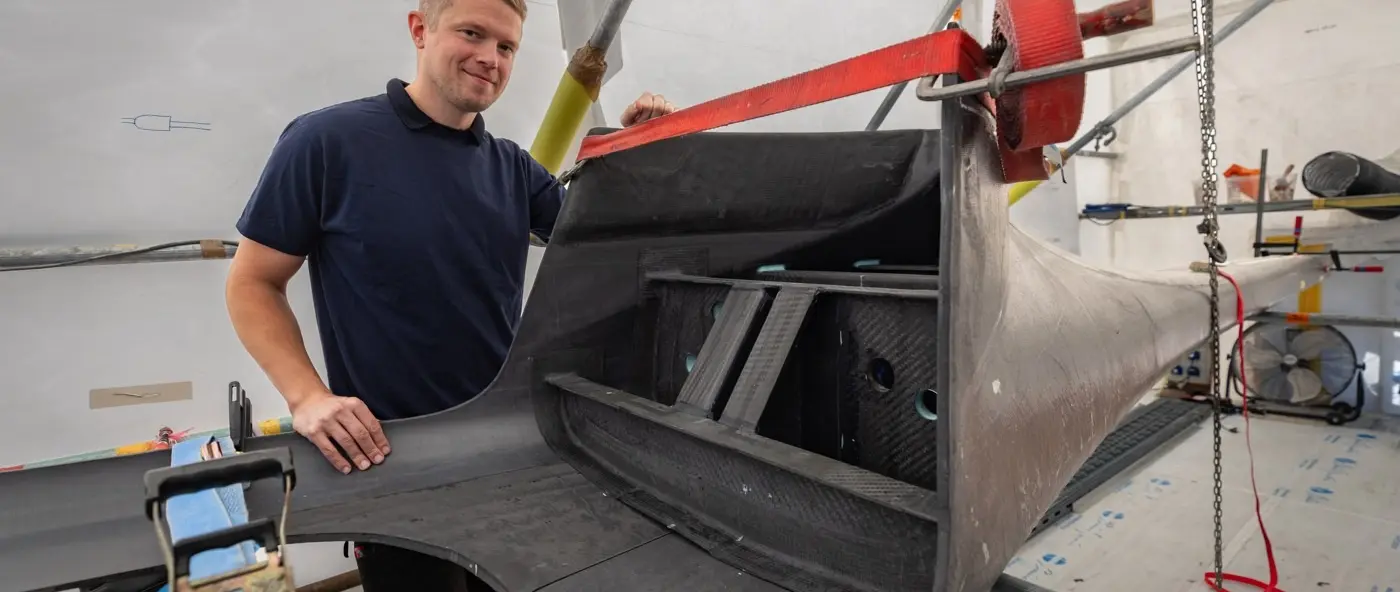
Baltic Yachts official VISIONE six metre bowsprit refit Palma 2026 press photograph
Baltic Yachts describes its six-metre bowsprit installation on VISIONE, combining Finnish engineering and composite production with refit work in Palma.
Baltic Yachts has disclosed details of a recent structural modification to the Baltic 147 VISIONE in a service and refit announcement issued on 10 November 2026. The Finnish builder and its Mediterranean service operation in Palma de Mallorca collaborated on the installation of a six-metre bowsprit, with the component manufactured by Isotop. The company is using the project as an example of its technical service capabilities ahead of METSTRADE, which runs from 17 to 19 November in Amsterdam.
For the owners of large performance sailing yachts, the announcement has particular relevance because a bowsprit is not merely an exterior styling accessory. Its installation can form part of a wider engineering project involving the structure of the bow, the positioning of rigging attachments and the equipment that transfers forces from the sail plan into the yacht. The work illustrates how an established sailing yacht can be adapted to new requirements without necessarily bringing every stage of the work to its original construction location.
According to Baltic Yachts, the engineering work for the VISIONE project took place in Finland. The yard also laminated the new bow structure and the associated chainplates and cylinder mounting arrangements described in its release. Isotop produced the bowsprit itself and delivered it to Palma, where the local refit team had prepared the vessel for installation. The company identifies a member of its Finnish team who spent two months working on the project at the Palma facility.
The six-metre dimension refers to the bowsprit, not necessarily to the length by which the completed yacht's overall extremity has changed. The released information does not establish how much of the component lies outside the original stem or provide a new verified overall length for VISIONE. Nor has the yard published detailed structural drawings, measured gains in speed, a project budget or a full technical acceptance report. These limitations are worth noting because the case demonstrates the nature of the work rather than providing the data necessary to independently assess every aspect of its engineering.
On a performance sailing yacht, the geometry of the sail plan influences where loads enter the hull. Moving an attachment point forward can alter the options available to a sail designer and crew. It can also change the leverage acting on the supporting structure. The loads associated with a sail are not simply constant vertical or horizontal forces; they depend on sail geometry, wind conditions, vessel motion, rig tension and the operational configuration at the time.
A designer considering changes to the forward sail arrangement therefore needs to understand both the intended benefits and the structural implications. The forces must be transferred into the main vessel structure in a controlled and predictable way. Local reinforcement, alignment and the condition of adjacent components may be as consequential as the strength of the new fitting itself. The published description of work on the bow and mounting points at the Finnish yard is consistent with the need for a coordinated engineering approach, although it does not disclose the project-specific calculations behind those decisions.
The repair and modification of composite structures present different practical considerations from the fabrication of a new structure in a controlled production sequence. On an existing yacht, engineers may have to establish the original laminate arrangement and the condition of material around the planned work. Access to the inside of the hull can be constrained by interior spaces or equipment that was installed after its construction.
A proposed modification should accordingly begin with an investigation of the existing arrangement. The design documentation and installation specifications need to identify how new parts will connect to the original structure, which areas require preparation and what inspections will be carried out before the work is concealed. The sequence may have implications for other contractors or for planned maintenance in the same location. In particular, a project involving multiple facilities requires consistency in the treatment of reference dimensions and the communication of changes to the design.
Baltic Yachts cites its in-house composite and engineering expertise as part of its service proposition. The VISIONE case offers a specific example of those capabilities being used to support an existing vessel rather than exclusively the construction of a new yacht.
A geographically distributed refit creates both opportunities and obligations for the project management team. Design work and production of components can potentially take place away from the vessel while the local team completes preparatory work. This may be attractive when a yacht is already operating in the Mediterranean or has other maintenance scheduled in the region.
However, the benefits depend on the quality of the information exchanged between participants. The team manufacturing a component must work from dimensions and specifications that correspond to the yacht's actual condition. Changes identified during preparation need to reach the responsible engineers before production advances beyond an easily reversible stage. The availability of specialist staff at the installation site also needs to be considered in the timetable.
The announcement describes the cooperation as an established part of Baltic Yachts' service approach. It provides no comparison of the cost or overall duration of the VISIONE work with a scenario in which the yacht travelled to Finland. Such comparisons would require more information about the original schedule, the vessel's location and the full extent of the maintenance programme.
The builder says the new bowsprit was intended to improve VISIONE's racing capability. Whether a modification delivers a measurable competitive advantage depends on the complete operating configuration. Sail combinations, crew procedures, the rating arrangements applicable to a particular regatta and the conditions in which a yacht competes all influence the outcome.
For a yacht that combines racing and cruising, additional considerations include access to the bow when the equipment is not in use, the handling and stowage of sails and the procedures employed when approaching a marina. The owner may place different priorities on a competitive outing and a voyage with guests aboard. A technically suitable proposal should reflect the operating modes that the yacht is actually expected to undertake.
The November release does not report race results attributable to the installation. It would be premature to infer a specific handicap improvement or a percentage gain in speed. Instead, the project establishes that the owner and builder have invested in adapting a prominent large sailing yacht's forward structure and sailing equipment.
Owners considering comparable work should identify the objective before agreeing to a proposed solution. A technical team needs a clear understanding of which configurations will change, which existing systems must remain compatible and whether other parts of the vessel will be affected. Relevant designers, the yacht's management and the responsible survey or certification authorities should be involved as appropriate.
An agreed scope of work is particularly important where equipment is fabricated at a separate location. It should establish interfaces, delivery responsibilities, quality checks and the procedure for resolving discrepancies discovered during the installation. The yacht's crew can contribute knowledge of how existing equipment is actually used and which maintenance tasks are difficult to perform with the current arrangement.
At the end of the work, the owner should obtain the updated technical information needed by the people who will operate and maintain the yacht. The scope of commissioning and verification should be set by the specialists responsible for the work, not inferred from the fact that a similar modification has been publicised by another yard.
Baltic Yachts states that its refit operation works on yachts from other builders as well as its own fleet. It has facilities in Finland and Palma and describes mobile support teams as part of its international offering. This broadens the relevance of the announcement to yacht managers who may be examining several alternative locations for an upcoming project.
A yard's suitability for an individual vessel will depend on the proposed work, available facilities, relevant engineering experience and the other projects scheduled at the same time. Proximity to the yacht's operating area can be useful, but it should not outweigh the need for the right technical resources. Owners can evaluate proposals on the basis of specific work packages rather than treating a general service offering as a commitment to take on every project.
The Baltic Yachts service and refit team is scheduled to attend METSTRADE in Superyacht Hall 8, stand 801. The sales and procurement teams will also be represented. The event gives owners, captains and suppliers an opportunity to discuss forthcoming maintenance and technical upgrades before decisions are made about next year's operating schedule.
By presenting the VISIONE modification at this point in the calendar, Baltic Yachts is highlighting the relationship between yacht construction knowledge and specialist support throughout a vessel's working life. For the sailing superyacht sector, the project is a tangible example of the kind of structural work that can be undertaken through cooperation between a northern European engineering base and a Mediterranean refit operation. The exhibition itself has yet to take place, and further technical or commercial announcements should be distinguished from the work already documented by the shipyard.
Primary source: Baltic Yachts official service and refit release, 10 November 2026.
Photo: Baltic Yachts, official 10 November 2026 service and refit release, documenting work at Palma. Official source.
Explore
Go deeper into the yachts, companies, events and destinations directly connected to this article.
Continue reading
Malta-based Melita Marine Group has started construction on a waterfront facility for captains and crew during yacht refits, with a gym, sauna, shared social …

Cantiere Rossini has begun a €2 million crew and staff facility at its Pesaro superyacht refit yard, with completion scheduled for October 2027.
Baltic Yachts has delivered the 37.08m ALICE, an all-carbon performance cruiser designed for fast family bluewater cruising with limited crew.

A METSTRADE interview with former Indian Navy engineer Darsitha Babu examines the transfer of engineering, project leadership and compliance skills to yachting.
Superyacht Guide
Continue into the wider Superyacht Guide.
Business opportunities · Superyacht Guide
Companies serving the superyacht market can discuss clearly identified advertising, sponsorship and business-profile opportunities. Commercial activity remains separate from independent editorial coverage.