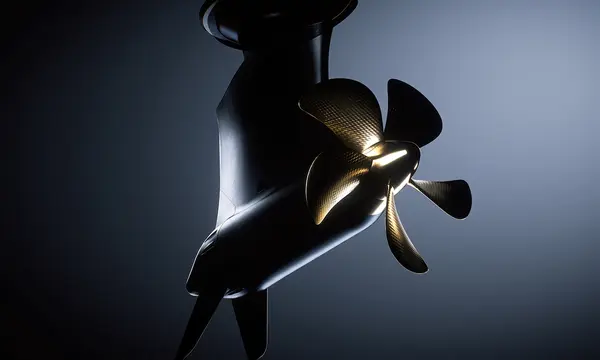
Kongsberg Expands Elegance Pod Propulsion Range to 22 MW
Kongsberg Maritime is extending its Elegance Pod electric propulsion family with five larger sizes delivering up to 22 MW for high-power vessel applications.
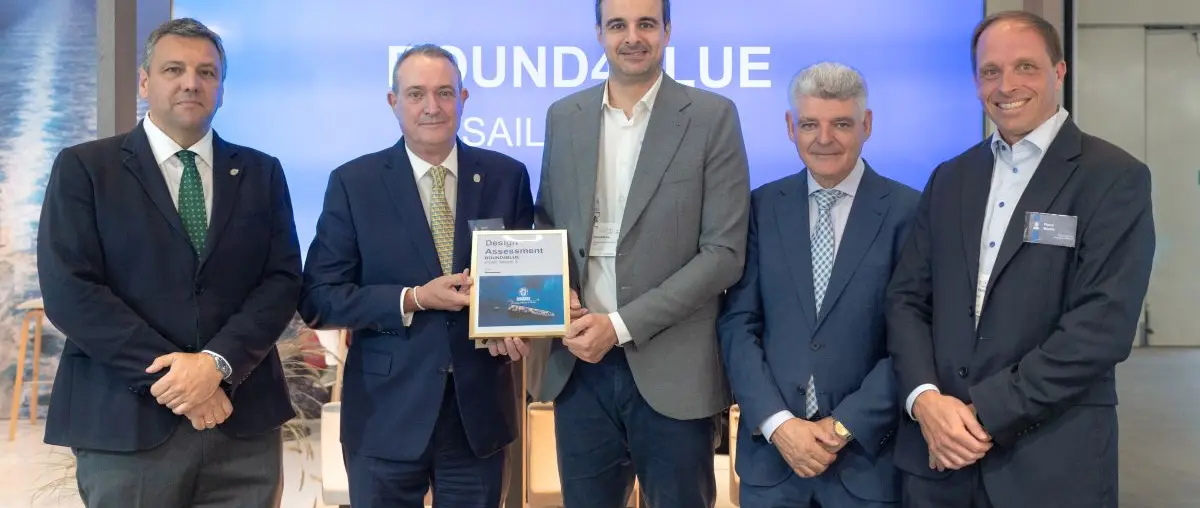
Image: Bureau Veritas / bound4blue
Bureau Veritas has completed a Design Assessment of bound4blue’s Model 3-24 eSAIL, independently reviewing the large-vessel suction-sail propulsion system.
Bureau Veritas has completed a Design Assessment of bound4blue's Model 3-24 eSAIL, an important step for a new generation of wind-assisted propulsion systems aimed at larger vessels. The assessment was announced during SMM 2026 in Hamburg and independently reviews the design against Bureau Veritas technical requirements.
The system uses suction-sail technology to generate additional propulsive force from the wind. Rather than relying on a conventional fabric sail, the eSAIL controls airflow around a rigid vertical structure using boundary-layer suction, increasing aerodynamic lift and allowing wind energy to contribute directly to vessel propulsion.
The assessed Model 3-24 is part of bound4blue's latest Model 3 generation, which is offered in heights from 24 to 36 metres. Bureau Veritas says the range has been developed to increase the contribution of wind propulsion on larger ships while maintaining practical installation and operation.
Although the current assessment is aimed primarily at commercial shipping applications, the engineering is relevant to the superyacht sector as designers continue to evaluate rigid sails, wing systems and other forms of wind-assisted propulsion for large motor yachts and support vessels. The challenge is to produce meaningful fuel savings without compromising deck use, stability, maintenance access or visual design.
Wind-assist technologies can produce substantial theoretical savings, but owners and designers need independently reviewed engineering before integrating large aerodynamic structures into a new build or retrofit. The Bureau Veritas assessment confirms that the Model 3-24 design has undergone an external technical review rather than relying solely on manufacturer performance claims.
That does not mean every vessel will achieve the same reduction in fuel consumption. Actual savings depend on route, wind conditions, vessel speed, hull form, installed sail area and how effectively the propulsion system is integrated into voyage planning and machinery management.
The wider significance is that wind-assisted propulsion is moving from experimental projects toward standardised products with classification involvement. Suction sails, rotor sails and rigid-wing systems are increasingly being treated as practical components in the broader effort to reduce fuel use and emissions at sea.
For superyacht designers, the Model 3 assessment adds another reference point when considering how large-yacht propulsion may evolve. The technology is not a direct replacement for conventional machinery, but it demonstrates how renewable propulsion can be integrated as an additional source of thrust when vessel profile and operating pattern make the economics and engineering work.
Continue reading
Kongsberg Maritime is extending its Elegance Pod electric propulsion family with five larger sizes delivering up to 22 MW for high-power vessel applications.
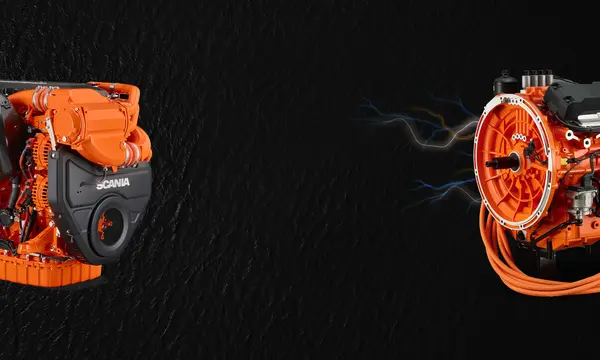
Scania is showcasing its 13-litre marine engine built on the Scania Super platform alongside hybrid systems and industrial battery technology.
Volvo Penta is showcasing the D13-IPS1350H at Cannes, combining its most powerful IPS engine with an integrated hybrid propulsion architecture.
Lloyd’s Register says nuclear propulsion for superyachts now warrants serious safety and regulatory work, while major technical and societal barriers remain.
Superyacht Guide
Continue into the wider Superyacht Guide.