Carla Guilhem Explains Owner-Led Superyacht Interior Design
By Superyacht Guide Newsroom · Edited by Superyacht Guide Newsroom
Carla Guilhem Explains Owner-Led Superyacht Interior Design — attributed SYG News batch03 20261125
In a new interview, Carla Guilhem explains accessibility on Lady Lene, the softer interiors of ONE and the influence of yacht design on the Essenza furniture range.
Carla Guilhem, founder and creative director of a studio working across superyachts and residential interiors, has explained her approach to yacht design in an interview published by PressMare on 23 November 2026. The discussion examines how her team interprets a client's daily habits, deals with technical limitations and uses materials to create spaces that remain comfortable over time. It is a dated interview containing first-person descriptions of completed design work, not an announcement that a previously undisclosed yacht has been ordered or launched.
The designer's account is relevant to large-yacht owners because an interior is more than a collection of decorative surfaces. Movement through a vessel, storage, accessibility and the interaction between lighting and materials can influence everyday life on board. Guilhem's examples include the motor yachts ONE and Lady Lene, alongside furniture developed for use on land. These specific projects provide practical context for understanding her method. They should not be confused with new contracts announced in November; the current news is the designer's published explanation of how the work was conceived.
Guilhem describes growing up around her family's furniture and millwork business in Brazil, where she developed an understanding of how materials and objects are made. She later studied and worked in Europe, where exposure to architecture, design history and traditional craftsmanship broadened that technical foundation. The combination of workshop knowledge and aesthetic exploration remains central to the way she describes her practice. She places value on how an item is constructed, how it behaves and how its proportions affect a space over time.
This perspective is particularly relevant to a yacht interior, where an attractive material must also withstand movement, vibration, humidity and repeated use. Designers cannot assume that every detail appropriate for a stationary home will perform equally well aboard a vessel. Finishes, furniture joinery and hidden mechanical connections need careful specification. The interview does not identify the precise material suppliers for each yacht mentioned, so it would be speculative to assign particular products or construction techniques. Instead, Guilhem's account highlights a general design discipline grounded in understanding the practical consequences of aesthetic decisions.
A central theme of the interview is the distinction between the images clients initially admire and the spaces that will genuinely support their routines. Guilhem says she prefers to learn how people spend time, what they value and what they would rather avoid before committing to an interior concept. This makes the design brief a process of discovery rather than a fixed collection of reference photographs. It also suggests why two yachts from the same design studio need not share a uniform signature appearance.
For owners, that approach can influence where quiet seating is located, how dining and entertaining areas are connected and whether private spaces accommodate particular daily habits. A yacht used for extended family cruising may require different details from one designed primarily for social occasions. None of these preferences can be inferred reliably from the owner's wealth or the yacht's length alone. The interview presents personal understanding as a design input, but it does not claim that Guilhem's studio has developed a universal method or a formula that can eliminate disagreements during a project.
Guilhem recalls the design process for ONE, formerly referred to as Project 111.11, as an example of how dialogue with a client can reshape an initial concept. The owners reportedly began with ideas involving relatively hard, strong lines, while she proposed a softer and more comfortable direction. The finished design explored references to the Moon and Mars through shape, texture and colour rather than literal science-fiction imagery. This example illustrates a process of reinterpretation, not an independently verified claim that a designer overruled an owner.
The described palette included subdued, nearly monochrome tones with touches of orange, brown and light cream, together with sculptural forms and gentle curves. According to Guilhem, comfort and visual calm were important because people may live aboard for weeks at a time. Such an approach can produce dramatic design without making every surface visually demanding. The interview provides insight into the intended atmosphere, but does not include a technical specification for lighting levels, material weight or acoustics. Those details would require project documentation beyond an editorial conversation.
A particularly practical case concerns Lady Lene, where wheelchair accessibility was among the requirements shaping the interior. Guilhem describes integrating support features such as grab bars into the architecture so that they would function as part of the visual and practical design rather than as awkward additions. This is a useful example of considering accessibility from the beginning of a project. It also challenges the assumption that functional adaptations must necessarily undermine the character of a luxury interior.
Accessibility at sea involves more than one fitting. Door widths, thresholds, circulation, furniture placement, changes of level and safe movement underway all warrant evaluation in relation to the individual user and vessel. The interview does not provide a complete accessibility certification or claim that every part of Lady Lene meets a specified international standard. It offers a designer's account of incorporating requirements into a coherent space. Owners who need similar provisions should still work with naval architects, safety specialists and experienced accessibility advisers during detailed planning.
Guilhem's remarks about ONE focus on how surrounding forms, materials and light affect emotion and wellbeing over extended periods. A yacht's interior may look impressive during a short tour but must also remain usable when several people spend weeks sharing relatively limited space. The cumulative effect of visual noise, awkward furniture edges or inadequate storage can become more noticeable with time. A design that feels calm and easy to navigate may therefore offer practical value beyond its appearance in a brochure.
There are technical limits to how these ideas can be realised. Weight distribution, available hull volume, emergency routes, ventilation and the location of equipment must still be respected. The interview does not suggest that visual tranquillity should override engineering or class requirements. Instead, it describes a creative direction that works within constraints. For owners considering major interior changes during a refit, the case illustrates why design decisions should be assessed against intended use, the needs of different guests and the operational realities of a working vessel.
The discussion also references Guilhem's Essenza furniture collection, developed with Artefacto Beach & Country. She explains that lessons from yacht interiors have influenced the design of pieces intended for residential use. Attention to movement, proportions, softened edges and the purpose of each detail is central to that exchange. The interesting point is that marine design can inform the broader luxury-furniture market without requiring a home to imitate a yacht's shape or appearance.
Furniture aboard a superyacht must be considered in its installed environment. Stability, fixing methods, maintenance access and resistance to movement may differ from the priorities for a residential living room. At the same time, both settings can benefit from thoughtful dimensions and comfortable touch points. Guilhem's comments illustrate this cross-disciplinary learning, but they do not amount to proof that a particular collection has been certified for all marine uses. Any item proposed for installation aboard a yacht would need review against the vessel's own requirements and applicable safety considerations.
The November discussion offers a useful summary of the approach behind several established projects: begin with the person who will live in the space, understand how materials and furniture work, and integrate practical needs early. This is not a new yacht model, a sale or a construction contract. It is a designer's explanation of professional choices already made, with specific examples drawn from the superyacht sector. The source identifies Guilhem's studio as operating from Miami and Rome, reflecting the international character of this part of the industry.
For a prospective owner, the lesson is to develop a brief around actual habits rather than relying solely on aesthetic references. For a builder or project manager, it is to give technical and creative teams sufficient opportunity to coordinate before details become expensive to change. The interview does not show how every owner would respond or provide cost figures for the designs mentioned. Its value lies in the practical questions it raises about accessibility, comfort and the experience of living on board. Future project announcements will require their own separate verification.
Primary source: PressMare direct interview with Carla Guilhem, 23 November 2026.
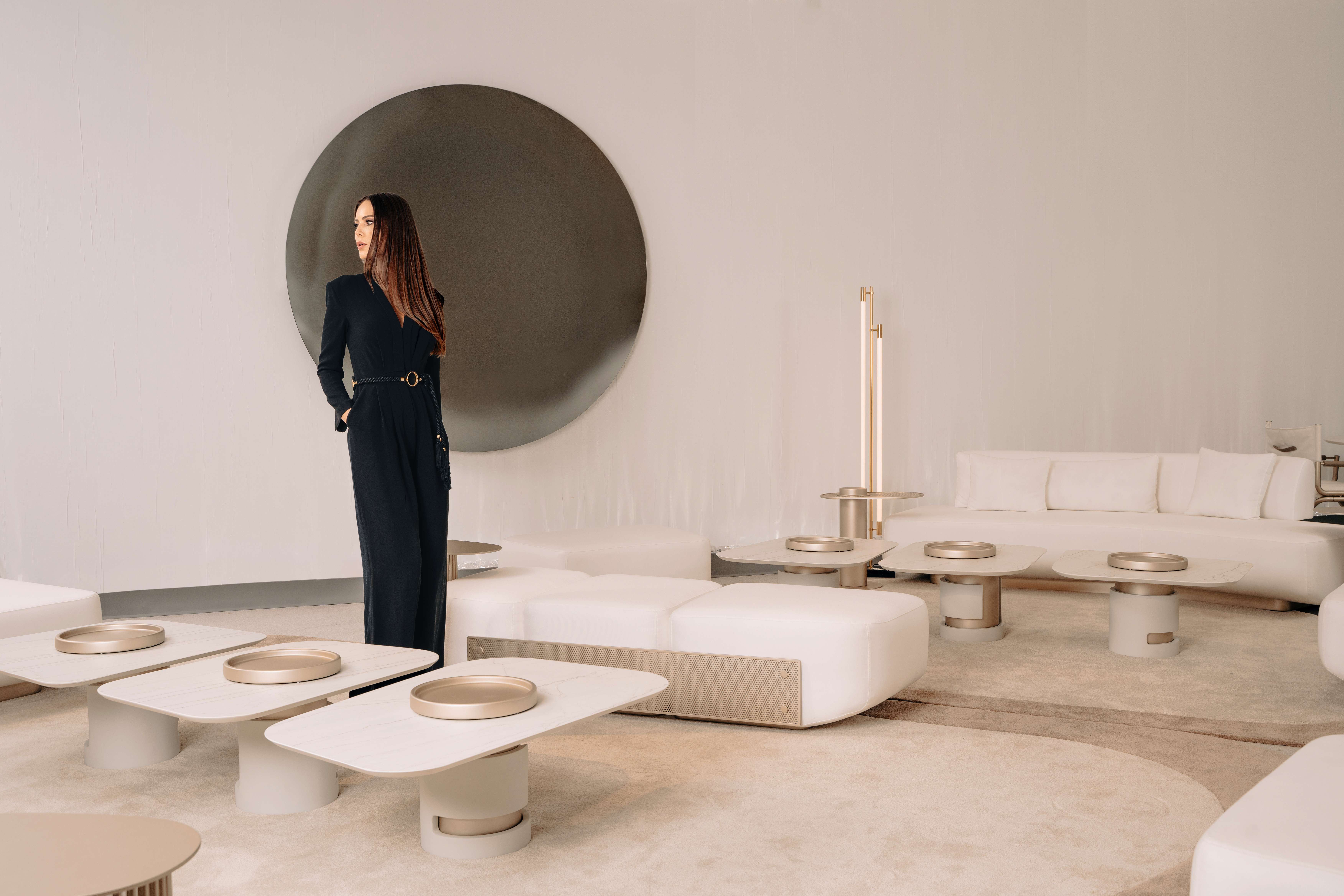
Portrait of Carla Guilhem supplied courtesy of Carla Guilhem Design for PressMare’s 23 November 2026 interview. © Carla Guilhem Design and original photographer. Official source.
Explore
Go deeper into the yachts, companies, events and destinations directly connected to this article.
Continue reading
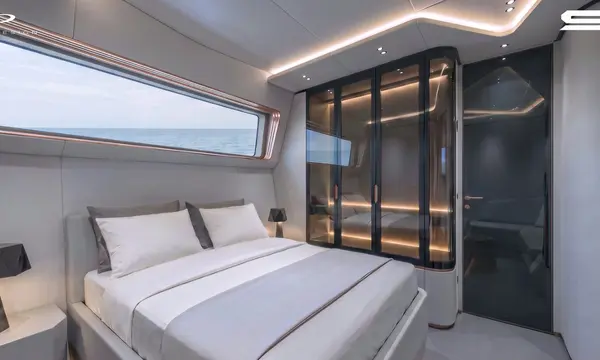
Facheris Design presents renderings of a 27.4m yacht concept for a technology entrepreneur, combining angular architectural design with open-plan creative work and leisure spaces.
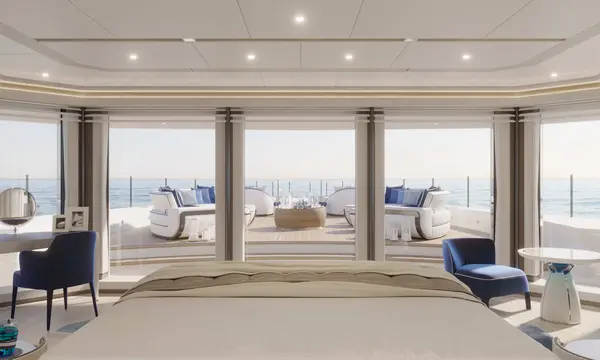
Heesen has published an unusually detailed November look at the interior of 57-metre Project Setteesettanta, including a four-deck staircase and custom finishes.
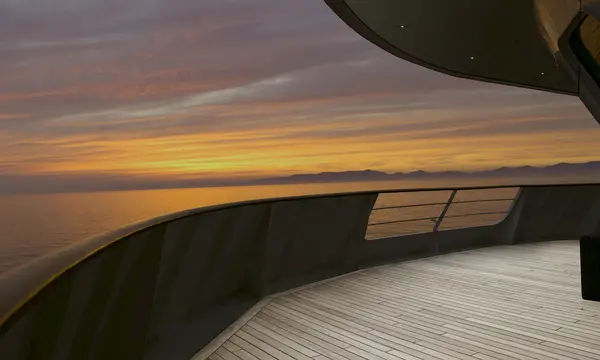
Apure Marine lists its FORTIS IP67 lighting fixture with two beam-angle options and a low-glare lens design for demanding yacht environments.
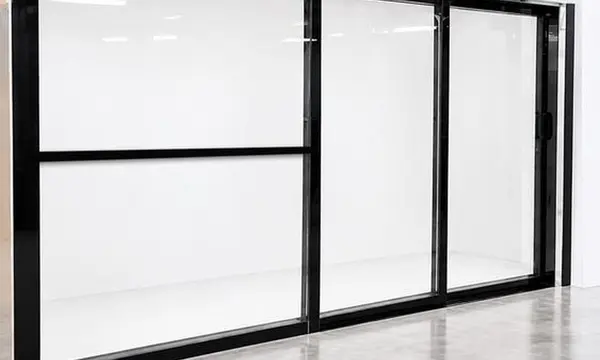
Amare Group presents DOORY large-format patio doors for superyacht saloons, promoting panoramic glazing and marine structural integration at METSTRADE 2026.
Superyacht Guide
Continue into the wider Superyacht Guide.
Business opportunities · Superyacht Guide
Companies serving the superyacht market can discuss clearly identified advertising, sponsorship and business-profile opportunities. Commercial activity remains separate from independent editorial coverage.