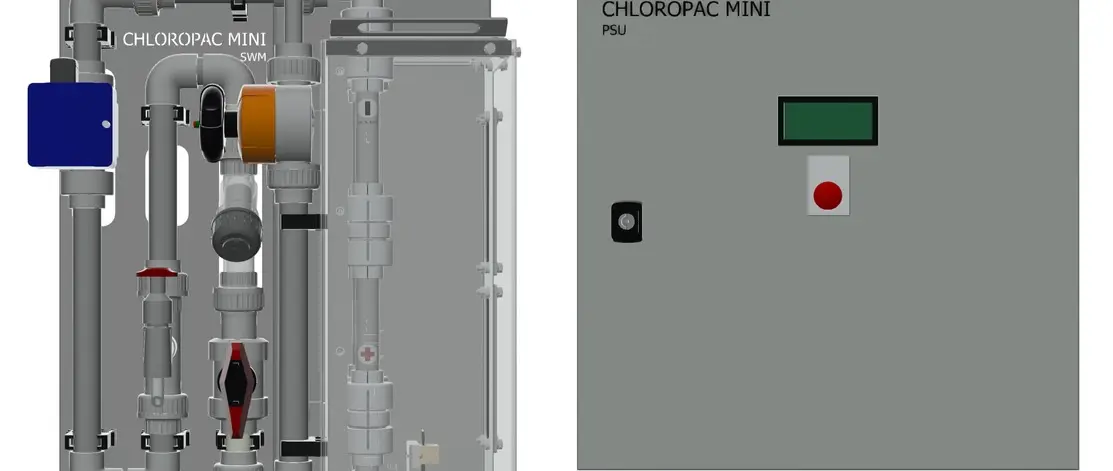
CHLOROPAC MINI brings a compact electrochlorination marine-growth prevention system to superyacht engine rooms, aiming to protect seawater intakes, strainers, coolers and pipework.
A new compact approach to marine growth in yacht machinery
Nautisch en Technisch Bureau Venteville has presented CHLOROPAC MINI, a compact marine-growth prevention system designed specifically for superyacht engine rooms. The product was listed with a 1 October 2026 release date in the METSTRADE exhibitor catalogue. It adapts a long-established electrochlorination technology to the space and maintenance constraints of large private yachts, where seawater circuits support engines, generators, air conditioning and other vital machinery.
The announcement is directly relevant to yacht engineers because marine organisms can colonise water intakes, pipework, strainers and heat exchangers. Even an otherwise well-maintained cooling system can lose efficiency if its water flow is reduced by deposits. The equipment is designed to prevent fouling across the circuit rather than simply remove growth after restrictions develop.
Why seawater systems are vulnerable
A superyacht's seawater system continuously draws water containing microscopic organisms and suspended material. Inside a pipe or heat exchanger, surfaces provide places where biofilm and larger forms of marine growth may accumulate. The severity of fouling depends on the area in which the yacht operates, water temperature, periods of inactivity and the details of the installation.
Restrictions in flow can increase the workload on pumps and interfere with effective heat transfer. In severe cases, engineers may face high machinery temperatures or reduced cooling capacity just when the vessel is operating at high demand. Strainers capture some larger debris, but they are not designed to prevent every form of growth further along a connected cooling circuit.
How electrochlorination is intended to work
CHLOROPAC technology uses electrochemical processes to produce a controlled low concentration of sodium hypochlorite within the seawater system. This is intended to inhibit marine growth before organisms become established on internal surfaces. The MINI version is described as a space-saving arrangement based on more than four decades of CHLOROPAC experience in other maritime applications.
The concept differs from a manually dosed cleaning chemical used periodically after a problem appears. A properly configured marine-growth prevention system provides continuous treatment while operating, with controls designed to keep the effect within an appropriate range. Actual performance depends on seawater conditions, flow, electrode operation and the manufacturer's design limits, which should be checked against a yacht's specific piping arrangement.
From the sea chest to the heat exchanger
Venteville identifies seawater intakes, strainers, pipework, coolers and heat exchangers among the parts of the circuit that can benefit from protection. On a complicated superyacht, however, there may be several independent or cross-connected seawater systems, together with dedicated pumps and branches supplying individual items of equipment.
Before specifying treatment, an engineer should produce an accurate schematic showing where water enters the hull, which components are supplied and how flow varies between modes of operation. Installing a unit at one point cannot be assumed to provide adequate treatment to every separate circuit. Isolation valves, back-up pumps and any sections that remain stagnant also need to be considered.
Space and maintenance are important in a superyacht engine room
Large yachts can have sophisticated machinery spaces without generous spare room for additional equipment. A compact wall-mounted treatment assembly is attractive if it can be reached for inspection and installed without obstructing routine maintenance on nearby systems. Engineering suitability still involves adequate ventilation, electrical supply, service clearances and clear access to components that may eventually require replacement.
Crews should ask the supplier how the system is monitored, which alarms are provided and what preventive maintenance is required. They should understand whether the yacht can continue cooling essential machinery safely if the treatment equipment is shut down. A prevention system should not introduce a new single point of failure into a critical cooling service.
Corrosion, seawater chemistry and environmental controls
Because the treatment relies on electrochemical activity, its installation requires consideration of material compatibility and safe control of the treatment level. Yacht seawater circuits can include metals, non-metallic pipework, strainers and specialist heat exchangers, and their manufacturers may specify limits on water chemistry or treatment products.
A responsible specification should also address any applicable discharge and environmental requirements, taking account of the yacht's flag, intended cruising areas and the relevant equipment approvals. The product announcement describes its intended mechanism; it does not establish that every installation is suitable for every jurisdiction or every material combination.
Why the development matters to technical departments
The most useful potential benefit is avoiding unplanned interventions rather than saving a small amount of routine cleaning time. If cooling equipment remains free of internal marine fouling, engineers may face fewer urgent strip-downs during busy operating periods and can schedule inspections within the vessel's planned maintenance programme. That benefit still needs to be demonstrated for an individual yacht through monitoring and maintenance records.
CHLOROPAC MINI's dated 2026 introduction gives the superyacht market a product developed around these constraints, with an official image and specification made available through METSTRADE. For captains and engineers assessing the unit, the next step is a vessel-specific technical review: verify the circuit, required capacity, electrical integration, materials and compliance before making performance claims or ordering equipment.