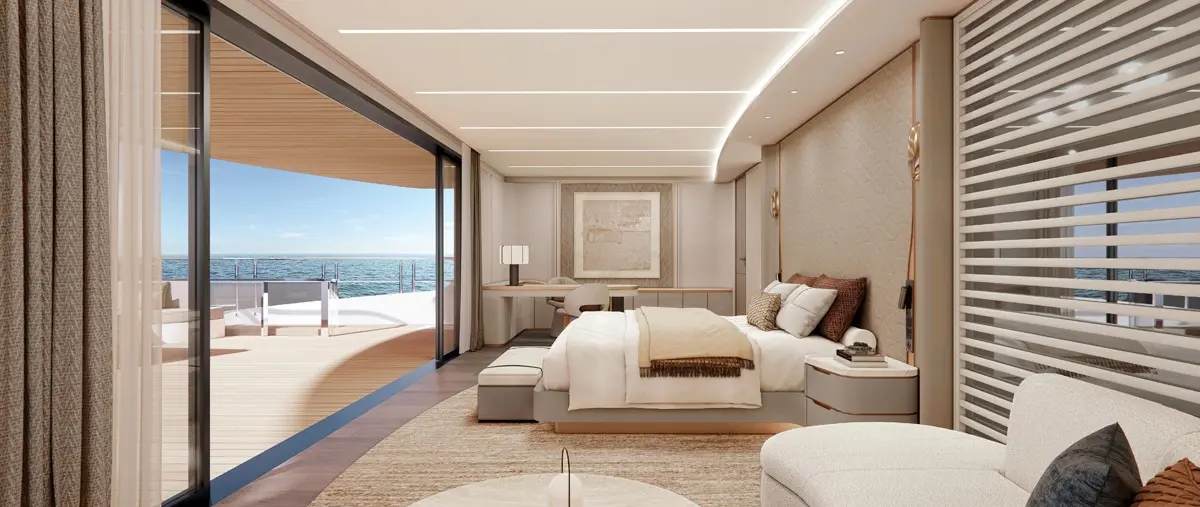
CL Yachts has disclosed a new mid-deck owner's suite configuration for the 35-metre CLC115 catamaran, offering a private spa terrace, a main-deck gym and extra guest cabins.
CL Yachts has introduced an alternative accommodation plan for its 35-metre CLC115 tri-deck catamaran, placing the owner's suite on the mid deck rather than the main deck. The Hong Kong yacht brand, part of Cheoy Lee Shipyards, detailed the option in a 5 November 2026 announcement distributed through the industry press. The change is a design configuration of an existing platform, not the launch or delivery of a newly completed vessel.
The distinction matters in the large-catamaran market because the same underlying hull arrangement can support markedly different approaches to living aboard. One owner may give priority to an expansive personal apartment near the principal saloon, while another may prefer separation from guest activity and more generous shared areas. CL Yachts presents the second arrangement as an option, allowing the project brief to determine the interior rather than treating the first published plan as fixed.
In the newly described arrangement, the owner's suite moves aft on the mid deck. The builder says the room is designed around floor-to-ceiling views and an individual terrace with lounge seating and a spa pool, as well as a dedicated owner's bathroom. These are planned features in the revised configuration, and the available announcement does not provide measurements for the suite or terrace.
Moving the main private accommodation away from the main deck creates a different relationship between the owner and the rest of the yacht. The terrace could be particularly appealing for an owner seeking an outdoor area that is distinct from common guest circulation, although actual privacy also depends on crew routes, sightlines and how the vessel is operated. Drawings and specifications should ultimately be assessed by prospective clients rather than treating design intentions as proven onboard experience.
The mid-deck relocation leaves more room on the main deck for shared activities. According to CL Yachts, that space now includes a dedicated gym and two additional guest cabins, each with its own en-suite bathroom. This is the central trade-off in the new plan: the owner's principal suite is moved upward while the lower level takes on more of the social and guest-accommodation functions.
For private users, the distribution may allow family groups to keep guest rooms together while the owner occupies a more separate level. For charter planning, extra dedicated guest cabins can affect how the yacht is presented to prospective clients, but cabin count alone does not establish permitted passenger capacity or a commercial charter certification. Such limits depend on the final vessel's registration, safety arrangements and applicable requirements.
CL Yachts describes the new arrangement as six guest cabins plus one convertible cabin, compared with five guest cabins plus a convertible cabin in the existing main-deck owner's-suite version. Its published description retains accommodation for four crew members in both cases. The stated comparison is between two layout proposals for the same CLC115 platform, not a claim that seven guest cabins are simultaneously dedicated bedrooms.
The convertible mid-deck stateroom is intended to offer a choice of functions, including an audio and video entertainment room, nursery or massage room. Each option requires different practical considerations: sound separation and ventilation for entertainment, supervision and safety for children, and enough circulation space and service access for treatments. The point of a convertible room is that the eventual buyer chooses a role rather than assuming that every possible use can operate at once.
The new accommodation approach comes from Supertomato Studio, which is credited with the CLC115's interior design. Incat Crowther remains responsible for naval architecture and the exterior design of the platform, according to the builder's release. That division of responsibility is useful for understanding the announcement because the newly publicised change concerns internal space allocation rather than a declared alteration to the hull or propulsion.
A revised interior can still have implications for engineering, weight distribution, circulation and services once a project moves toward detailed specification. The press statement does not provide revised displacement, stability results, speed or range figures for the mid-deck alternative. Without those calculations, it would be inappropriate to infer that the changed layout makes the vessel faster, more efficient or better suited to a particular sea state.
On a 35-metre multihull, the relationship between interior floor area and exterior terraces can be a defining design consideration. CL Yachts' decision to add a second layout highlights a willingness to use that available space in more than one way. The vessel's three-deck arrangement creates alternatives for keeping owner, guest, leisure and service functions distinct while still linking them through common routes.
The builder has not published a quantified comparison of usable area between the two configurations in the 5 November release. Consequently, there is no verified basis for saying that one version has a particular percentage more living space. The defensible conclusion is narrower: the option reallocates space that already exists within the proposed yacht to serve a different mix of private and collective activities.
An owner-centred plan normally tries to preserve personal space even when guests are aboard. A charter-centred plan may place greater emphasis on the number and usability of cabins, ease of serving meals and convenience of shared leisure areas. CL Yachts argues that the alternative CLC115 arrangement can help clients find a different balance between those needs, with a spa-equipped private terrace above and additional guest facilities below.
Neither arrangement is inherently superior without knowing the intended use. A couple cruising with occasional visitors might value the original plan, while a family with several generations aboard could place greater weight on separate rooms and flexible functions. Both types of owner would still need to review access stairs, privacy from neighbouring spaces, storage and the daily workload placed on the four-person crew complement described in the preliminary plans.
The announcement should be read as a design update rather than a fleet-delivery milestone. CL Yachts has not identified a newly delivered CLC115 carrying this particular accommodation plan in the material released on 5 November. Nor does the statement announce an owner contract, vessel name, asking price or handover schedule associated specifically with the mid-deck configuration.
That limitation is especially relevant in a market where previews, signed construction orders, launches and completed deliveries are distinct stages. Prospective purchasers can discuss the revised arrangement with the builder, but a design presentation cannot be taken as evidence that the physical yacht is afloat or available for immediate use. Accurate reporting separates the options being marketed from the vessels that have actually entered service.
CL Yachts states that space for four crew is retained in the second layout despite the introduction of the two additional main-deck guest cabins. Crew accommodation is a significant consideration on yachts expected to support owners, guests and technical operations over extended periods. A similar number of sleeping places does not automatically mean that the service workload stays the same once a different guest and amenities plan is selected.
Where more cabins are regularly occupied, housekeeping, food service and guest-activity schedules may become more demanding. Owners considering the CLC115 should examine how the proposed crew areas connect with service routes and stores, as well as how food, laundry and maintenance tasks are supported. The published release confirms the intended crew complement but does not supply an operational staffing study for each configuration.
Martin Lo, a director of CL Yachts, presented the addition as a response to different owner and charter requirements. The builder's central message is customisation within an established yacht platform: a main-deck owner's apartment remains an option, but the mid-deck alternative changes where the most private spaces sit and how the main deck can be used. That is a concrete design choice rather than a headline claim of more length or faster performance.
The next meaningful evidence for buyers would be detailed deck plans, equipment specifications and, where applicable, a confirmed construction programme for the selected configuration. Those documents can establish room dimensions, circulation, stability and service provision in ways that a broad announcement cannot. For now, the 35-metre CLC115 has gained a distinct second interior proposal, offering a wider discussion about how a luxury multihull can balance ownership, family cruising and guest hospitality.
Source: CL Yachts official release distributed by PressMare, 5 November 2026.
Explore
Go deeper into the yachts, companies, events and destinations directly connected to this article.
Continue reading
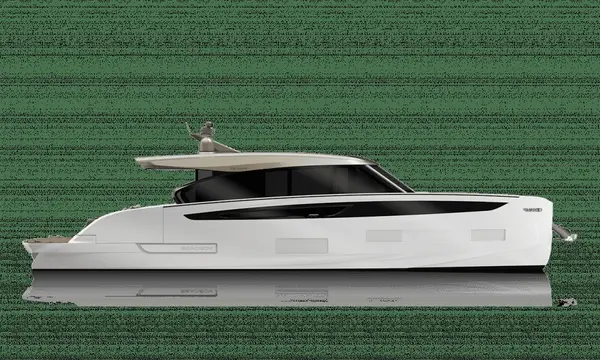
The Azimut Magellano 27M has won the 2026 Design Innovation Award in the superyachts over 24 metres category at the Genoa International Boat Show.

YachtCloud is highlighting how its ECHO system manages yacht network access, device registration and private casting across guest, crew and operational areas, aiming to …
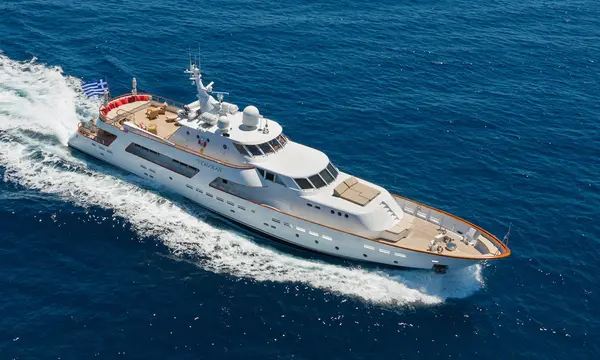
Northrop & Johnson has announced a €1.6 million asking-price reduction for PARVATI, taking the advertised figure to €2.35 million. The 26 October notice identifies …
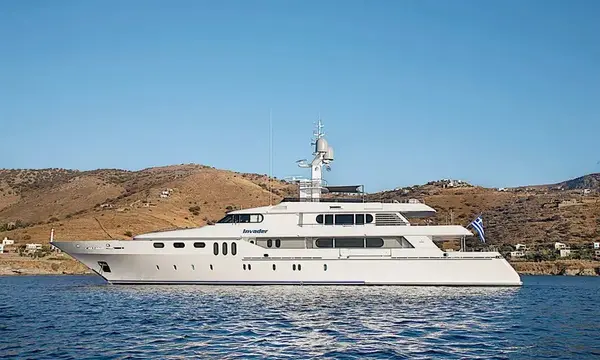
Burgess currently presents Codecasa's 50-metre INVADER for sale on a price-on-application basis, emphasizing her 2019 refit, guest elevator and extensive outdoor spaces.
Superyacht Guide
Continue into the wider Superyacht Guide.
Business opportunities · Superyacht Guide
Companies serving the superyacht market can discuss clearly identified advertising, sponsorship and business-profile opportunities. Commercial activity remains separate from independent editorial coverage.