
IDEA Release 2026.4.5 Adds Crew Records and Fleet Reporting Tools
IDEA Data Solutions confirms new 2026.4.5 yacht-management software functions for crew records, maintenance tasks and shoreside fleet reports.
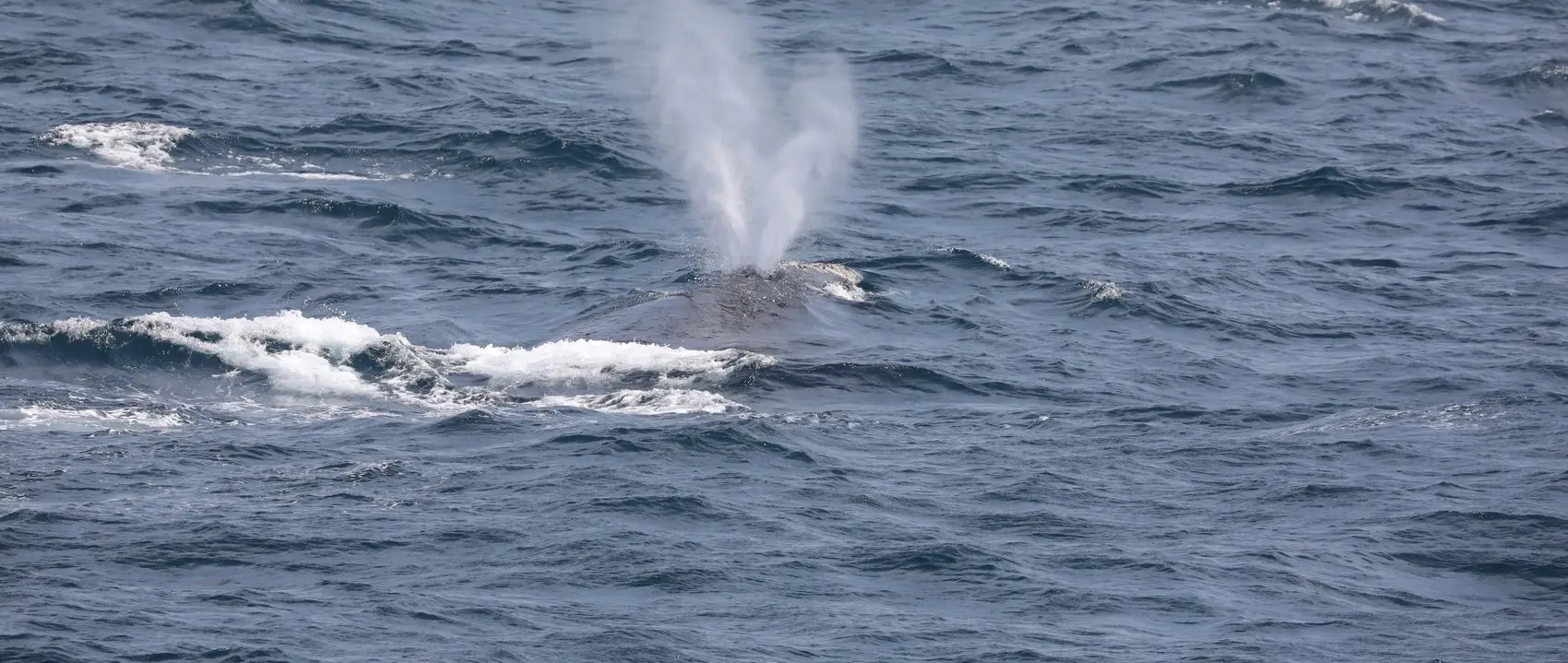
Photo: NOAA Fisheries / Peter Duley, permit #21371. U.S. Government public domain image of an adult right whale; contextual illustration, not one of the November 2026 calves.
Two US Coast Guard notices recorded endangered right whale mother-calf sightings near Chesapeake Bay in November, as NOAA confirmed the start of the 2027 calving season.
The United States Coast Guard issued two broadcast notices to mariners after endangered North Atlantic right whale mothers and calves were reported near Chesapeake Bay in November 2026. The first bulletin, dated 20 November, concerned a pair seen on 19 November inside the lower Chesapeake between Hampton, Cape Charles and Cape Henry. A later notice issued on 23 November described another mother-calf sighting near the mouth of the bay on 22 November. Yacht officers should treat these as specific dated reports, not as proof that the warnings remain active indefinitely.
The later bulletin, CGD-E BNM 0532-26, reminded operators that federal law prohibits vessels from approaching within 500 yards of a right whale. It conveyed NOAA Fisheries' advice to use caution and pass slowly to prevent lethal collisions. The notice scheduled cancellation for 27 November 2026; this article therefore reports its historical issue, not an active Coast Guard broadcast as of 28 November. Masters must check current navigation notices at departure.
The 20 November Coast Guard bulletin and 23 November bulletin identify the emergency maritime information issued after the Virginia sightings. NOAA's 2027 calving-season scientific record separately documents the identities of Curlew, Snail and Calvin and the early season's three calves. The official sources provide complementary operational and research evidence, not interchangeable dates or statements of legal status.
These Coast Guard warnings demonstrate the connection between wildlife reports and navigational precautions for coastal shipping and large yachts. Their scheduled cancellation dates should not be mistaken for the end of the calving season, which runs into spring. A bridge team can use the historical reports to improve awareness while relying on the latest current Coast Guard and NOAA information for specific voyage decisions.
NOAA Fisheries has documented three North Atlantic right whale calves in the opening weeks of the 2027 calving season, with sightings reported during November 2026. The agency identifies the mothers as Curlew, Snail and Calvin and describes observations off Florida and Virginia. The new records are significant because every birth matters to a species whose population remains critically small and whose animals share busy coastal waters with moving vessels.
NOAA's official seasonal account says researchers have identified three calves so far; that is a dated early-season count, not a forecast of how many calves will eventually be born. The field season extends from mid-November into mid-April, so the number can change as new sightings are confirmed. For large-yacht masters, the immediate practical message is that mothers and dependent young may be present near important Atlantic routes now.
North Atlantic right whale calving seasons are identified by the year in which the winter and spring season concludes. Thus NOAA's 2027 season starts in November 2026, rather than waiting for January to begin. The agency monitors the southeast coast each year because this is the only known region in which right whales regularly give birth and nurse young.
This timing overlaps the seasonal movements of yachts, commercial shipping and other traffic along the American East Coast. A yacht preparing for a winter crossing from the Northeast or a visit to Florida should not interpret the 2027 label as a reason to delay attention. The first animals in this season have already been documented, and the risk information belongs in current voyage planning.
The earliest of the three mother-calf observations described in the NOAA update came on 10 November, when members of the public reported a pair approximately eleven nautical miles east of St Augustine Inlet, Florida. Researchers identified the mother as Curlew, catalogue number 4190. NOAA says she is sixteen years old and that this is her first recorded calf.
Curlew's movements also illustrate why marine-mammal records can have a geographical reach beyond the stereotypical winter nursery map. NOAA recounts a journey she made with another female during the preceding season that included Gulf waters and a visit to the Bahamas, both unusual developments for the species. Those historical details should not be turned into a claim that her new calf has made a similar journey.
NOAA reports a second mother and calf on 19 November in the Chesapeake Bay shipping channel, about two miles east of the Chesapeake Bay Bridge-Tunnel in Virginia. Scientists identified the mother as Snail, number 4050, and recorded this as her first calf. The location is notable because it lies close to waters used intensively by shipping and other vessels, making accurate reporting of a sighting particularly important.
The agency explains that Snail's name refers to a distinctive callosity and a propeller scar on her back. Her own mother died in 2024 after a vessel strike off Virginia, a history that demonstrates the danger in an unusually direct way. None of this establishes that the recently born calf was struck or injured; NOAA's current record is a sighting of the pair.
On 20 November, researchers trying to locate Snail and her calf observed another mother-calf pair near the entrance to Chesapeake Bay. The mother was identified as Calvin, number 2223, born in 1992, and NOAA says this is her fifth calf. The agency describes it as unusual to detect calves this early in the season and so far north, particularly when more than one pair is reported in the same broad area.
Calvin's recorded life history includes repeated entanglements and a period when scientists did not see her for several years. Her early-life story is also well known to researchers because her mother was killed in a vessel strike when Calvin was still young. Those records add conservation context, but they do not establish the immediate health or future survival of the newborn calf.
NOAA's seasonal account estimates approximately 380 North Atlantic right whales remain, including about seventy reproductively active females. These are population estimates from the agency, not exact individual counts, and should be reported as such. The small breeding population makes the survival of each mother and calf disproportionately important to the species' longer-term recovery.
NOAA also points to an ongoing unusual mortality event and the effects of vessel strikes, fishing-gear entanglement and environmental pressures. The agency says females are currently producing calves less frequently than in healthier circumstances. New births are encouraging evidence of reproduction, but they do not by themselves resolve the broader threat facing the population.
Some whales travel more than a thousand miles from northern feeding grounds to coastal waters off the Carolinas, Georgia and Florida. NOAA identifies the southeastern United States as the only known area where the species regularly gives birth and nurses young. This makes relatively shallow coastal waters important habitat during the same months that many vessels are travelling along the eastern seaboard.
The agency has designated critical habitat that includes waters from Cape Fear, North Carolina, to below Cape Canaveral, Florida. Critical-habitat mapping is one source of planning information, but a captain must separately verify any rules attached to a specific voyage. The existence of a critical-habitat designation should not be confused with a uniform prohibition on all navigation throughout the region.
The United States has mandatory seasonal speed restrictions in designated areas for many vessels 65 feet or longer. Ten knots is the relevant speed limit in the covered waters and periods, subject to the actual regulatory provisions. A yacht with a length of at least 24 metres exceeds the size threshold, making the rule particularly material to professional superyacht route planning.
The latest calf sightings do not themselves create new speed regulations. Rather, they reinforce the purpose of existing protections and the need to check dates, coordinates and applicable conditions before departure. Officers should consult NOAA's current vessel-speed guidance and official navigational information, not rely on a broad claim that every mile of the East Coast has the same limit.
The Snail and Calvin observations near Chesapeake Bay show that dependent calves may be encountered outside the area people most readily associate with southeast-coast calving. NOAA explicitly notes the unusual timing and northern location of the sightings. For yacht crews, the implication is that a map of designated habitat is only one element of understanding the animals' actual distribution.
A captain following the Chesapeake approaches must already manage traffic, weather, navigation marks and port restrictions. Verified wildlife information adds another factor to the same decision process. The appropriate response may involve enhanced lookout, reduced speed or a different track depending on conditions and official guidance, rather than assuming that a single location descriptor answers every navigation question.
NOAA's seasonal page includes photographs of the newly identified pairs, with individual credits to research partners and the appropriate permits. Not every photo appearing on a government website is automatically a work of the U.S. government, so ownership and reuse conditions need to be checked individually. Images from contractors or partner institutions can have different copyright status from material created by NOAA employees.
The photograph used with this article is instead a separately credited NOAA Fisheries image by Peter Duley, showing an adult right whale at the surface. It is an archival species illustration and does not depict one of the three new calves. The official NOAA record remains the source for the November observations, and the image should never be presented as direct visual evidence of them.
The bridge team can start by identifying whether the intended passage approaches Virginia, the Carolinas, Georgia or Florida during the winter calving season. Current NOAA guidance, official charts, mandatory seasonal speed areas and dynamic advisories should then be checked before a route is approved. Accurate notes help distinguish what the law requires from additional recommendations aimed at reducing collision risk.
A yacht operator also needs to build the information into watchkeeping practice. Whales can be difficult to see in poor visibility or rough seas, and the presence of a calf makes close approaches especially concerning. The captain should ensure lookouts understand reporting procedures and should never encourage an approach merely to photograph wildlife.
NOAA encourages people who see right whales to report sightings through its designated channels. The opening-season record demonstrates why public and research observations can be useful: Curlew's pair was first reported by members of the public, while the Virginia pairs were identified by researchers. Timely and accurately located information helps specialists understand where animals are travelling.
That does not give recreational observers permission to approach protected animals. A responsible yacht can report a sighting from a safe distance while continuing to follow all relevant wildlife-protection rules. For any safety-critical reporting, the bridge should use current official contact information rather than a number remembered from an earlier voyage.
Owners and charter guests may not know that a seasonal speed restriction or wildlife precaution can affect the time needed for a passage. Managers should explain the operational rationale before a route or arrival estimate becomes a firm expectation. A small change in speed over a substantial distance can affect planning, but the precise impact depends on the route and cannot be inferred from the calf count alone.
The same consideration applies to transits for maintenance or delivery, when crews may be under schedule pressure. Protecting a rare species is consistent with professional seamanship when it is considered early and documented clearly. The objective is to preserve navigational safety while avoiding unnecessary risk to animals using the same waters.
NOAA's record will be updated as the 2027 calving season continues and further animals are confirmed. A count of three calves in November 2026 is therefore a snapshot of official monitoring, not an estimate of the final seasonal result. Any later report should check the agency's current record and identify the date of the information being quoted.
The early observations of Curlew, Snail and Calvin provide a meaningful piece of conservation news with a direct navigational consequence for large yachts. They remind the industry that protected whales are moving through coastal corridors in which operators have established responsibilities. The correct response is to follow verified guidance, keep voyage plans current and give wildlife hazards the same disciplined attention as other material risks at sea.
Original primary record: U.S. Coast Guard, Sector Virginia. Photo: NOAA Fisheries / Peter Duley, permit #21371. U.S. Government public domain image of an adult right whale; contextual illustration, not one of the November 2026 calves. Original first-party media: source photograph or official illustration. Copyright and image source are credited; first-party availability does not imply unrestricted reproduction permission.
Continue reading
IDEA Data Solutions confirms new 2026.4.5 yacht-management software functions for crew records, maintenance tasks and shoreside fleet reports.
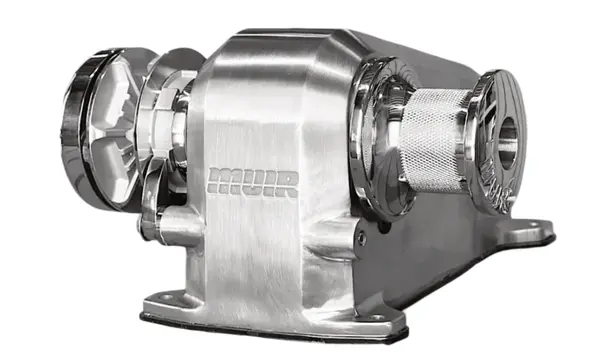
Muir introduces Volume II of its anchoring guide at METSTRADE, addressing equipment handover, commissioning, safe operation and maintenance for large yacht crews.
A new Northrop & Johnson crew advisory questions whether rotational employment suits every position, highlighting differences between senior and junior crew and between yacht …

An IYC and SuperYacht Times panel at Monaco Yacht Show 2026 examined how crew rest, staffing, mental wellbeing and working culture affect the guest …
Superyacht Guide
Continue into the wider Superyacht Guide.
Business opportunities · Superyacht Guide
Companies serving the superyacht market can discuss clearly identified advertising, sponsorship and business-profile opportunities. Commercial activity remains separate from independent editorial coverage.