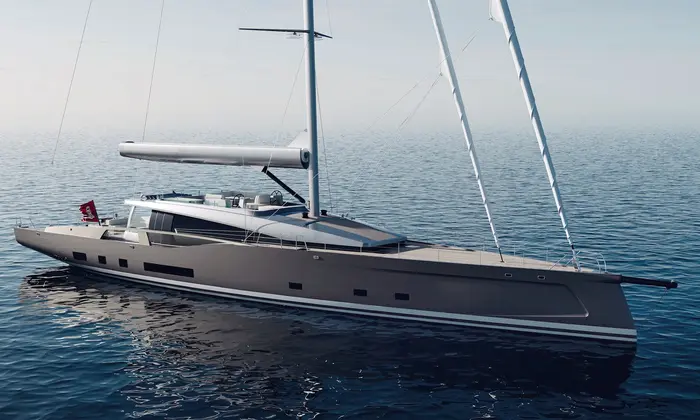
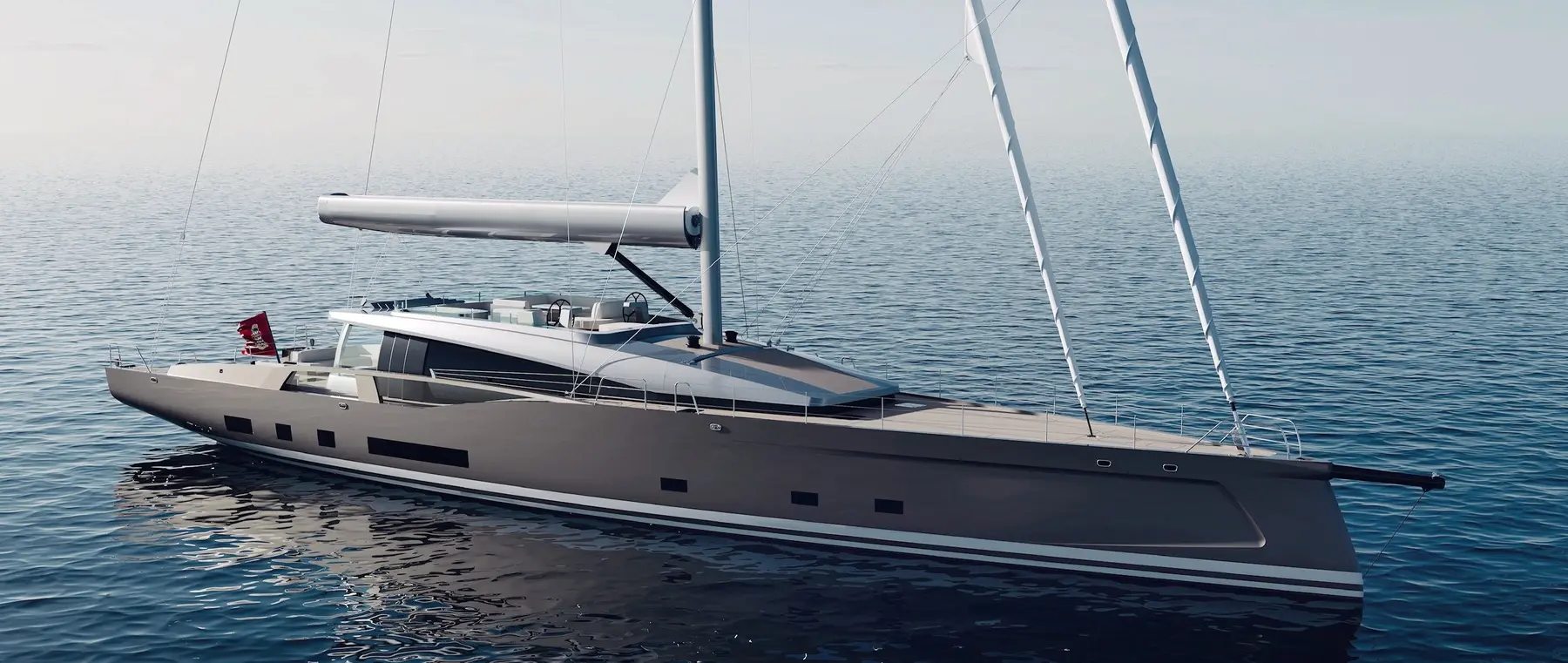
Official Conrad Shipyard company press newsletter source ID 530; dated 2025-05-08; design rendering.
The in-build Conrad CO.ONE 140 made two 2025 yacht design award shortlists. See the flybridge concept, hybrid goals, design team and project status.
Conrad Shipyard's CO.ONE 140 sailing superyacht was shortlisted in two categories of the International Yacht & Aviation Awards in spring 2025. The announcement, circulated in the yard's original press newsletter on 8 May, concerned an in-build project rather than a yacht already at sea. The two categories were Concept Over 40 Metres and Interior Concept Design. Public voting was open through 4 June 2025, a deadline that has long since passed. The recognition is nevertheless a useful starting point for examining a distinctive 42.85-metre sailing project at Conrad's Gdańsk facility.
Shortlisting means that a design has reached a particular stage of an awards process. It is not equivalent to receiving the category prize or being declared the best yacht in the world. The original Conrad email sought votes, and that appeal has to be understood in its 2025 context.
For anyone maintaining a shipyard's awards record, this distinction matters. Promotional messages frequently use enthusiastic language, but the verified result must match the precise competition stage. The CO.ONE 140 can accurately be described as a shortlisted project in 2025 without inventing a subsequent victory or implying that voting is still open.
Conrad is widely associated with the award-winning C144S motor yachts ACE, EXTRA TIME and MOONLIGHT. The CO.ONE 140 marks an expansion into a semi-custom sailing range, drawing on the yard's earlier experience with sailing projects. This is not simply a motor-yacht hull fitted with a mast; a long-range performance cruiser poses different design and weight challenges.
The build requires coordination of sailing loads, rigging, hull structure, keel equipment and comfortable accommodation. The potential audience includes owners who want serious passage-making capabilities but do not wish to give up the benefits of a substantial superyacht interior. That combination explains why the concept was of interest to awards juries even before completion.
The vessel's original concept, styling and interior arrangement were developed by Frank Neubelt Yacht Designs in association with German Yacht Couture. Conrad's published project details identify Deltamarin as a partner in the naval architecture and engineering. The work must reconcile a low, purposeful sailing profile with a sizeable flybridge and an apartment-style owner's suite.
There is an important tension between open-plan luxury and racing demands. Every window, platform and spacious room influences weight, structure and equipment routes. The design partners therefore need to work as one team rather than treat the rig and interior as unrelated products.
Conrad's current specification lists 42.85 metres overall, 38 metres at the waterline and 8.50 metres of maximum beam. The original award-nomination letter referred to approximately 41 metres of hull length plus a bowsprit. These figures are not necessarily contradictory because hull length and overall length can measure different parts of a sailing yacht.
A fleet database should choose one clearly described primary dimension while preserving the source of alternative values. The 42.85-metre overall length is used for the CO.ONE project profile. It must not be silently replaced by a rounded promotional figure or confused with a shorter vessel sharing the Conrad name.
The design proposes an aluminium hull, with carbon-composite material used for the superstructure and important sailing equipment. This arrangement seeks to control weight high in the vessel while retaining structural capabilities appropriate for the project's operating demands.
Carbon and aluminium bring different fabrication, joining and maintenance considerations. Corrosion protection and careful treatment of connections between dissimilar materials are essential. A description of 'lightweight construction' conveys the design intent, not an independent measurement of the completed hull's weight or guaranteed efficiency.
One of the yacht's most notable design characteristics is its hybrid propulsion system. The builder describes a high-voltage electrical installation associated with diesel machinery and Hundested propulsion equipment, allowing different operating modes. Under certain conditions the project is intended to move quietly under electric power and recover energy while sailing.
Engineering claims deserve clear qualification. Battery capacity, propulsion settings and the ability to operate without generators depend on installed hardware and hotel loads. Before sea trials, the published statements represent design capabilities and targets. No completed-boat fuel economy, zero-emission voyage or measured regeneration rate is established by the original shortlist announcement.
The CO.ONE design includes a lifting keel with a stated draft range of approximately four to six metres. A deeper keel can improve righting moment and the yacht's performance under sail. A reduced draft can make some anchorages and ports more accessible, depending on local conditions and the approved operating procedures.
Moving a substantial keel involves complex systems and concentrated loads. The owners and captain will need practical confidence in inspection, maintenance and safeguards. The presence of such equipment is an expression of the project's ambition to combine racing performance and cruising versatility, not a promise that shallow-water navigation will always be possible.
Conrad's original announcement describes a substantial sailing rig with Southern Spars equipment, Rig-Pro rigging and systems intended to assist sail handling. Twin rudders and dedicated helm stations are part of the concept. For a large sailing yacht, these features are as much about crew coordination as outright speed.
Push-button operation should not be mistaken for removing the need for seamanship. Sails remain powerful, the weather remains variable, and a reliable crew still has to manage lines, assess loads and communicate clearly. Sophisticated equipment can reduce physical demands while increasing the need to understand the machinery and its failure modes.
The flybridge is a major part of the CO.ONE identity. Flybridge sailing yachts need to reconcile useful elevated leisure space with the air flow around sails, the placement of controls and the need to keep unnecessary mass from rising too high in the boat. The design's proportions attempt to make the upper deck part of a coherent sailing platform.
Guests may benefit from excellent views, a comfortable lounge and social facilities. But those features cannot be considered apart from stability and handling. The award shortlist acknowledged a concept whose challenge is precisely this balance between luxurious upper-deck accommodation and active sailing performance.
Conrad describes a large aft owner's apartment with its own terrace and direct connection to the waterside platform. This arrangement aims to create a private retreat that can be enjoyed at anchor. The main cockpit and saloon are designed for a relatively continuous living environment, supported by natural light through broad windows.
The physical reality will depend on detailed engineering. Openings and terraces introduce mechanical systems, seals and service requirements. The movement of the yacht under sail also affects how comfortable and safe these spaces are. Thoughtful design has to account for both a calm anchorage and offshore passages.
The original award-nomination material described accommodation for six guests, together with a professional crew and supporting service areas. Different marketing presentations refer to slightly different crew capacities and optional layouts. Such variations are common before a semi-custom vessel is fully configured for an individual owner.
What matters is not merely the number of berths but whether the crew can work safely and rest properly while the guests enjoy the yacht. The project includes substantial galley, storage and technical arrangements, because remote cruising requires more than attractive guest rooms.
The shipyard presents the CO.ONE 140 as a yacht intended for extended ocean passages, with large fuel capacity and electrical systems designed to limit unnecessary generator use. The marketing descriptions include 'Pacific range' and the ability to spend extended periods at anchor without generator operation.
These are meaningful goals, but the headline range figure cannot be treated as a universal result. Conditions, sail usage, speed, electrical loads and reserve policy all affect autonomy. A capable crew will plan against realistic operating data from commissioning and trials rather than depend only on an early design brochure.
Conrad's original May 2025 source said Hull #1 was under construction, with delivery planned for 2027, and referred to a second hull available for sale with a potential 2028 delivery. The later official project page keeps those two ideas separate. A commercial opportunity for Hull #2 does not prove a second physical yacht is already taking shape in the yard.
Superyacht Guide therefore maintains one confirmed construction-stage project entry for CO.ONE 140 Hull #1. The offered Hull #2 is retained in company business notes as a dated sales proposition rather than a fabricated launched hull or a second completed yacht.
The International Yacht & Aviation Awards shortlist drew attention to the yacht's unusual combination of performance-cruiser ambition, hybrid engineering and extensive private accommodation. The nomination did not certify the physical performance of a completed ship. It represented recognition of design ideas at a point when production was continuing.
That distinction makes the original correspondence useful rather than obsolete. It records the project's stated ambitions, the category in which judges were considering it and the development phase. Later construction milestones can be appended as separate events, with each new detail attributed to a verified source.
A sailing yacht should ultimately be judged as a working vessel. Keel operation, rigging loads, the comfort of the accommodations underway and the performance of the proposed electrical systems can only be fully understood when the yacht is complete and commissioned. The CO.ONE 140's early design documentation provides a framework for those future questions.
The 2025 shortlist is an appropriate historical story, but not a licence to declare a delivery or an awards win. With its first hull under construction and its second hull only marketed as a planned future build, this project is best followed through accurate dates, official source material and clearly identified renderings.
Sources and provenance: * Conrad Shipyard original email 530, dated 8 May 2025, and separate voting reminder 1616, dated 28 May 2025. Official Conrad 2025 shortlist release and CO.ONE 140 technical project specification. Hero image © Conrad Shipyard, original 2025 design rendering, not a launched-yacht photograph. No votes were cast or subscriptions changed.
Explore
Go deeper into the yachts, companies, events and destinations directly connected to this article.

Continue reading
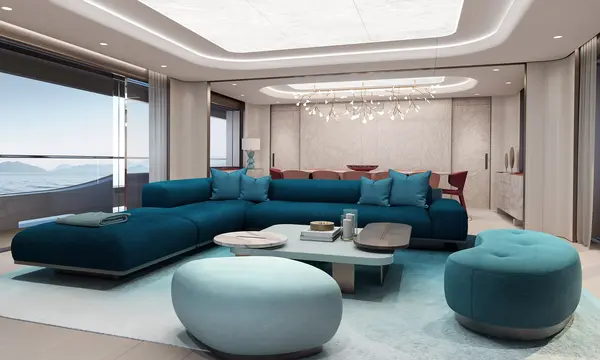
Dixon Yacht Design’s 48.27m Project OXO combines integrated solar generation, hybrid-ready propulsion and a 16-knot aluminium platform with interiors by Design Unlimited.
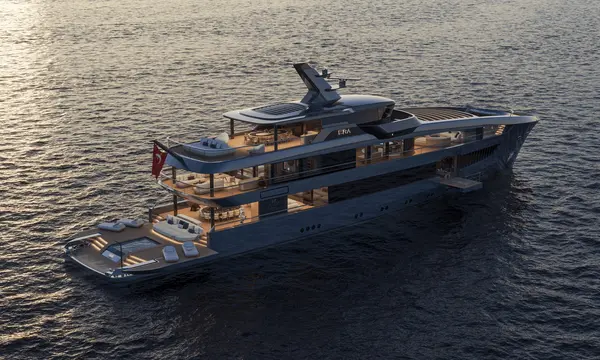
RMK Yachts has revealed the 55m ARCANE ERA, a 499 GT steel-and-aluminium expedition concept by Espen Øino with IPS propulsion and a 5,000nm eco-range …
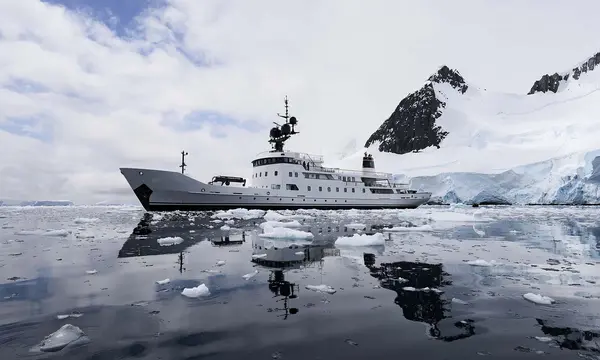
Pendennis details a second major transformation of the 68.8m expedition yacht JESTER, with hybrid propulsion, new machinery and exhaust treatment following her 2023 rebuild.
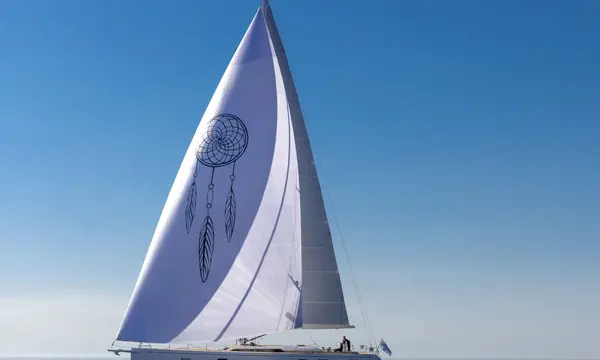
The history and engineering of the 28.27m first hybrid-electric Swan 88 DreamCatcher, with its distinct Nautor hull identity and official 2024 source.
Superyacht Guide
Continue into the wider Superyacht Guide.
Business opportunities · Superyacht Guide
Companies serving the superyacht market can discuss clearly identified advertising, sponsorship and business-profile opportunities. Commercial activity remains separate from independent editorial coverage.