JESTER Antarctic voyage, Pendennis official 2024 newsletter — Ollie Coleman
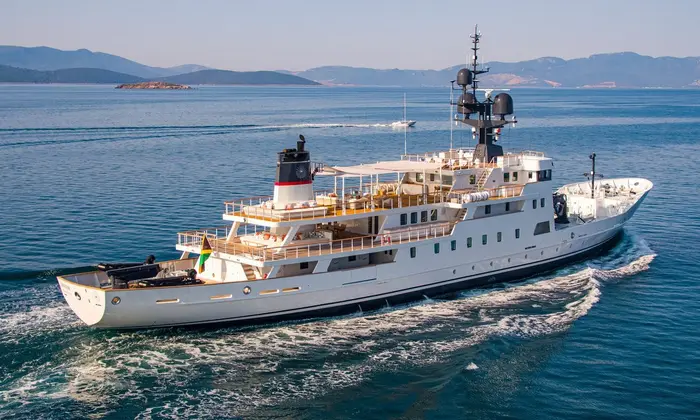
Pendennis details a second major transformation of the 68.8m expedition yacht JESTER, with hybrid propulsion, new machinery and exhaust treatment following her 2023 rebuild.
Pendennis has completed a second major transformation of the 68.8-metre expedition yacht JESTER, replacing her older propulsion arrangement with a hybrid installation intended to make long-distance cruising quieter and more efficient. The Falmouth yard's updated project account describes a new engine, gearbox, electric motor, generators, battery bank, shaft and propeller, alongside exhaust-treatment and control-system changes. It is a substantial engineering chapter for a yacht built in 1972, and distinct from the structural and accommodation rebuild that first brought JESTER back into service in 2023.
The shipyard says the latest installation can propel the vessel under electric power alone at speeds of up to eight knots, with a combined boost mode reaching up to 15 knots. Pendennis also reports an approximately 83 percent reduction in nitrogen-oxide emissions from the exhaust-treatment arrangements. These are builder-reported performance figures, not independently verified operating averages, but they identify the principal engineering aims of the project: lower noise, reduced local exhaust impact, and flexibility in the way a large expedition vessel delivers power.
JESTER retains the identity of the steel-hulled expedition ship constructed by Finland's OY Laivateollisuus in 1972. Pendennis lists her at 68.8 metres overall, with an 11.9-metre beam and five-metre draft. The original builder remains central to the yacht's history; Pendennis is the specialist refit yard responsible for the contemporary transformations, rather than the original builder. This distinction is particularly important for former working vessels, whose accumulated alterations can sometimes obscure their earliest design and construction records.
The new installation follows an unusually extensive earlier period at Pendennis. After changing ownership, JESTER arrived in Falmouth in 2021 for inspection and trials. The yard found that the interior and several existing systems needed considerably more attention than initially anticipated. What followed was a 23-month programme that reworked both how the vessel functioned and how her owners and guests could use her for extended exploration. She departed Falmouth in May 2023 and subsequently supported an ambitious international cruising programme.
During the earlier rebuild, Pendennis replaced approximately 130 tonnes of steel in areas including the hull, main deck and double-bottom tanks. The shipyard also overhauled the original engines and generators, installed new domestic services, electrical wiring, ventilation and fire-suppression equipment, and replaced both the bridge and galley. The interior was rebuilt to designs by RWD, while substantial external changes created facilities suited to expedition use rather than a conventional summer cruising itinerary.
Those additions included a multisports deck, a dive room with decompression chamber, a SOLAS-compliant aft crane and a hydraulically operated cargo hatch intended to handle equipment and adventure gear. The programme also involved re-fairing and repainting the hull and superstructure. None of these alterations turned the vessel into a newly delivered 2023 hull; instead, they demonstrate how a decades-old platform can be rebuilt around a different operational brief, with the original ship remaining the foundation.
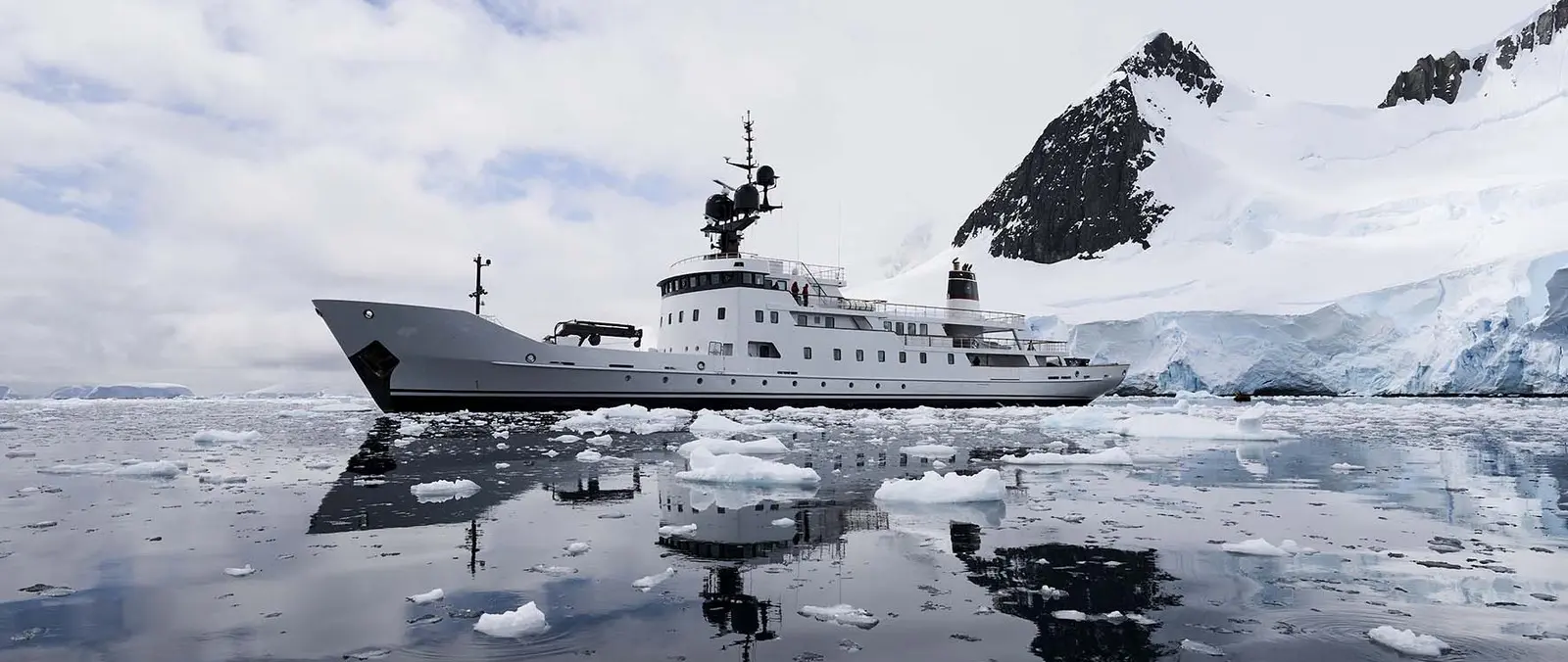
After leaving Falmouth, JESTER and the separately built superyacht INFINITE JEST undertook a programme that included Antarctica. The two vessels travelled in tandem, and their voyage subsequently received the 2024 World Superyacht Awards Voyager's Award. That recognition concerned their expedition programme, not a new-build prize for JESTER. Pendennis points to the voyage as an important illustration of the yacht's post-rebuild capability and the owners' emphasis on reaching remote waters.
The experience also provides context for the later decision to change propulsion. A vessel intended to operate far from familiar maintenance centres must place considerable emphasis on service access, redundancy, endurance and practical operating flexibility. While the awards record establishes that the expedition happened, it does not independently certify every system's efficiency or guarantee future capability in polar conditions. Such voyages still require an appropriately prepared crew, route planning and compliance with relevant operational and environmental rules.
According to Pendennis, the captain returned with a proposal to modernise the yacht's original machinery after a period of global cruising. The yard undertook roughly a year of engineering work, including three-dimensional modelling, naval architecture and systems planning, before JESTER returned to Falmouth in September 2025. A project of this type must coordinate machinery dimensions, shaft alignment, electrical loads, ventilation and structural access before any major existing equipment can safely be removed.
The yard reports that within 20 days of arrival it had removed the original funnel and cut an extraction route through the bridge and upper decks. This allowed the existing Deutz engine and gearbox to be taken out. Such an operation illustrates why repowering a custom yacht can become a shipbuilding exercise rather than a straightforward machinery swap. The route through which large components enter and leave the hull may require temporary changes to the very structure that must eventually protect passengers and crew at sea.
At the centre of the new arrangement are a main engine and gearbox integrated with a PTO/PTI electric motor, new shaft and propeller, two generators, a substantial battery bank and a reworked exhaust system. PTO/PTI is the common abbreviation for power take-off and power take-in: it describes how an electric machine can exchange power with the propulsion train in different operating modes. Precisely how those modes are managed on JESTER will depend on the controls and the conditions in which the vessel is operating.
Pendennis reports electric-only propulsion at up to eight knots. For owners, the significance is not merely that a large yacht can move without using its main diesel engine; the practical questions are how long that operating mode can be sustained, the electrical loads from hotel systems, and when generators or the engine must be brought back into operation. The shipyard has not supplied a public battery-energy capacity, a verified electric-only endurance figure or a measured fuel-saving percentage, so none should be inferred from the quoted speed alone.
The repower also incorporates diesel particulate filtration and selective catalytic reduction, or SCR. These are exhaust after-treatment technologies addressing different pollutant groups, and they require more than simply fitting a new engine. Space, heat management, exhaust routing, maintenance access and the integration of tanks and ancillary equipment all influence whether such systems can be installed effectively aboard an existing vessel.
Pendennis says the system reduces nitrogen-oxide emissions by approximately 83 percent and produces virtually no visible exhaust fumes. Those figures should be understood as the yard's stated technical outcome, rather than a universal emission factor for every operating condition. Actual results depend on propulsion loading, maintenance, operating temperature, the quality of fuel and the calibration and use of the after-treatment installation. The published project material does not support presenting the yacht as zero-emission, or calculating a carbon saving that the builder has not released.
The work was not confined to the principal propulsion components. Pendennis also describes a new stern thruster, improved engine-room ventilation, revised controls and the conversion of a former gym into a master cabin. These additions reveal the practical consequences of bringing contemporary technology into a mature expedition design: systems, circulation and accommodation often have to be reconsidered together rather than independently.
The former engine-room arrangement had to make space for new equipment, while Pendennis fabricated a replacement funnel to restore the external architecture after machinery extraction. An owner considering a comparable refit would need to assess the resulting impact on vessel stability, weight, noise, guest areas, maintenance access and certification. The exact calculations for JESTER have not been made public, and it would be misleading to substitute generic design assumptions for project-specific naval architecture data.
JESTER's relationship with Pendennis has extended beyond a single shipyard stay. Her first rebuilding programme was carried out in Falmouth, and after departing the United Kingdom in 2023 she called at the group's Vilanova facility near Barcelona as part of the transition towards active cruising. Pendennis describes subsequent support for the owner's wider fleet through that Mediterranean operation, showing why the availability of a familiar technical partner along a cruising route can be valuable.
Falmouth remains the centre for the heavy structural and engineering work described in the newest case study. Moving a complicated project between yard planning, component sourcing, fabrication, testing and commissioning places a premium on continuity of knowledge. Staff who understand the earlier replacement of tanks, wiring and accommodation can be better placed to anticipate the effects of a second major systems intervention. That practical continuity is one of the central themes of the relationship described by the yard.
JESTER provides a useful example of the choices facing owners of capable older hulls. A yacht may still offer the range of spaces, basic robustness and expedition character its owners value, even when its original engines and electrical systems no longer meet their expectations. Rebuilding that equipment can be technically complex and costly, yet it may allow an established vessel to serve a substantially different future cruising programme without replacing the ship itself.
The project should not be treated as evidence that every 1970s yacht can be economically converted to hybrid power. The feasibility of any conversion depends on the condition of the hull, available machinery volume, weight margins, system architecture, certification requirements, intended passages and detailed lifecycle costs. It also depends on the owner's priorities: quiet running and lower exhaust impact may matter more than theoretical top speed, particularly during extended time at anchor or voyages through environmentally sensitive waters.
For the Superyacht Guide fleet record, the chronology is now clear. JESTER was built in 1972 by OY Laivateollisuus, underwent a substantial Pendennis rebuild completed in 2023, was associated with the 2024 Voyager's Award after Antarctic voyaging, and received a second major Pendennis transformation centred on hybrid propulsion in 2026. Those are separate milestones, and the original builder should not be replaced with the refit yard in the yacht's structured data.
Pendennis's official JESTER case study is the primary source for the machinery specification, stated electric-only and boost speeds, steel renewal, interior and deck work, and emissions-control claims. Its award history is also documented in the yard's World Superyacht Awards retrospective. Original Pendennis correspondence from November 2024 is preserved in the Superyacht Guide management system as source CRM email 1581. The latest work adds a new engineering milestone to that evidence, without duplicating the earlier voyage announcement or inventing unpublished performance figures.
Explore
Go deeper into the yachts, companies, events and destinations directly connected to this article.
Continue reading
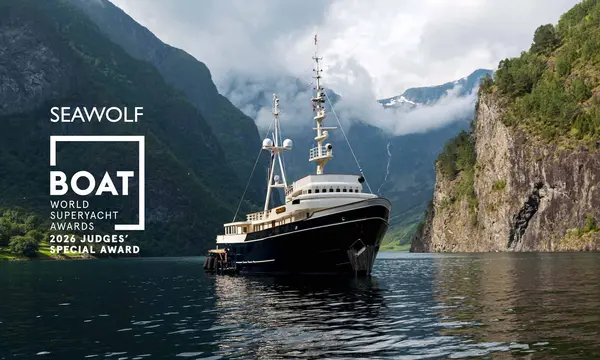
1957 former tug SEAWOLF wins a 2026 World Superyacht Awards rebuild honour after Pendennis hybrid-propulsion, structural and interior transformation.
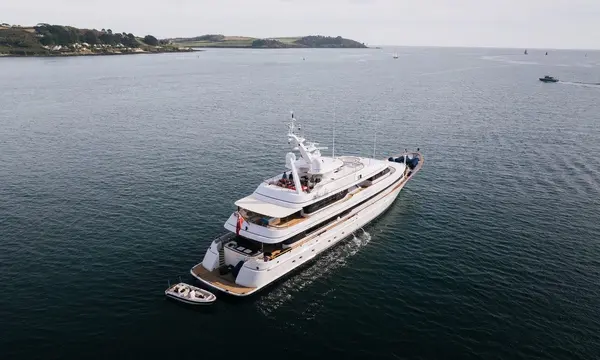
The 57-metre Feadship motor yacht Solace has won Best in Refit at the 2026 International Superyacht Society Design & Leadership Awards, recognising an extensive …
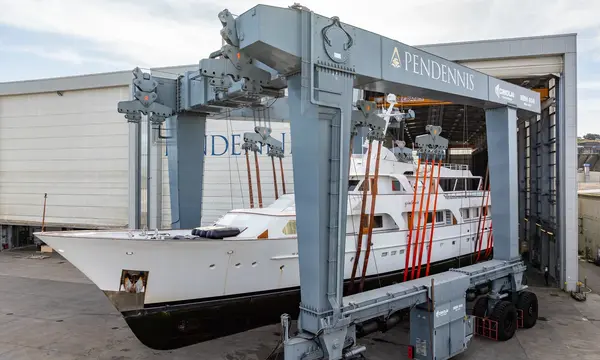
The original 1981 Feadship GIN-TONIC entered an extensive Pendennis refit in 2026. How a four-metre extension, engine change and historic identity are being documented.
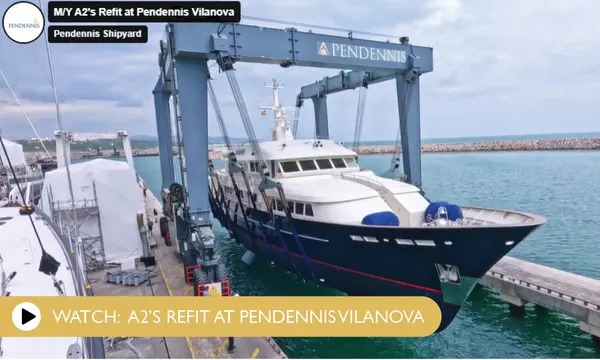
Pendennis Vilanova completed a 2026 refit of the 47m Feadship A2, originally built as CIRCUS II in 1983. Its historic rebuild and correct yacht …
Superyacht Guide
Continue into the wider Superyacht Guide.
Business opportunities · Superyacht Guide
Companies serving the superyacht market can discuss clearly identified advertising, sponsorship and business-profile opportunities. Commercial activity remains separate from independent editorial coverage.