Daino Technologies and Amer Yachts Prepare Shipyard Scheduling Pilot
By Stephen Yardley · Edited by Stephen Yardley
Daino Technologies is introducing algorithm-driven planning at Amer Yachts' Pisa site, with an Amer 106 construction programme identified for a pilot.
Daino Technologies is preparing a production-planning trial with Amer Yachts at the builder's Pisa facilities, using an Amer 106 project as the initial test. The collaboration was announced ahead of an intended October 2026 start. It addresses a practical difficulty familiar to many yards: production schedules, purchasing records and the actual state of work onboard often live in separate systems, leaving managers to reconcile changes after delays have already developed.
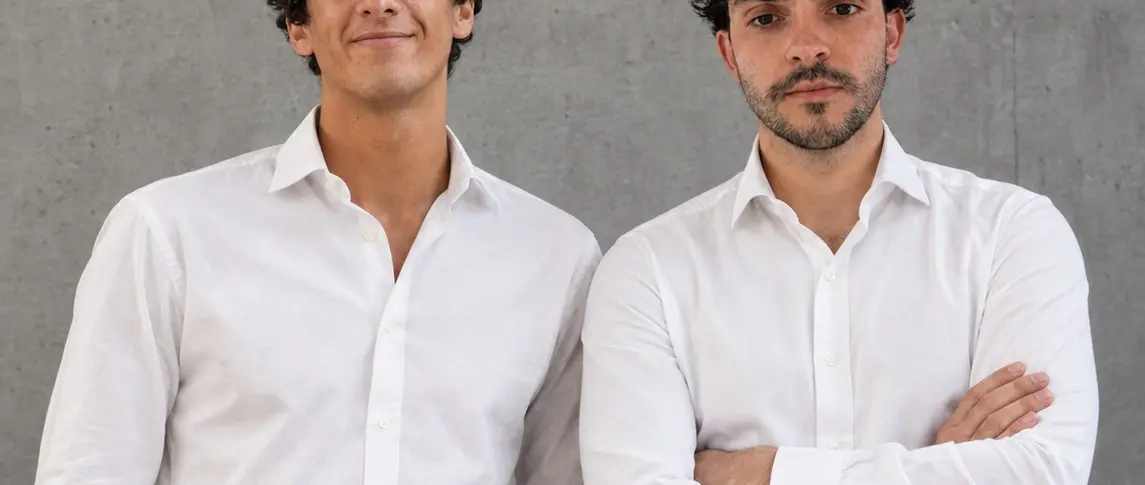
The technology company's founders, engineers Giulio Maria Santonico and Paolo Pascarelli, have drawn on mathematical optimisation work and experience from other industrial settings. For custom yachts, the challenge is particularly difficult because low-volume production combines many specialist trades, changing owner instructions and interdependent tasks inside confined spaces.
Daino describes a three-layer platform. The first creates a shared view of the build, combining tasks, resources and progress in a single digital environment. The second uses operations-research algorithms to calculate how jobs could be sequenced, subject to constraints such as labour availability, equipment, materials and the order in which spaces can be accessed.
The company says even planning work within one machinery space can involve an enormous number of possible task combinations. This is where optimisation software differs from a simple calendar: it can evaluate multiple constraints and propose alternatives when part delivery, inspections or other activities do not proceed as expected.
The third layer allows people working on the yacht to flag a problem using an ordinary-language message, voice note or photograph. Daino uses AI to interpret and organise those reports, while the underlying mathematics handles scheduling. That separation is significant because probabilistic language systems are not appropriate substitutes for hard engineering constraints and numerical optimisation.
For example, if an equipment installation cannot proceed until a structural or electrical task has been signed off, the system could identify which other work can move ahead without creating a clash. This illustrates the proposed method rather than a specific result that has already been observed at the Amer yard. Site managers would still decide how to change the programme.
Daino reports modelled reductions of up to 20 per cent in processing time and potential cost savings of five to ten per cent. These figures come from simulations and applications in other industrial environments. There is not yet evidence that the Amer 106 pilot has delivered equivalent savings, and presenting those percentages as achieved shipyard results would be misleading.
The distinction matters because a custom yacht has different production economics from high-volume manufacturing. A single delayed component, owner-requested change or specialist subcontractor can reshape a schedule. Any credible measurement will need to compare an actual Amer build programme against a defined baseline, accounting for those differences.
Santonico argues that optimisation becomes more valuable when a yard manages several projects competing for the same workshops, lifting equipment and specialist personnel. Planning each hull independently can hide conflicts between contracts until they arrive in the same production week. A programme-level view could allow the yard to anticipate them earlier.
The founders emphasise that the software is intended to support craftsmen and project managers rather than turn bespoke yacht construction into an assembly line. For Amer Yachts, the meaningful future result will be a transparent account of what the pilot improved, what it failed to anticipate and whether the methods could work across more than one yacht.
Explore
Go deeper into the yachts, companies, events and destinations directly connected to this article.
Continue reading
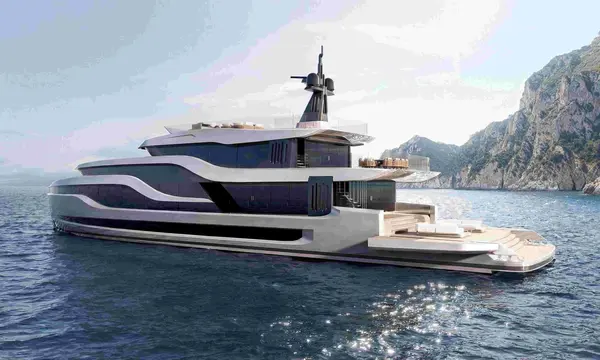
Amer Yachts is linking access to financing to verified ESG indicators through a programme involving BPER Banca and RINA.
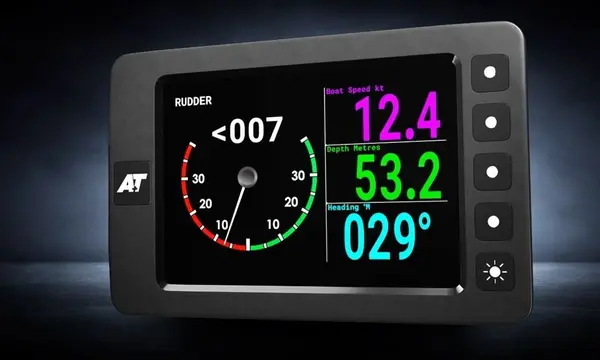
A+T Instruments has unveiled a five-inch HFD5 transflective colour display with NMEA 2000 connectivity, physical controls and Wi-Fi software updates.
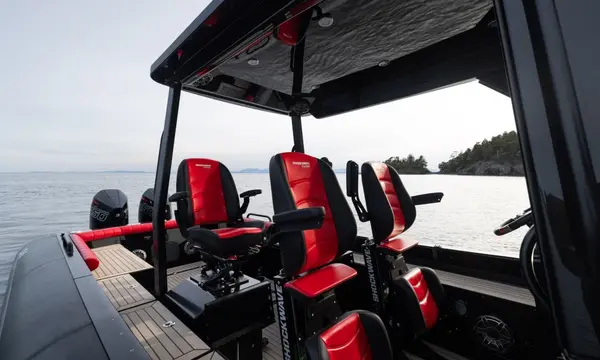
Shockwave Seats is presenting cushioned marine seat bases with 100mm vertical and 38mm forward movement for rough-water applications including superyacht tenders.
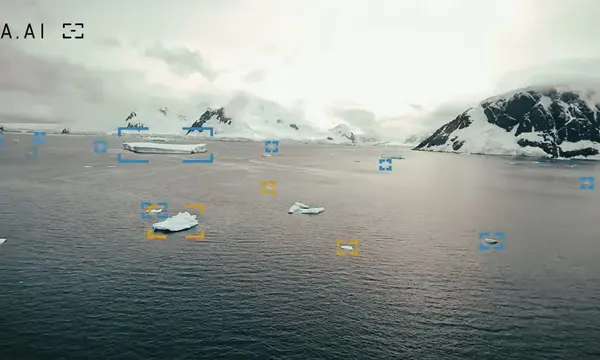
SEA.AI is using images gathered by the Malizia Explorer Antarctic expedition to improve computer-vision recognition of icebergs and semi-submerged sea hazards.
Superyacht Guide
Continue into the wider Superyacht Guide.
Business opportunities · Superyacht Guide
Companies serving the superyacht market can discuss clearly identified advertising, sponsorship and business-profile opportunities. Commercial activity remains separate from independent editorial coverage.