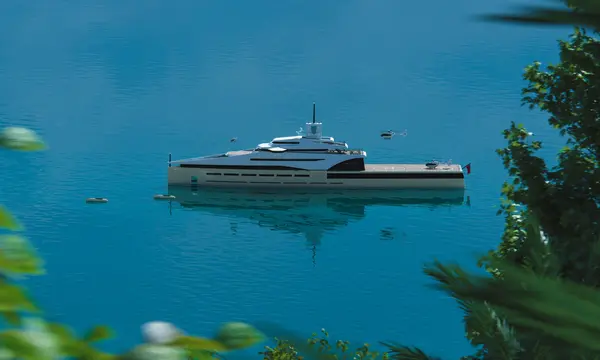
Alexander McDiarmid Details 130m GEx Four-Helicopter Concept
Alexander McDiarmid Design’s GEx proposes a 130m ice-class explorer with dual flight areas and below-deck helicopter hangars.
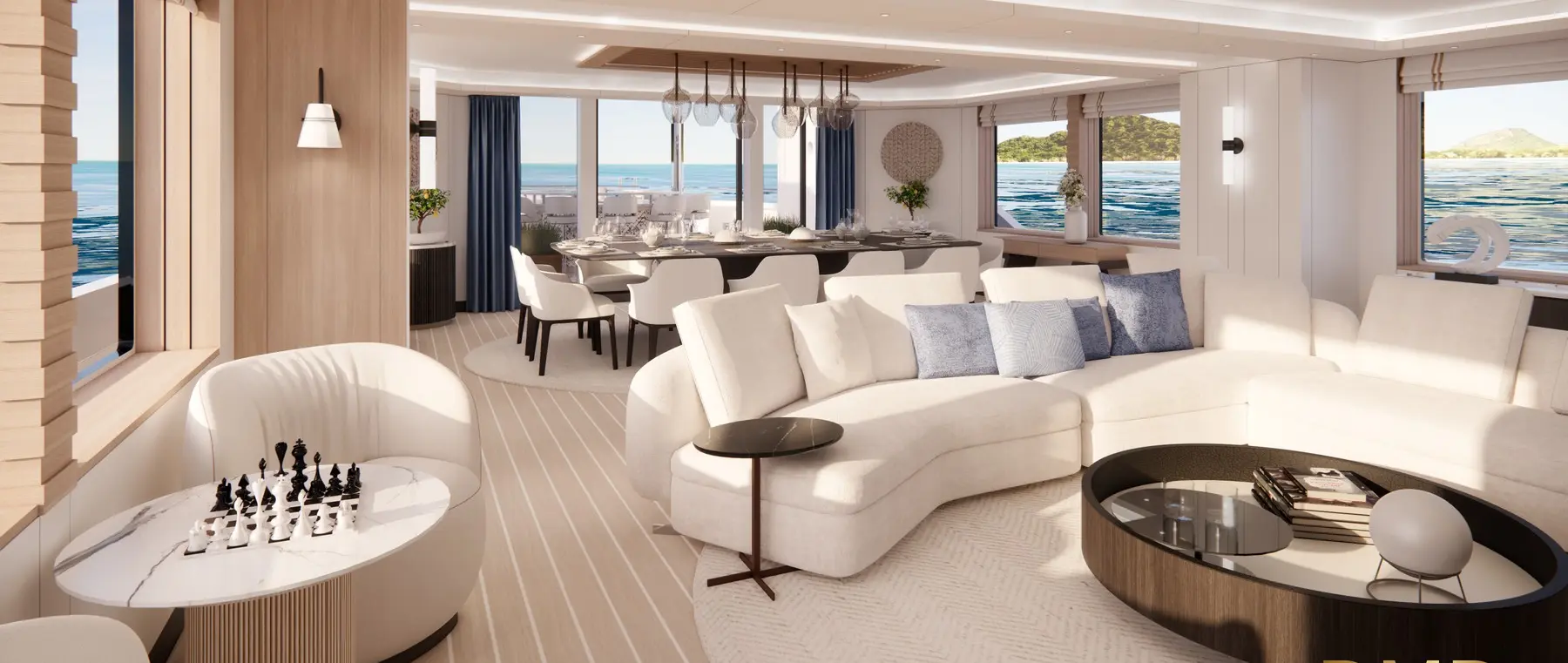
Image: Dasha Moranova Designs official studio project imagery; PressMare interview of 12 October 2026
Dasha Moranova Designs reports two superyacht builds, recently completed 50m-class refit work and further winter projects while outlining the studio's people-first design approach.
Amsterdam-based Dasha Moranova Designs says it is handling two superyacht new builds, has recently completed an approximately 50-metre refit and expects two more refit programmes during the coming winter. Founder and creative director Dasha Moranova described the workload during a Monaco Yacht Show interview published on 12 October, offering an update on a studio whose approach to interior design places the owner’s daily experience ahead of visual spectacle.
The seven-person practice is preparing to expand and open another office in central Amsterdam, according to the interview. No names, prices or delivery dates were disclosed for the two current new builds in that account, and it would be misleading to treat the statement as an announcement of freshly signed yacht contracts. The relevant news is the scale of activity the studio itself has described and the design philosophy guiding those projects.
Moranova has approximately two decades of design experience, including earlier work involving Blue Ocean Yacht Management, Terence Disdale Design and Winch Design. The independent studio is associated with projects at both concept and build stages, including Lürssen’s 98-metre Alice design exercise, a project presented in 2021 rather than a vessel delivered to an owner.
The designer’s central proposition is that interiors should respond to the way guests move, rest, work and spend time together. Lighting, proportions, fabrics, acoustics and finishes can create a feeling of calm, but each element needs to function as part of the complete yacht rather than as an isolated decorative choice.
This matters particularly on larger yachts where different activities share the same structure: a guest might want privacy while the crew prepares for dinner, or a family may use a saloon for entertainment one evening and quiet reading the next. Movable furniture, thoughtful routes between rooms and independent climate or lighting controls can make those changes easier without adding unnecessary complexity.
Material choices also affect performance. Natural wood, stone, glass and metal offer contrasting tactile qualities, but they must withstand vibration, salt air, humidity and the service demands of a vessel that is constantly moving. A successful scheme balances emotional appeal with maintenance access, fire safety, cleaning requirements and the weight calculations of the naval architect.
The argument therefore extends beyond building larger exercise rooms or adding fashionable wellness equipment. An owner is more likely to benefit from an interior that can accommodate rest, private conversation and daily routines without requiring constant adjustments from the crew.
One illustration of Moranova’s thinking is Senses, an 83-metre design concept developed alongside British naval architecture firm Lateral Naval Architects. Dasha Moranova Designs explored the possibilities of Lateral’s Free From Bulkheads platform, which places particular attention on reorganising how watertight division and usable spaces can be arranged on the lower deck.
In the conceptual arrangement, visitors move through a wellness area with broad outward views close to the sea. The programme envisages a Finnish sauna, steam room, meditation and cryotherapy facilities, massage loungers and discreetly integrated digital controls. The studio has also discussed a gym incorporating artificial-intelligence-assisted functions, but no operational performance or medical outcomes have been established for these conceptual features.
The engineering and interior-design roles are separate and important. Lateral’s architectural platform supplies the technical starting point, while DMD develops the experiential layout, materials and atmosphere. The visualizations show design possibilities and should not be mistaken for photography of a completed superyacht. Any final ship would require its own safety, stability and class approval processes.
An ambitious design concept is useful when it allows owner representatives to test what they value before committing to construction. It can reveal conflicts between circulation, technical areas and privacy early enough for solutions to be explored without the expense and disruption of reworking a completed space.
Moranova also points to Aurai, her interior proposal for Oceanco’s Simply Custom programme, as an example of how substantially different moods can be created from a shared spatial arrangement. The design offers three approaches to finishes and atmosphere, demonstrating that personalisation does not always require reinventing every bulkhead or window position.
The broader industry question is how designers translate the increasing emphasis on wellbeing into repeatable, reliable details. Crew need understandable controls and accessible technical spaces, refit yards need realistic materials and installation plans, and owner representatives need to know which parts of a design are proven installations and which remain visual or engineering studies.
For refits, this distinction is even sharper. An existing vessel imposes limits on structural alterations, electrical capacity and service routes, so worthwhile improvements may begin with sound insulation, lighting, ergonomic furnishings or a better arrangement of familiar rooms rather than the wholesale introduction of elaborate new equipment.
The latest interview puts that balance at the centre of DMD’s next phase of growth. It does not establish a new 83-metre Senses build or confirm the identities of confidential clients; it shows how a working superyacht studio is applying ideas about comfort, sensory design and discreet technology to both new construction and the existing fleet.
Continue reading
Alexander McDiarmid Design’s GEx proposes a 130m ice-class explorer with dual flight areas and below-deck helicopter hangars.
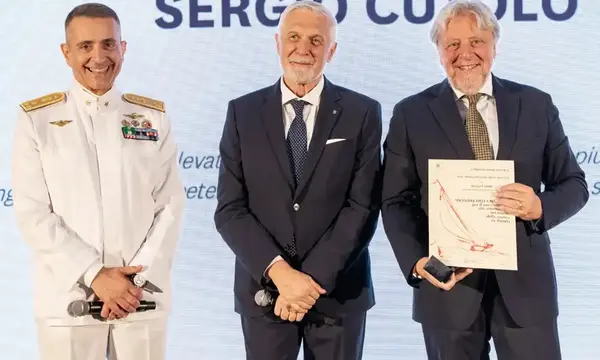
Hydro Tec founder Sergio Cutolo was recognised by Confindustria Nautica in June 2026 for four decades of naval architecture and explorer-yacht design.
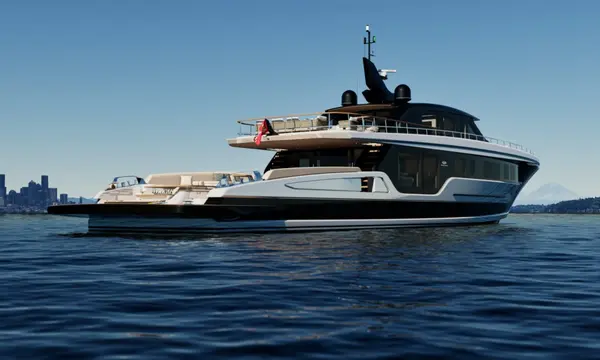
Delta Marine’s proposed 125-foot Longtail brings Roberto Curtò’s sculptural styling to a Seattle-built custom-yacht concept with a large aft pool and outdoor living space.
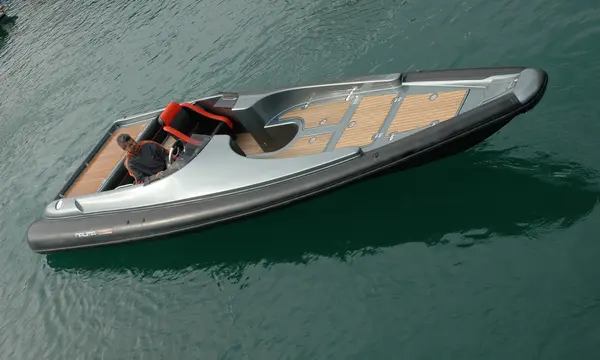
Naumatec's redesigned 7.98m Freccia 800 combines sports-tender performance with a more relaxed guest layout, after its presentation at the 2026 Monaco Yacht Show.
Superyacht Guide
Continue into the wider Superyacht Guide.
Business opportunities · Superyacht Guide
Companies serving the superyacht market can discuss clearly identified advertising, sponsorship and business-profile opportunities. Commercial activity remains separate from independent editorial coverage.