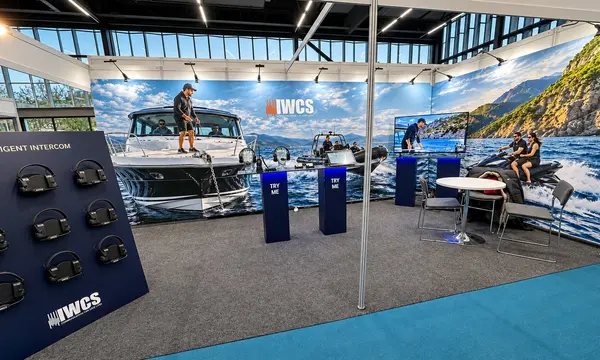
IWCS Reviews Yacht Communications Demonstrations at METSTRADE
IWCS describes three days of product demonstrations and new marine communications contacts at METSTRADE 2026, thanking its distributors and confirming plans for 2027.
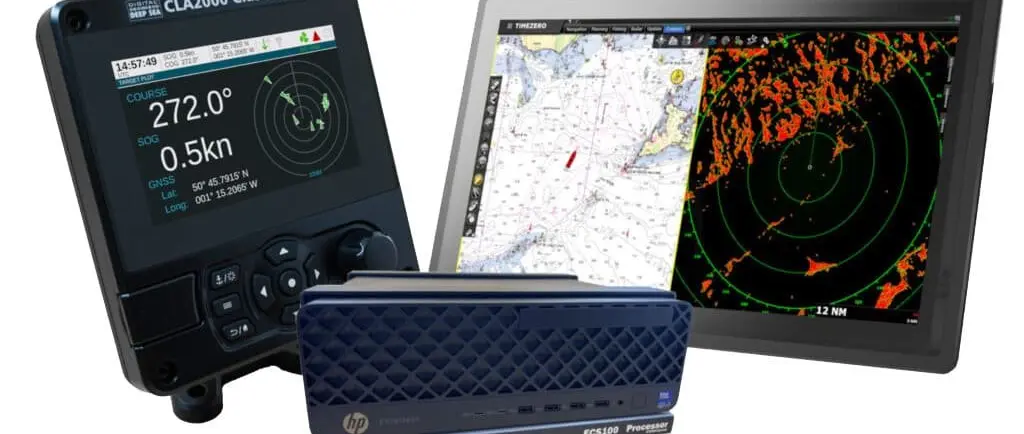
Digital Yacht / Digital DeepSea, original manufacturer product photograph from official 26 November 2026 WorkBoat Show news announcement.
Digital DeepSea previews ECS1000 commercial electronic charting, AIS systems, NMEA 2000 diagnostics and remote yacht monitoring at the forthcoming New Orleans WorkBoat Show.
Digital DeepSea, the commercial marine division of Digital Yacht, has announced that it will exhibit a set of navigation, tracking, diagnostics and remote-monitoring products at the International WorkBoat Show in New Orleans from 2 to 4 December 2026. The company's announcement, published on 26 November, names its ECS1000 electronic chart system, professional AIS equipment, NavDoctor Pro diagnostics and NjordLink+ connected monitoring among the products it intends to demonstrate at booth 3771.
The programme is aimed principally at commercial craft, but the company's own release specifically includes superyachts among the vessels for which professional electronic charting may be relevant. That makes the announcement of interest to yacht owners, captains and engineers considering equipment beyond a conventional recreational multifunction display. It is not an announcement that every yacht must fit a particular device or that a single electronics package is approved for all flags and operating areas.
The WorkBoat Show takes place in New Orleans on 2–4 December, with Digital DeepSea planning to meet customers at booth 3771. The manufacturer presents the event as an opportunity to discuss its specialist commercial range, including electronic navigation, Automatic Identification System equipment and technical monitoring. For a supplier serving different vessel types, such a gathering provides access to workboat operators, integrators and other buyers whose equipment decisions are shaped by operational reliability.
Superyacht projects may draw on similar technologies for different reasons. Some owners want clearer integration between the bridge and shoreside team; others are evaluating commercial-grade navigation systems for a particular operating pattern. The practical issue is not the exhibition location but the interaction between equipment capability, applicable rules, crew training and onboard maintenance. An operator should start with the yacht's intended use before assessing whether an individual product is suitable.
Digital DeepSea highlights its ECS1000 electronic charting product and says that some jurisdictions require certain commercial craft to use approved electronic chart systems rather than ordinary recreational chartplotters. Its release lists tugs, pilot boats, fishing vessels and superyachts among potential applications. The manufacturer describes ECS1000 as a combination of PC and display hardware with charting software intended to meet specified commercial requirements without adopting the full scale of a conventional ECDIS installation.
The company statement should not be read as a universal legal conclusion. Requirements depend on vessel classification, flag, trading area and the regulations applicable to the ship. A captain or project team would need to obtain the exact approval documents and confirm acceptance by the relevant authority. The product announcement is useful evidence of what Digital DeepSea is promoting, but not a substitute for a vessel-specific compliance determination.
Navigation electronics are often selected alongside bridge layout and other communications equipment. A modern superyacht may need to accommodate different displays, sensors and routes for data exchange, while retaining clear human supervision of navigational decisions. A product marketed for commercial charting must therefore be evaluated for the quality and currency of its information, reliability of its hardware, operational ergonomics and the practical demands of maintaining it.
Even where a specific device is accepted for the intended operating context, crew competence remains essential. Watchkeepers need to understand how alarms behave, how charts are updated and what happens if a screen or its data feed becomes unavailable. These considerations cannot be solved through a purchase alone. Equipment selection is the beginning of an installation, testing and training process that ultimately determines whether the system contributes to safer operations.
The company's presentation includes professional AIS products and coastal surveillance solutions. Its website refers to Class A and Class B+ transponders, an AIS and TIMEZERO monitoring system, and AIS Deploy, a rugged portable unit intended for rapid deployment in professional or government contexts. These are different categories of application. A fixed shipboard transponder, a portable device and a shoreside monitoring arrangement should not be treated as interchangeable simply because each uses AIS-related information.
On a superyacht, reliable AIS integration has relevance to situational awareness, equipment management and the flow of information between systems. Proper operation also depends on the applicable radio and installation requirements. The information transmitted by other vessels has its own limitations and cannot replace a professional lookout, radar assessment or prudent seamanship. The practical value of an electronics upgrade depends on how the equipment fits into the vessel's broader navigation procedures.
Digital DeepSea also says it will show NavDoctor Pro, a product designed to examine NMEA 2000 network data and help identify potential faults. The manufacturer describes continuous monitoring, alerts and diagnostic tools intended to reveal device issues or abnormal messages. That may be of interest where a yacht's network connects numerous pieces of bridge and technical equipment, making intermittent problems difficult to reproduce during a short inspection.
The important advantage proposed by the supplier is better visibility into the system rather than a guarantee that faults will disappear. A monitoring tool may help engineers investigate a recurring alert, but only if its readings are interpreted correctly and the underlying network has been installed according to the applicable standards. Operators should verify what protocols and devices are supported, what the diagnostic records contain and how a technician can use those records without exposing sensitive onboard information.
The announcement introduces NjordLink+ as a gateway associated with the company's Njord Cloud remote-monitoring platform. Digital DeepSea describes universal NMEA connectivity, real-time alerts, stored data and analysis capabilities. This illustrates the industry's continuing shift towards connected equipment, in which technicians may be able to examine system information without waiting to board the vessel at its next port.
A connected solution also creates governance questions. The yacht's management team should know which information is sent ashore, who may access it, how long it is retained and how communications are protected. A system that helps a shore technician diagnose an intermittent sensor problem may be valuable, but the same connection should be designed with an appropriate cyber-risk assessment. Remote access is not simply an optional convenience when it touches operational data.
The manufacturer positions Digital DeepSea as the commercial part of Digital Yacht, reflecting a distinction between leisure electronics and systems developed for professional use. Large privately operated vessels can sit at the intersection of those markets. Their bridges may be highly sophisticated, but owners also expect integration, discreet styling and user-friendly interfaces. A component suited to a fishing vessel or pilot boat should be assessed on its merits rather than assumed appropriate or inappropriate because of its original customer base.
This overlap also works in the opposite direction. Technology originally made accessible to recreational users can influence commercial systems, particularly in networking and remote access. What matters to yacht managers is whether the final combination offers the right data quality, service support and regulatory position for their vessel. Marketing categories can guide early enquiries, but the ship's actual operating requirements should determine equipment choices.
New bridge electronics often interact with existing sensors, cabling, software and displays. When equipment is upgraded during refit, a nominally straightforward replacement may reveal incompatibilities that are hidden from a catalogue description. An integrator may need to consider bandwidth, data priorities, redundancy, power protection and the division between primary navigation and auxiliary information systems.
These questions are especially significant for yachts that have undergone successive generations of electronics upgrades. A new network-monitoring device may reveal legacy problems, but it does not itself resolve incompatible wiring or configuration. A reliable outcome requires a documented system architecture and an agreed commissioning plan. The product chosen should be one part of that process, with the responsible marine electronics specialist retaining oversight of installation and testing.
A yacht that cruises internationally may encounter a technical fault far from the supplier or the shipyard that completed the original work. Equipment documentation, spare-part availability, software updates and access to competent service technicians then become practical selection criteria. Digital DeepSea's event is an opportunity for commercial customers to ask about those capabilities before placing orders for individual systems or a wider bridge upgrade.
Owners should also consider the difference between a laboratory demonstration and a product installed on an operating yacht. Documentation should explain how updates are handled, which components need calibration or inspection and what a crew member should do when a monitored service becomes unavailable. Those details may be less dramatic than a new product name, yet they strongly influence the effectiveness of modern onboard technology.
The confirmed news is that Digital DeepSea published a 26 November preview of its participation at the upcoming New Orleans WorkBoat Show and identified ECS1000, AIS systems, NavDoctor Pro and NjordLink+ among its intended demonstrations. The source gives a clear event date, booth number and broad product lineup. It does not report that these products have been newly installed on a particular superyacht or that their exact approval status is identical in every jurisdiction.
For the superyacht industry, the announcement reflects a relevant convergence between commercial marine technology and large-yacht expectations. Captains and engineers increasingly work with interconnected navigation and technical systems whose reliability can be improved through careful integration and sensible diagnostics. The value of a forthcoming trade-show demonstration lies in what it enables project teams to verify, not in unsupported predictions about how quickly a product will be adopted.
The principal source is Digital DeepSea's official 26 November 2026 WorkBoat Show announcement. Product capabilities, intended markets and compliance-related descriptions are attributed to the manufacturer. Applicable legal requirements must be confirmed for each specific vessel; this report does not assert a blanket chart-system mandate for all superyachts.
The accompanying photograph shows the manufacturer's ECS1000 commercial electronic charting equipment, supplied through Digital Yacht's own official news-page media assets. It is credited to Digital Yacht/Digital DeepSea and presented as a company product image, not a photograph of a named superyacht installation. No AI-generated illustration or third-party editorial photograph has been used.
Continue reading
IWCS describes three days of product demonstrations and new marine communications contacts at METSTRADE 2026, thanking its distributors and confirming plans for 2027.
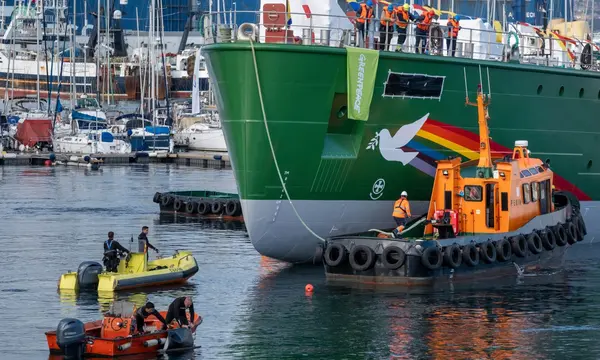
Greenpeace's 75-metre wind-powered campaigning and research ship has floated out at Freire Shipyard in Vigo, combining a DynaRig concept with hybrid onboard energy systems.
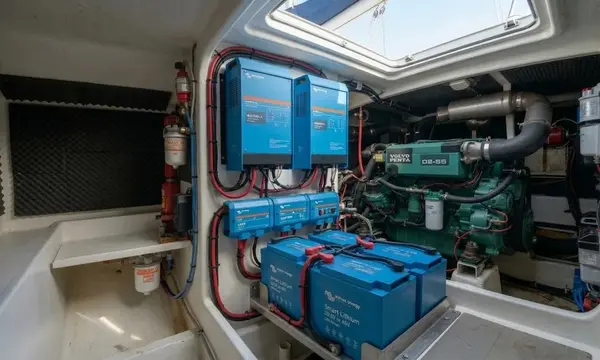
Valencia-based Mediterranean Yachts Solutions describes how 48V batteries, solar panels and high-output alternators may reduce generator use on suitable smaller boats.
AMIT Marine Services reports its 2026 Abu Dhabi International Boat Show appearance, outlining five marine technology and safety sectors and its international brand partnerships.
Superyacht Guide
Continue into the wider Superyacht Guide.
Business opportunities · Superyacht Guide
Companies serving the superyacht market can discuss clearly identified advertising, sponsorship and business-profile opportunities. Commercial activity remains separate from independent editorial coverage.