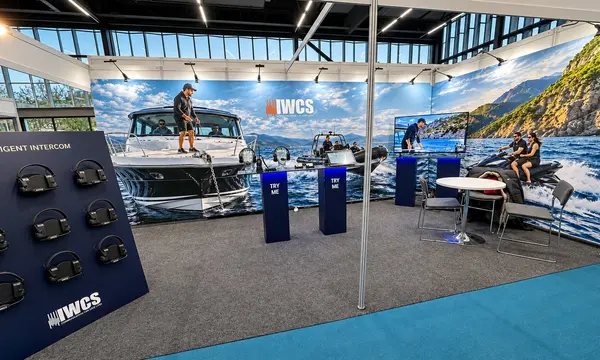
IWCS Reviews Yacht Communications Demonstrations at METSTRADE
IWCS describes three days of product demonstrations and new marine communications contacts at METSTRADE 2026, thanking its distributors and confirming plans for 2027.
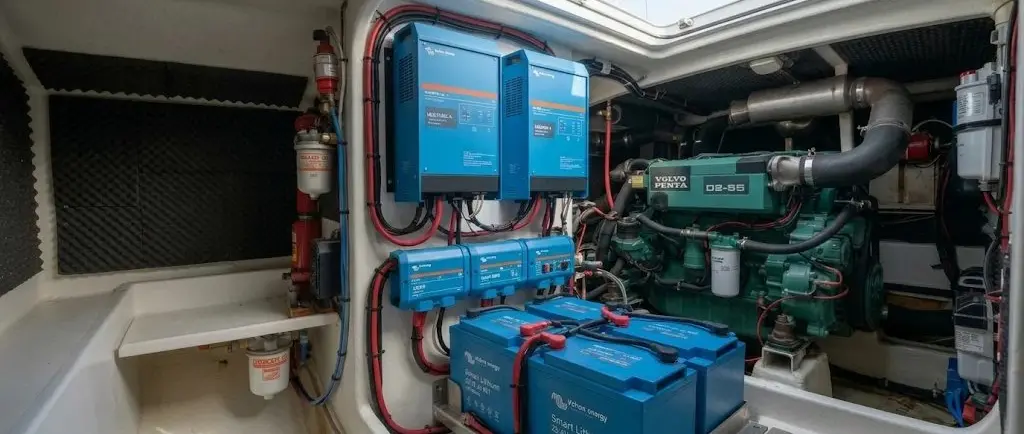
Mediterranean Yachts Solutions official photograph of installed marine electrical equipment.
Valencia-based Mediterranean Yachts Solutions describes how 48V batteries, solar panels and high-output alternators may reduce generator use on suitable smaller boats.
Mediterranean Yachts Solutions, a Valencia-based marine systems integrator, has published a technical discussion of 48-volt electrical arrangements that can reduce generator running on suitable sailing yachts and catamarans. Its 26 November 2026 article describes a combination of lithium batteries, solar generation, high-output alternators and inverter-chargers. The supplier presents the arrangement as an alternative to running a conventional generator for every domestic load while a boat is at anchor.
The important limitation is vessel size. The company's examples centre on smaller sailing craft and catamarans, rather than the hotel and technical power demand of a 60-metre superyacht. Its recommendations may nevertheless be relevant to large-yacht designers examining tenders, auxiliary systems or more efficient onboard energy management. This is a supplier's contemporary technical explanation, not proof that diesel generators have become unnecessary across the superyacht fleet.
The supplier describes a lithium battery bank, compatible charge and discharge equipment, solar panels and charging from the propulsion engines. An inverter converts battery power to the alternating-current supply required by selected domestic appliances, while DC-to-DC converters support existing 12- or 24-volt services. In principle, these elements allow several sources of energy to serve a common storage system, subject to careful engineering and appropriate protective equipment.
The arrangement depends on correct coordination. A system can have sufficient battery energy for a particular overnight load but insufficient inverter output for simultaneous appliances. Charging may also be limited by solar exposure, engine use and wiring. A properly sized installation needs both a power calculation and an energy calculation, since peak demand and the total electricity consumed over time are different questions.
At a given power level, using a higher voltage reduces the current required compared with a 12-volt distribution system. Mediterranean Yachts Solutions uses this point to explain potential cable, heating and equipment advantages. It also notes that lithium battery modules may have a nominal voltage around 51.2 volts, illustrating why the term 48V describes a system class rather than a fixed voltage present at every moment.
Current reduction can be useful when supplying large loads over significant cable runs. It does not automatically make a design cheaper or safer in every circumstance. Battery chemistry, fault currents, cable protection and equipment compatibility all need professional attention. The supplier's claims provide a starting point for understanding the architecture, but a marine electrician must confirm the actual installation and applicable standards.
The company identifies Victron lithium batteries and MultiPlus-II inverter-chargers among the equipment it installs. Such devices can combine several electrical functions, including conversion between direct and alternating current and management of charging. The value of an integrated system lies partly in knowing the condition of the battery and the source of incoming power, rather than operating individual components without coordination.
A buyer should establish the specific device ratings and configuration required for the boat. The presence of a familiar brand does not determine the outcome on its own. Monitoring, protection and correct commissioning are as important as the name printed on an inverter. A technical comparison should look at the complete electrical diagram and documented loads, including what happens when one component fails.
Solar generation can contribute electricity while a vessel is stationary, but production depends on weather, orientation, shadows and available surface area. The supplier describes rigid panels fitted to an arch and flexible alternatives on a deck or bimini. Each installation involves compromises involving access, structural support, cooling and maintenance, particularly on a moving boat exposed to saltwater.
For superyacht tenders, the challenge may be finding enough unobstructed space without compromising boarding or deck safety. On a larger yacht, a solar contribution may still be modest compared with the continuous demand of air conditioning and other hotel services. Calculations should use realistic daily generation estimates rather than simply multiplying a manufacturer's peak panel rating by the number of sunshine hours.
Mediterranean Yachts Solutions places emphasis on high-output 48V alternators that can replenish a domestic battery bank while the boat's propulsion engine is running. The article discusses equipment in the approximate six-to-nine-kilowatt class and illustrates how charging performance changes with engine revolutions. These are examples supplied by the installer, not test results from an unspecified superyacht or guarantee that every engine can support the same arrangement.
Alternator upgrades require careful consideration of mechanical drive capacity, belt loads, cooling, wiring and engine-manufacturer constraints. A captain also needs to account for the energy cost of charging batteries through the propulsion engine. Running an engine to charge a battery can be worthwhile in some situations, but the appropriate comparison depends on efficiency, operating hours and the alternative sources of power available on board.
Lithium storage is usually described in energy terms, while a domestic appliance consumes power at a particular rate. A battery bank that can briefly supply several high-demand loads may not sustain them for a whole night. The supplier's technical article encourages owners to size storage around their actual air-conditioning, galley and refrigeration requirements. This is more reliable than assuming a system will be quiet at anchor simply because it contains many batteries.
An assessment should consider the permitted depth of discharge, inverter losses, temperature effects and the reserve needed for essential systems. On a professionally operated yacht, critical services should not depend on an optimistic estimate of how long guests will use domestic equipment. Careful monitoring is a practical benefit, but only when the crew understands the thresholds and planned response if the battery reserve falls.
An upgrade to a higher-voltage domestic system need not require every existing instrument and pump to be replaced. The supplier describes using DC-to-DC converters to maintain 12- and 24-volt circuits from the higher-voltage storage system. This can make a retrofit more manageable, although the design still needs electrical isolation, appropriate fusing and a documented strategy for the failure of a converter.
The practical question is which loads should be transferred to the new system and which should remain on existing distribution. A tender may need independent essential services for navigation and communications. The use of conversion equipment creates new dependencies that must be identified during commissioning. The best approach is not always the most technically complex one; it is the configuration that crews can understand and maintain safely.
The company's explainer argues that 48V operation can be advantageous over supplying very high current at 12V. The general comparison is understandable, but a higher-voltage lithium installation still contains substantial stored energy. Electrical faults, battery protection failures and unsuitable wiring can create serious hazards even when the nominal voltage is below levels associated with some other electrical installations.
Safety therefore has to be engineered into the entire arrangement. Batteries, cables, isolation devices, ventilation where required and fire-response procedures should be selected with competent professional advice. It would be misleading to state that a 48V system is inherently safe in any boat simply because the nominal voltage is lower than a typical mains supply. The relevant standards and practical installation environment remain decisive.
The strongest owner-facing attraction is quieter anchoring when batteries and solar power can support selected domestic equipment without a generator running. Reduced machinery noise may make a noticeable difference to guests on a smaller boat, while the owner may also value lower generator maintenance hours. Actual fuel and emissions savings depend on the energy that is displaced and the means used to replenish storage.
For a superyacht, multiple generators and sophisticated hotel systems may be necessary even when battery storage is available. A smaller-boat example should not be presented as a direct substitute for that infrastructure. More credible applications may involve reducing the frequency of a particular auxiliary generator operating, or improving electrical efficiency on a tender that has a much smaller accommodation load.
The supplier describes remote or local monitoring of charging, battery discharge and other system measurements. Digital information can be valuable for engineers trying to understand why electrical demand changes at different times of day. It may also make it easier to plan energy use while guests are ashore or a tender is being prepared for another journey.
Monitoring should not be confused with automatic protection from every fault. Alarm thresholds, battery-management functions and crew procedures all need to be configured and tested. Owners may appreciate an attractive phone display, but technical staff must have access to authoritative information and a safe manual response when required. A good installation provides clarity without introducing unnecessary reliance on a single connected device.
Before applying the same ideas to a larger yacht or one of its service craft, engineers should establish realistic electrical loads and decide whether the intended batteries, inverters and alternators have sufficient capacity. They would then need to examine space, weight, charging provisions, heat management and failure modes. A battery retrofit can introduce structural and safety questions that are not apparent from a simple schematic.
Regulatory responsibilities also differ by vessel size and operating status. A professionally operated superyacht may need to follow classification, flag and electrical standards that are more demanding than those assumed in a recreational boating guide. The supplier's November update is useful evidence of one practical approach, not an approved design for every yacht. Independent engineering remains indispensable.
Mediterranean Yachts Solutions published a technical explanation of combining 48V lithium storage, solar, alternator charging and inverter equipment to reduce dependence on a standalone generator in suitable applications. It identifies itself as a Valencia-based Victron installer and discusses commissioning and monitoring. The article does not report the delivery of a newly named superyacht with this system or supply independently verified savings for a particular fleet.
The significance for the superyacht audience is the wider discussion about flexible electrical architectures and the potential use of smaller integrated systems aboard tenders and auxiliary craft. Any application to the main electrical plant of a very large yacht should be assessed independently rather than assumed from the supplier's small-boat examples. This framing preserves the practical value of the update without exaggeration.
The principal source is Mediterranean Yachts Solutions' original 26 November 2026 technical article. The product examples, equipment brands and efficiency arguments are attributed to the company. Limits on transferability to large yachts are explicit editorial analysis rather than new measurements of a superyacht installation.
The accompanying photograph comes from the supplier's own technical page and shows actual marine electrical equipment in an installation environment. It is credited to Mediterranean Yachts Solutions and does not purport to be a specific unnamed superyacht, an image from a competitor's publication or an AI-generated visual. No unrestricted photographer licence is inferred.
Mediterranean Yachts Solutions official photograph of installed marine electrical equipment.
Continue reading
IWCS describes three days of product demonstrations and new marine communications contacts at METSTRADE 2026, thanking its distributors and confirming plans for 2027.
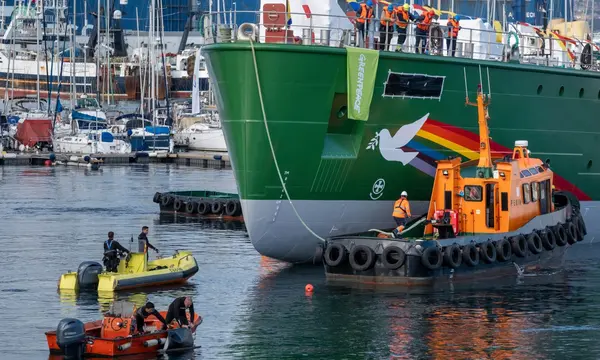
Greenpeace's 75-metre wind-powered campaigning and research ship has floated out at Freire Shipyard in Vigo, combining a DynaRig concept with hybrid onboard energy systems.
AMIT Marine Services reports its 2026 Abu Dhabi International Boat Show appearance, outlining five marine technology and safety sectors and its international brand partnerships.

ARG America reports discussions with European yacht-industry partners about its Japanese-engineered marine gyro stabilisers following METSTRADE 2026.
Superyacht Guide
Continue into the wider Superyacht Guide.
Business opportunities · Superyacht Guide
Companies serving the superyacht market can discuss clearly identified advertising, sponsorship and business-profile opportunities. Commercial activity remains separate from independent editorial coverage.