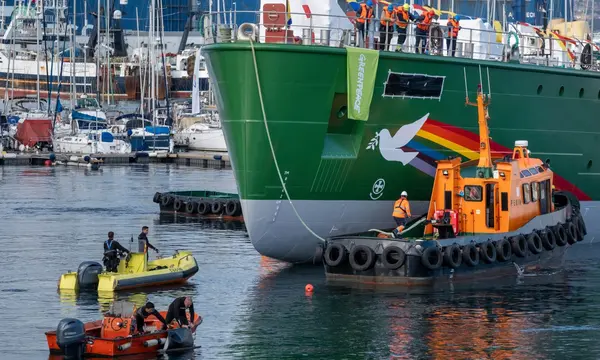
Greenpeace Floats Out 75m DynaRig Ship at Freire in Vigo
Greenpeace's 75-metre wind-powered campaigning and research ship has floated out at Freire Shipyard in Vigo, combining a DynaRig concept with hybrid onboard energy systems.
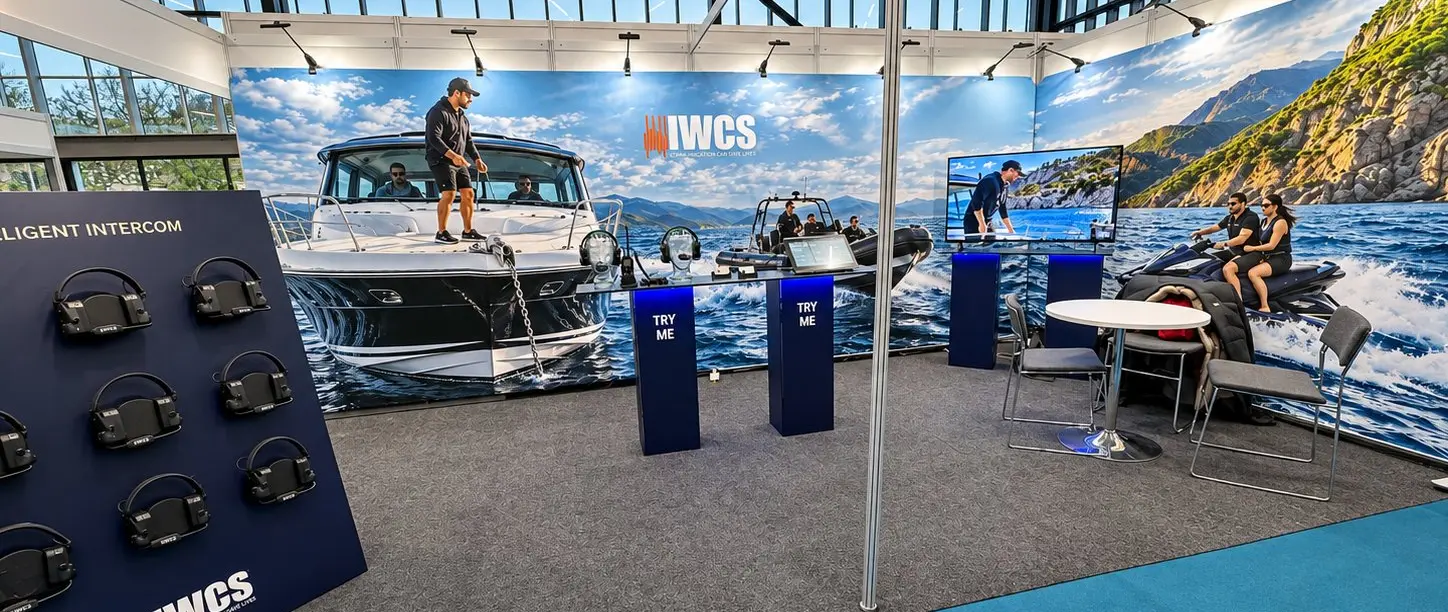
IWCS, original company photo showing its METSTRADE 2026 exhibition stand.
IWCS describes three days of product demonstrations and new marine communications contacts at METSTRADE 2026, thanking its distributors and confirming plans for 2027.
IWCS has published a post-show account of its participation in METSTRADE 2026, the international marine equipment exhibition held in Amsterdam. The company thanks visitors, distributors and partners for discussions and product demonstrations over three days, describing the event as an opportunity to meet new contacts and hear about practical communication needs on the water. Its update also says the company intends to return for METSTRADE 2027.
The report is about an exhibition and supplier engagement, not the announcement of a newly certified yacht communications product or a named installation contract. That distinction matters in the technology sector, where a successful stand demonstration can be mistaken for a completed delivery. The company has not published a verified order total or identified a new shipyard customer in this statement.
On a professionally operated yacht, several teams may need to coordinate at once. The bridge works with deckhands during mooring, engineers monitor technical spaces, and crew may supervise tenders or guest activities at some distance from the principal helm. Clear communication can reduce misunderstandings and help people share important information without repeatedly leaving their stations.
A marine intercom system is only one part of that arrangement. Radios, public-address equipment, alarms and other communications tools have different purposes and operating requirements. The right configuration depends on crew tasks and the vessel's approved procedures. The IWCS post-show update does not identify a particular yacht that has adopted a new configuration, so the operational discussion should be treated as general context.
The company's account describes product demonstrations at its updated exhibition stand. Direct demonstrations can help buyers understand how headsets, microphones, control units and related equipment behave in a realistic operating scenario. Questions may range from audio quality to how a system is worn by crew using protective clothing or working in a noisy location.
A booth demonstration is not a complete sea trial or regulatory acceptance test. Real marine environments involve wind, machinery noise, water exposure and differences in equipment placement. Purchasers should confirm that any product under consideration is appropriate for those conditions, rather than relying on a brief trade-show interaction. The exhibition was a starting point for conversations, not evidence of a finished yacht installation.
A communication system can have ample volume and still be difficult to understand when wind or engine noise obscures speech. Designers must consider microphone placement, headsets, hearing protection and the need to distinguish essential instructions from routine conversation. The arrangement may be different on a fast tender, an open flybridge or inside a machinery space.
For superyacht captains, the goal is reliable communication when crew are carrying out tasks that may have limited room for error. A buyer should test potential equipment in conditions comparable to the intended use. IWCS's announcement references demonstrations and customer feedback, but does not provide independent noise-reduction measurements for a new 2026 product. No performance figures are inferred from the event's positive account.
Mooring operations are a particularly clear example of why predictable communication matters. The bridge may need to exchange instructions with personnel handling lines where direct visual contact is obstructed. Systems that allow rapid, clear replies can support established procedures, but they must be operated with suitable discipline and contingency arrangements.
Technology cannot replace the captain's judgement or the crew's training. If audio equipment fails, a vessel should still have an agreed alternative method appropriate to the operation. Buyers should ask how devices are powered, paired and maintained, and what indicators tell users whether the channel remains available. These are questions for the specification phase, not claims of functions that IWCS necessarily introduced at METSTRADE.
Superyacht tenders may operate between an anchorage, a shore facility and a larger yacht, sometimes in challenging weather. Their crews may require communications that are comfortable to wear while managing the vessel, with different requirements from those of a person working in a protected wheelhouse. Equipment must be selected for the craft and the actual communication plan.
A marine intercom company can participate in these conversations, but a product shown at a supplier exhibition is not automatically approved for every tender or commercial use. Installation, power arrangements, water resistance and compatibility all need independent assessment. The 2026 IWCS recap reports a broad range of discussions, not a particular contract linking its technology to a named tender fleet.
Where communication equipment is worn, comfort and usability are engineering considerations as well as purchasing preferences. A device that performs well in a short demonstration may prove uncomfortable during an extended operation. Crew wearing hearing protection, helmets or other equipment should be able to access controls without compromising safe working practices.
The broader category of marine communications includes different headset and interface arrangements, and requirements vary across crews and tasks. Buyers should verify each model's intended application and certification rather than treating all devices as interchangeable. IWCS does not disclose a specific newly released helmet communication platform in its post-show article, so this report does not invent one.
A modern yacht may already have radios, internal telephones, public-address systems and alarm interfaces. Adding another communication channel can help only if the crew understand when and how to use it. Poorly planned integration may create distractions or conflicting information, especially where several audio sources are connected.
An equipment review should begin with a map of the intended communication paths, including who needs to hear each message and which channels should remain independent. Technicians then need to consider power, cables, connectors and the ability to maintain the system over time. The company says it discussed communication solutions with visitors but does not confirm that a new integration standard was adopted at the exhibition.
A yacht's communication arrangements may work differently while moored, cruising or carrying out deck operations. Wind, machinery and the movement of people and equipment can all influence the experience. A useful installation should be evaluated against the scenarios in which a clear instruction is most important.
Reliability also involves maintenance and the availability of a backup. A failure may be caused by a damaged cable, an exhausted battery, an unsuitable setting or a component that is not properly protected from moisture. Buyers should establish how faults can be identified and resolved by crew. No trade-show recap can replace that vessel-specific assessment, regardless of how promising a demonstration appears.
IWCS thanks the distributors and partners who participated in its METSTRADE presence. For a specialised supplier, a distributor can help connect products with shipyards, installers and end users in different markets. Those relationships may be valuable when a vessel is delivered far from the original manufacturing location or travels internationally.
The statement does not name new exclusive agents or quantify sales arising from the exhibition. Reporting new commercial appointments would require additional first-party confirmation. The reliable finding is that partners attended and supported the company's engagement with visitors. The potential value of those contacts remains a business-development consideration rather than a measured revenue outcome.
Trade shows can reveal recurring needs that are not always obvious in product planning. A yacht captain may emphasise audio clarity during mooring, while a tender operator is more concerned with comfort or protection from spray. Installers may raise different issues about power connections and serviceability. Gathering those perspectives can influence how future products and support information are developed.
IWCS describes hearing visitors' ideas and requirements during the event. It does not disclose a completed customer survey or a statistically representative sample of the marine market. The update should therefore be interpreted as qualitative feedback. For owners considering communications equipment, it underlines the usefulness of involving the actual crew before a technical specification is finalised.
An owner representative following up with a supplier may want to know what has been demonstrated, what remains under development and what can actually be delivered for a particular boat. Relevant questions include working environment, equipment approvals, service support, training, maintenance and any required changes to existing systems.
A written proposal should make clear the responsibilities of the manufacturer, distributor and installing contractor. It should also distinguish what is included from optional services or accessories. Those principles are general procurement advice, not a claim that IWCS has announced a new package with specific prices. The first-party news is a supplier's report on the conversations held at METSTRADE.
IWCS says it expects to be back at the next edition of METSTRADE in 2027. That is a forward-looking statement of intent rather than a confirmed list of new products or business commitments for the future show. Future participation details may change as organisers and suppliers finalise their arrangements.
The announcement is modest in scope, but it provides a dated record of the company's engagement with professional marine equipment buyers. It may also be useful for existing distributors and yacht technical departments deciding when to reconnect with a supplier. Any later product announcement should be reported when supported by a separate verified source, rather than being projected onto this 2026 recap.
The original update confirms that IWCS attended METSTRADE 2026, demonstrated communications solutions, met existing and new contacts and thanked distributors for their support. It also states a plan to return next year. It does not supply a new model name, launch price, named superyacht installation or certified technical performance results.
The yacht-industry relevance is the continuing role of communication equipment in crew work and the practical value of dialogue between suppliers, installers and users. This article separates that context from the narrower news event. It neither claims a record-breaking show for IWCS nor invents a contract completed during the three exhibition days.
The primary source is IWCS's official METSTRADE 2026 post-show update. Statements about the exhibition, demonstrations, partners and plans for 2027 are attributed to the company. The safety and procurement discussion is original editorial context and not a product specification.
The lead picture comes directly from IWCS's official source and shows its actual exhibition stand. It is credited to IWCS and does not purport to be a photograph of an installed communications system on a named superyacht. No artificial image or competitor press photograph has been used, and no unrestricted photographic licence is invented.
IWCS, original company photo showing its METSTRADE 2026 exhibition stand.
Continue reading
Greenpeace's 75-metre wind-powered campaigning and research ship has floated out at Freire Shipyard in Vigo, combining a DynaRig concept with hybrid onboard energy systems.
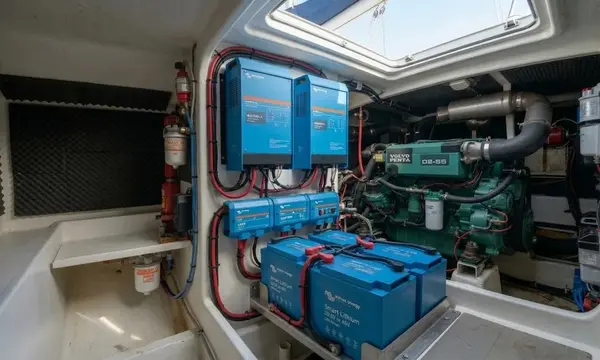
Valencia-based Mediterranean Yachts Solutions describes how 48V batteries, solar panels and high-output alternators may reduce generator use on suitable smaller boats.
AMIT Marine Services reports its 2026 Abu Dhabi International Boat Show appearance, outlining five marine technology and safety sectors and its international brand partnerships.

ARG America reports discussions with European yacht-industry partners about its Japanese-engineered marine gyro stabilisers following METSTRADE 2026.
Superyacht Guide
Continue into the wider Superyacht Guide.
Business opportunities · Superyacht Guide
Companies serving the superyacht market can discuss clearly identified advertising, sponsorship and business-profile opportunities. Commercial activity remains separate from independent editorial coverage.