
Digital Yacht Presents New Battery Monitoring and Network Tools at METSTRADE
By Superyacht Guide Newsroom · Edited by Superyacht Guide Newsroom
Digital Yacht official METSTRADE 2026 press announcement image
Digital Yacht brings new battery monitoring, connectivity and diagnostic equipment to Amsterdam, with potential applications for yacht tenders and bridge systems.
Digital Yacht is presenting a new range of marine electronics at METSTRADE, which opens in Amsterdam on 17 November 2026. The manufacturer's announcement identifies six developments: the NavDoctor Pro network diagnostic instrument, SafeLi battery monitoring, the NavLink3 wireless server, AllSense analogue interface, a connected vessel-data platform and two touchscreen display sizes within its S Series. The products reflect a broader shift in marine electronics towards connected equipment and greater visibility of the underlying systems that support navigation and onboard services. Although the manufacturer serves boats of many sizes, the introductions are relevant to engineering teams responsible for smaller independent systems, tenders and auxiliary craft carried by larger yachts. Installations on the primary bridge or within a classed machinery system require a different level of scrutiny. The manufacturer's exhibition announcement does not establish approval for those applications.
SafeLi is a monitoring product designed to detect gas released by potentially damaged lithium iron phosphate batteries and excessive temperatures. Digital Yacht's exhibitor-submitted description identifies hydrogen and volatile organic compounds as targets for its detector. The equipment is intended to generate visual and audible warnings, including display notifications on compatible helm systems. It also has a wireless interface for monitoring and configuration. The idea is to make an abnormal condition visible before it develops into a more serious incident. This is one additional layer of monitoring rather than a guarantee that a battery incident can be prevented. Not all failures follow an identical sequence, and the conditions under which a particular sensor responds depend on its design and the circumstances of installation. The published information does not establish its performance against every battery chemistry or supply a comprehensive fire safety certification for a superyacht.
On a larger yacht, an electrical fault aboard an auxiliary craft has implications beyond that craft alone. Tenders may be charged in enclosed or partially enclosed spaces, and some installations are difficult to observe continuously during normal operations. The technical team needs to understand the battery chemistry, charger, ventilation arrangements, electrical protection and inspection procedures of each independent craft. The availability of an additional detection product might be relevant to that examination, provided its use is consistent with the instructions of the relevant manufacturers and the requirements governing the vessel. It should not be taken as permission to modify charging arrangements or to overlook established protective measures. Storage, charging and alarm management need to be considered together and assessed by competent specialists. In particular, the risk associated with a tender in its stowed position may differ materially from the corresponding risk when the same craft is operating independently outside the yacht.
NavDoctor Pro is described by Digital Yacht as a diagnostic tool for NMEA 2000 installations. The manufacturer says it can identify network problems in real time and notes its recognition in the 2026 NMEA Technology Awards. NMEA 2000 supports the exchange of specified data between compatible marine equipment. As installations grow, it can be more difficult for an engineer to determine whether an apparent malfunction originates within the transmitting instrument, the receiving display or the connections between them. A diagnostic tool can provide information that helps narrow those possibilities. It is particularly useful when supplementary instruments from different manufacturers share a network, because a fault may appear in equipment that is otherwise working properly. The instrument is not a substitute for a broader technical survey or for verifying the installation against the applicable manufacturer requirements. The appropriate diagnostic procedure will depend on the network topology and the nature of the fault under examination.
NavLink3 is the manufacturer's new NMEA 2000 wireless server, with a facility for displaying network-derived information including instrument readings, electrical system data and engine information. Wireless access can be helpful when information is needed away from a fixed instrument, particularly aboard a tender with limited space for additional displays. On a yacht, a supplementary interface might enable appropriately authorised personnel to examine data from a compatible independent network without occupying a primary helm display. This does not mean that the interface should be connected indiscriminately to critical shipboard systems. The boundaries between navigation, entertainment, monitoring and remote access should be established as part of the installation design. Wireless equipment introduces questions about access permissions, interference and the behaviour of the system if the wireless connection is unavailable. Any important information still needs to be accessible through the arrangements specified for the vessel, regardless of the status of an auxiliary wireless service.
AllSense is intended to allow readings from analogue equipment to be represented on an NMEA 2000 network. Digital Yacht highlights engine data and tank monitoring among the intended uses. This addresses a familiar challenge for refit engineers: the useful remaining life of an older instrument or sensor may exceed that of the interface through which its information has traditionally been read. An appropriate interface can preserve access to that information while making it available to more recent electronics. Compatibility must nevertheless be established for the specific sensor and application. Different devices can use different electrical characteristics or calibration methods, and the published announcement does not enumerate all compatible equipment. The refit team should establish how the readings are produced, how the new interface represents them and how the display will indicate unavailable or implausible values. A convenient representation of a reading does not independently validate the original measurement.
The exhibition also introduces NjordLink+ together with NjordCloud. Digital Yacht describes the platform as combining remote access to vessel information with predictive maintenance support, weather and port information. These capabilities are relevant to the wider development of connected yacht management, although the announcement does not demonstrate that the platform can replace the maintenance systems used by larger yachts. A useful evaluation would begin by identifying the particular equipment capable of supplying data and determining how the resulting information is delivered to an authorised user. It would then consider the availability of the necessary connection when the craft is away from shore, the handling of historical information and the arrangements for access control. Predictive maintenance is particularly dependent on data quality and the relevance of the analytical process to the equipment being monitored. A general claim about supporting maintenance is not evidence that every developing fault can be detected before a breakdown.
The S Series includes high-brightness, full-HD touchscreen monitors in 13.3-inch and 18.5-inch formats. Different sizes can be useful in installations where the design of a console determines the area available for equipment. The smaller size is potentially relevant to restricted spaces; the larger format may allow more information to be displayed simultaneously. Screen selection should also consider viewing conditions at different times of day, access to controls, the effects of moisture and vibration, and the ability of the operator to interpret the presented information. The current announcement does not provide the complete environmental specifications, power requirements or relevant approvals of either monitor. The engineering team should obtain the applicable product documentation before selecting one for a particular vessel. General suitability for marine use should not be confused with qualification for every navigation or safety-related application.
The common theme among these introductions is the movement of information from equipment to places where a user can assess it. For engineers managing a diverse fleet of tenders, equipment can differ even among apparently similar craft. Recording those differences is a prerequisite for deciding whether a new diagnostic or monitoring product is worthwhile. The value of a supplementary display ultimately depends on the reliability of the source data and the way an abnormal condition is communicated to somebody capable of responding. Adding a device solely because it can connect to an existing network may introduce unnecessary complexity. The more useful approach is to establish a defined operational requirement, determine the relevant interfaces and seek manufacturer confirmation of compatibility. The METSTRADE display gives designers, builders and engineering representatives an opportunity to discuss those details directly with Digital Yacht at booth 1.535. The new equipment represents potential tools for specific installations, rather than a universal solution for every onboard system.
Primary source: Digital Yacht official METSTRADE release, 11 November 2026.
Further official information: Digital Yacht exhibitor-submitted SafeLi product information.
Image: Digital Yacht, official METSTRADE 2026 product announcement. Official source.
Image: Digital Yacht, official METSTRADE 2026 product announcement.
Explore
Go deeper into the yachts, companies, events and destinations directly connected to this article.
Continue reading
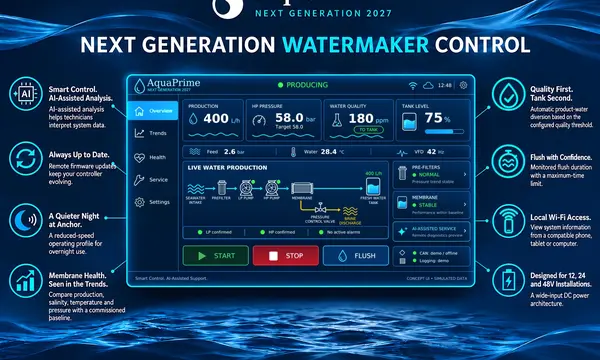
AquaPrime will preview its new watermaker control platform at METSTRADE, with touchscreen monitoring and diagnostic features under development for yacht crews.

Vulkan Italia will present its 200kW H1000 parallel-hybrid module for marine diesel engines rated 500–1,500kW during METSTRADE's Next Gen showcase.
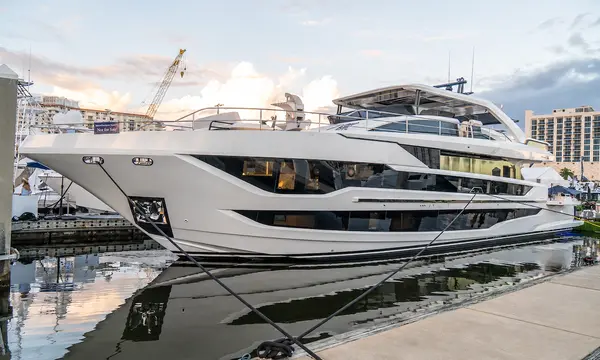
Pearl Yachts’ 30m Pearl 100 Hybrid makes its world debut at Fort Lauderdale with twin-shaft hybrid propulsion, five cabins and two full-beam suites.

Northrop & Johnson has profiled StarEDGE's approach to superyacht communications, including multi-orbit satellite links, mobile networks and a dashboard for yacht managers.
Superyacht Guide
Continue into the wider Superyacht Guide.
Business opportunities · Superyacht Guide
Companies serving the superyacht market can discuss clearly identified advertising, sponsorship and business-profile opportunities. Commercial activity remains separate from independent editorial coverage.