Company
Fundamental Marine Developments GmbH
Explore the company profile and related Superyacht Guide coverage.
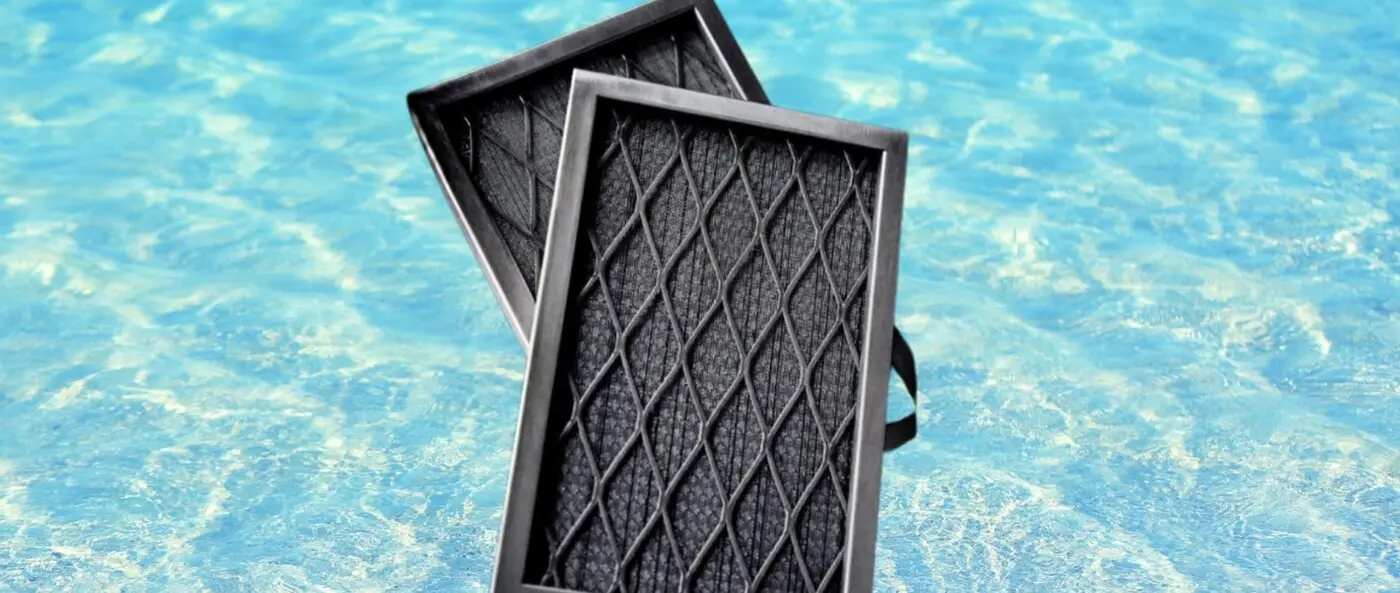
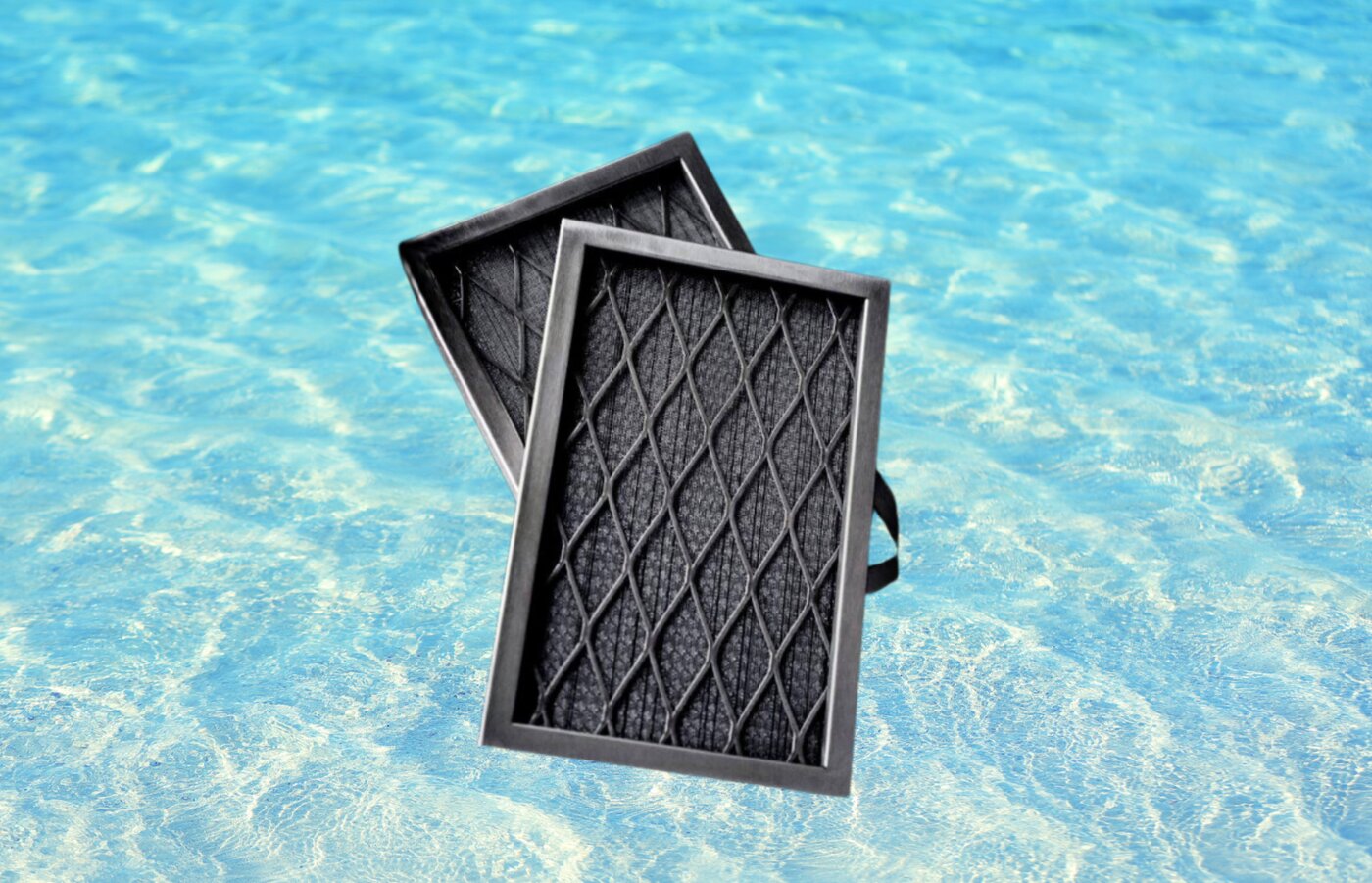
FMD washable filter panels — official product publicity visual
Fundamental Marine Developments presents reusable air filtration at METSTRADE, focusing on HVAC maintenance, pressure drop and lifecycle environmental impacts.
Fundamental Marine Developments is scheduled to participate in the Superyacht Sustainability Route at METSTRADE in Amsterdam, with its permanent washable air filters listed at stand 08.562. The exhibition takes place from 17 to 19 November 2026. The supplier's inclusion in the route reflects Water Revolution Foundation's assessment of an existing technology, rather than the launch of an entirely new air-conditioning installation. For large yachts, this is an opportunity to revisit one of the less visible but regularly recurring elements of maintenance.
The foundation's product summary describes synthetic filter media that acquire an electrostatic charge from airflow. The intention is to capture particulate contamination with a relatively modest resistance to air movement, while retaining the option of washing and reusing a filter. In its comparative study with a disposable-filter scenario, the foundation reports substantial reductions across most of the environmental indicators measured, with water consumption identified as an exception. The results are specific to the studied cases and should not be extrapolated to every air-handling system without an engineering review.
A yacht with several decks of air-conditioned accommodation can contain numerous fan-coil units and larger central air-handling installations, as well as separate ventilation systems for technical and service areas. Access to individual filter locations may vary from straightforward to awkward. A housekeeping-led approach may remove filters when dust becomes visible, but the engineering significance extends beyond whether a grille looks clean.
A filter affects the quantity of air delivered, the performance of heat exchangers and the cleanliness of components behind it. When resistance increases, a fixed-speed fan may move less air; an appropriately controlled variable-speed unit may increase its power consumption to maintain delivery. The consequences depend on the design of the specific installation. Where ventilation supports a particular humidity, pressure or temperature requirement, filter condition can influence much more than passenger comfort. A change of filter type therefore deserves attention as an engineering decision.
FMD's quoted initial pressure drop is typically 90 pascals, according to the Water Revolution Foundation summary. It recommends a final pressure drop of 300 pascals and lists a maximum of 450 pascals. These figures are useful starting points for supplier discussions, but their applicability depends on the test conditions, the size of the filter, air velocity and the system in which it is installed.
An existing yacht may have fan selections based on particular resistance assumptions for the filter, coil, ductwork and terminal devices. Replacing an element with one that has different characteristics can affect the balance of the system. Request the maker's test data at the airflows anticipated aboard, alongside appropriate filtration efficiency information. Determine whether monitoring equipment is already installed and how operators will identify when a filter requires cleaning. A single low initial-resistance figure does not establish that the entire ventilation installation will perform better with a different filter.
A reusable product must satisfy the filtration requirements of the application it serves. Cabin air-conditioning, galley treatment and machinery ventilation may have different priorities and separate mandatory requirements. Filters protecting machinery also need to be considered against the original manufacturer's specifications. No assumption should be made that one washable panel is suitable for all the duties currently performed by different classes of disposable element.
The technical assessment should take account of the particulate sizes targeted, the operating environment, the expected dust loading and the manufacturer's stated retention performance throughout the permitted use cycle. Where hygiene requirements are particularly important, consult the appropriate specialist. For some installations, several stages of filtration may be required. Changing one stage does not eliminate the need to maintain the others. Establish the correct duties before considering the environmental or financial benefit, because a reduction in consumable purchases is not a satisfactory result if the basic air-quality or equipment-protection requirement is no longer met.
The significance of reusable filtration lies in the complete maintenance procedure, not merely in the physical ability to place a filter under a water supply. FMD should provide instructions for the cleaning products and methods permitted for its equipment. The yacht needs a suitable place to carry out washing, collect contaminated water as appropriate and dry the media before putting the element back into operation.
A practical issue is what happens to the ventilation system while its filter is being cleaned. Some arrangements may allow a changeover with a prepared spare set, while others could require a controlled period of shutdown. Operating sensitive equipment without its required filter should not become a normal part of a washing routine. Plan the circulation of sets so they can be individually identified and inspected. Establish the criteria under which damaged or persistently contaminated media must be taken out of service. A washable component remains a component with finite functional limits, whatever its advertised longevity.
The environmental assessment acknowledges that water is required to wash the reusable filters. This is precisely the type of trade-off a lifecycle study should expose. Other environmental indicators in the comparative study show improvements spanning roughly 57 to 99 per cent, but it would be misleading to portray these numbers as the energy or water savings delivered aboard a particular vessel. The analysis compares selected scenarios rather than measuring actual yacht-wide performance.
The significance of water use differs between vessels. Some yachts produce much of their freshwater aboard; others rely more heavily on water delivered during port stays. Water production itself requires energy and appropriate treatment. The wash process may also generate contaminated wastewater whose permissible handling depends on its contents and location. Consequently, the cleaning arrangement deserves to be included in the purchasing assessment. Compare the quantities of water, cleaning materials and energy required with the present consumption and disposal of filter elements. Include the transport of spares and the treatment of removed material.
Before placing a fleet-wide order, create a register of the filter locations in each yacht. Record the existing specifications, dimensions, access method and any constraints on safe cleaning or replacement. Relatively small differences between adjoining fan-coil units may lead to several different filter dimensions. Photographs of installed frames and measurements taken aboard are more useful than assuming that two units bearing similar names require identical parts.
Consider selecting one representative installation for a controlled trial, following the supplier's recommendations and obtaining any necessary approvals. Record pressure readings and relevant operational information before installation, after fitting and following a defined cleaning interval. The trial can also establish how much time the crew needs to remove, wash, dry and refit the filter. These practical findings are valuable when deciding whether the same arrangement can be extended across a larger yacht or several vessels.
On a yacht, maintenance of ventilation equipment may involve several departments. A cleaner might notice a change in airflow, an engineer might inspect pressure readings, and another member of staff might document the condition of a cabin unit. Clear responsibilities help prevent minor defects from remaining unreported until a guest experiences an uncomfortable room. A permanent filter system adds tasks associated with washing and inspecting the media, which must be reflected in the established maintenance plan.
Create a means of identifying individual elements, particularly where several spare sets are circulating between workspaces. A record of cleaning frequency can help identify an installation that is accumulating dirt unusually quickly. That may point to a problem with the intake location, a damaged seal or another issue deserving further investigation. Reliable records also allow the chief engineer to estimate recurring water use and labour rather than relying on a theoretical comparison produced before installation.
The existing filter budget may be distributed across several accounts, including machinery spares, HVAC service, freight and waste handling. When considering reusable filtration, bring these costs together. Compare the purchase and replacement expense, the labour involved and the requirement for spare filters during cleaning. Include any modifications necessary to monitor pressure or adapt frames.
A useful supplier discussion in Amsterdam will establish which systems have been assessed, the relevant test conditions and how the proposed installation differs from the examples in the foundation's work. Ask for current technical instructions and written clarification of warranty conditions before incorporating an extended replacement interval into a planned maintenance system. The objective is not simply to eliminate purchases of disposable panels. It is to provide dependable airflow, protect expensive machinery and reduce unnecessary material use through a procedure the crew can actually sustain. That makes a humble filter a worthwhile subject for the superyacht technical team at METSTRADE.
Primary source: Water Revolution Foundation / Fundamental Marine Developments.
Exhibition programme: Water Revolution Foundation — METSTRADE 2026.
Fundamental Marine Developments washable filter — official verified-solutions product photograph. Official editorial material from Water Revolution Foundation / Fundamental Marine Developments. Official source.
Explore
Go deeper into the yachts, companies, events and destinations directly connected to this article.
Company
Explore the company profile and related Superyacht Guide coverage.
Continue reading
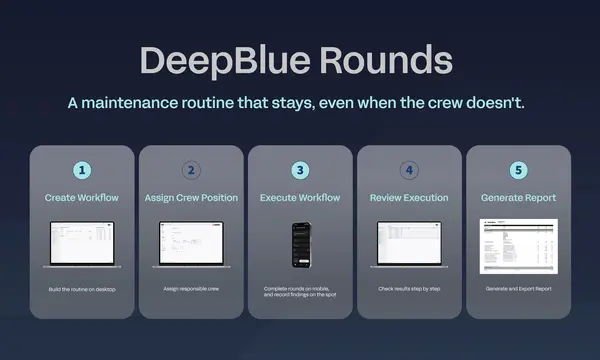
DeepBlue introduces Rounds, a mobile inspection workflow linking equipment readings, maintenance checks and follow-up jobs to yacht equipment records.
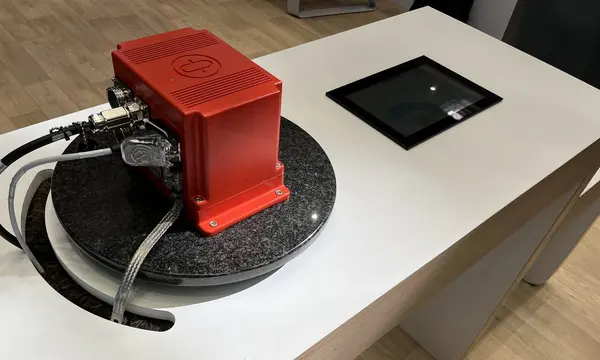
Anschütz has unveiled the Standard 100 MF, a maintenance-free gyrocompass designed for straightforward new-build and retrofit integration from 2027.
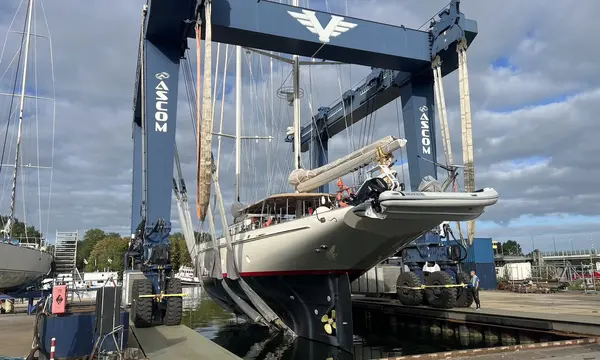
Amsterdam Yacht Service reports a rig-on haul-out for 41.54m MELODY, including antifouling, exterior maintenance, rig retuning and a swing-keel inspection.
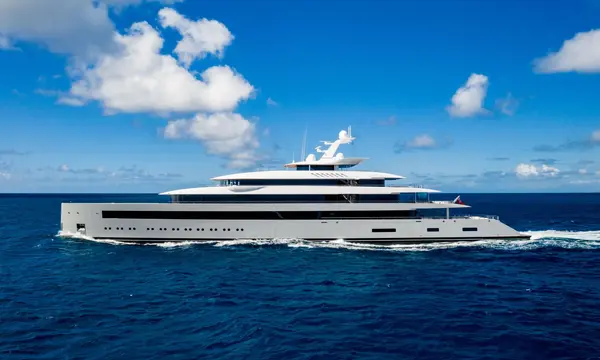
The 99.95m Feadship REVERIE, delivered as MOONRISE in 2020, has been photographed in Gibraltar following a reported ownership change earlier in 2026.
Superyacht Guide
Continue into the wider Superyacht Guide.
Business opportunities · Superyacht Guide
Companies serving the superyacht market can discuss clearly identified advertising, sponsorship and business-profile opportunities. Commercial activity remains separate from independent editorial coverage.